More than 15 million Americans have an autoimmune condition. This real world evidence from over 60,000 such individuals is worth noting
https://t.co/BfUWLDYROF
True or False: Jaccoud's arthropathy causes joint deformities due to bone and cartilage damage, and erosions are typically visible on X-ray.
Test your knowledge in this week's RheumIQ at https://t.co/UaXqHKWizt.
✅ Today at #BSR2026 in Curutiba, Brazil 🇧🇷 I will talk about how #digital tools can improve the life of those living with #lupus. In particular, I will focus on the #CORRELATE research program, about creating equal opportunities in #cognition testing with a free online platform
Why have antioxidant supplements not helped reduce the incidence of cancer and in some trials shown an increase?
Suppression of T cell immune response to cancer
@ScienceMagazine
https://t.co/JGsP0hGzxD
https://t.co/C5X6qUz7hX
Today I learned that the majority of patients who experience transient global amnesia never have a recurrent episode. ~15% of patients do get recurrent episodes. Recurrence is associated with personal or family history of migraines and younger age at time of the initial episode.
A pioneer of AI-in-biology just published a sharp rebuttal to the "AI will cure cancer" narrative.
The core argument: It's a measurement problem.
Over 90% of drugs that enter clinical trials still fail — a number that hasn't moved in decades. In most cases, the molecule works fine. The mechanism it was built to hit was simply wrong.
No amount of AI-designed molecules fixes that: Building better keys for the wrong locks does not open the correct doors.
The reason we keep picking the wrong locks: human biology has never been measured at the scale or resolution needed to actually map disease mechanisms. LLMs can connect results from the literature, but they can't extract answers about molecules and processes that were never captured in the first place.
This is exactly where scalable mass spectrometry-based proteomics has a role to play. Unlike sequencing, MS can directly quantify the functional molecules — proteins, their modifications, their interactions — that actually execute cellular decisions. As single-cell and low-input proteomics methods mature, they offer a path to the kind of large-scale, perturbation-aware functional datasets Koller argues are missing: not just what's genetically possible, but what's biologically happening.
Substantive AI-for-biology progress requires the right instruments pointed at the right layer of biology.
Our paper introduces membrane-impermeable caspase inhibitors that use GSDMD pores as their entry route.
Because these compounds can't cross an intact membrane, they enter only cells already forming GSDMD pores — before pore density exceeds the cell's repair capacity. This confers built-in specificity: the drug acts solely on pyroptotic cells, leaving apoptosis and healthy cells untouched, addressing the off-target toxicity that has limited earlier, cell-permeable caspase inhibitors.
The effect goes beyond arresting cell death. Cells already committed to pyroptosis reverse course and regain viability — a "Lazarus effect" that challenges the assumption that lytic cell death, once initiated, is irreversible.
In essence, these unexpected results could create new opportunities for precisely targeting inflammatory cell death while safeguarding healthy tissue.
During his tenure as CEO, Jack Welch was celebrated as one of the world's greatest business leaders. Under his leadership, GE became the world's most valuable company, and Welch was widely viewed as a model for corporate management.
A decade later, many commentators argued that the same management philosophy had contributed to GE's long-term decline.
It's a reminder that the true impact of leadership decisions is often impossible to judge in real time. Some consequences take years — or even decades — to become clear.
So what's your verdict?
Was Jack Welch's overall legacy a net positive or a net negative? Which of his ideas have stood the test of time, and which ultimately proved harmful?
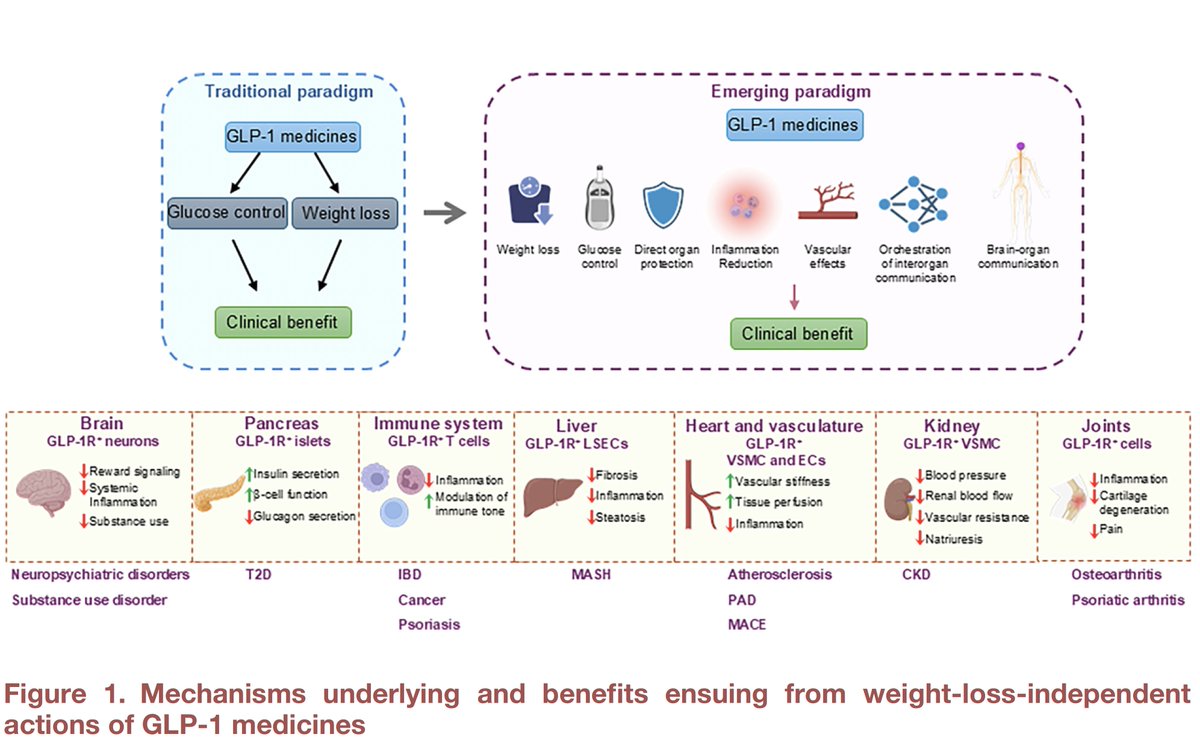
The GLP-1 drugs have evidence for beneficial impact— heart, kidney, liver, joints, immune system, and brain—that are independent of weight loss
@Cell_Metabolism@DanielJDrucker
https://t.co/ApB9ptjDL2
✅ Very happy to be part of this work on disease modification in #lupus#nephritis as part of the @ERAkidney network 👍 Check this beautiful paper showing what we think is the way in immunotherapy for #renal involvement in #SLE 👍
📥 LINK: https://t.co/So5u1UKFNY
In @ScienceMagazine today
Blocking a prostaglandin receptor (EP2) can keep tissue resident macrophages clearing senescent white blood cells from aged organs, slow their aging
in experimental mouse model
https://t.co/LN573dqQDq
https://t.co/oRnAtX1g0t
An important study: CGD in the Middle East and North Africa:
Chronic granulomatous disease: A multicenter study from the MENA region https://t.co/C2hUDVySxi
EULAR26: Updates in SLE and APS
Severe refractory systemic lupus erythematosus (srSLE) is a clinical state conceptualised as persistent high disease activity despite standard care with glucocorticoids and immunosuppressants.
https://t.co/DP7gPvlGhU
Since the 1960s, the genetic code has been used to predict protein sequences from DNA and mRNA sequences. Our @Nature article demonstrates that these predictions miss thousands of protein sequences present in human tissues.
Across >1,000 human samples, we identified numerous abundant proteins whose amino acid sequences differ from those predicted by the genetic code.
These proteins are not rare translation byproducts. They accumulate to thousands of copies per cell. Some are more abundant than the proteins predicted by the genetic code from the same transcripts.
Their abundance reflects a combination of alternate RNA decoding mechanisms — including codon-anticodon mismatches, tRNA abundance, and RNA modifications — and selective stabilization of the resulting proteins. The last factor – protein stability – emerges as a major determinant of protein abundance across proteins, proteoforms and cell types: https://t.co/IzOfAZKnxT
Alternate RNA decoding is pervasive across functional groups of proteins, healthy and diseased tissues. It affects proteins playing key roles in neurodegeneration, and some alternately decoded proteins show strong enrichment in tumors compared to their surrounding tissues.
This discovery has been a long and exhilarating journey with Shira Tsour and the @slavovLab team. It started in 2019 and proceeded through many challenges and thrilling highs. A journey that has opened new perspectives that we long to explore!
1/
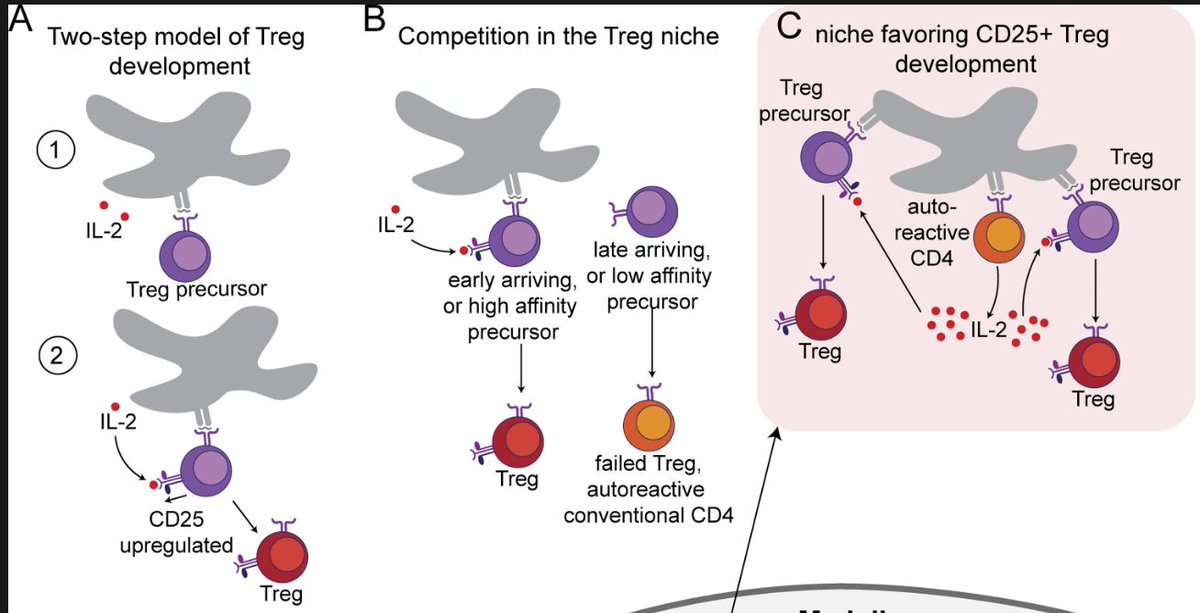
Generally speaking, for Tregs to mediate antigen-specific tolerance in the periphery, they must be educated in the thymus by pairing with T cells that share the same antigen specificity.
1/2
#science#immunology#Treg#Foxp3
https://t.co/BAgesWQCSa
Data show that lupus nephritis is characterized by progressive amplification of inflammatory, fibrotic, and immune activation programs that become anatomically compartmentalized within the kidney. Read how these data could direct new interventions: https://t.co/F8mFqGWS8Q.