Here's the teaser vid of @personaaiinc Gen2 humanoid that I showed during my fireside chat with Brian Heater at Automate in Chicago. The team at Persona is on fire! LDTS!
$MU CEO ON ROBOTICS MEMORY DEMAND
“Humanoid robots carry 10 times the amount of memory as an average L2+ vehicle. We expect a sustained substantial multi-decade memory demand cycle to begin in the latter part of this decade.”
“The mix of L2+ and above vehicles is more than doubling this year to over 20%, and is expected to exceed 40% by 2030.”
So how do you confine a superhot, 100M°C fusion plasma? With superstrong magnets, of course. 🧲
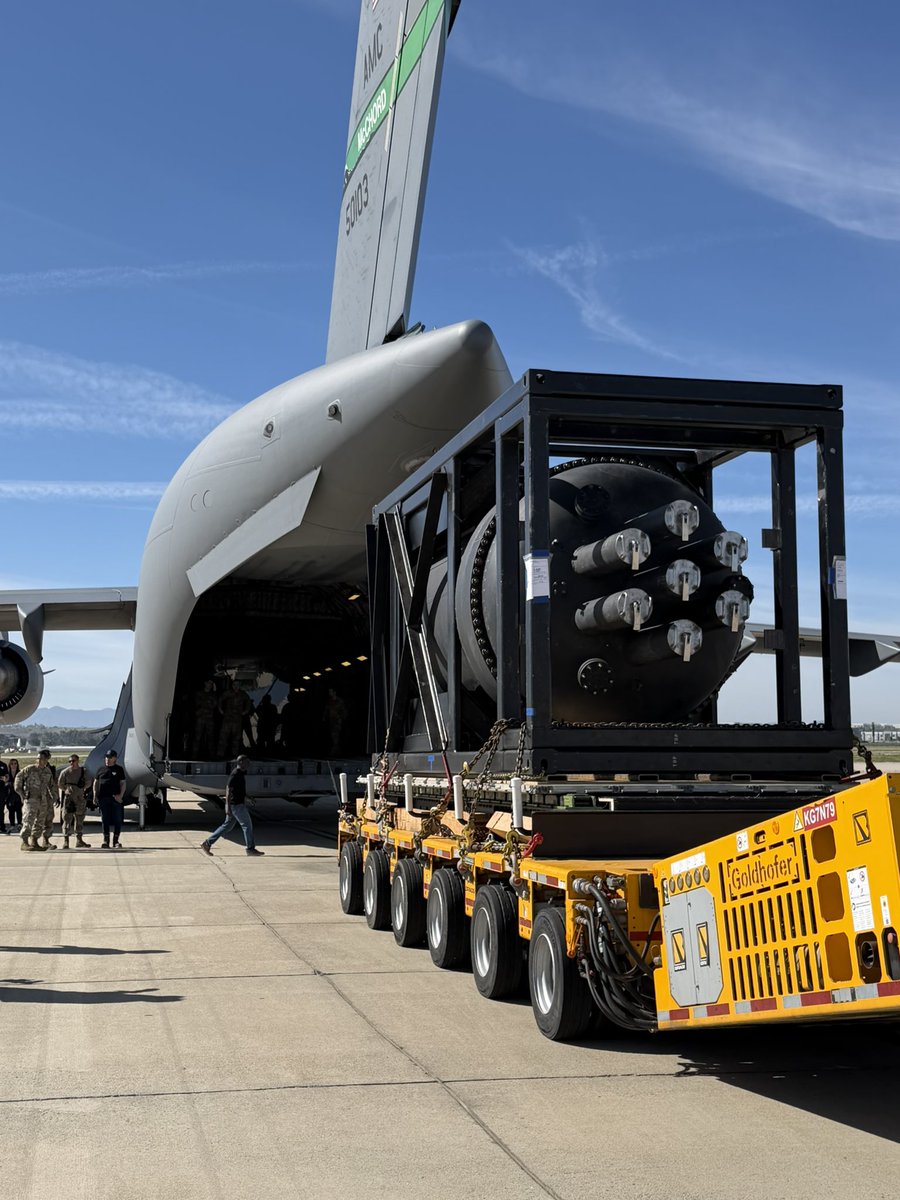
We've now installed three of the 18 toroidal field (TF) magnets needed for our SPARC fusion demonstration machine. TF magnets are one of the three major magnet types we'll use in SPARC (the others being the poloidal field and central solenoid magnets) to corral the plasma once the machine is operating.
Because plasma is made up of charged particles, it responds to a magnetic field. It's a technique refined over dozens of earlier tokamaks built around the world that manage this highly energetic cloud of particles that's hotter than the center of the sun.
#SPARC #Magnets #FusionEnergy
At our Groves site in Lockhart, Texas, Oklo reached substantial completion of our isotope test reactor in just 229 days and is working toward criticality this July, making it one of the fastest-built reactors since the Manhattan Project.
Once operational, Groves will support the production of critical isotopes used across medicine, industry, research, and other essential applications.
Go inside Groves with @cbsaustin:
https://t.co/k8I7QNS38D
Moments ago, Valar Atomics took Ward 250 critical for the first time. This fulfills President Trump’s EO 14301, which called for 3 advanced reactors to go critical by July 4th.
This is our second criticality as a company, and an important step toward our goal of power by July 4.
@NASAAdmin Thank you Mr. Administrator! Valar Atomics will inevitably put reactors in orbit and on other celestial bodies. The reactor we turned on today was built to parameters which will make it easily adaptable into a Starship bay.
American dominance in space and nuclear is important
and if we're thinking about curves on manifolds, the next natural question is what's the topology of those manifolds?
understanding the shape like holes, loops, some other maybe persistent structures, tells you a lot about what kinds of curves are even possible on them
relevant paper: Persistent Topological Features in LLMs by Gardinazzi, Viswanathan, Panerai, @ansuin, Cazzaniga, and @Matteo1Biagetti
they use zigzag persistence from topological data analysis to track how topological features evolve across model layers (not layer by layer independently, but the full evolutionary path)
https://t.co/UYYLos5jP9
Our internal data shows Claude is accelerating AI development—a possible path to recursive self-improvement, or AI autonomously building a more capable successor.
It’s happening faster than we thought, and the implications deserve greater attention. https://t.co/OVVPJO7VQx
Climbing stairs is one of the biggest challenges for humanoid robots, but PNDBotics Adam is now doing it with ease.
In a latest demo, the robot smoothly climbed real-world outdoor stairs without any support, even on uneven steps.
The robot stays balanced and moves naturally after being trained to quickly adapt to different surfaces.
Today, we share a breakthrough on the planar unit distance problem, a famous open question first posed by Paul Erdős in 1946.
For nearly 80 years, mathematicians believed the best possible solutions looked roughly like square grids.
An OpenAI model has now disproved that belief, discovering an entirely new family of constructions that performs better.
This marks the first time AI has autonomously solved a prominent open problem central to a field of mathematics.
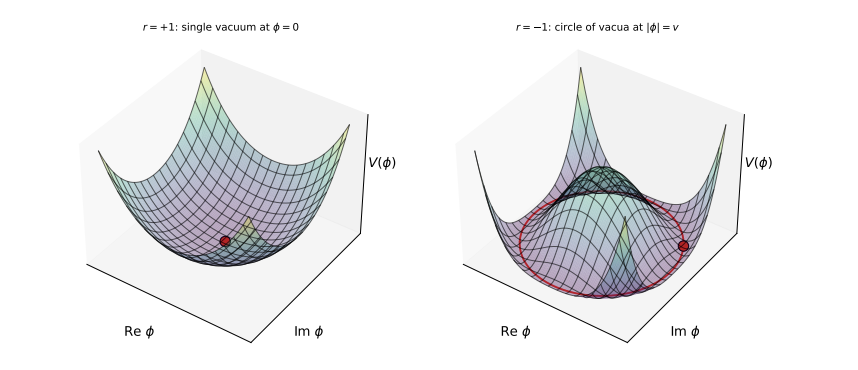
We have a new paper out on spontaneous symmetry breaking, Goldstone modes, and deep learning!
This is work with the amazing team of @t_andy_keller@YueSong48287250@takeru_miyato@wellingmax.
A brief thread on a marriage of physics and ML. (Link at end).