Every day leading up to August 25, the 35th anniversary of Linux, we'll be sharing a Linux milestone. First up:
In April 1991, 21-year-old Linus Torvalds wasn't trying to build an OS. He was writing a terminal emulator for his new 386 PC to connect to his university's Unix servers. That side project became Linux.
https://t.co/6pk9lpDjGL
#Linux35
Google Deepmind argues that LLMs can never make real scientific discoveries.
They published a paper breaking down Albert Einstein’s private view of scientific discovery.
In a famous letter to his friend Maurice Solovine, Einstein drew a diagram of how science actually happens.
It is a cyclical loop.
First, you experience raw sensory data. Then, through a mysterious, non-logical act of intuition, you make an intuitive "jump" to abstract axioms. Finally, you use strict logical deduction to derive consequences from those axioms.
Generative AI has completely mastered two-thirds of this loop.
• Induction: Statistical pattern matching across billions of tokens.
• Deduction: Formal proof generation, like AlphaProof solving complex math Olympiads.
AI can crunch data and it can prove theorems.
But it cannot make the jump.
The paper argues that AI completely lacks Abduction, the generation of novel explanatory hypotheses when observational data is scarce.
The prevailing tech myth says that "creativity is just data compression." That if you feed an LLM enough text, scientific breakthroughs will naturally pop out.
Einstein’s formulation of General Relativity proves that is a delusion.
When Einstein formulated relativity, the observational data didn't demand a new physics framework; classical mechanics was still massively successful. The breakthrough required a conceptual rupture. An intuitive leap from physical reality to a brand-new set of foundational axioms.
An LLM can execute the math once the axioms are given. But it is structurally incapable of formulating those premises on its own.
It can interpolate inside existing human thought, but it cannot transcend it.
The translation of physical reality into formal axioms remains the absolute, hard bottleneck of artificial scientific invention.
We can build models with trillions of parameters. We can scale compute into the stratosphere.
We can make the calculator infinitely fast.
But until we solve grounding, the machine can process all the data in the universe.
It still can't make the jump.
John Tukey the Fast Fourier Transform (FFT) inventor, who coined both "bit" and "software" died exactly 26 years ago today.
The Fast Fourier Transform (FFT), one of the most important algorithms in signal processing and data analysis, was introduced by Tukey & Cooley in 1965.
In 1805, Gauss - studying the orbits of asteroids Pallas and Juno - came up with a method to interpolate their trajectories from discrete samples. What he came up with was mathematically very close to the modern FFT but Gauss never published that work, and didn’t analyze its computational complexity. It predated even Fourier’s 1822 work on heat diffusion - but without the framing or generalization that Cooley & Tukey would bring 160 years later.
In 1965, Cooley & Tukey published their now-famous algorithm that reduced the cost of computing a Discrete Fourier Transform from 𝑂(𝑛²) to 𝑂(𝑛 log𝑛). This leap made real-time signal processing and digital media compression feasible.
From radio telescopes to JPEGs, from audio codecs to quantum mechanics - the FFT is everywhere. It’s one of the most important (and elegant) algorithms of the 20th century - rooted in the genius of Gauss, but brought to life in the computer age.
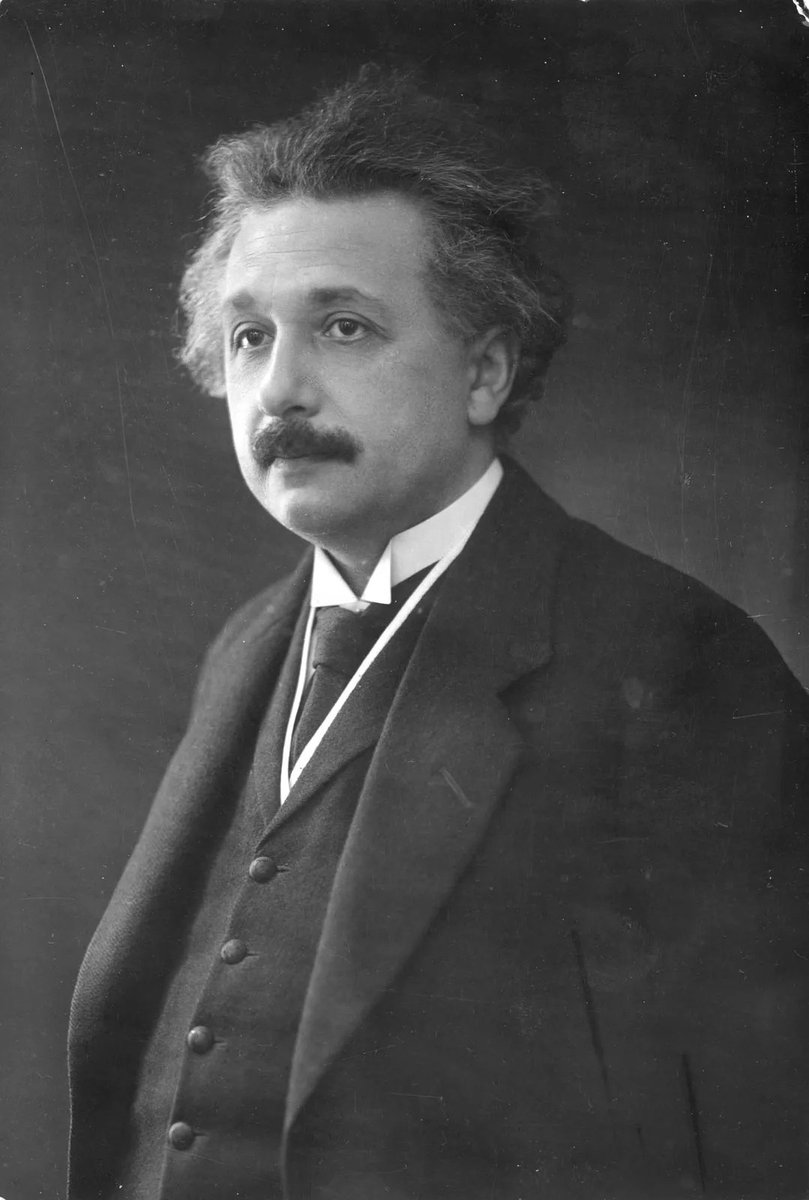
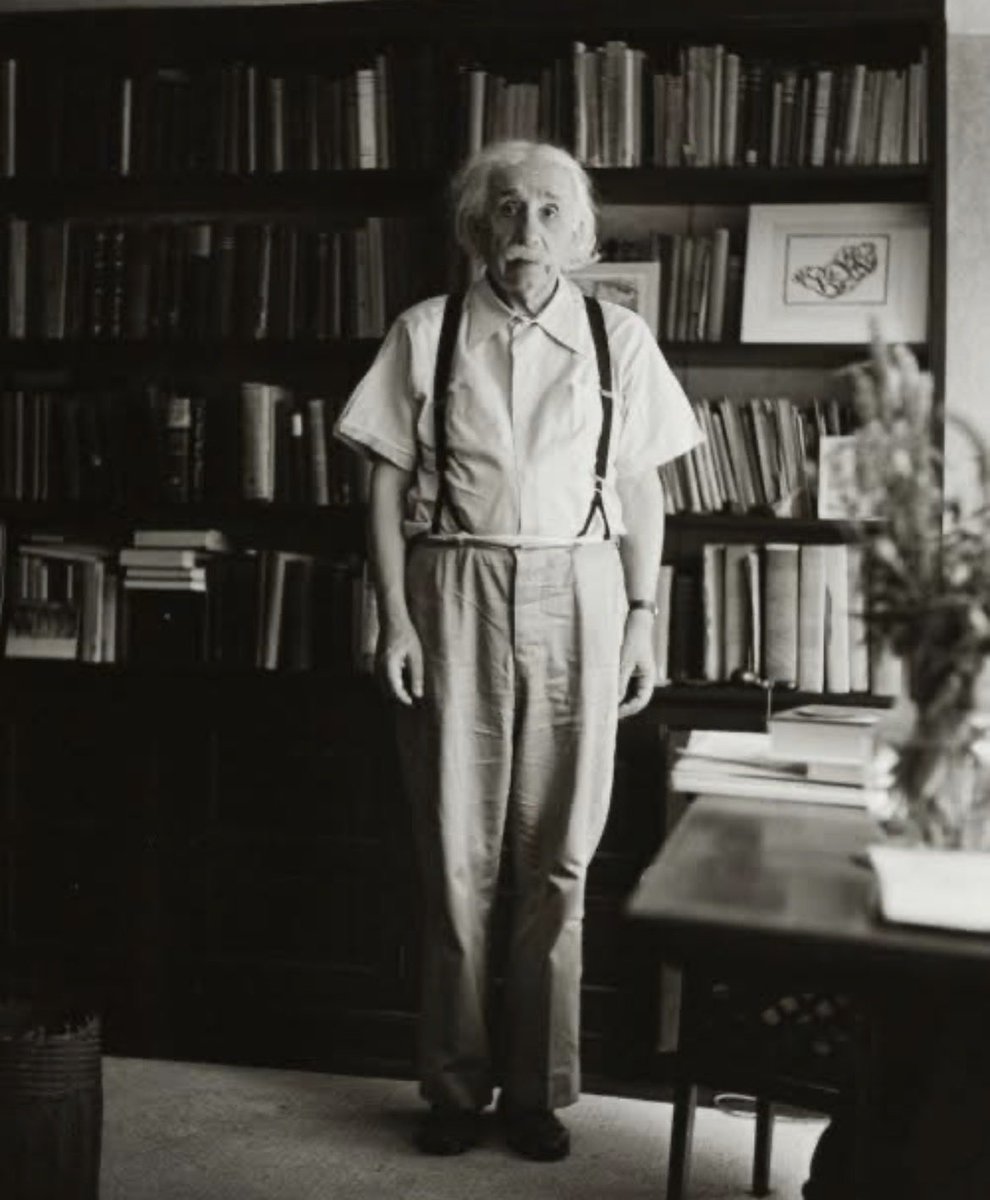
I am enough of an artist to draw freely upon my imagination. Imagination is more important than knowledge. Knowledge is limited. Imagination encircles the world.
- Albert Einstein
On October 15, 1986, the football teams of IBM Zurich Laboratory and Dow Chemical were due to play a game against each other. But it was almost derailed by a sudden announcement made just a few hours before kick-off.
The sudden announcement was that two of the IBM players – Gerd Binnig (right, holding flowers) and Heinrich Rohrer (left, holding flowers) had been awarded the Nobel Prize in Physics.
The two laureates were rushed off to a press conference, but they insisted the conference end on time because their football team needed them. Although IBM lost the match 2-4 they still had a reason to celebrate.
📊 Continuous Distributions: Uniform Distribution – A Complete Guide
The Continuous Uniform Distribution is a continuous probability distribution in which every value within a specified interval has an equal probability of occurring.
Calculus is a powerful tool for understanding change, motion, and growth - and it's good to know as a dev.
In this College Calculus course, Ed teaches you the key concepts through the lens of Python.
You'll learn about limits, derivative rules, slope interpretation, various theorems, and how to apply symbolic math libraries like SymPy for graphing & computation.
https://t.co/KGvwu3EQwO
Classical physics gave us a world of certainty: if we know the present exactly, the future should follow like a clock. But quantum mechanics showed that nature is not always a clock. At the microscopic level, energy comes in packets, particles behave like waves, and possibility is not ignorance, it is part of reality.
This is the quiet revolution of quantum physics: the universe is not less logical than we thought, but deeper than our old logic allowed. Classical physics describes the world we see. Quantum mechanics reveals the hidden rules from which that world is built.