Director @sfhealthnetwork HF Program Zuckerberg SF General Hospital @zsfgcare @ucsfcardiology. New Dad x2! Alum @WUSTLmed⬅️ @UCSFmedicine⬅️ @cornell he/his/him
Check out the latest Regs Made Easy Blog Post: Before the Rule Drops: What to Expect from the CY 2027 PFS Final Rule https://t.co/X4tjnNOXfl via @LinkedIn
I’m excited to launch Regs Made Easy on Linked-in, a new blog on Linked-in focused on making complex healthcare policy and regulatory developments easier to understand—and explaining what they mean in practice.
Subscribe on LinkedIn: https://t.co/muyfiD9MQT
In the first post, I reflect on the next chapter after Regs & Eggs and preview the Medicare, Medicaid, affordability, value-based care, and other federal policy issues I’ll be following. I hope you’ll read along and join the conversation.
I’m beyond excited to join Holland & Knight LLP as a Senior Policy Advisor and begin this next chapter of my career.
https://t.co/zLg3hNClAV
I’m also thrilled to work alongside my colleague Kristen O'Brien and join an outstanding team of attorneys and healthcare policy professionals dedicated to helping clients navigate the increasingly complex healthcare regulatory landscape.
I look forward to bringing my experience to support both old clients and new ones as they address evolving regulatory and policy challenges. I also hope to continue sharing insights through my Regs & Eggs blog, with more details on that to come soon.
In the meantime, I’d love to stay connected. Please feel free to reach out at [email protected].
🚨🚨🚨 CARDIO-TTRansform data presented at @escardio#ESCCongress and simultaneously published in @NEJM. The (very surprising!) topline data was released last month – now we get the full data release. Much to break down – it’s all here in the 🧵 below. (1/25) https://t.co/l2gue8or6u
For the second year in a row, @CMSGov proposes to make changes to the practice expense methodology that will impact payments to physicians and other clinicians.
The CY 2026 PFS policy was significant: CMS modified the indirect PE allocation methodology for services furnished in the facility setting, reducing the portion of indirect PE allocated per work RVU to 50% of the amount allocated for non-facility services. CMS implemented the policy to better align its payment policy with contemporary physician practice patterns and address potential duplicative payment for indirect costs. However, the agency indicated it would continue to examine the indirect PE methodology and consider further refinements in future rulemaking.
In the CY 2027 PFS proposed rule, CMS proposes a modification to the policy for clinician visits in nursing facility settings. CMS also acknowledges stakeholders who believe that the 2026 policy had a detrimental effect on facility-based physicians who work in independent practices. These stakeholders are concerned that independent practices are unable to cut administrative and overhead costs enough to absorb the CY 2026 facility PE reductions, and that the reductions are accelerating the insolvency of independent physician practices and leading to an increase in hospital consolidation. CMS notes that it has heard “no general consensus among interested parties to this effect,” and that the agency has “received feedback that this policy supports independent practices.” (note from me: I have heard consistently that this policy is hurting independent practices, particularly those who exclusively work in facility-based settings, like emergency physicians and hospitalists).
CMS states in the rule, however, that it is open to further refinements to the 2026 policy, particularly in how PE costs vary for physicians who are employed by facilities.
Is the simultaneous/rapid sequence initiation strategy for GDMT for HFrEF superior to usual care one by one approach?
✅ Better use, dosing, adherence, and persistence
✅ Safe, well tolerated, less HF events
In both the 🏨 and outpatient clinic setting
🎯STRONG-HF
🎯 SHORT
Can quadruple GDMT be simultaneously initiated and rapidly uptitrated in ambulatory outpatients with HFrEF?
The SHORT RCT
✅ Time to quadruple GDMT optimization 29 days vs 112 with usual care
✅ safe, well tolerated, less visits, less HF events
https://t.co/bqJRd3DSYs
Rosuvastatin 20 mg for primary prevention and achieving LDL < 50 mg/dL
Clinical benefits>>potential risks
Relative risk reductions: large
Absolute risk reductions: small per year, but accumulate over time
Cost:
$31.40 per year
$2.61 per month
9 cents a day
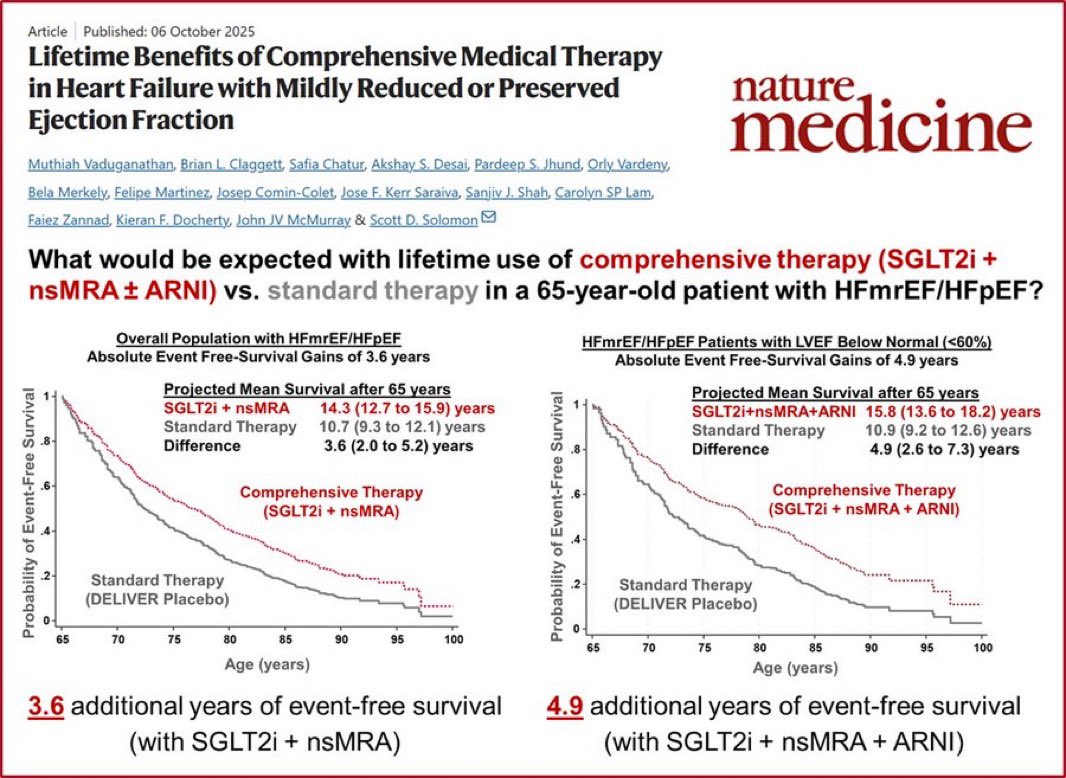
💊🫀 What does optimal therapy actually buy a 65-year-old with HFmrEF/HFpEF?
From Nature Medicine (Vaduganathan et al., 2025):
🔴 SGLT2i + nsMRA → +3.6 years event-free survival
🔴 SGLT2i + nsMRA + ARNI → +4.9 years (LVEF <60%)
vs. standard therapy alone.
Nearly 5 extra years without hospitalization or death.
💡 These drugs exist. They work. Are all eligible patients receiving them?
Vaduganathan et al. Nature Medicine, Oct 2025
@mvaduganathan
#HeartFailure #HFpEF #HFmrEF #SGLT2i #ARNI #Cardiology #MedTwitter #NatureMedicine
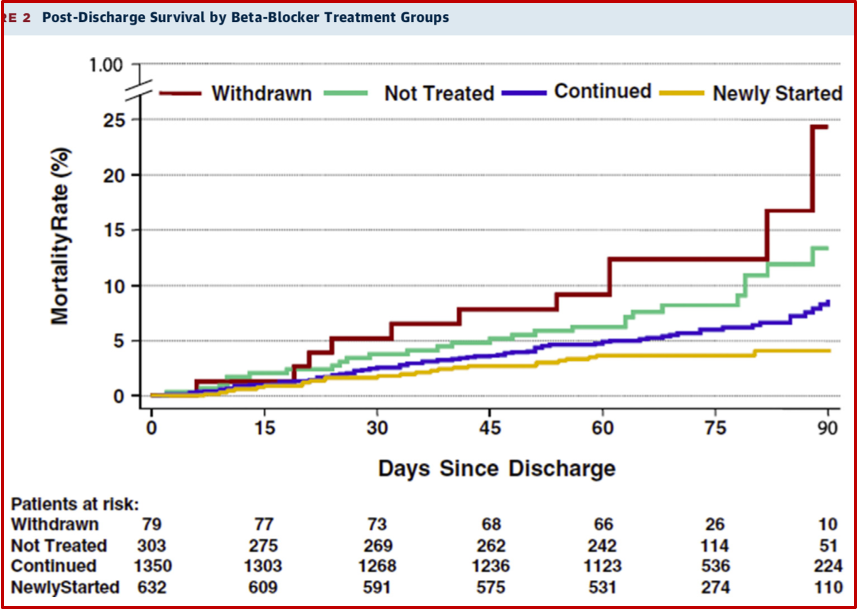
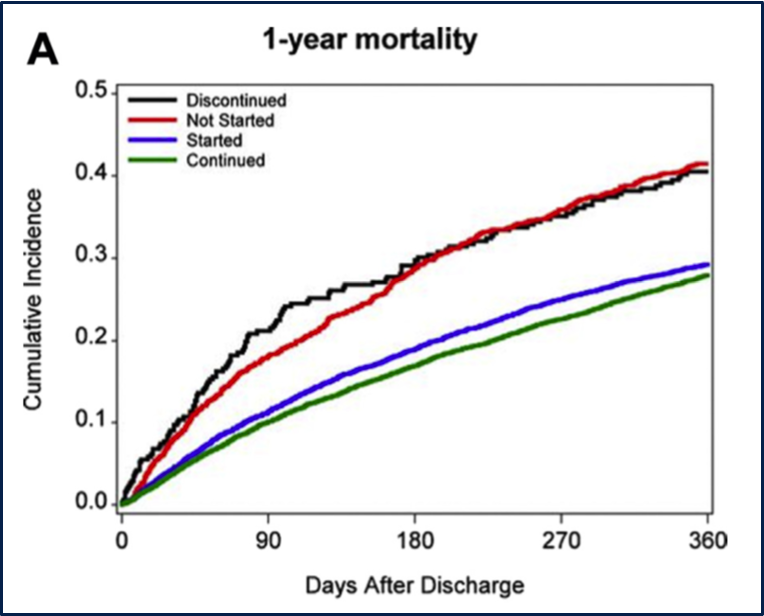
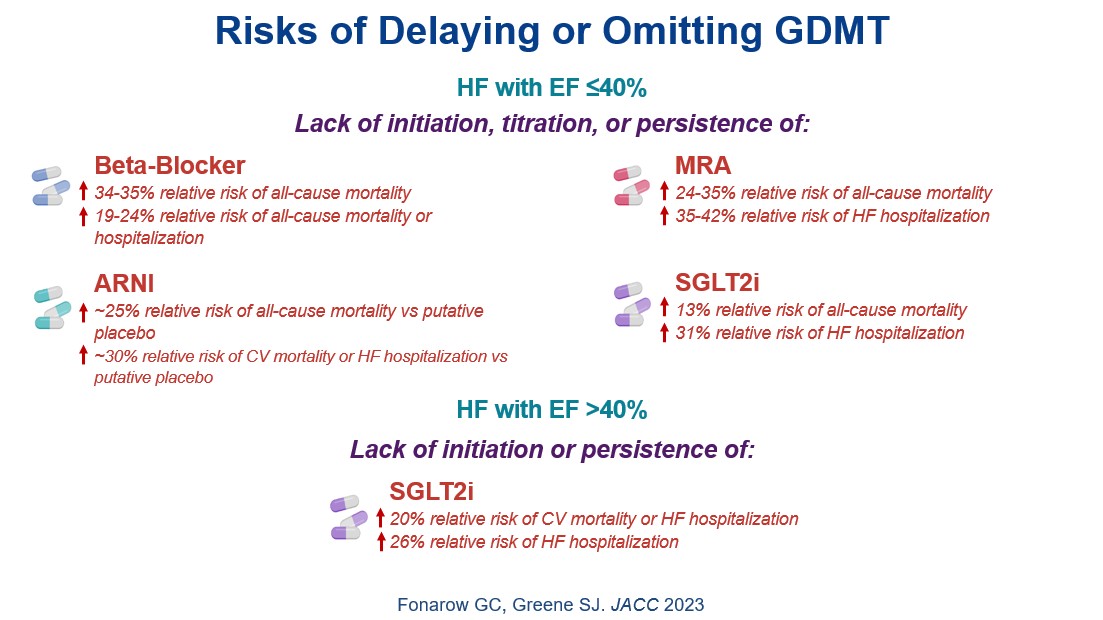
Every admission = opportunity to improve #GDMTWorks! MD, RN, PharmD, etc; QD-BID labs; vitals 4-6x/day... all hands on deck! Take advantage! Major consequences of stopping or not starting! @SJGreene_md@mvaduganathan@gcfmd@JavedButler1@UCSFIMChiefs
10.1016/j.jchf.2018.06.011
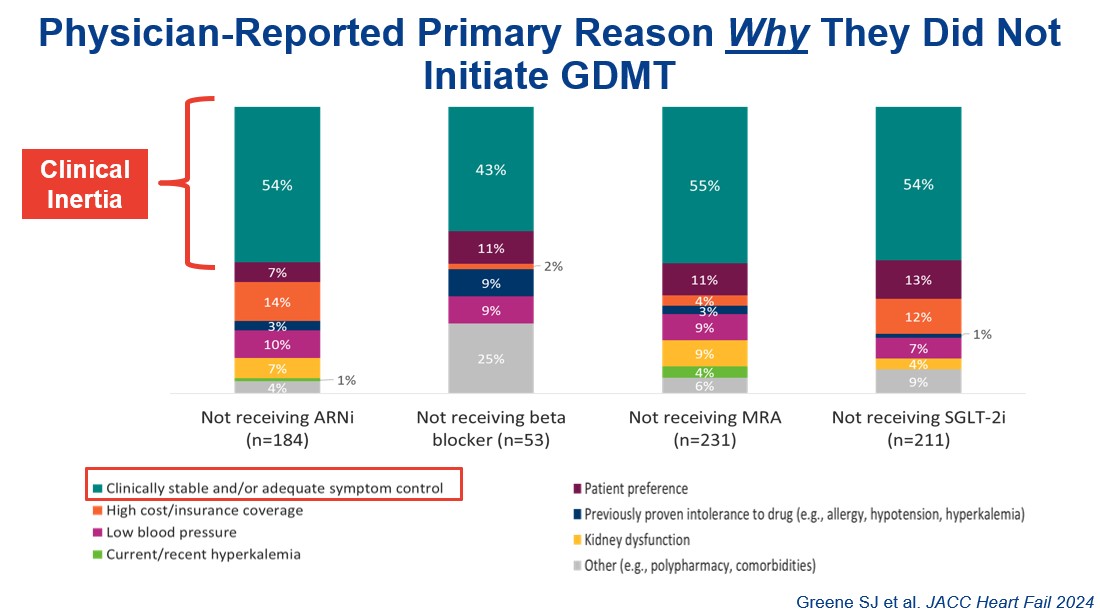
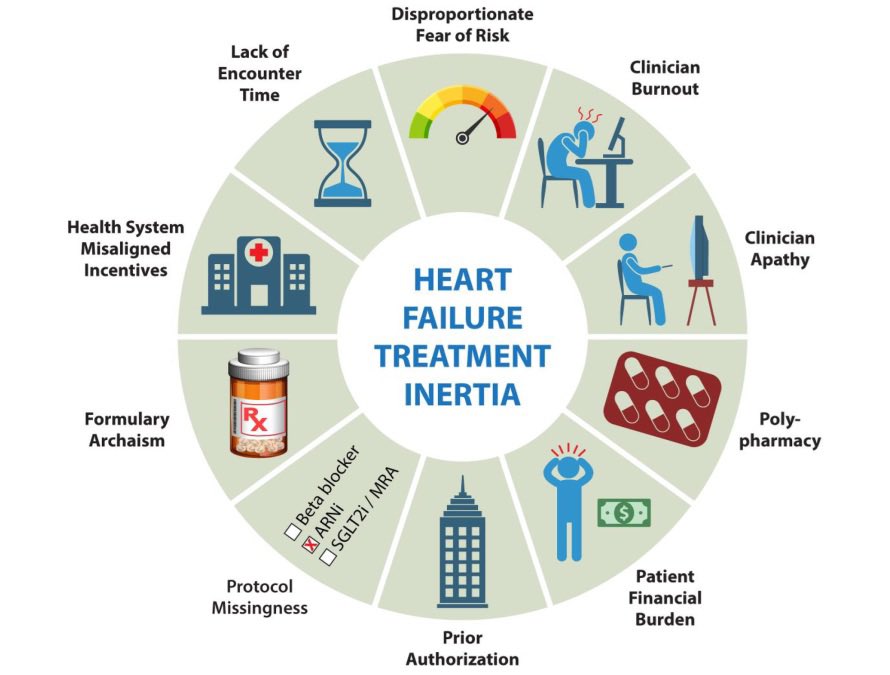
Why are 100% of eligible patients with HFrEF w/o CI or intolerance not receiving quadruple GDMT in 2026?
ARNI+BB+MRA+SGLT2i ➡️
75% ⬇️ all-cause ☠️ (26% ARR, NNT=4, 24 months)
85% ⬇️ HF 🏨 (33% ARR, NNT=3, 24 months)
Extend median survival by 7-11 years
💊 Cost $78/month
Patients newly diagnosed w/ #HFrEF
>9 of 10 deaths occur among pts who never receive ≥1 💊 proven to ⤵️⤵️⤵️death....
...in a nationwide health system w/ minimal or $0 patient copays for #GDMTworks
🤯🤯🤯
@gcfmd@JavedButler1
https://t.co/S1KBq4eVxG
HFrEF in 2026
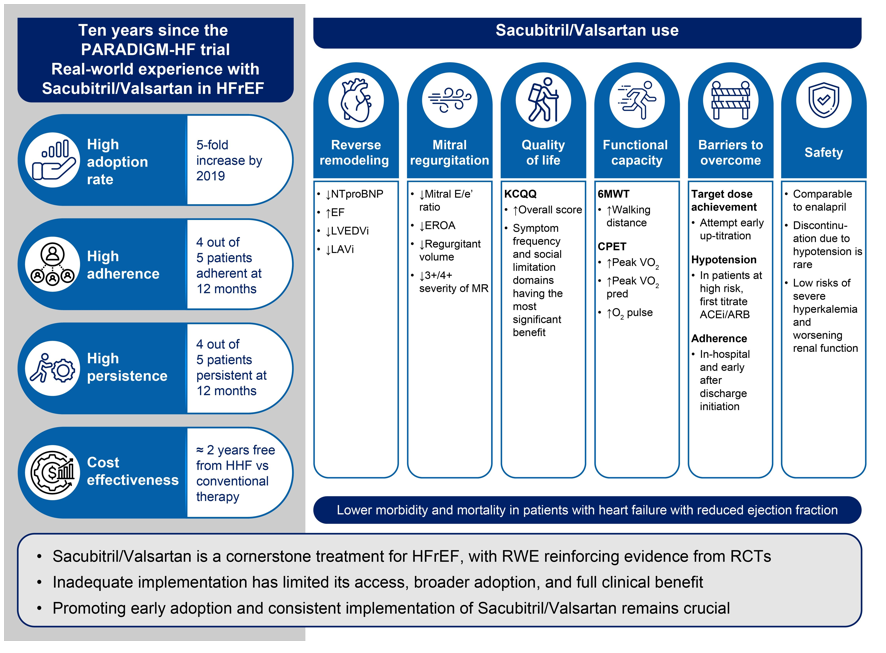
Most common Rx is use still ACEI/ARB+BB, despite Class 1 recommendation for quadruple GDMT
ACEI/ARB+BB ➡️ ARNI+BB+MRA+SGLTi
Extends median survival:
6.3 years
75.6 months
2300 days
55,188 hours
3,311,280 minutes
💊s cost extra $70 per month
Worth it?