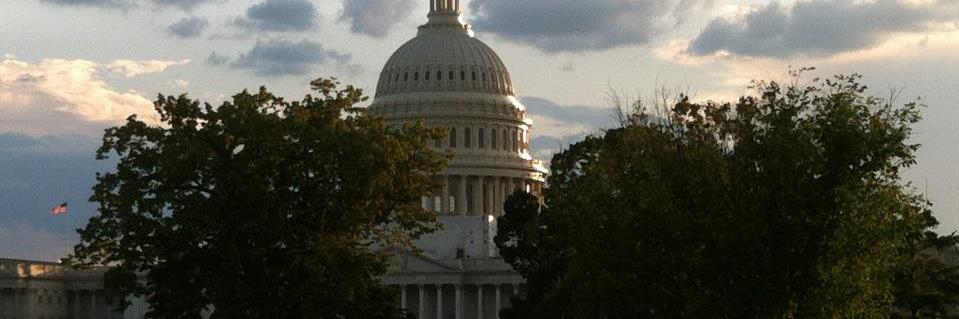
“And what about our sins? Slavery was the original sin, and I won’t sand it down. The founders knew it. Jefferson knew it, and he owned slaves — the hypocrisy was staring right at them, and they kept kicking the can down the road. But here is what a poisoned telling of our history leaves out: the New England colonies began rejecting slavery before England itself did. And when the reckoning finally came, hundreds of thousands of men died on battlefields to make other men free. “As He died to make men holy, let us die to make men free,” read the original lyrics of the Battle Hymn of the Republic. That’s propitiation. One man suffers so others go free. A nation that will bleed that much to right its own wrong is not an evil nation. It is a great one, straining toward becoming a more perfect one. We had a black president. We had a black vice president. Our Secretary of State is the son of Cuban refugees. Anyone telling you the story that nothing here ever gets better is selling you something.”
https://t.co/x00baUJNoo
Compare Calvin Coolidge on America’s 150th anniversary:
“It is often asserted that the world has made a great deal of progress since 1776, that we have had new thoughts and new experiences which have given us a great advance over the people of that day, and that we may therefore very well discard their conclusions for something more modern. But that reasoning can not be applied to this great charter. If all men are created equal, that is final. If they are endowed with inalienable rights, that is final. If governments derive their just powers from the consent of the governed, that is final. No advance, no progress can be made beyond these propositions. If anyone wishes to deny their truth or their soundness, the only direction in which he can proceed historically is not forward, but backward toward the time when there was no equality, no rights of the individual, no rule of the people. Those who wish to proceed in that direction can not lay claim to progress. They are reactionary. Their ideas are not more modern, but more ancient, than those of the Revolutionary fathers."
1. Vance does not understand economics or American economic history at even a basic gradeschool level.
2. His takes on both subjects are primarily motivated by the fact that he wants a right wing version of the New Deal.
FIFA would do well today to put out a brief and simple statement saying, the USA-B&H officials did not abide by the proper VAR protocols and wrongly awarded Balogun a red card, and thus the one match suspension has been voided. Will they do it? No. But they'd be right to.
Cristiano Ronaldo got a 3 game red card suspension and FIFA just up and decided he was simply too big of a superstar to serve it
So forgive me if I'm not really interested in what "mechanisms" FIFA says are or aren't at our disposal here as it's just Calvinball all the way down
One of the richest men in all of America signed the Declaration of Independence knowing it could cost him everything. Then he left home to serve, died far away in a borrowed town, and never came back. Meet Philip Livingston.
This guy was not a scrappy underdog. Just the opposite. He was born in 1716 into the Livingston family, one of the wealthiest, most powerful dynasties in colonial New York. Manor lands, a Yale education, and a shipping empire he built into one of the biggest merchant fortunes in New York City. He had everything the British system was designed to reward.
And he spent that fortune building things that still exist. He helped found King's College, which you know today as Columbia University. He helped start the New York Society Library. He helped create the New York Chamber of Commerce. The man was basically constructing the civic backbone of New York with his own money and time.
Here's the thing though. He was not some hothead revolutionary. He actually feared independence. He worried it would bring chaos and disorder, and he was cautious about the whole idea for a long time. This wasn't a man itching to burn it all down.
But when New York finally gave its delegates the go-ahead, Livingston signed. He put the name of one of the great fortunes in America onto a document the crown treated as treason. A rich man betting his wealth against the empire that made him rich.
And the war came straight for him. When the British took New York, they seized and used his properties. He started selling off his holdings to help fund the fight, watching the empire he'd defied pick apart the life he'd built.
Then comes the ending that gets me. His health was failing, and he knew it. Congress had been driven out of Philadelphia and was meeting in the small town of York, Pennsylvania. Livingston could have gone home to rest. Instead he told his family he probably wouldn't see them again, and he went to York to keep serving anyway.
He died there in June 1778, in the middle of a session of Congress, far from home. He's buried in York, Pennsylvania to this day. He never made it back to the New York he spent his whole life building.
A man who had every reason to stay comfortable and loyal, who gave his fortune and his final months to a country he wasn't even sure would work.
Philip Livingston. He died at his post, a long way from home.
America at 250.
July 2 is one of my favorite dates because of John Adams.
July 2, 1786, the delegates are exhausted, the debates have dragged on for weeks, and the weight of history presses down like the summer humidity.
On this very day, July 2, 1776, Adams and his allies push the Continental Congress to vote for independence from Great Britain. The resolution passes. The colonies are no longer subjects; they are free, or at least determined to become so.
Adams writes to his beloved Abigail that day: “The Second Day of July 1776, will be the most memorable Epocha, in the History of America… It ought to be solemnized with Pomp and Parade, with Shews, Games, Sports, Guns, Bells, Bonfires and Illuminations from one End of this Continent to the other from this Time forward forever more.”
He was off by two days. July 4 would get the glory when the Declaration was formally adopted, but he nailed the spirit.
As we race toward America 250 in 2026, this moment feels electric. Two hundred fifty years ago, a group of imperfect but courageous people bet everything on the radical idea that governments derive their power from the consent of the governed. They chose hope over fear, unity over division, and liberty over submission.
Today is all about John Adams!
NEW: Since Donald Trump’s re-election, the Supreme Court has issued 44 orders relating to the president.
The court sided with him 25 times, against him 11 times, and issued mixed rulings 8 times.
Here is how each justice voted each time (“likely vote” = presumed to be in the majority if they did not state a dissent):
"VAR made their recommendation to the referee based on slow-motion and still replays, which is not aligned with VAR protocols."
@andydaviesref believes VAR made the incorrect decision on Folarin Balogun's red card.
https://t.co/dXTyO1KwLY
Kyle Davidson says the Blackhawks have some two-way contracts coming but nothing else right now.
They’re still “looking into what’s available” but would be comfortable bringing this current group into the season.
This is with Senate GOP holding the line. Imagine the taxes needed to fill the budget deficit if Democrats had full control and spent our reserves already…
Inbox: Pennsylvania brought in $48.9 billion this year, per the Department of Revenue. That's more than anticipated, but still $1.2 billion less than the $50.1 billion in spending the state approved for the just ended fiscal year.
July 1, 1776 — An informal vote revealed independence did not yet have unanimous support. Pennsylvania and South Carolina opposed the measure, Delaware remained split, and New York abstained. Congress delayed the final vote until the next day.
The vote that would create the United States was deadlocked, and the man who could break the tie was eighty miles away, dying of cancer, on the wrong side of a thunderstorm.
His name was Caesar Rodney. On the first of July 1776, while Congress argued itself toward independence in Philadelphia, he was stuck back in Delaware. He was tamping down Loyalist trouble, in constant pain from the cancer eating at his face and fighting for breath due to his asthma.
Then the letter came. Delaware's two delegates in Congress were split. One for independence, one against. Without a tiebreaker, the colonies would not stand united. And a divided front was exactly what the Crown was counting on.
He did not hesitate. He climbed onto his horse near midnight and rode straight into the storm. Lightning split the sky. The roads turned to sludge. A journey that normally took two days but he made it in eighteen hours. He stopped only to change horses, soaked with every mile.
He reached Independence Hall on the morning of July 2 just as the vote was called, still in his boots and spurs. Caked in mud. Thomas McKean never forgot the sight of him standing in the doorway.
Rodney walked in and cast his vote for independence. It broke Delaware's tie, and with that, not a single colony stood against the break from Britain.
On this day, 250 years ago, a dying man rode all night through a storm so America could be born.
America 250 🇺🇸
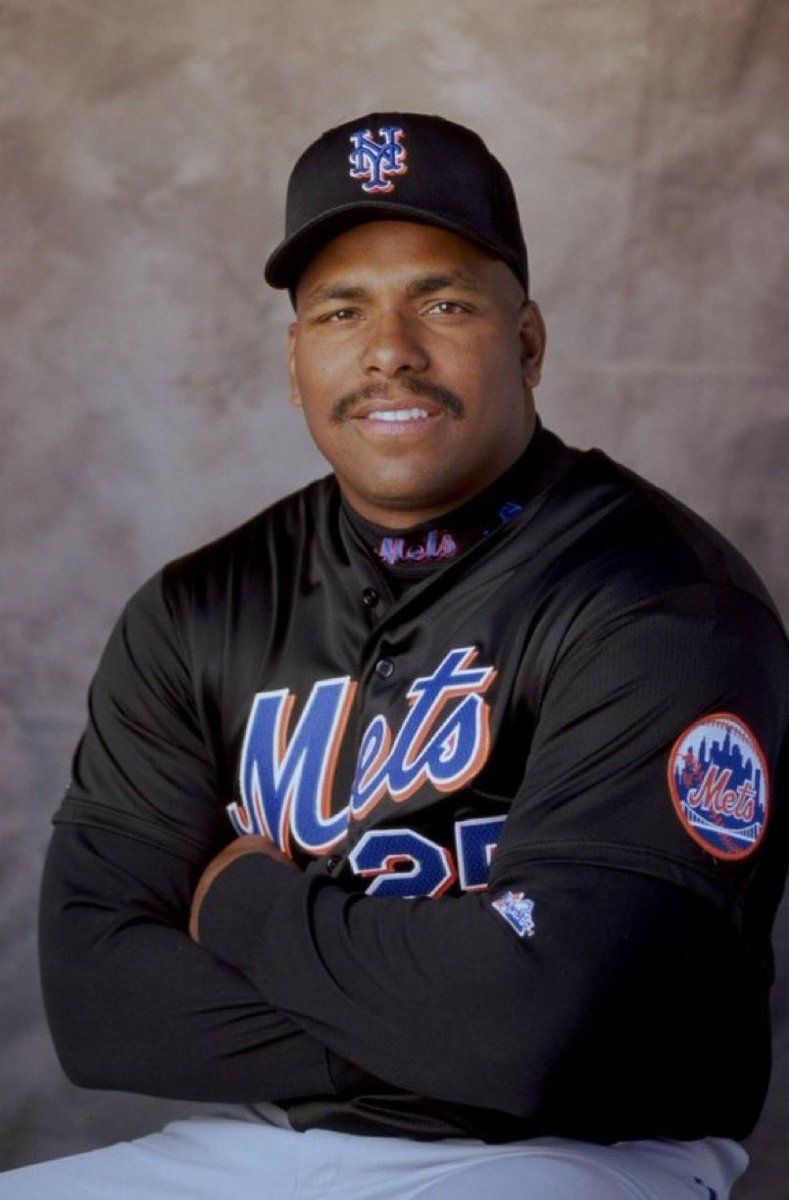
Happy Bobby Bonilla Deferral Day: Bonilla is set to collect another $1.193 million from the New York Mets today, as he will each July 1st through the year 2035.
Werenski enjoys Columbus. He should talk his buddy Dylan Larkin into joining him with CBJ. Together, change the narrative in Ohio. Waddell can send Fantilli to Detroit, then move Marchenko for multiple pieces. Shake it up!! Just a thought …