Just 5 minutes of prayer could have surprising health benefits, study finds | Khloe Quill, Fox News
Adult patients experienced significant relief from pain and anxiety after just five minutes of in-person prayer, as found in a randomized controlled trial.
The study, led by researchers at the University of Maryland School of Medicine’s Department of Family and Community Medicine, compared the effects of direct prayer to the effects of listening to music, revealing that prayer provided greater and more sustained relief for both symptoms.
"Prayer is powerful and beneficial on many levels," Jesse Bradley, pastor of Grace Community Church in Washington, told Fox News Digital.
According to statistics cited in the study, prayer is the most used form of complementary medicine in the United States, relied on by 43% of Americans.
The researchers focused on a practice known as proximal intercessory prayer (PIP), which is defined as in-person, face-to-face prayer directed toward another individual’s well-being.
The research team recruited 180 adult patients from a family medicine waiting room, according to a press release. All participants had previously reported experiencing moderate to severe pain, anxiety or both.
Following their standard medical appointments, the patients were randomly assigned to one of two groups: the prayer group, in which participants received five minutes of in-person Christian prayer delivered by a trained volunteer, and the music group, where they spent five minutes listening to music.
The researchers then tracked changes in the participants' self-reported pain and anxiety levels at multiple intervals: immediately after the five-minute session, at two weeks and at six weeks.
"It was very well-received," Katherine Jacobson, MD, assistant professor of family and community medicine at the University of Maryland School of Medicine, told Fox News Digital. She noted that 97% of participants said they were "neutral or supportive" when asked about having this kind of prayer available as part of their medical visits.
The study, which was published in The Annals of Family Medicine, revealed that while patients in both groups showed improvements, those in the prayer group reported substantially greater relief.
Bradley, who was not involved in the study, described the transformative power of prayer through "healing and comfort," and shared that he himself once went through a long, painful recovery process.
"Daily prayer was essential in my healing journey," he shared.
For pain reduction, the individuals who received in-person prayer experienced greater drops in pain intensity immediately following the session. This superior level of relief remained evident during the two-week follow-up compared to the music group, the researchers found.
For anxiety reduction, the benefits of prayer were even longer-lasting. The prayer recipients reported significantly greater reductions in anxiety immediately after the session, and these positive effects remained statistically significant at both the two-week and six-week checkpoints.
"We expected that patients who expected prayer to work would benefit more, but that wasn't what we found," Jacobson said.
"Religious affiliation, religious intensity and expectancy of healing did not predict who improved," he went on. "Benefits appeared across a wide range of patients, including those not of the Christian faith and those who did not expect the intervention to help them."
The study had some limitations, the researchers acknowledged, primarily that it could not prove that prayer itself caused the improvements.
The team also noted that patients receiving prayer had human contact, while the music control group did not. The eye contact and gentle laying of hands from the prayer volunteers may have had an impact, as that type of contact is known to reduce pain.
The authors hope to conduct future studies with a control group that receives interpersonal contact but no prayer.
"For physicians and health systems, the study supports continuing to ask patients about spiritual care preferences as part of whole-person care, and considering whether trained Christian volunteer prayer practitioners could be integrated into outpatient settings for interested patients," Jacobson said.
The researchers suggest that PIP could serve as a low-cost, non-pharmacologic and effective complement to standard medical care.
Rather than replacing traditional treatments, the authors indicate that this type of brief, faith-based intervention could be integrated into primary care settings to help manage pain and anxiety.
https://t.co/9uXwPEERlq
In a randomized trial of family medicine patients with pain or anxiety, five minutes of in-person intercessory prayer led to greater and sustained symptom improvement versus a music control.
Read original research article here: https://t.co/yCk9YVwUEg
@UMmedschool
Medical science make new cures possible that previously would have been miracles. My new book Proving a Miracle explores what cures are possible. https://t.co/qZCYVueXBZ
Our new randomized controlled trial of in-person healing prayer for pain and anxiety in a medical setting – five minutes of healing prayer vs. music control causes improvements lasting weeks https://t.co/wJuOm0y6nn
Do these findings require a supernatural explanation? No. Spiritual practices can be good for your health, and mind-body and placebo effects can be strong. 2/3
Thanks Luiz! It's a fine line to walk between science and spirituality, but I think you'll find that the book stays both properly grounded in science and balanced in its treatment of spiritual practices. I've taken some inspiration from @mindandlife on how to study the intersection
Most of you know me as a professor working on computational and cognitive neuroscience, but today I’m announcing a new project, one very personal. Over 20 years ago I was diagnosed with a brain tumor. I thought my life would end within a few years, but that started me on a path of looking for a miracle. Since then I’ve seen many remarkable healings around the world, including my own, and that led me deep into a research direction of investigating miraculous healing claims, analyzing them from the perspective of neuroscience and psychology, including placebo effects, conversion disorder and more. Some of what I found may surprise you. The story of that journey is in my new book Proving a Miracle, on sale today from @HarperCollins . https://t.co/zigXHQklHa
The number of lives Anthropic has changed by allowing such generous limits on the $200 plan is hard to estimate.
It has completely transformed mine. I was able to achieve some of my wildest goals just by throwing more compute at problems.
I don’t know whether this was a careful business decision, or came from a place of genuine benevolence.
Either way Anthropic has done more good for society than almost every single company in the history of the world.
I fully appreciate the need for safety, but sometimes you need to —dangerously-change-the-world
Did you log in today out of your own 'free will'? I study what gives you that feeling - and what parts of your brain may be involved in creating it. Just presented my work on the neural correlates of the experience of free will at #SPP2025. Manuscript in preparation!
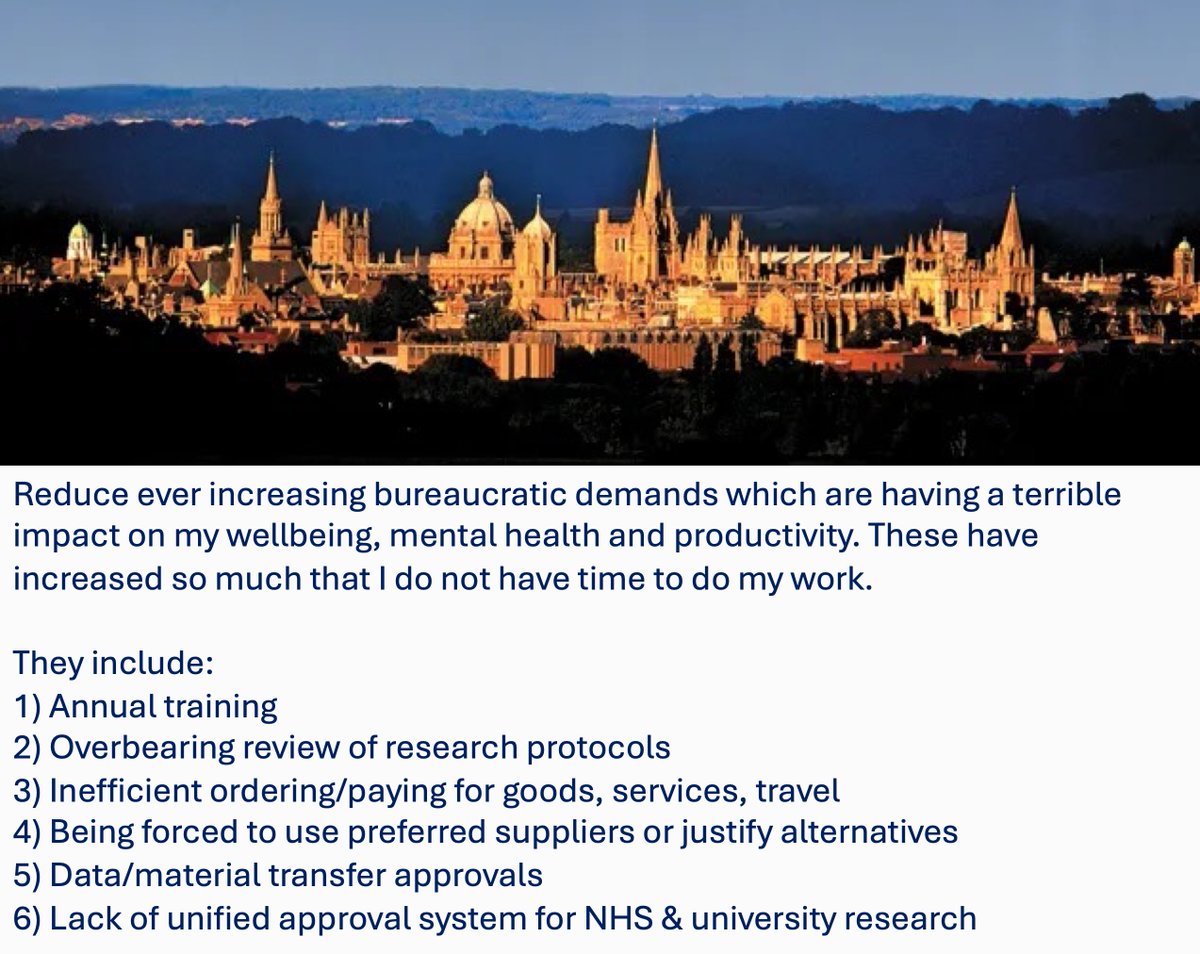
At @UniofOxford it's time for the staff survey. Here's my answer to: "What is the main thing the University could do to help you to progress your career?"
Please RT and respond similarly to the survey if you agree. It's the only way to get our points across!
I retired from the American University system at age 49 (after 26 years) so have no direct stake in this.
But am here to say that drastically cutting NIH & NSF funding and reducing grant “overhead” to 15% are among the dumbest ideas I have ever seen.
America will never be the same. Science will take a huge hit; academic stars will leave; university reputations will crumble, and homegrown talent will be even harder to find.
Asia and Europe will profit.
Epic unforced errors.
Thrilled to be at #ACNP2024 – amazing science and wonderful connections, old and new!
Excited to present my poster: Using an MRI-compatible vaping device, we studied smokers receiving nicotine or monetary rewards in an fMRI. Curious about the findings? Stop by Tues, 5–7 PM :)
@KordingLab If a goal is specified, there is evidence the brain (esp. vmPFC) plans by recursively subdividing the trajectory. No prior knowledge needed (neurips2024 spotlight) https://t.co/qJ1Z4d2JmL