The last major financial regulation bill was passed 15 years ago in response to the 2008 financial crisis.
Tomorrow, the signing of the GENIUS Act cements the US’s future in being a leader in truly innovative financial technology – stablecoins. This moment is a historic one, and I, for one, am looking forward to all that is to come as a result of this transformational legislation.
Thank you to the bipartisan leaders that got it done – @RepFrenchHill, @GOPMajorityWhip, @CongressmanGT, @RepAngieCraig, @RepDustyJohnson, @RepDonDavis, @RepBryanSteil, @RepRitchie, @SpeakerJohnson, and @RepJoshG.
ISO 20022 is LIVE 🔥
The chosen ones are already in position.
The future of regulated finance won’t run on speculation, it’ll run on $XRP $XLM $XDC $QNT $HBAR $ALGO $IOTA
Bank rails are upgrading and they’re building the foundation
Which ones are in your bag? 👇
⚠️ INTERESTING DISCOVERY NO ONE HAS MENTIONED…
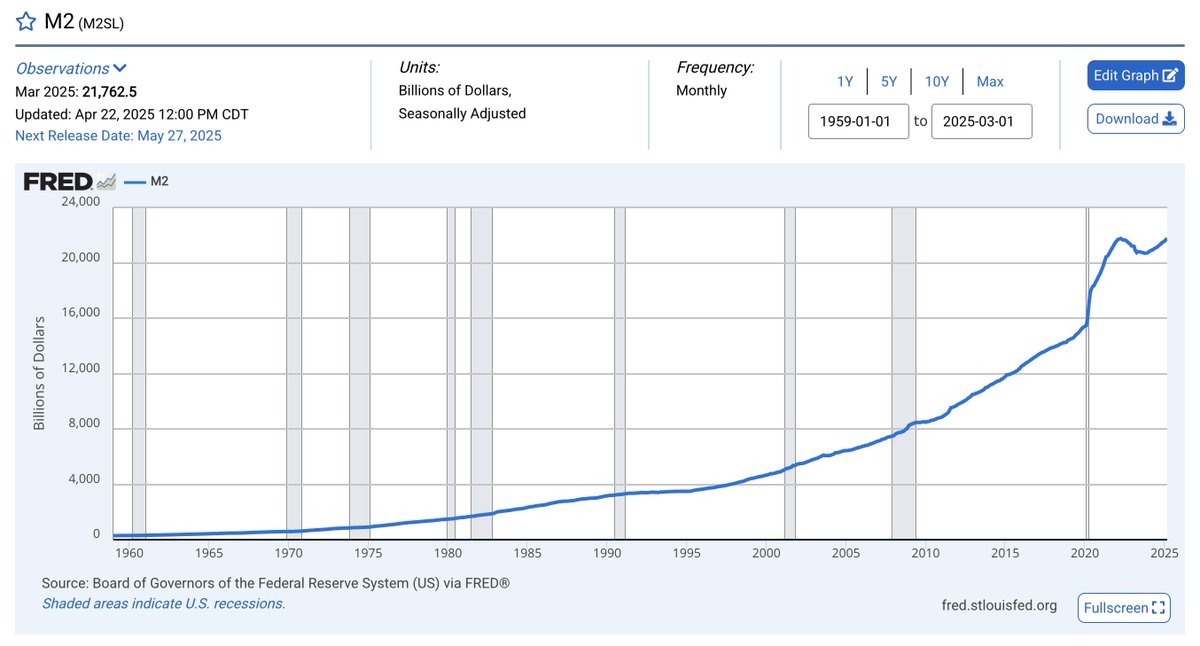
The M2 money supply just quietly climbed to $21.76 trillion.
That’s $210 billion injected since January. A month-over-month growth of approximately 0.42%.
But where’s that money going?
It’s not showing up in stocks. Bonds are flat. Real estate’s stalled.
Yet crypto—still beaten down—is showing early signs of life.
If you know how capital moves, this is your signal.
M2 rising = risk appetite returning. Liquidity always finds a home.
And the last time M2 spiked like this?
Bitcoin doubled within months.
They won’t announce the pivot. They never do. But the data whispers first.
This is it – the moment we’ve been waiting for. The SEC will drop its appeal – a resounding victory for Ripple, for crypto, every way you look at it.
The future is bright. Let's build.
🚨SCOOP: Two well-placed sources tell me that the @SECGov vs. @Ripple case is in the process of wrapping up and could be over soon.
My understanding is that the delay in reaching an agreement is due to Ripple's legal team negotiating more favorable terms regarding the August district court ruling, which imposed a $125M fine on the company and included a permanent injunction preventing the company from selling $XRP to institutional investors.
The argument, I’m told, is that if the new SEC leadership is wiping the enforcement slate clean for all previously-targeted crypto firms because it believes regulatory clarity will resolve the underlying issue, why should Ripple still be penalized? Accepting the Torres ruling as it stands would mean that Ripple is essentially agreeing to admit to wrongdoing — but now the SEC itself is seemingly unsure whether any wrongdoing occurred.
There’s no real playbook for this kind of thing which could explain why this case is taking longer to resolve than the rest. Stay tuned.