Our new paper on epigenome editing is out!
We mapped which effector domains regulate transcription across genomic, cell type and DNA-binding domain contexts. Then we built new gene repressor and activator tools with improved efficiency & deliverability
https://t.co/VqRLtNFey7
Delighted to share new work from our lab: CRISPR fusion proteins to boost PRECISE genome editing (TruEditors).
We wondered what if we could “turn on” and test every gene in the human genome to accelerate protein design?
Does the noncoding genome actually carry more genetic information than coding seqs? Motivated by this question we mutated every bp in the 10kb MYC locus. Results are even more exciting: Decoding the MYC locus reveals a druggable ultraconserved RNA element https://t.co/MynOLLNvXi
Moving beyond 300 base pairs…
@Harvard researcher, Josh Tycko, used Twist’s Multiplexed Gene Fragments (MGFs) in a novel massively parallel reporter assay, leading to the discovery of therapeutically relevant effector sequences.
Read the blog here: https://t.co/41zbkn1QB1
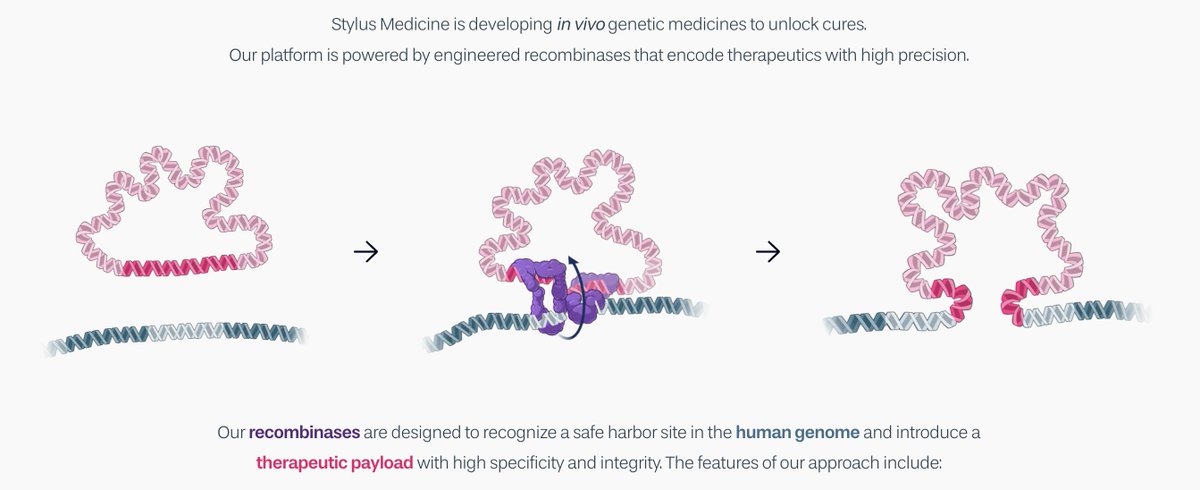
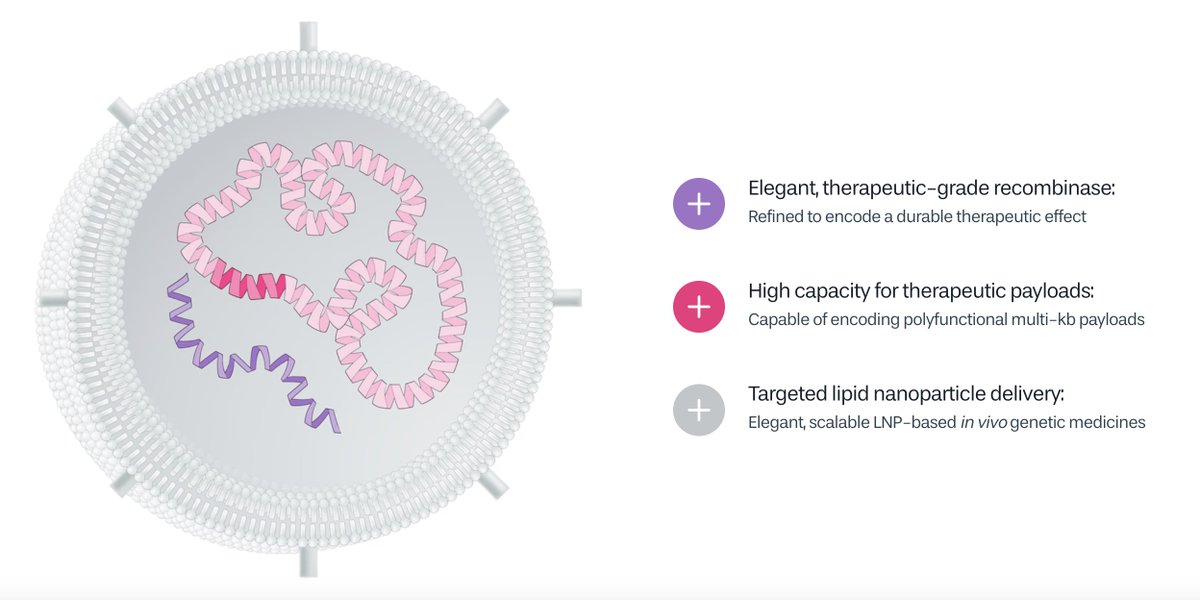
@stylus_medicine emerges from stealth to develop in vivo genetic medicines
The company was co-founded by Stanford professors, who received funding and support from SPARK https://t.co/kMJ6GQIuFA
The machine-guided humanization paper is out after peer review! https://t.co/wPbHYMDhhV Key contributions from current and previous international students on visas, representing 5+ countries.
In a medical milestone, a customized base editor was developed, characterized in human and mouse cells, tested in mice, studied for safety in non-human primates, cleared by @US_FDA for clinical trial use, manufactured as a complex with an LNP, and dosed into a baby with a severe, rapidly progressing genetic disease... all in an astounding 7 months. Best of all, the infant patient shows apparent benefit. Congratulations to @kiranmusunuru, Rebecca Ahrens-Nicklas, and other team members for this heroic and inspiring effort, which has implications for the hundreds of millions of patients that suffer from thousands of genetic diseases.
https://t.co/wsgvvRYPVM
Recombinases are simple short proteins that are sufficient to integrate long DNA with high specificity
Combined with simple lipid nanoparticles, this could be a way to make durable cell therapies affordable and distributable
Stylus originated from a wonderful scientific collaboration discovering serine DNA recombinases with Ami Bhatt, @BintuLacra, and @MCBassik spearheaded by star researchers @mgdurrant@AlisonFanton@JoshTycko
A huge thanks also to Cosmas Giallourakis and @eminkow for their leadership of the early Stylus build and the daring to build simpler, cost-effective genetic medicines
Delighted to publicly launch @Stylus_Medicine today to program the human body into a cell therapy factory to fight cancer. It's a privilege to work with Emile and Jason as CEO/CSO of Stylus and our earliest believers Josh Resnick/Ness Bermingham from RA Capital + @khoslaventures
How Multiplexed Gene Fragments are Expanding What’s Possible in Molecular Biology!
@TwistBioscience@JoshTycko
Moving Beyond 300 Base Pairs | Twist Bioscience https://t.co/ZVG9GWkxs8
So we beat on. Gene/cell therapies often use proteins that could be recognized/rejected as non-self by our immune system. We combine algorithms to build proteins that are therapeutically relevant and can masquerade as our own parts https://t.co/8UqRE8TewB
Joining the culture war! We tried liquid culture to re-amplify a lenti sgRNA plasmid library from @Addgene.
N=1 but it wasn't worse than our traditional large plate protocol, and seems even better in uniformity
and liquid culture is easier to do
thanks @nmateyko@CarldeBoerPhD
Do you really need to spread plasmid libraries on mountains of plates to get uniform growth, or can you just dump them in a flask and call it a day? We make huge plasmid libraries in the de Boer Lab, so we tested whether culture method really matters. 1/ https://t.co/3HbkGnBw6G
Today we report that an engineered skin bacterium, swabbed gently on the head of a mouse, can unleash a potent antibody response against a pathogen. Could lead to topical vaccines that are applied in a cream. @DjenetBousbaine led the charge... @Nature 1/55
A dream come true: in 2004 I started thinking about counting microstates to predict gene expression with @JKondev Rob Phillips @HernanGGarcia. 20 years later we can measure them: https://t.co/fz6kKAsdpD Thank you @WJGreenleaf@bgrdoughty@MichaelaThinks Julia and all co-authors!
Incredibly excited that our paper linking single molecule states of TF binding to gene expression using quantitative thermodynamic models is out in Nature today. An amazing collaboration with the Bintu Lab. Congrats to Ben, Michaela, and Julia! https://t.co/4zjMOlOgVV
🧬 Thrilled to share our latest work on engineering precise DNA recombinases for targeted genome integration! Through directed evolution & protein fusions, we achieved over 50% efficiency & 97% specificity for multi-kb DNA cargo insertions. Big thanks to all co-authors -
Our new paper on epigenome editing is out!
We mapped which effector domains regulate transcription across genomic, cell type and DNA-binding domain contexts. Then we built new gene repressor and activator tools with improved efficiency & deliverability
https://t.co/VqRLtNFey7