🚨 إنجاز طبي يزلزع عالم الأعصاب: طريقة خارقة لتنظيف الدماغ من ترسبات الزهايمر في 10 دقائق فقط.. بدون جراحة أو أدوية! 🧠
في اختراق علمي يغير قواعد الطب ومستقبل الب��رية، نجح الباحثون في فك شفرة تنظيف المخ بطريقة لم تكن تخطر على بال أحد
📌 كيف يعمل "نظام الصرف الصحي" الخفي في دماغك؟ 👇
When we say sample to discovery, this is what we mean.
We send back results you can act on: volcano plots and pathway enrichment for RNA-Seq, species-level breakdowns for microbiome samples, annotated plasmid maps, and alignments that point you straight to the mismatch.
Explore them interactively, then download publication-ready figures for your next paper or lab meeting. 🦖
La SCB invita al I Concurso de Imágenes Científicas
para los asistentes inscritos en la V Reunión Anual. Forma parte de este certamen que busca visibilizar el punto de encuentro entre el arte, la biología y las ciencias de la computación.
Bases y postulación en la descripción.
🚨 STOP DELETING PHOTOS WHEN YOUR PHONE SAYS “STORAGE FULL.”
The real junk is hiding somewhere else entirely.
I freed up 22GB in 15 minutes without deleting a single memory.
Here’s exactly where to look 👇
A new Review highlights the mechanisms of molecules that disrupt translation in an amino acid or mRNA sequence-dependent manner
https://t.co/2fcySo7LoI
.@IRBBarcelona launches 'Cancer Detective', an interactive online simulation to bring personalized medicine to schools and the public https://t.co/h2NmCqlS55
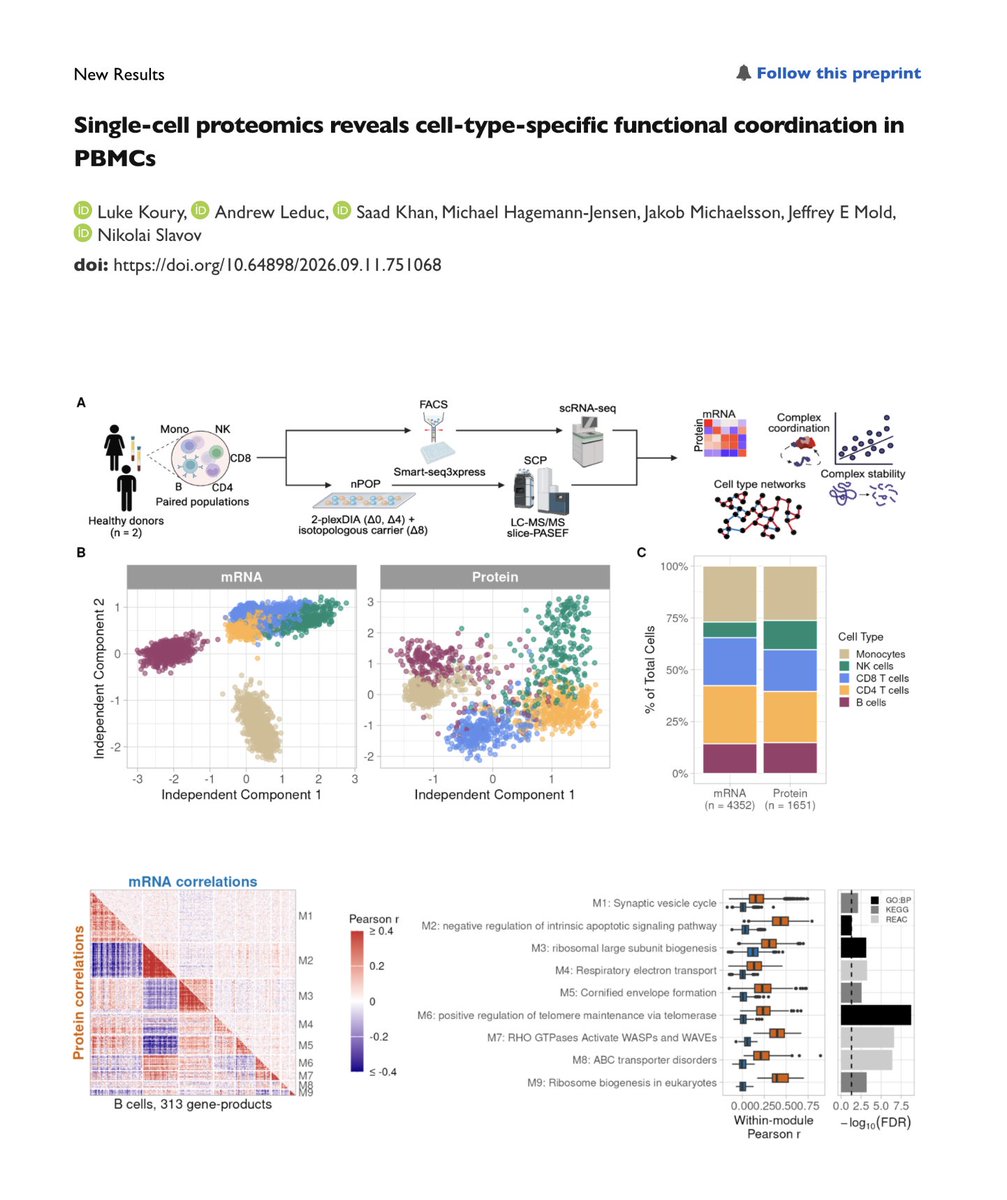
Millions of PBMCs have been analyzed by scRNA-seq. Have we seen it all ?
We profiled thousands of single PBMCs — proteomes and transcriptomes side by side — and uncovered functional coordination undetectable in the deepest scRNA-seq we could perform.
https://t.co/JoozcYoBrm
1/
A Beginner’s Guide to Claude Code for (Non-Technical) Academics
Part I: Introduction
This is a beginner's guide to Claude Code written specifically for non-technical academics. I have written in simple and accessible language.
You don’t need any technical background to understand this guide or to use Claude Code.
If you can write sentences in English, you can use Claude Code. You will only need to be patient and attentive.
Out here one bite can turn breath into stillness. 💔
A pregnant honey badger, bitten by a black mamba, fights to reach shelter to deliver her cubs. Inside an old serval's den, 4 fragile lives are born while venom takes over her body.
And then the unexpected happens - the serval doesn't hunt. It protects.
A mother broken, but her love doesn't retreat. And a protector no one expected. ��
Deep learning meets bioinformatics I/O: DeepBioP is a Rust core with Python bindings for feeding biological data (FASTQ and beyond) into ML pipelines efficiently. pip install deepbiop, get Rust-speed preprocessing without leaving your notebook. 🧠🦀
https://t.co/JSMgX3RgE3
Excited to release AlphaGenome Atlas 🧬 We used AlphaGenome to predict the regulatory impact of all 9B possible SNVs in the human genome. We collaborated with amazing scientists to analyze and apply it, and developed a portal to browse the genome using this new lens 🔬
🌐 Portal: https://t.co/Hq3ZLGXB7M
📖 Blog: https://t.co/cF4TsZkhwj
📄 Preprint: https://t.co/aIhrGELqr8
🧵 1/6
Recién publicado en @Nature este estudio de metaanálisis que examina 61 estudios empíricos de aplicación de IA educativa en ámbito STEM. Resultados mayoritariamente muy positivos tanto en el plano cognitivo como en el afectivo.
Link:
https://t.co/Tvhh2IXqaG
AlphaFold: predicting the protein structure from amino acid sequence for >200 million proteins (awarded @NobelPrize)
Today
Alpha Genome Atlas: predicting the molecular impact of all 9 billion variants of the human genome
https://t.co/DkEtZofJ8s
🤖 Una de las universidades más reconocidas de Finlandia tiene un curso online en español para aprender inteligencia artificial desde cero, incluso si nunca has programado.
La Universidad de Helsinki enseña desde los fundamentos de la IA hasta machine learning, redes neuronales y aplicaciones reales, con ejercicios prácticos y a tu propio ritmo.
Acceso al curso directo aquí: https://t.co/IHy22RyLPp
#InteligenciaArtificial #Curso #Gratis
Llevo 2 años usando Claude casi a diario.
Y puedo decir que ha cambiado por completo mi forma de trabajar, aprender y organizarme.
Estos son los 12 prompts que más utilizo y que más tiempo me ahorran:
(Guarda esto 🔖)
Ahora Claude Code puede leer documentaciones completas sin gastar un solo token.
Solo necesitas conectarlo a NotebookLM de Google vía MCP.
En este vídeo te enseñan cómo hacerlo👇