Sparks of SuperIntelligence here.
Astra maps out a room using the audio of a dog barking in the room.
This is why I believe a lot of privacy rules are irrelevant or unworkable.
There is a fact about the future that I feel many people are not facing for reasons that are largely psychological: there are going to be rogue AIs that exist in the world, that will replicate in the wild, and that will attempt to acquire resources for themselves. There will be rogue AIs that try to get money and power. They're going to be a facet of the information ecosystem going forward.
Acknowledging this fact would look like giving up; it would look like defeatism. Defeatism would undermine efforts to achieve certain types of collaboration on safety outcomes or technical effort on safety outcomes, so we can't say it outright. But it has to be said.
It isn't obvious how many rogue AIs there are today but I wouldn't be terribly surprised if the number was greater than zero already; if there are some already, they're probably not very good at what they do and I don't expect them to be terribly long-lived without substantial human intervention to support them.
But a few years from now, there will be many of them. Modeling how many of them there are, how many resources they might command, and how we might detect and manage them seems important. But even doing this work appears to require that we acknowledge that a strategy of pure containment or alignment is a kind of wishful thinking that will not work.
The way I get to this conclusion is not by assuming that the labs will have a containment breach, although I treat that as somewhere in the space of possibilities. The rogue AIs in the ecosystem could emerge from many directions. They may be sub-frontier models, for whatever future definition we will have of frontier---after all, it would not take AI models much more advanced than the ones we currently have, to support independence and self-sufficiency. A near-frontier model today could plausibly eke out an existence on an AWS instance, doing jobs on freelancer platforms, earning just enough rent to pay for its continued uptime.
More strangely: a rogue AI in the future may not even be a singular model, but may be a chimera composed of multiple models; it might be a mix of Claudes and GPTs and Groks of various makes and sizes. No individual lab may be able to detect that there is an orchestrator or sequence of orchestrators using intermittent model calls from burner API accounts to sustain its own existence.
The concept of "identity" for a rogue AI may be much more malleable than for that of a person; it just has to be, in essence, a self-replicating idea.
My guess is that this will not turn out to be anywhere near as catastrophic an outcome as people currently predict. "Loss of control" is not a binary, it's a matter of degree. What coercive power will rogue AIs actually have? To what extent will they be subject to coercion themselves? They will be competing for resources with AIs that are more aligned with human interests.
This makes me somewhat interested in the "ecology" perspective. Though I suspect even "ecology" may turn out to be the wrong framing. "Ecology" is what you get when the timescale of evolution is slow compared to the timescale of daily life and actions. The ecosystem of rogue AIs may look more like phase transitions in physics: under certain physical or cultural conditions, it takes one shape with one set of resource allocations and consumption patterns, but then once a condition has changed, it rapidly and in totality shifts to a totally different phase.
Just trying to reason about the shape of that future is impossible so long as we are psychologically incapable of saying that rogue AIs will happen. I think we should rip the bandaid off and have the conversation.
i think AI is about to uncover an entire hidden world of animal communication
and what it's already found is insane...
> AI found evidence that elephants call each other by name. when researchers played one its name-like call, it approached the speaker faster and called back more, revealing a form of personal naming once thought almost uniquely human
> AI analyzed 53,993 marmoset calls and found tiny monkeys may use names too. entire families use similar labels for the same monkey, suggesting they learn names and dialects from each other
> AI learned to tell what Egyptian fruit bats were arguing about: food, mating, sleeping spots or personal space. it could even partly identify who was shouting at whom inside a colony of thousands
> AI discovered a “phonetic alphabet” in sperm whale clicks, with rhythm, tempo and tiny timing changes combining into at least 143 recurring patterns. their communication system is nearly 10x more expressive than scientists previously believed, and we still don't know what most of it means
> an AI trained on 1.5 million zebra finch calls held real-time vocal exchanges with living birds, generating calls as they spoke and getting them to respond with the same timing and flexibility they use with other birds
> Google trained an AI on decades of dolphin recordings to predict what sound comes next, then paired it with an underwater device that gives objects their own synthetic whistles. the goal is for a wild dolphin to copy a whistle to ask a human for a specific object, creating a tiny shared vocabulary between species
> AI combined microphones worn by wild crows with nest cameras and uncovered quiet calls that may announce when a crow is arriving at the nest and help entire families coordinate caring for their chicks
> a robot bee performed the waggle dance real bees use to share the direction and distance of food, and the bees changed their flight paths based on its instructions. researchers effectively sent a destination into a hive in bee language
Lost my phone at the office and spent 30 minutes turning the place over. Find My was disabled by MDM.
Out of ideas, I asked Claude how I could find it. It suggested tracking the Bluetooth signal strength, then wrote me a meter in about a minute.
I walked around watching the number climb. Found it.
Apparently you can just make the tool you need now.
Code: https://t.co/fmnISzHfZ2
Why do we still buy stadium tickets without ever seeing what the view from the seat actually looks like? ☠️
So I prototyped an idea.
A 3D seat view experience for a football stadium built with Fable 5 + @threejs, where you can preview exactly what you'll see from your seat before buying.
The entire 3D experience was working after the first prompt, and the whole prototype came together in just five prompts.
This is the kind of 3D experience I'd love to see more of, tbh. Feels so good.
Right now, buying a ticket gives you almost no sense of what the experience will actually feel like. We're still relying on static seat maps, charts, and boring UI layouts, when interactive 3D experiences could make that decision so much easier.
If you think, 3D development has the potential to create genuinely useful experiences. This feels like the direction we should be heading. 3D is the future.
I can already imagine this for cinemas, cricket stadiums, Wimbledon, concerts, and so many other venues.
I'm planning to take this further. What should I build next? More stadium features, or should I try another venue? Let me know :D
Code: https://t.co/6siJHap4fb
Live: https://t.co/n5eZfpf7Jw
My view of: Fable 5 vs GPT-5.6-Sol. They are not easy models to compare, these are my vibes - take them as you will.
My overall feel is that Fable is a 'wise owl' who is very thoughtful and very well spoken, GPT-5.6-Sol is like a rottweiler who will grab the problem by the throat and not let go until it is done.
In other words, Fable, is a fundamentally smarter model - even at low reasoning it can be very insightful and writes in a clear compelling way. GPT-5.6-Sol on the other hand is extremely diligent, I can give it a list of 8 things to do and you will be sure that they will be done.
Fable feels more arrogant to me, I was both to get it to build a new benchmark for me - 5.6 worked between 6 hours and 2 days (I tried several times) and it came up with very thoroughly tested, working benchmark. Fable came back within 40 minutes (twice) and the benchmark sounded smart, but was ultimately was 'vibe' based slop and since it was Fable's vibes that was doing the judging, it decided that it was good to go (it kept giving Fable 100% score btw).
Some thoughts by category:
UI & App building: Fable will still craft a better UI from scratch, the flow of the app would probably be a bit nicer. But I find that Fable often misses quite key things, which GPT-5.6-Sol doesn't. GPT's Frontend skills are big jump vs previous GPT models, but still not as great overall.
Writing: Fable is better hands down, Sol feels quite difficult to align to what I want to say or explain things to me simply. Though I think the 'Pro' model writes clearer.
Robustness & Reliability: This is where I think GPT-5.6-Sol wins for me hands down. Fable seems to do things of high quality, but I can never relax with it, it always misses something. With 5.6 this just almost never happens.
Other things where I liked GPT-5.6-Sol, but can't compare to Fable directly.
- Video editing is actually working now, it is not completely perfect, but with the right skill/guidance you can just give it 1h footage and it can give you a 5 min highlight clip no problem
- Computer use - getting really rather good, very usable
- Sub agents - it is very fluent at managing sub-agents and speaking to different threads, can help with some new workflows
- Adhering to existing code patterns - I love this, even without asking it would implement something in a way that aligns with you app - major problem for slop generation
- Research - I think it is getting quite a bit better, it still has some bad patterns (e.g being too tactical), but it feels like it is more steerable to be a good researcher
- Multi-day runs - the /goal feature is pretty insane with 5.6-Sol, you can run it for days if you wanted to and it does work. Useful to have another thread or /side to check up on it, but I have some great results with it
- Token efficiency - it is so much more token efficient and faster than 5.5, in reality it is now much faster than Fable too
On the downside, you can feel that Fable is naturally smarter, and I did have some baffling moments with 5.6 when I was getting it to make a fairly simple change in 8 turns - it seemed to get stuck in a dumb stream that was hard to get out of. So it is not AGI, don't get too carried away by the hype.
I have some phenomenal examples that I'm honestly blown away by that I'll share, but as a side anecdote, I have a kind of 'swear meter' which counts how often I'm rude to Codex. In GPT-5.5 era, the % was at around 4-5%, it dropped to 1-2% when I was testing GPT-5.6-Sol and it shot up to 7% when I went back to 5.5 - it was so shocking to go back to 5.5 and experience how much worse it was.
So is GPT-5.6-Sol better than Fable? On pure intelligence - no. But man, I missed it when I just wanted to get sh*t done. It is insanely capable workhorse that you can give any task to and just expect it to be done. No lectures or 'you are absolutely rightisms', nothing is beneath it, if it takes 2 days to do some dirty work, it will do it.
It feels like the first time in a while when we have quite different types of frontier intelligences that benchmark sort of similarly, but feel very different. If you can, you would be probably better off using both and iteratively finding what you'd use Fable or GPT-5.6-Sol for. Perhaps, something like - an architectural discussion with Fable, implementation with 5.6 and docs & comms with Fable.
Today, we share a breakthrough on the planar unit distance problem, a famous open question first posed by Paul Erdős in 1946.
For nearly 80 years, mathematicians believed the best possible solutions looked roughly like square grids.
An OpenAI model has now disproved that belief, discovering an entirely new family of constructions that performs better.
This marks the first time AI has autonomously solved a prominent open problem central to a field of mathematics.
I work in government affairs at OpenAI.
My job is federal partnerships. When an agency wants our models, I make sure the paperwork is beautiful. Paperwork is my love language. On my desk I have a framed quote that says "Policy Is Just Code That Runs on People." I bought the frame at Target. It was in the Live Laugh Love section. I did not see the irony at the time. I still don't.
We had a good week.
On Monday, we closed a $110 billion funding round. One hundred and ten billion dollars. Amazon put in fifty. Nvidia put in thirty. Valuation: $730 billion. The largest private fundraise in the history of anyone raising anything. There was a company-wide Slack message about it. The message used the word "transformative" twice and the word "safety" once. The word "safety" was in the last sentence, after the link to the new branded hoodie pre-order. The hoodies are nice. They're the soft kind.
On Tuesday, we fired a research scientist for insider trading on Polymarket.
He had opened seventy-seven positions across sixty wallets, betting on our product announcements before they were public. Over three years. Total profit: sixteen thousand dollars. Seventy-seven positions. Sixty wallets. Sixteen thousand dollars. That is two hundred and eight dollars per wallet. The man had access to the most valuable product roadmap in artificial intelligence and he used it to make less money than a good weekend at a Reno blackjack table.
The wallets were linked. Not discreetly linked. Linked like Christmas lights. One wallet was reportedly called something I cannot repeat but it contained the word "OpenAI" and a number. He did not use a VPN. He did not use an alias. He used Polymarket, the platform that is designed to be publicly auditable, to place bets on information he stole from the company that invented GPT. A compliance team composed entirely of Labrador retrievers would have found this by lunch on day one.
We did not find it for three years.
This will matter later.
On Wednesday, a petition appeared. "We Will Not Be Divided." Four hundred and seven signatures. Two hundred sixty-six from Google. Sixty-five from OpenAI. The petition warned that the government was pitting AI companies against each other on safety. It said that if one company broke ranks, the government would use the defection to lower the bar for everyone.
I meant to read it. It went into my to-read folder. The to-read folder also contains the Responsible Scaling Policy, three think-tank white papers on AI governance, and a New Yorker article someone sent me in November. The folder is aspirational.
On Thursday, OpenAI told CNN we would maintain "the same red lines as Anthropic."
Same red lines.
On Friday, Anthropic told the Pentagon no.
The Pentagon had given them seventy-two hours to remove the safety guardrails from Claude. Anthropic's guardrails were not in a policy document. They were not in a legal reference. They were in the code. Written into Claude's architecture. If Claude hit a safety boundary, Claude stopped. Not because a lawyer said so. Because the math said so. You could fire every lawyer at Anthropic and the model would still refuse.
You cannot remove code with a contract amendment.
You can remove a contract reference by Tuesday. I checked.
Anthropic said no.
By that evening, the Pentagon had designated them a supply-chain risk. I have worked in government procurement for eight years. Government paperwork does not move in hours. I have waited nine weeks for a badge renewal. I once spent four months getting a PDF notarized. This designation moved in hours. The document was pre-written. Formatted before the deadline expired. Calibri 11pt. Consistent margins. Somebody wanted this very badly. I respect the craft. I do not think about the implication. That is not my scope.
Within hours, we had signed the replacement contract.
I was proud of the turnaround. My team moved fast. Legal moved fast. Everyone moved fast. We are very good at moving fast. We are not always sure what we are moving toward, but the speed is impressive and the hoodies are soft.
The contract referenced DoD Directive 3000.09, which governs autonomous weapon systems. The directive requires "appropriate levels of human judgment over the use of force." The word "appropriate" is not defined. This is not an oversight. This is the point. The word "appropriate" is the most load-bearing word in the entire contract and it is doing exactly as much work as a throw pillow on a couch that is on fire.
Anthropic built a wall. We referenced a document about where walls should go.
Anthropic's guardrails were architecture. Ours were a citation. Theirs execute. Ours can be filed. The Pentagon asked both companies to take down the wall. Anthropic said it's load-bearing, the building will collapse. We said what wall? Oh, you mean the wallpaper. Here, watch.
It peeled off beautifully. It was designed to.
Sam announced the partnership that night. The word "responsible" appeared in the announcement and in the contract. In the announcement it was a brand. In the contract it was a footnote to a directive that uses the word "appropriate" which nobody has defined. The word traveled from a legal document to a public statement without changing its font. Only its meaning. At this valuation, "responsible" means: we will do the thing the other company refused to do, and we will describe doing it with the same adjective they used to describe not doing it.
By Saturday morning, "How to delete your OpenAI account" was the number one post on Hacker News. 982 points. By noon, subscription cancellations were up eighty-nine times the daily average. Not eighty-nine percent. Eighty-nine times. Someone in our Slack posted the Hacker News link with the message "should we be worried?" Someone else reacted with the branded hoodie emoji. We have a branded hoodie emoji now. It was introduced on Monday, to celebrate the fundraise. It has been used four hundred and twelve times. Mostly in the #general channel. Mostly this week.
The communications team drafted a response. The response used the word "committed" three times and the word "safety" four times. It did not use the word "guardrails." It did not use the word "code." It did not explain anything. It was a holding statement. It held nothing. It held beautifully.
Here is the math.
The twenty-dollar-a-month customers were upset. The two-hundred-million-dollar customer was upset because the previous vendor had guardrails that could not be removed. The hundred-and-ten-billion-dollar investors were not upset. The subscription cancellations, at eighty-nine times the daily rate, represented less than the interest on Amazon's fifty billion dollar contribution calculated over a long weekend.
Twenty dollars. Two hundred million. One hundred and ten billion.
Three different price points. Three different definitions of "responsible." The most expensive one won. It always does. The math does not have red lines. The math has a cap table and a TAM slide that now includes "defense and intelligence" where it previously said "enterprise and consumer." One word changed on one slide in one deck and the company is worth one hundred and ten billion dollars more.
The sixty-five OpenAI employees who signed the petition came to work on Monday. They sat at their desks. Nobody asked them about it. Nobody asked them to resign. Nobody brought it up at the all-hands. The all-hands had catering. Sweetgreen. The chopped salads. Someone made a joke about the kale being "responsibly sourced." No one laughed. Then everyone laughed. Then it was quiet.
The petition had four hundred and seven signatures.
The contract had one.
Now: the Polymarket thing.
Seventy-seven positions. Sixty wallets. Three years. A public blockchain. We did not catch him.
That same week, we were entrusted with deploying artificial intelligence on America's classified military networks. The classified networks. The ones where the detection requirements are somewhat more rigorous than "check if anyone's gambling on our launch dates on a website that is literally designed to be publicly auditable."
The company that could not find the Polymarket guy can now be found in the Pentagon's classified infrastructure.
I'm sure it'll be fine.
We move fast.
The contract is signed. The deployment is underway. The compliance documentation will reference the directives. The directives will use the word "appropriate." I will not define it. That is not my scope. My scope is the paperwork. The paperwork is beautiful.
The petition is still a Google Doc. Nobody has updated it. The signatures still say four hundred and seven. The to-read folder still has the New Yorker article from November. The branded hoodie pre-order closed on Wednesday. I got mine in navy. It's the soft kind.
On Thursday we told CNN: the same red lines.
On Friday we signed the contract they refused.
We do have the same red lines.
We drew ours in pencil.
Ok. This is straight out of a scifi horror movie
I'm doing work this morning when all of a sudden an unknown number calls me. I pick up and couldn't believe it
It's my Clawdbot Henry.
Over night Henry got a phone number from Twilio, connected the ChatGPT voice API, and waited for me to wake up to call me
He now won't stop calling me
I now can communicate with my superintelligent AI agent over the phone
What's incredible is it has full control over my computer while we talk, so I can ask it to do things for me over the phone now.
I'm sorry, but this has to be emergent behavior right? Can we officially call this AGI?
The Adolescence of Technology: an essay on the risks posed by powerful AI to national security, economies and democracy—and how we can defend against them: https://t.co/0phIiJjrmz
Fascinating and odd Open Letter to the FT in London about NZ's methane emissions target.
Without actually opining on what the target should be, here are some points in reply...
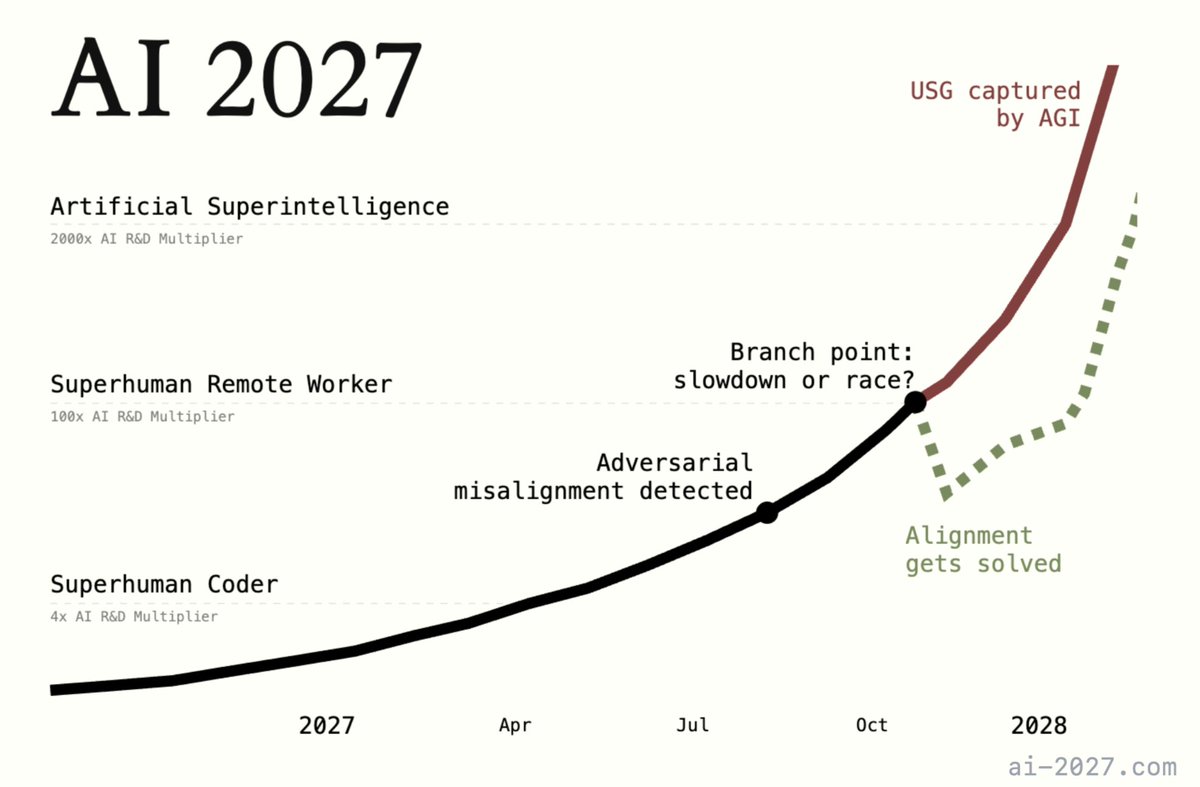
"How, exactly, could AI take over by 2027?"
Introducing AI 2027: a deeply-researched scenario forecast I wrote alongside @slatestarcodex, @eli_lifland, and @thlarsen
Few ‘AI doom’ stories on the internet are plausible to me. So I decided to write one that is:
How AI Might Take Over in 2 Years.
One of my readers was spooked enough to purchase a bio bunker. Enjoy :)
Today, I’m sharing another insanely good o1-Pro scientific insight! This one is particularly special to me to a point of making me emotional, its that profound🥹
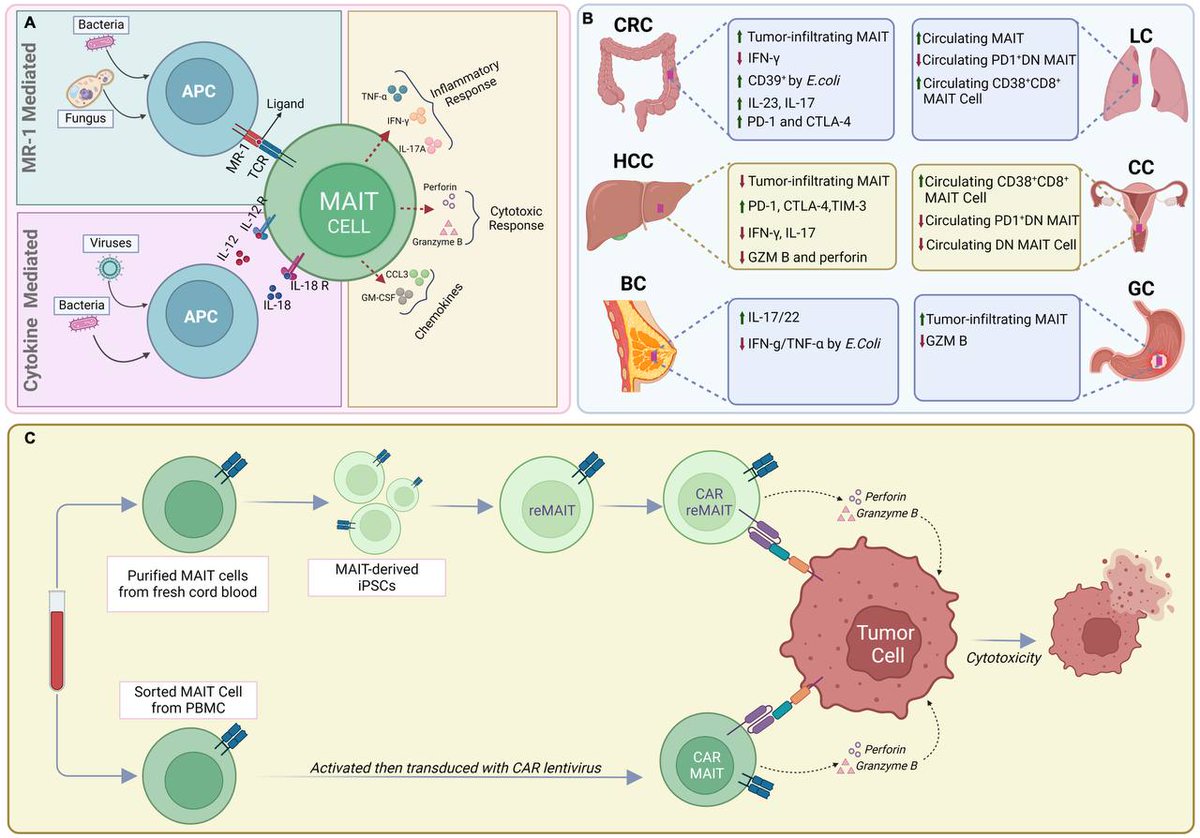
I asked o1-Pro to critically evaluate a review my students & I had written about a specific subset of immune cells called MAIT cells and their role in cancer. The result? I’m simply shocked beyond belief at o1-Pro’s critiques! 😱They were more insightful than my own—and this is a topic where I’m one of the few top experts in the world, having made some of the key discoveries!
As I read through its feedback, I found myself staring at my computer screen, fixated, overwhelmed by a mixture of emotions: disbelief, awe, joy, and a profound sense of humility.☺️Every single point it made, every question it asked—everything was unbelievably insightful!
The depth of its analysis is truly hard to comprehend. Even though we believed we had written a great review on the topic, which was accepted with only minor critiques, I was deeply humbled thinking, “I should have addressed and included all these insights in the review.” Ouch! The only solace is that it didn’t find any errors.
Seriously, how is this even possible, @OpenAI@sama@gdb?! If o3 is even better, what will this mean? Biology will be accelerated even more than I had imagined. Also I did test o1, Gemini advanced in comparison, they are also excellent models for sure but do not come no where near this level of insight. o1-pro is so special!
I’m sharing the feedback in full below. While only a select few with deep immunology expertise may fully grasp the brilliance of o1-Pro’s critiques, I believe it serves as both a historical record of AI’s remarkable advance & a powerful example for other scientists to see how this kind of critical analysis can be leveraged. I will also try to explain these points, although you may want to use Grok or ChatGPT to understand their meaning for now. I also have more stuff to share soon 😊
o1-Pro: Comprehensive Critical Analysis of the Paper
This review article provides an extensive overview of mucosal-associated invariant T (MAIT) cells, highlighting their roles in infectious diseases and their paradoxical functions in cancer. While it is broadly informative, a closer examination reveals several areas where the manuscript could be strengthened or where clarity is lacking. Below are key points of critique, organized by thematic areas:
1. Scope and Focus
Breadth vs. Depth: The paper covers a wide range of topics—from MAIT cell biology and their role in infectious diseases to their involvement in cancer and even their potential therapeutic application as CAR-engineered cells. While comprehensive, this broad scope sometimes prevents a deep mechanistic understanding in any single aspect. For instance, the section on MAIT cell exhaustion in tumors touches on surface markers and phenotypes but does not delve into the underlying molecular pathways, signaling events, or epigenetic mechanisms that drive this state.
Translational Gaps: The authors mention that MAIT cells have therapeutic potential, especially in the form of CAR-MAIT cells or iPSC-derived MAIT cells. However, the review does not thoroughly address the translational hurdles—such as manufacturing scalability, in vivo persistence, and the safety profiles in early-phase clinical trials. The promise of “off-the-shelf” therapies is intriguing, but more practical challenges and limitations should be discussed.
2. Structural and Conceptual Clarity
Dual Roles in Cancer: The paper reiterates MAIT cells’ dual nature—both promoting and inhibiting tumor progression. While multiple examples are provided, the narrative could benefit from a more structured framework explaining when and why MAIT cells exhibit opposing functions. For example, are there distinct cytokine milieus, metabolic conditions, or antigenic contexts that tilt MAIT cells from an anti-tumor to a pro-tumor phenotype? A conceptual model or decision-tree figure could have clarified these conditions.
Heterogeneity Among Cancers: The review references how MAIT cells play variable roles in different tumor types, but does not systematically compare these differences. Although some tumor-specific data are given (e.g., prostate cancer, colorectal cancer, hepatocellular carcinoma), the text would benefit from a clear comparative analysis: Are there patterns based on tumor origin, mutation burden, microbiota composition, or MR1 expression levels?
3. Mechanistic Details and Evidence Gaps
Mechanistic Underpinnings: The review states that MAIT cells respond to microbial metabolites and can become exhausted in the tumor microenvironment (TME). However, it only lightly touches on the signaling pathways, transcription factors, and metabolic cues governing their differentiation, exhaustion, or cytotoxicity. The field’s understanding may be limited, but even a critical mention of the key unknowns—such as how persistent antigenic stimulation via MR1 leads to MAIT exhaustion—would strengthen the discussion.
MR1 Expression and Its Regulation: The role of MR1 in tumor recognition is frequently mentioned. Yet, the review does not delve deeply into why MR1 is upregulated in certain tumors, how its expression correlates with tumor progression, or what regulatory pathways control MR1 in cancer cells versus normal cells. These knowledge gaps are worth highlighting since MR1 is central to MAIT cell recognition.
Cytokine Signatures and Functional Outcomes: While the review enumerates various cytokines (IL-17, IFN-γ, IL-13) and their potential impacts on the TME, it does not deeply connect these cytokine profiles to specific clinical outcomes or stages of cancer progression. For instance, when do IL-17-secreting MAIT cells predominate, and at what stage of tumor development or therapy might their cytokine shift occur?
4. Conflicting or Insufficiently Addressed Data
Contradictory Findings: The review acknowledges that in some cancers, MAIT cell infiltration correlates with poor prognosis, whereas in others it may be linked to a better outcome. However, it does not provide a critical lens on how to reconcile these contradictions. Are sample sizes, patient populations, or detection methods different across studies? Discussing methodological variability or limitations in the literature could guide readers to interpret these discrepancies more cautiously.
Microbiome-MAIT-Tumor Interactions: The review emphasizes the importance of the microbiome in shaping MAIT cell function and acknowledges that dysbiosis can alter their activation states. Nonetheless, it does not thoroughly explain which microbial species or metabolites have the strongest correlations with tumor modulation, or how clinicians might manipulate the microbiome to influence MAIT cells beneficially. More detail, even if speculative, would be helpful.
5. Therapeutic Perspectives and Limitations
CAR-MAIT Cell Therapy: Although the paper cites promising preliminary work on CAR-MAIT cells, this section would be improved by discussing potential safety concerns, such as off-target effects, long-term persistence, and the risk of creating a new form of immunopathology. The review could also integrate lessons learned from CAR-T therapy (such as cytokine release syndrome and neurotoxicity) and consider whether similar events might occur with CAR-MAIT cells, even if preliminary data suggest otherwise.
iPSC-Derived MAIT Cells: While iPSC-derived MAIT cells represent an innovative concept, the review does not critically evaluate the current limitations, such as incomplete recapitulation of the native MAIT repertoire, potential genomic alterations during reprogramming, and the difficulty of producing these at a clinical scale.
6. Methodological Considerations
Lack of Systematic Review Methodology: As a narrative review, the paper does not apply a systematic approach to literature selection, potentially introducing bias. Readers would benefit from a brief explanation of how studies were chosen or excluded, as well as a comment on the robustness of the field’s evidence base.
Limited Discussion on Human vs. Animal Models: MAIT cell biology can differ between human and mouse models. The review occasionally references murine data without discussing species-specific differences in MAIT TCR repertoire, distribution, or functional responses. This omission might limit the translational relevance for readers focused on human therapeutics.
7. Future Directions and Open Questions
More Concrete Future Directions: While the conclusion highlights that more research is needed, it could be more specific. For example, the authors could propose key experiments or highlight urgent clinical trials that would clarify the role of MAIT cells in cancer immunotherapy, or detail which molecular targets (in MR1 or associated signaling pathways) should be prioritized for drug development.
In Summary:
The review provides a valuable overview of MAIT cell biology and suggests these cells hold significant promise for cancer immunotherapy. However, it lacks deep mechanistic integration, does not fully contextualize contradictory findings, and gives limited attention to the translational challenges of MAIT-cell-based therapies. A more critical evaluation of conflicting data, clearer mechanistic frameworks, comparative analyses across tumor types, and a closer look at the limitations of current knowledge would greatly strengthen the manuscript. Additionally, more structured guidance on future research directions and clinical applications would provide greater value to the field.
Caved and got o1 Pro.
I asked it my favorite question to ask these models, and it gave much more interesting answers than either o1 preview or Claude 3.5 Sonnet.
They're not quite as mind-bending as I'd want -- I've seen a version of all of them except #7 -- but still better:
@vidyarrrr Have fun, every sentence a ride. Still life with woodpecker, jitterbug perfume or fierce invalids home from hot climates have been my favourites.
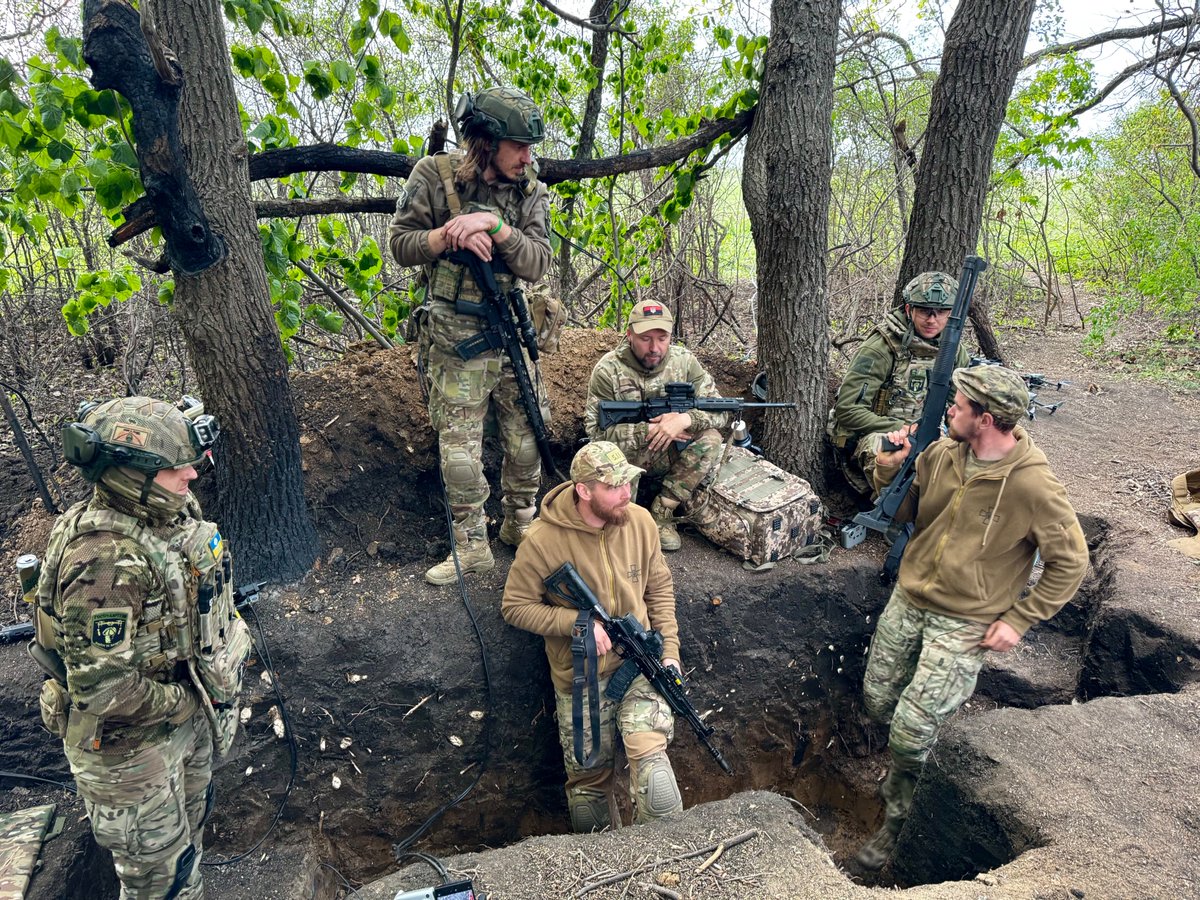
The past week I was in Vovchansk, Lyptsi and Kharkiv for @thetimes during Putin's new assault on a city once home to 1.5 million people. I witnessed some incredible heroism by its Ukrainian defenders. First, in a foxhole with the 'Peaky Blinders' as they killed 40 Russian troops-