@drjohnm Anyways it will be quite dizzying if we all start changing practice each time a single study comes out that contradicts many others - especially if the trend and pooled effect estimates align with the established effect for the intervention
📢REAF-AF Registry Data in @hrs_journal Sep 2026
*⃣ Variable loop circular catheter pulsed field ablation in real-world practice: Low complication rates across patient and procedural characteristics in the REAL AF registry @krishmd@paulzei
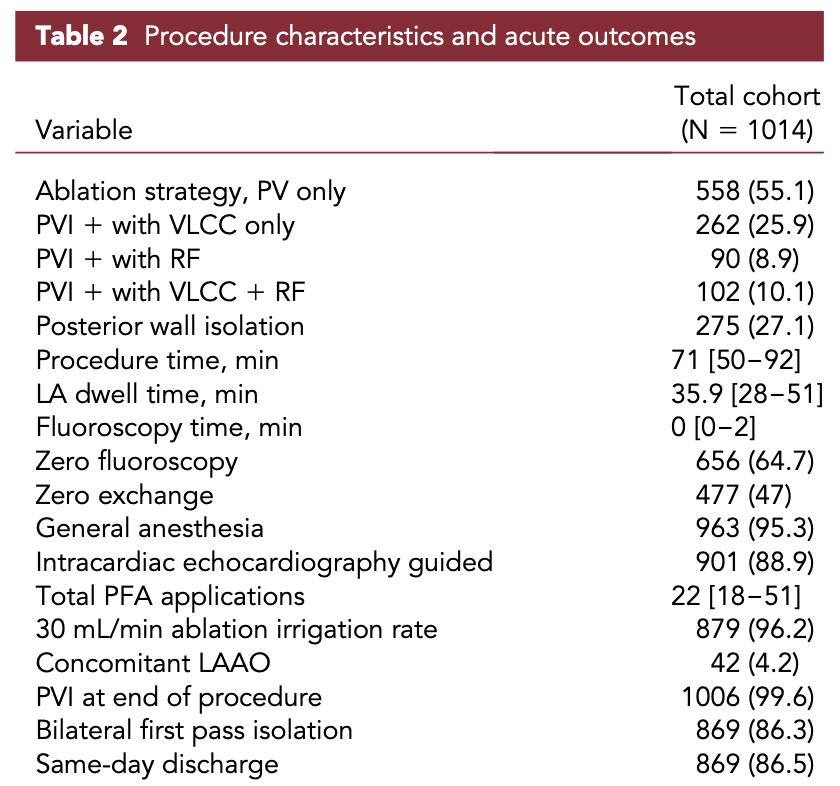
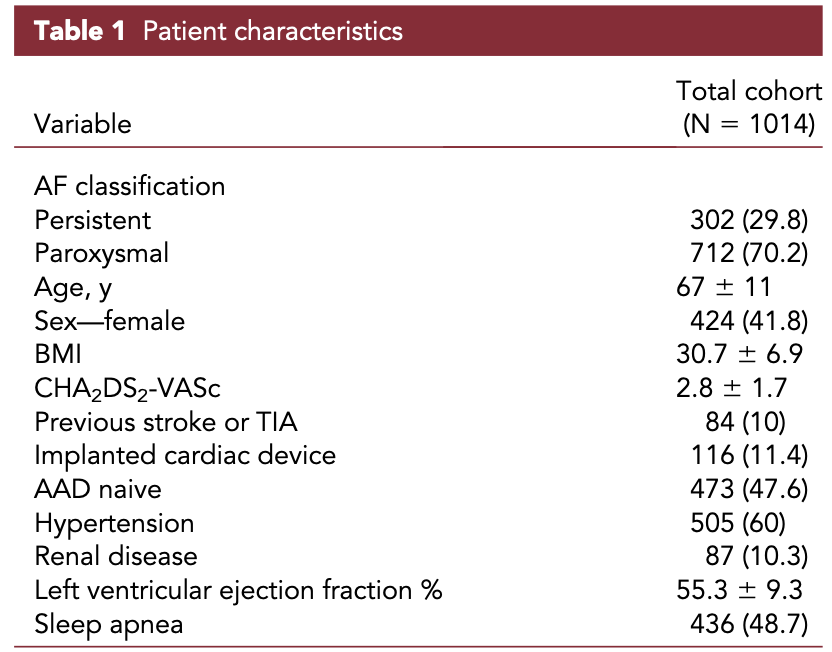
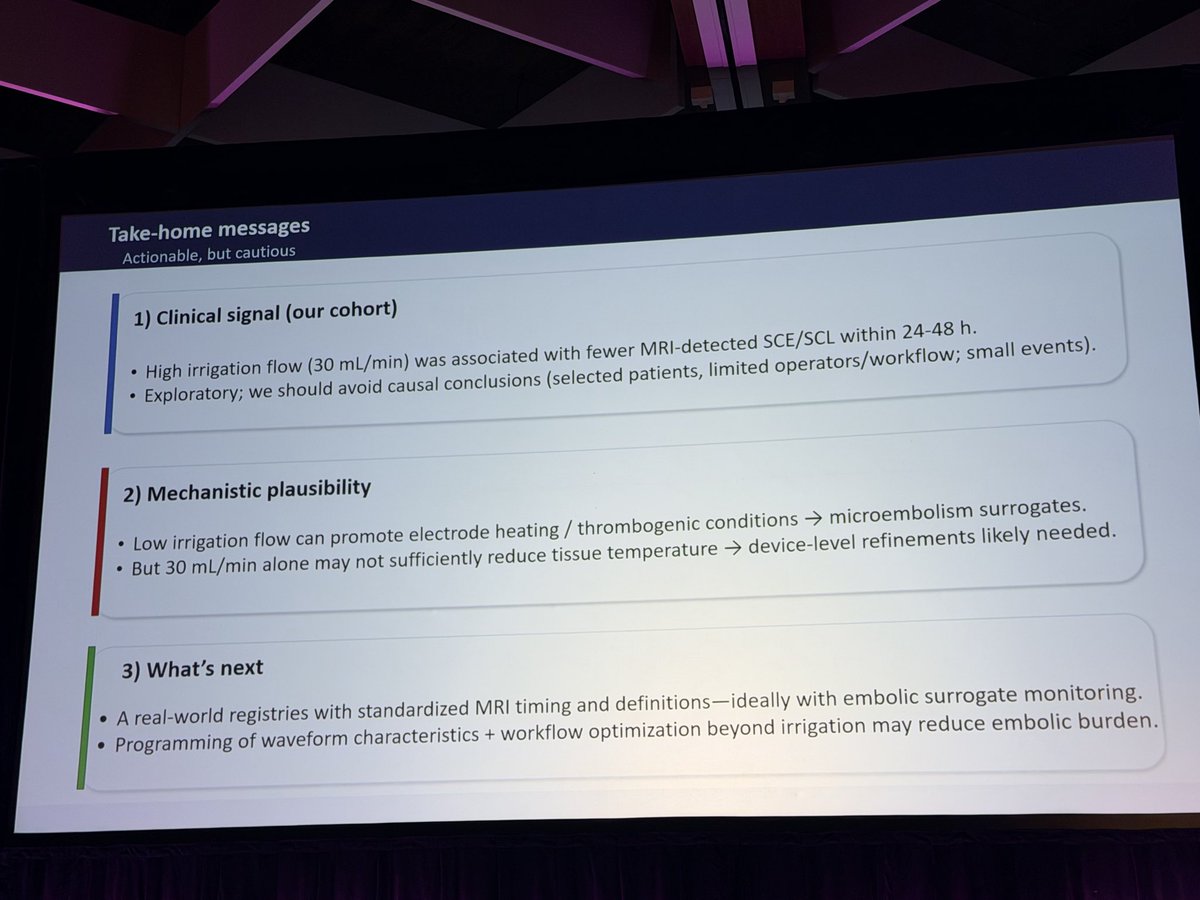
➡️Porterfield et al. report real-world experience with Varipulse PFA across 33 hospitals, 69 operators, and 1,014 index AF ablations (PAF 70%).
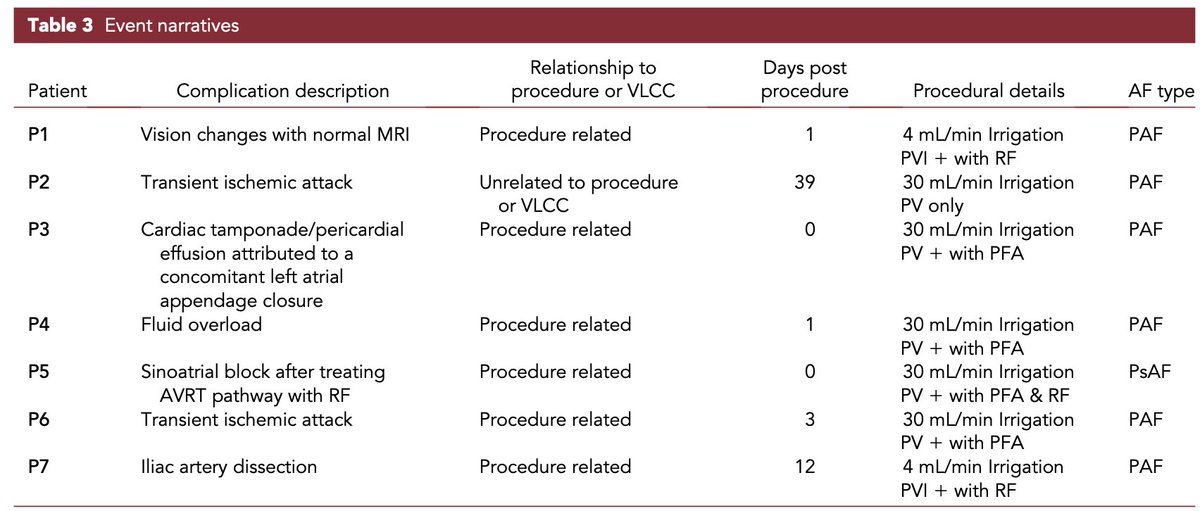
➡️Procedure-attributed complications: 0.6%; none were attributed specifically to the VLCC catheter. No stroke, atrioesophageal fistula, PV stenosis, coronary spasm, phrenic nerve injury, MI, AKI, or death.
➡️27.1% underwent posterior wall isolation, and ~19% received adjunctive RF. Half of the procedure-related events occurred in cases involving RF.
➡️Workflow Efficiency: median procedure time 71 min, LA dwell time 36 min, median fluoroscopy 0 min, with 64.7% zero-fluoroscopy procedures, same-day discharge 86.5%.
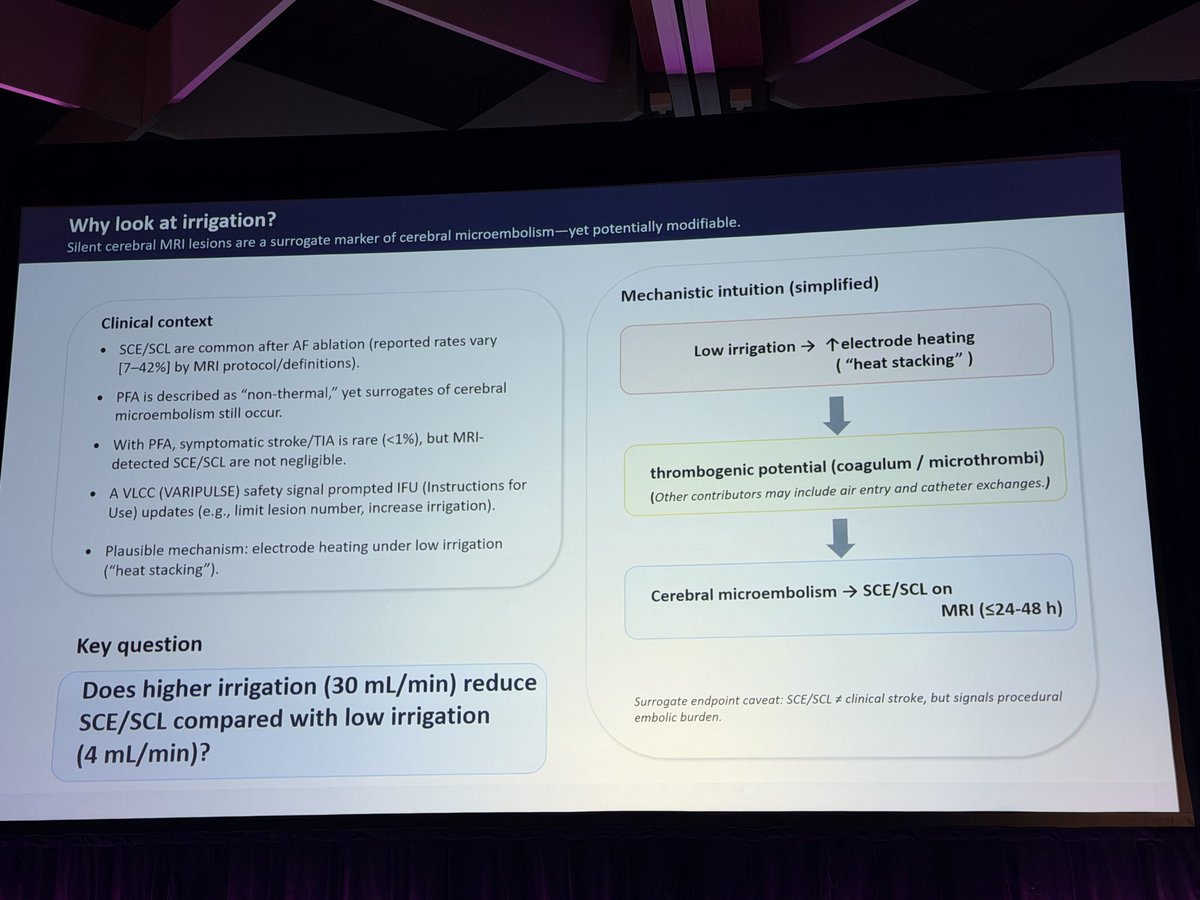
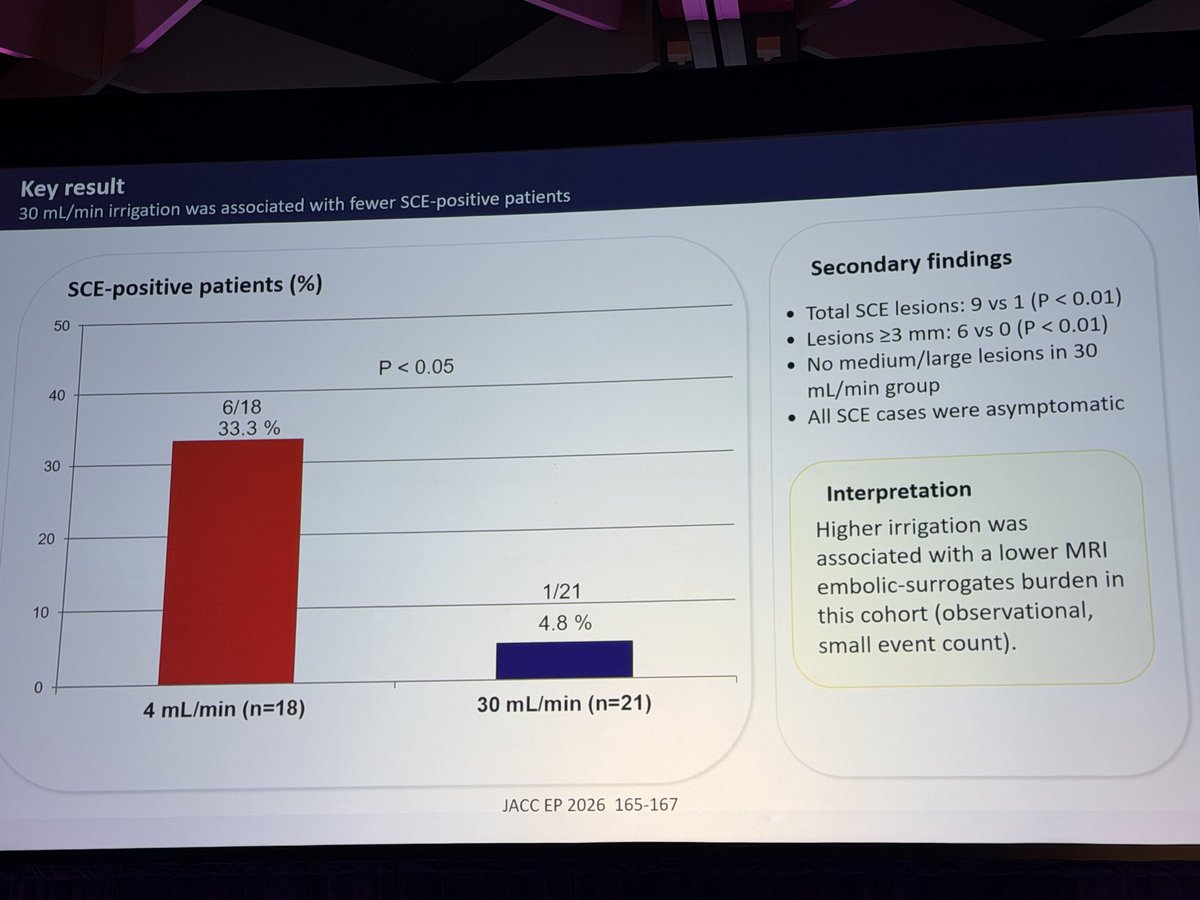
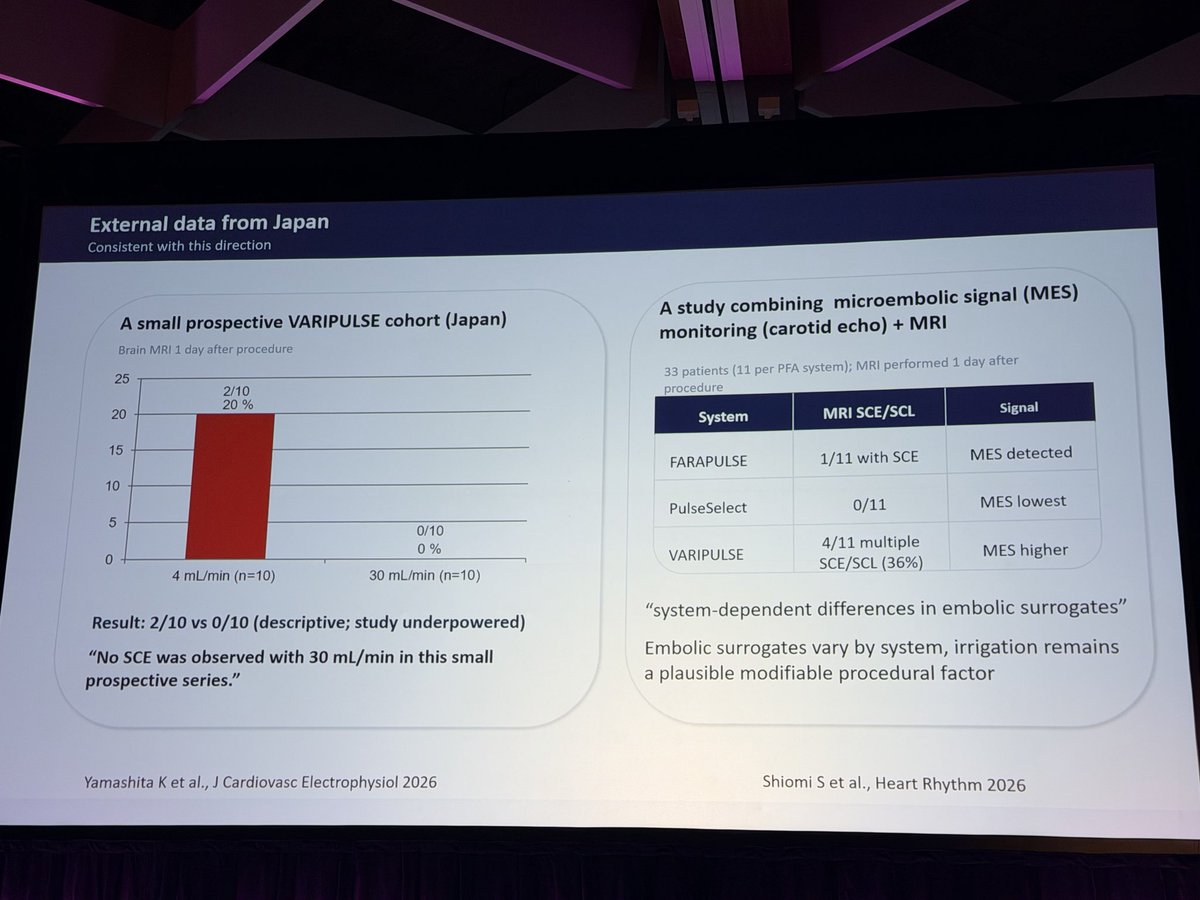
➡️96.2% used the contemporary 30 mL/min irrigation protocol.
🎯 Contemporary VLCC PFA workflows demonstrated a reassuring early safety profile in real-world practice.
⚠️ Limitations: Observational registry without a randomized comparator; only 6 procedure-related events, limiting meaningful subgroup comparisons and detection of rare complications; investigator-assessed rather than independent event adjudication; industry funded.
https://t.co/XobWoOdUbL
Important PVI-SHAM-AF trial—but interpretation matters. This was not ablation vs “nothing.” The sham arm included deep sedation, an invasive cath-lab procedure, intensive follow-up and, importantly, cardioversion when patients were in AF—itself an effective rhythm-control intervention.
Yet ablation still produced substantially better rhythm control (73% vs 52% freedom from AF).
With QoL assessed at only 6 months, are we measuring the effect of ablation—or comparing two active rhythm-control strategies?
I would be cautious concluding that ablation does not improve symptoms. The study may instead demonstrate how difficult it is to design a truly inert sham for AF.
#AFib #CatheterAblation #RhythmControl #PVI #ESCCongress @PrashSanders@drjohnm@chris_sohns@peterkistler3@DJ_Lakkireddy@DrRoderickTung@TinaBaykaner@DrJasonAndrade@SteffelJ@netta_doc@TulaneHeart
"...we should redouble our efforts to better understand AF" was my biggest takeaway from this piece. with all the cool PFA catheters on the market, we have ironically disincentivized therapy advancement. science humiliates and humbles
Even I was shocked at the negative results of SHAM-PVI-AF. Question everything my friends. Wow. Wow. Double wow.
My quick thoughts: https://t.co/UDtpqy4bnI
#esccongress
A journey inside the human heart.
From the left atrium through the mitral valve into the left ventricle, past the aortic valve and sinuses of Valsalva, and into the coronary arteries and ascending aorta.
Don’t miss the beautiful chordae tendineae.
I sat down with @Dr_Santangeli to discuss the Sphere-9 VT early feasibility study
He mentioned how current VT ablation technologies still face limitations in scar related VT particularly inadequate lesion depth, small treatment areas, and the need for a lot of irrigation fluid.
@IsaParam Two pathways(Lateral and Septal) initiated by Extra stim pacing on CS 9-10. Hard to rule out AT without calipers but VA does not seem to wobble too much(less likely). Lastly, AH jump seems to initiate the tachycardia further indicating that the AV node is part of the circuit.