🆕"Hip-extension angular velocity emerged as a consistent contributor to SPR velocity across intensities, underscoring its central role in SPR performance"
➡️ The role of HM & Gluteus Max in SPR kinematics ⚽️
👉 R. van den Tillaar 2026 🇳🇴
📂 Open Access: https://t.co/I7dVzCoZRJ
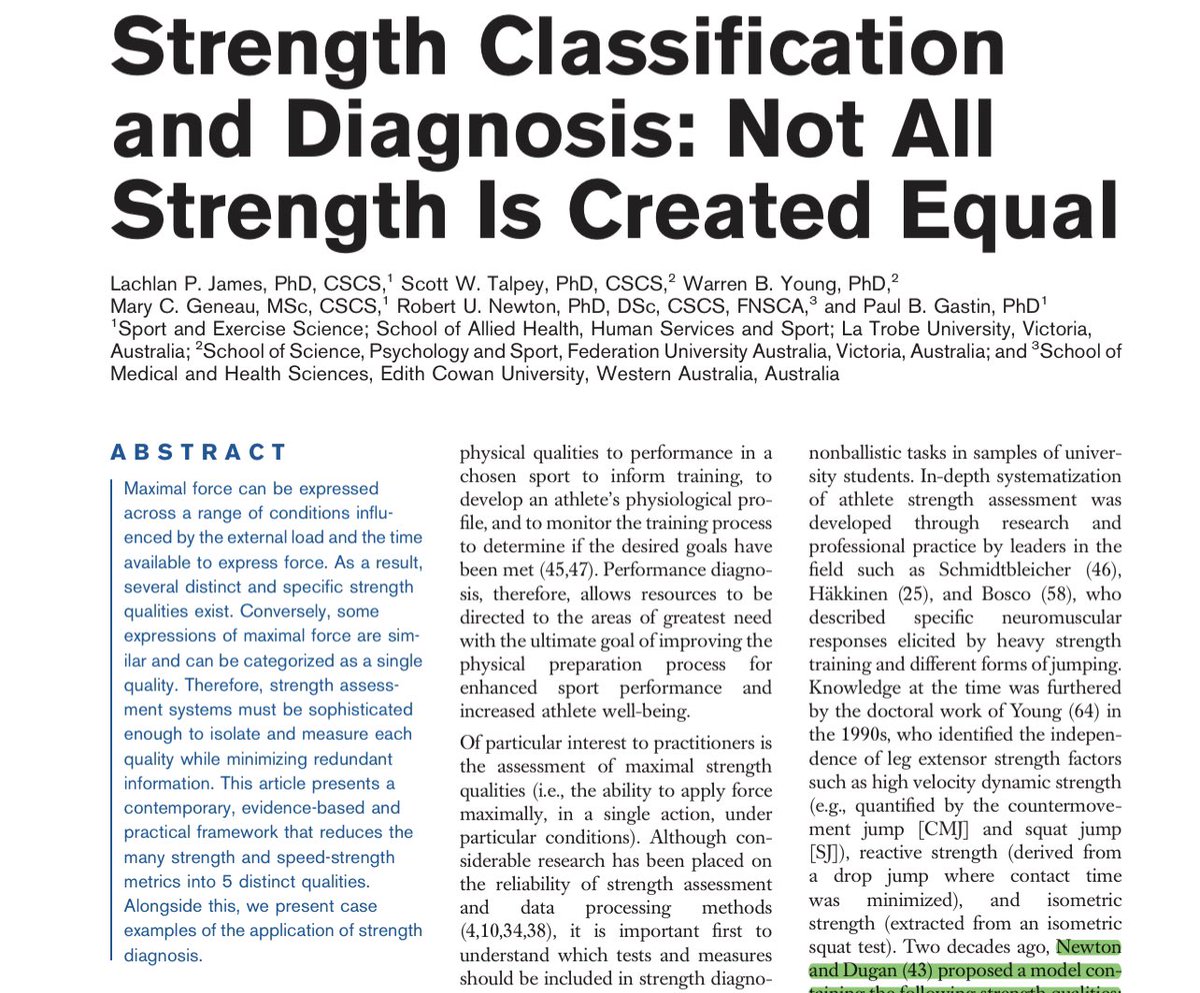
Not all strength is created equal
Strength quality classification: implications for training & testing
We can consider strength activities as a function of their contraction times & their external load.
Discrete qualities will share <50% common variance
Great study about getting Peak Max Velocity. Conditioned games and integrated Conditioning are fantastic but if you want to get a max speed stimulus there is a need for some isolated running 🏃♀️ . Note - isolated running can be in game movements. https://t.co/Yjrk48isDw
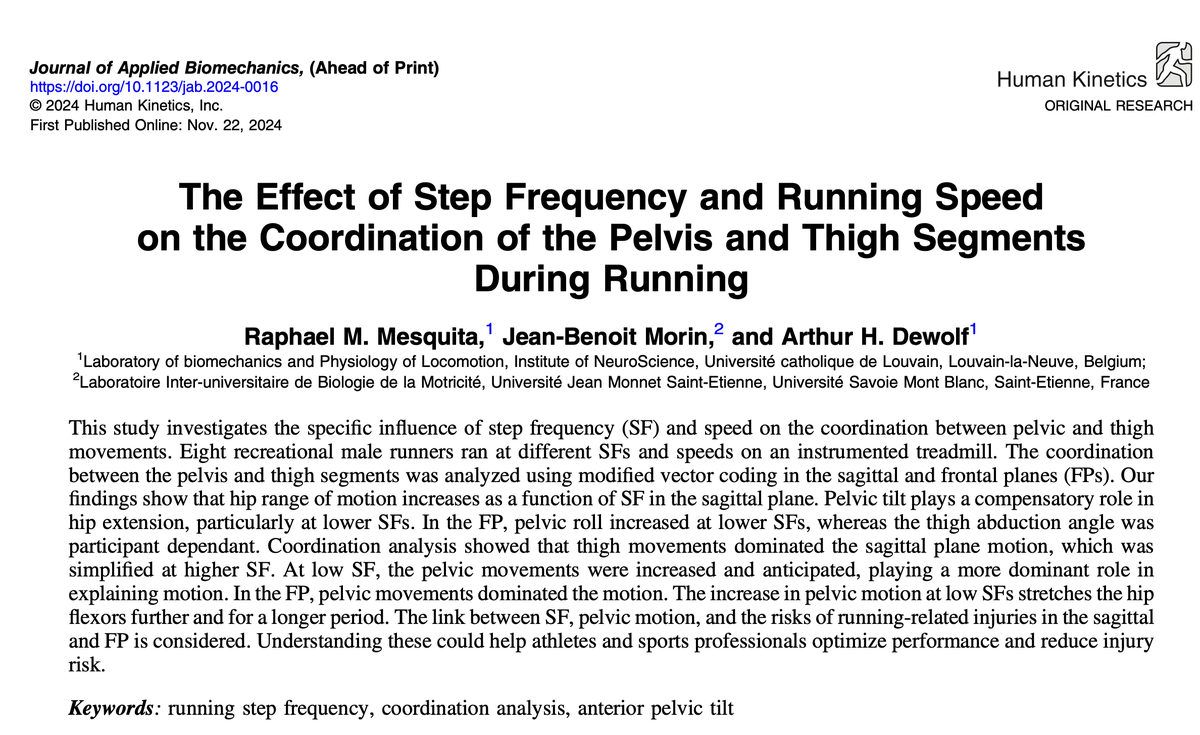
🚨NEW PAPER🚨📄🔬
Pelvis and thigh mechanics 🏃♂️are modulated by running step frequency 🧐
Nice and detailed analysis by @RaphMesquita and @dewolf_arthur
Interesting applications for injury prevention, for example lower SF = greater pelvic tilt 🔄
https://t.co/RrU0qBJBxs
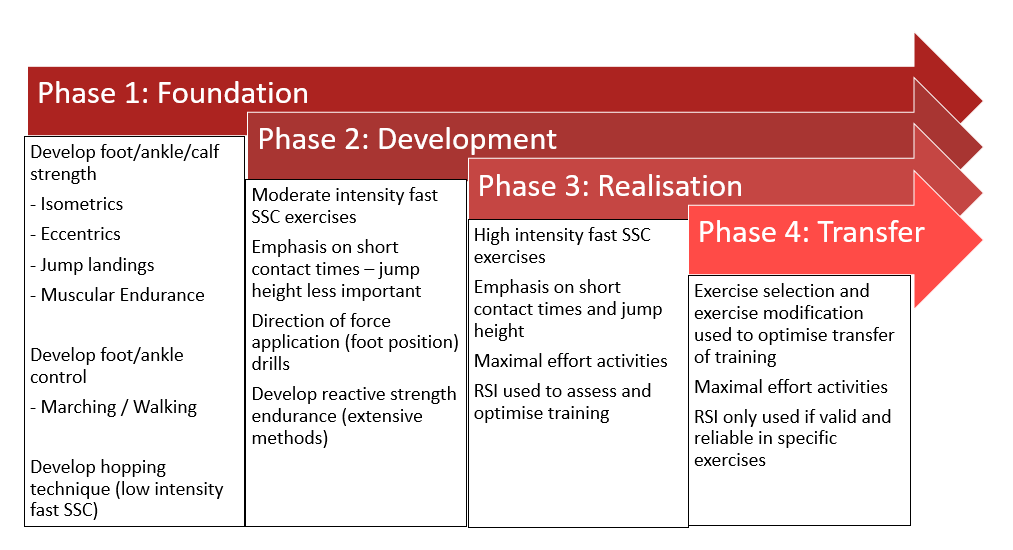
Extensive 🆚 intensive plyometrics.
When should you use one or the other?
Why do they fit in different phases of plyometric development?
Join @EamonnFlanagan to get these answers and much, much more!
https://t.co/L1Fvheol1Z
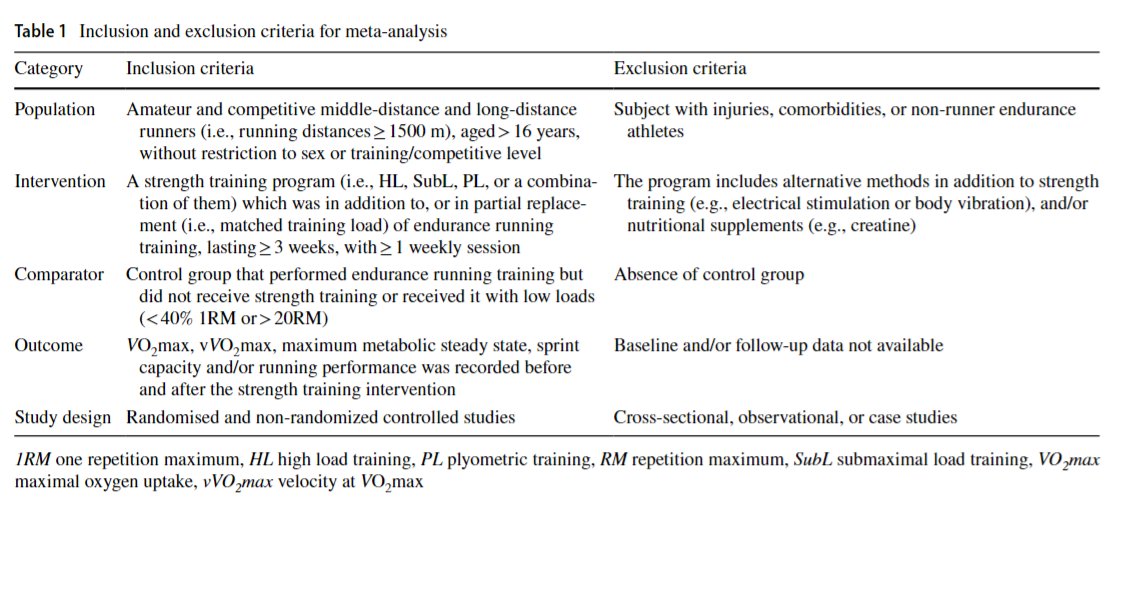
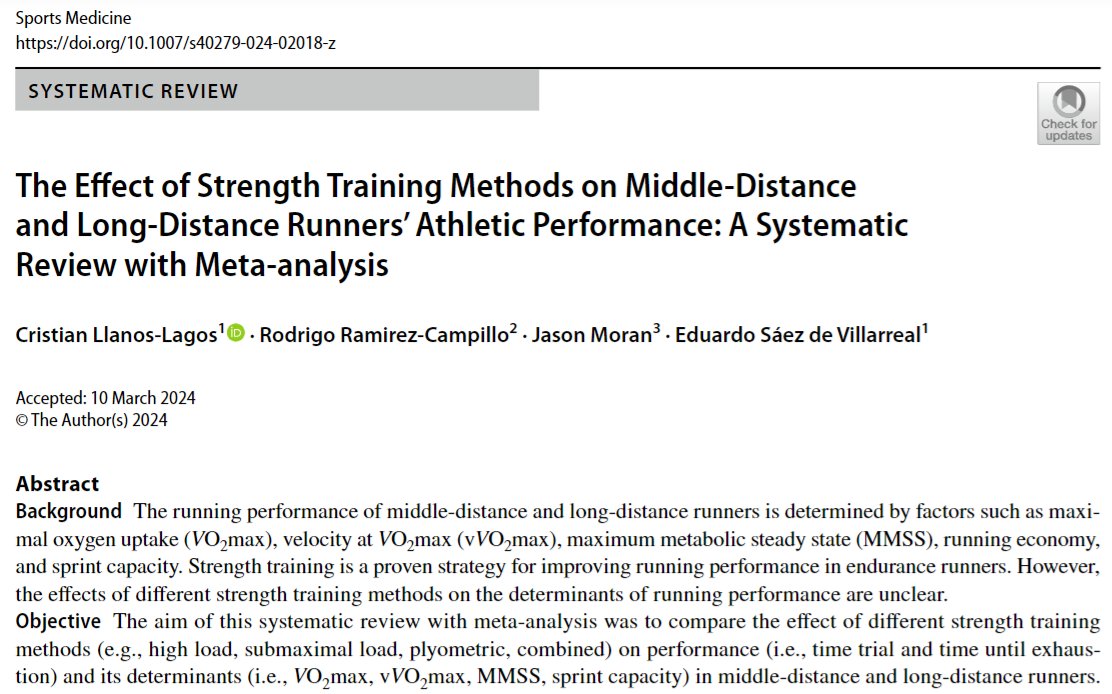
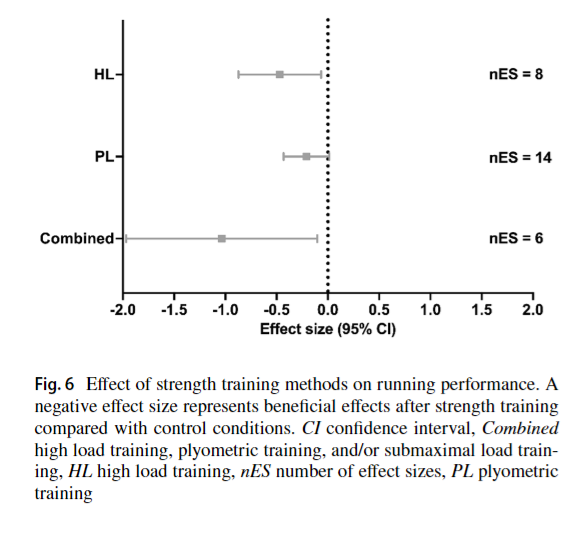
What type of strength training best impacts middle or long distance running performance?
New meta-analysis: The Effects of Strength Training Methods on Middle and Long Distance Running Performance
📈38 included studies; 900 middle or long distance runners
💪Strength training interventions included:
1⃣High load (>80% 1RM)
2⃣Sub max load (40-80% 1RM)
3⃣Plyometric
4⃣Combined methods (2 or more methods)
Strength training w/ high load can improve time trial an time-to-exhaustion performance
Combined methods (Strength training & plyometrics) had an increased performance improvement effect compared to one method alone (strength training only).
Plyometrics illicited no improvement in running peroformance when used in isolation (IE without concurrent strength training). But this finding is in contrast to some previous studies.
Article is Open Access
A muscle with a pennation angle of 0 degrees transmits 100% of its contractile force through the tendon, whereas the same muscle with a pennation angle of 30 degrees transmits 86% of its force through the tendon. Most human muscles have pennation angles that range 0 to 30 degrees
Eccentric Strength and the Reactive Strength Index are significantly correlated with running economy in distance runners
🔸 28 athletes (5k, 10k, marathon)
🔸 Running economy assessed @ 12 / 14 ' 16 km/h
🔸 Strength: 1RM Squat, Ecc-Con peak force
🔸 CMJ, DJ-RSI
🔸 Leg stiffness (k-leg in running)
In this study:
✔️ DJ-RSI sig. correlated w/ RE @ 12, 14, 16 km/h
✔️ DJ Height sig. correlated with RE @ all speeds
✔️ Ecc-Strength sig. correlated with RE @ all speeds
✔️ Leg stiffness sig. correlated with RE @ all speeds
🚫 No relationship between 1RM squat and CMJ with running economy
Cavaet:
Very low levels of RSI in this athlete group (RSI = 0.6) from a relatively high drop height (40cm).
Suggests:
・ RSI may be a very untrained quality in this group (low hanging fruit)
・ 40cm drop height may be greatly sub-optimal for this group
・ CTs (not reported) likely to have been very long suggesting more "countermovement" style depth jump (0.4 - 0.5s CT estimate)
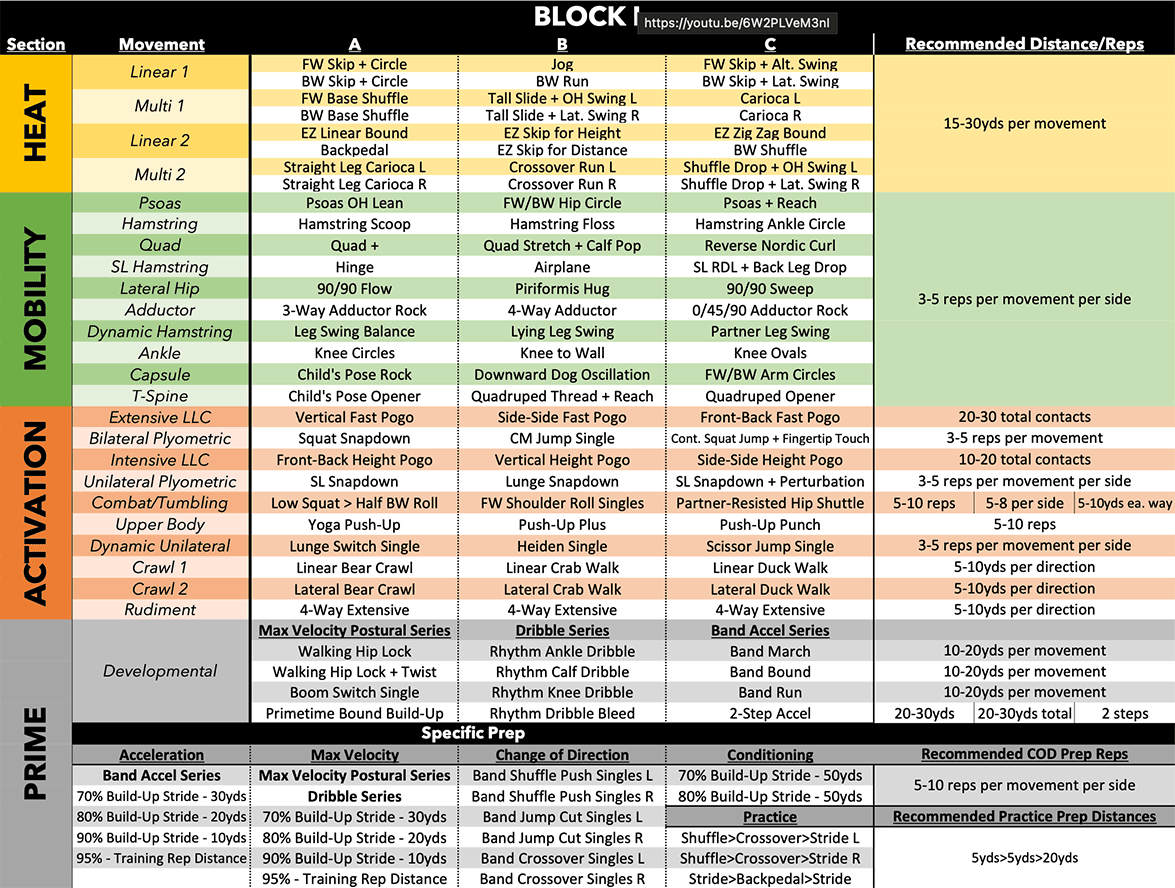
You spend much time warming your athletes up rather than just ticking a box on making them sweaty. Learn how Scott Kuehn systemizes and progresses his warm-ups to address a variety of athletic qualities and competencies 👉 https://t.co/6kIy4Z8iAD #WarmUp
We have been working long and hard to create something new and cool for you guys.
It’s the best biomechanics course we have ever made.
Put a running man 🏃🏽♂️in the caption for a chance to WIN a free preview to the course!
Everyone can get faster, We can show you how!
"The Primer"
Gameday lifting for enhanced performance
Getting an edge on gameday is what every team and athlete aims to achieve and the gameday primer can be a powerful addition to a sports performance program to help achieve this.
Programming principles:
Participating athletes should have high-level training age and be highly technically proficient in the chosen exercise modalities.
Stronger athletes may respond more potently to priming activities.
Consider a strong psychological component. Allow self-determination. The athlete should be involved in the selection of the priming activities. Choose the training types or the training focus, not the specific exercises.
Priming activities should be high intensity. Intensity can be driven with exercises with high force requirements (strength exercises) or high rate of force development requirements (ballistic power/speed exercises).
Priming work should be conducted with a high intensity of effort. Measurement and feedback methods such as velocity-monitoring in strength training or jump height & contact time monitoring in plyometric work can help increase intent of effort.
Priming work should take place at approx. 5-6 hours before the game. This is likely the most potent stimulus. However, priming sessions conducted 24-32 hours before the game can also have beneficial effects.
Priming sessions should be low volume and low metabolic fatigue kept to a minimum. Use long rest periods. If in doubt, use lower volume than planned.
Example sessions based on approach (aggressive vs conservative) and available equipment/facility 👇👇
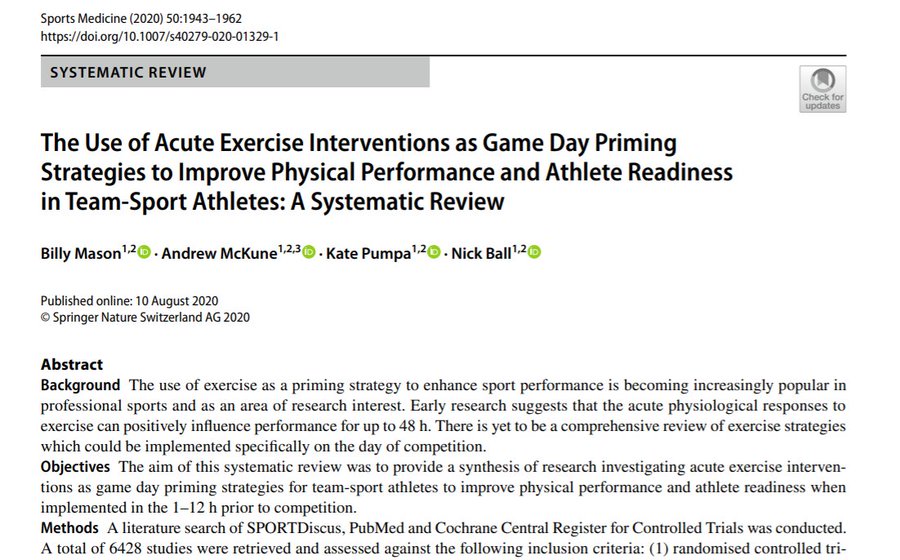
Solid review review from @brjmason here:
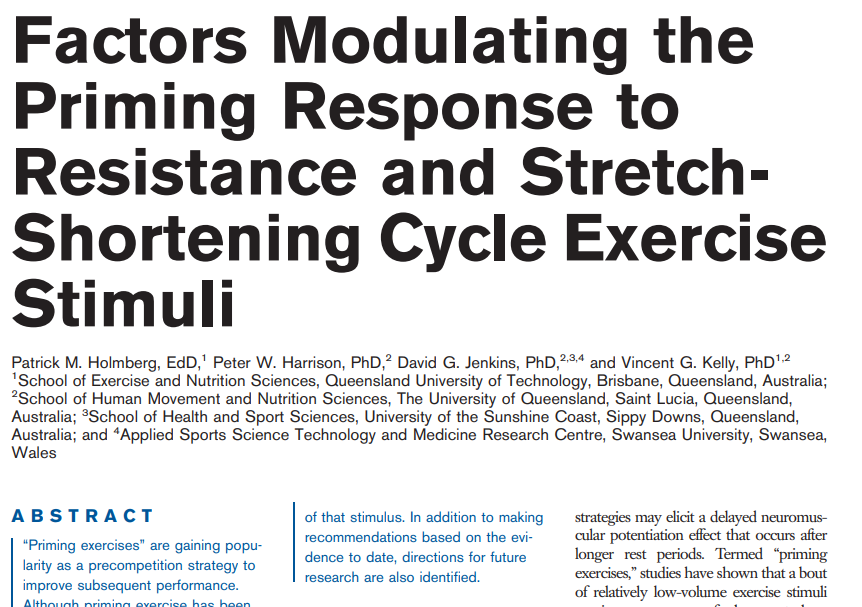
Excellent, really readable review from @PeterHarrisonAU and @DocHolmberg12 here:
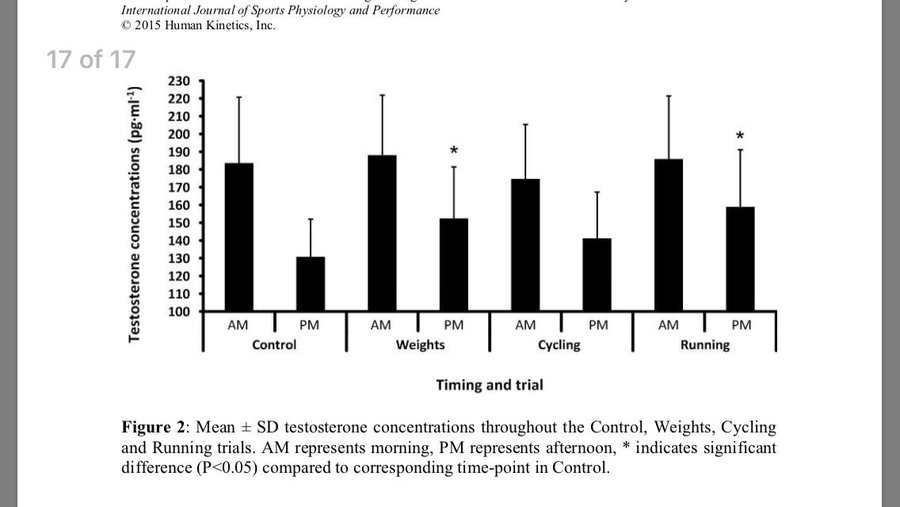
Great work from @DrMarkRu55ell and an all star cast showing beneficial non-specific effects of varied morning priming exercise types on afternoon performance.
Plyometrics: What can we learn from masters of the craft?
Here's what I've learned from the themes and commonalities between the world's experts on high powered plyometric training.
Plyometric experts all have strong clarity and give deep thought to the following:
🔸Their plyometric philosophy
🔸Quantifying plyometric intensity
🔸The individual athlete
🔸The specificity/intensity tradeoff
🔸The balance w/ sport specific training
The Plyometric Purpose
Each expert has a clear definition of plyometric training.
What it is.
And what it isn't.
When to use it.
And when not to.
They all have a clear "why". They don't all agree... but they each have a specific & clear purpose for using plyometrics.
Quality > Quantity
All clearly consider plyos to be a high powered, quality-dependent training stimulus.
All are thoughtful & methodical in quantifying intensity of exercises used. None solely count "foot contacts". Most use a product of: [foot contacts] * [intensity factor]
💥 Intensity factors are established in a number of ways across the expert group but most are a combination of one or more of the following:
🔸Published research
🔸Contraction types & contact times
🔸Experiential knowledge
Quantification ↔️ Classification
Once intensity is quantified exercises can be classified.
The experts all have clear categories of exercises from which they build clear training menus and progression plans. Example:
All consider the individual athlete
The training process is strongly guided by:
🔸Training purpose
🔸Time of year
🔸Sport specific training
🔸The athlete "type"
🔸The athlete training history
🔸The athlete injury history
Greyhound vs Bulldog
Athlete type is widely considered a determinant of plyo training response.
Greyhound: Light & elastic. Responds potently to plyos.
Bulldog: Muscular/strong athlete. Responds well to strength work but careful, moderate plyo doses can help ↗️ elasticity.
What about the sport?
All want clarity of the plyometric demands of the sport training.
All want to avoid overload of similar stimulus to the sport training.
All ask "what relevant stimulus can we give the athlete that the sport training is not providing?"
Intensity ↔️ Specificity
There is a tradeoff between plyometric specificity & intensity.
When we ⬆️ specificity we can infringe on sport technique & inadvertently ⬇️ the magnitude of physical quality overload.
"General" plyometrics overload physical qualities. Established sport specific drills are likely best way to balance both.
Thanks for reading.
All of this info has come from
@SportsmithHQ podcasts from:
@sprintcoachSWE
(episode 272)
@SheppardCoach
(ep28 & 103)
@MMJPerformance
(ep38)
@BooSchex
(ep212)
@dkhammy
(42)
And other resources from:
@wildy_jj@benthebounce@DerekMHansen
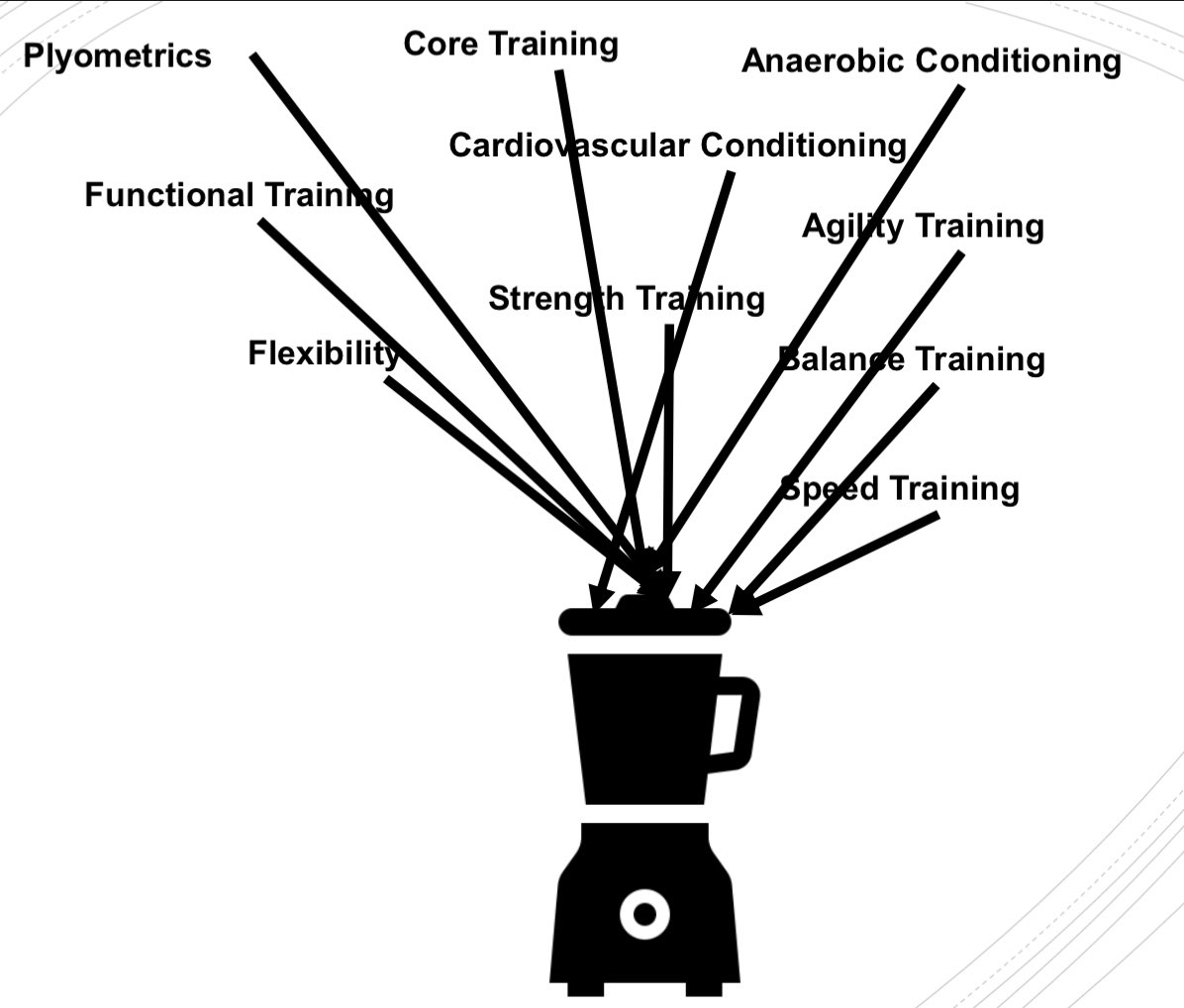
🏋️♂️🤯 Beware the 'Blender Effect' in training! When we target too many factors at once, we risk: unsequenced training, missed phase potentiation, excessive workloads, overtraining, and injury. Let's aim for smarter, not harder! 💪🔑 #TrainingInsights#SmartTraining
Making the complex simple, great paper to help you develop a framework for your S&C programs.
The 5 Key Strengths
🔹 Maximal Isometric Strength
🔹 Explosive Strength
🔹 Heavy Maximal Dynamic Strength
🔹 Fast Maximal Dynamic Strength
🔹 Reactive Strength
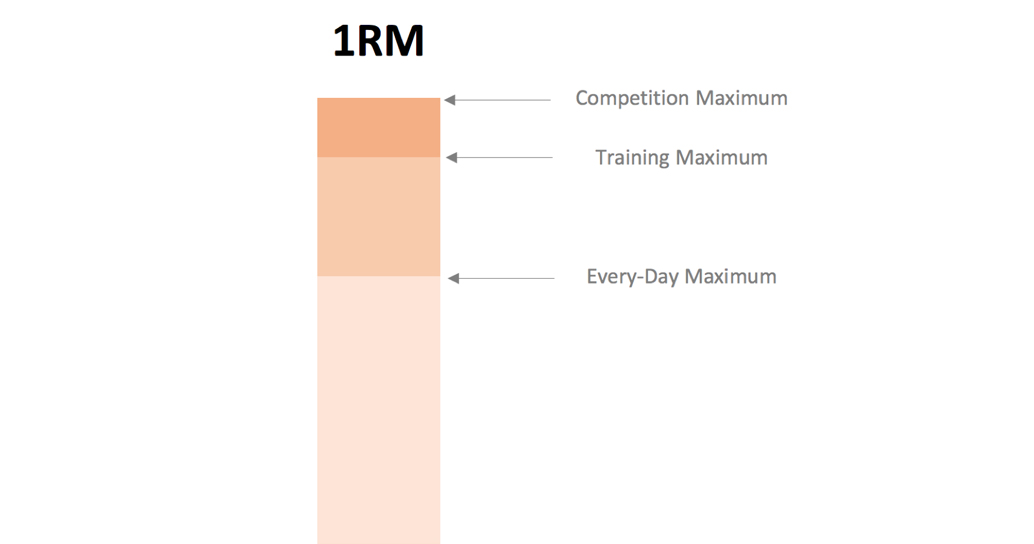
Do you REALLY need to test 1RM to prescribe strength training? How can you establish 1RM without directly testing it? Find out in the following article 👉 https://t.co/FmAj837Hfk #Establishing1RMs
🚨NEW PAPER🚨
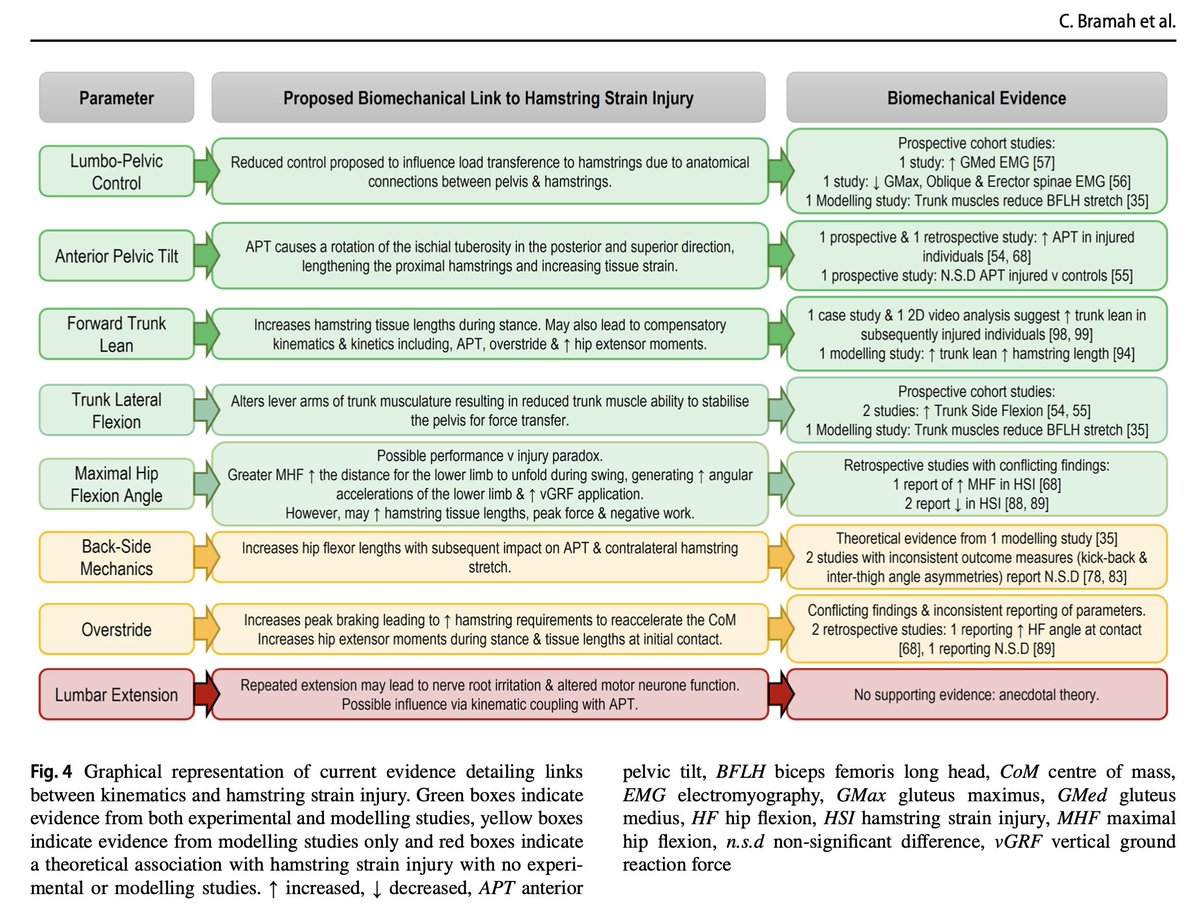
Sprint mechanics and hamstring strain ⚖️
Why? What? How?
Anatomy, biomechanics, experimental data discussed by @chrisbramah &al @SportsMedicineJ
Not a "waste of clinical time" IMO
📄https://t.co/zycoBVoKs7
Framework for intervention✅see👇
https://t.co/Zb7Ez8Tlpg