Hello everybody ! This is my new project about TNF/FND in Peru , This page is dedicated to sharing reliable, accessible information about FND and educational content to raise awareness and improve understanding of this condition .🍀✨🧠🤗 https://t.co/bEAfXUUxb3
🎺One-day symposium on FND and other functional disorders - St George's Hospital, London
I'm looking forward to taking part in this low-cost, multidisciplinary annual event on Sep 11th 2026
https://t.co/JEKd0UCGxX
Functional Visual Loss - a new paper in "Eye" led by Neil Ramsay
Full text here - https://t.co/EdIdI6kRFb
☑️ 1st systematic synthesis of epidemiology, prognosis and treatment
☑️ Near absence of treatment studies
☑️ Comorbid eye pathology/ trauma and headache common
New in Cephalalgia Reports!
Omega-3 supplements reduce migraine frequency and disability in adults. Optimal effects occur with moderate doses (≈2–2.5 g/day) in episodic migraine, while structured diet in chronic migraine.
https://t.co/ggOocPfbju
#migraine#headache#brain#pain #neurology #neuroscience
🗳️FNDS Members
The Classification Committee of the Society has prepared a draft of diagnostic criteria for FND and the F/DS subtype
Click below for explanation of the committee and process:
https://t.co/4wGIaaNAO1
Click below to fill out the feedback form:
https://t.co/KTOU5YwiGg
Integrating genetic and pathological data increased diagnostic accuracy and identified ancestry-related differences in #ParkinsonDisease, supporting biologically informed diagnostic tools and future pathology-targeted therapeutic trials. https://t.co/Ibt5GBLnV5
🧑⚕️Manejo de la hipotensión ortostática.
🟣La hipotensión ortostática es una afección común pero poco reconocida que aumenta con la edad y se asocia con una menor calidad de vida, caídas y mayor mortalidad. La frecuente coexistencia de hipertensión en decúbito supino e hipotensión posprandial con hipotensión ortostática dificulta su manejo.
🟣Se debe realizar una prueba de hipotensión ortostática en pacientes con síntomas ortostáticos (p. ej., cambios en la visión y mareos que ocurren solo en posición vertical y mejoran al sentarse o acostarse), así como en pacientes asintomáticos en grupos de alto riesgo como adultos con fragilidad mayores de 70 años, personas con trastornos neurodegenerativos o autonómicos y pacientes con caídas inexplicables. Los pacientes con hipotensión ortostática deben someterse a una evaluación de hipotensión posprandial e hipertensión en decúbito supino para orientar el enfoque del tratamiento. Las estrategias no farmacológicas, como la revisión de la medicación, el aumento de la ingesta de sal y líquidos, las prendas de compresión y las modificaciones conductuales, sirven como enfoques fundamentales para tratar la hipotensión ortostática. La midodrina y la droxidopa son los únicos medicamentos aprobados por la Administración de Alimentos y Medicamentos de los Estados Unidos (FDA) para la hipotensión ortostática.
🟣Los objetivos del tratamiento de la hipotensión ortostática no se centran en la medición de la presión arterial, sino en el alivio de los síntomas y la prevención de caídas.
👉Moloney D, Youssef A, Okamoto LE. Management of Orthostatic Hypotension: A Review. JAMA Intern Med. 2026;186(6):744–753. doi:10.1001/jamainternmed.2026.0284
https://t.co/8D7x1X8gGp
✍️Vía: Dr. @mrcsgmb84
Excellent Clinical Practice article in @NEJM on secondary prevention after ischemic #stroke.
A practical case vignette summarizing contemporary strategies for risk factor management and mechanism-specific prevention.
🔗 https://t.co/KH1KbJx2ZI
@JacopoImberti
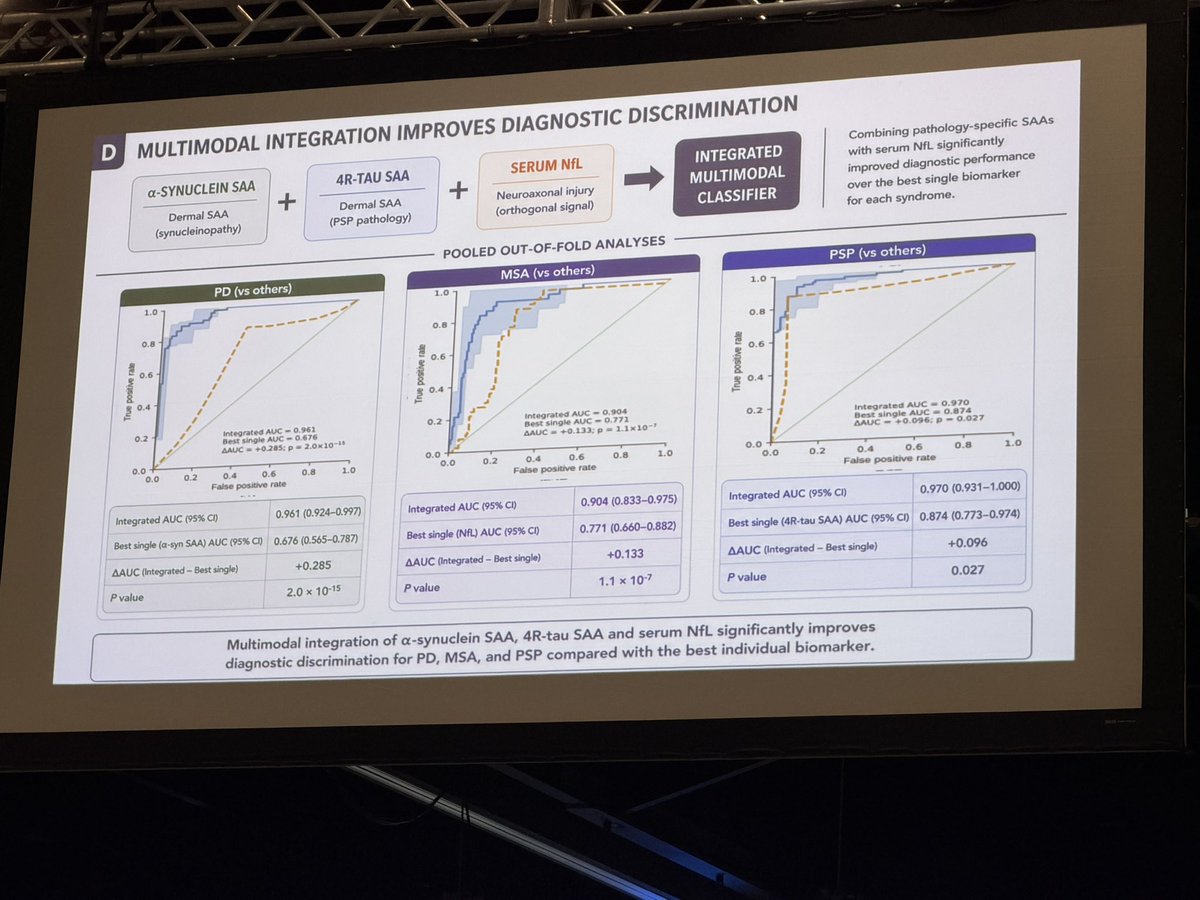
Big challenge in Parkinson’s is that synuclein seeding assays can be positive across many diseases. Nice plenary this morning showing how this group uses synuclein seeding + 4 R TAU + NFL to sort this out using a multi-modal biomarkers approach. This is one such approach used at the University of Toronto and presented today at the World Parkinson Congress.
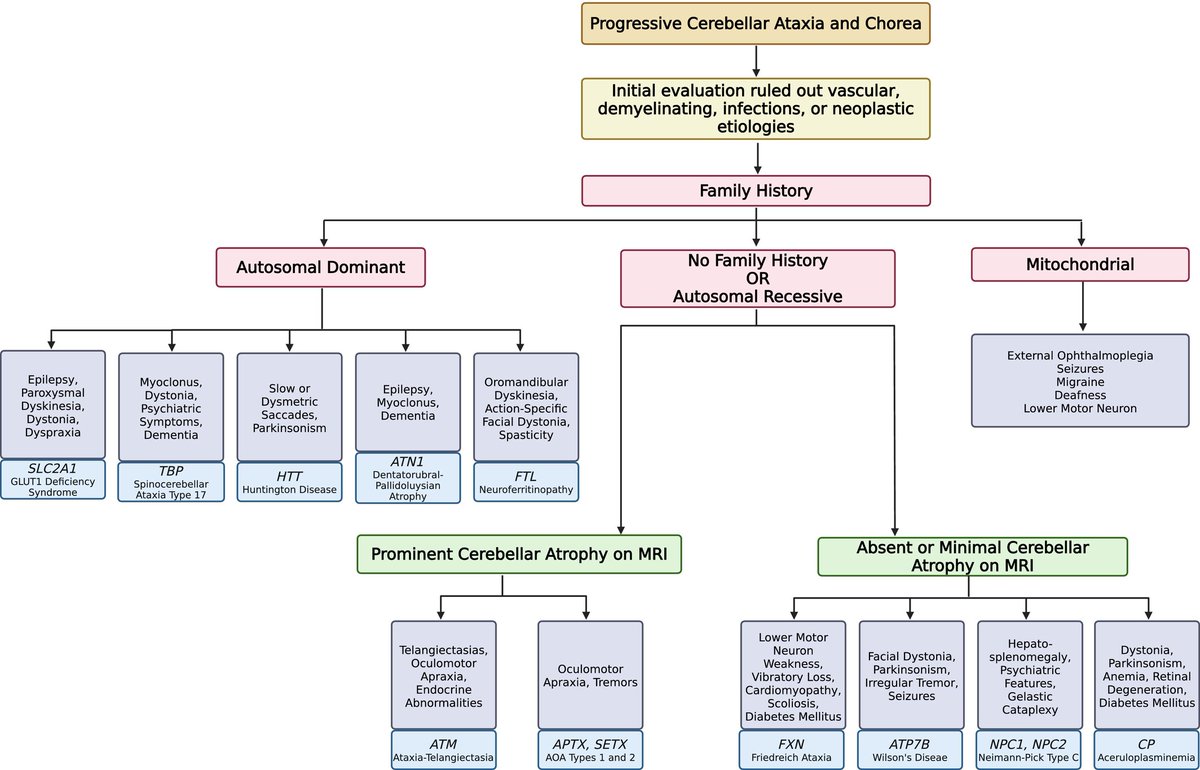
Predominant tremor and cognitive decline as key features of SCA27A https://t.co/WCnRnQJeie
SCA27A: Early-onset tremor, earlier and progressive cerebellar ataxia, higher frequency of cognitive impairment, dystonia
SCA27B: Late-onset, episodic cerebellar ataxia with prominent downbeat nystagmus and without early tremor or overt cognitive decline