Twitter is really becoming unbearable. I fully support keeping science separate from politics, but this is going too far. Foreign oligarchs should not be influencing European politics. I’ll still be around here, but my main activity is now on 🦋👇
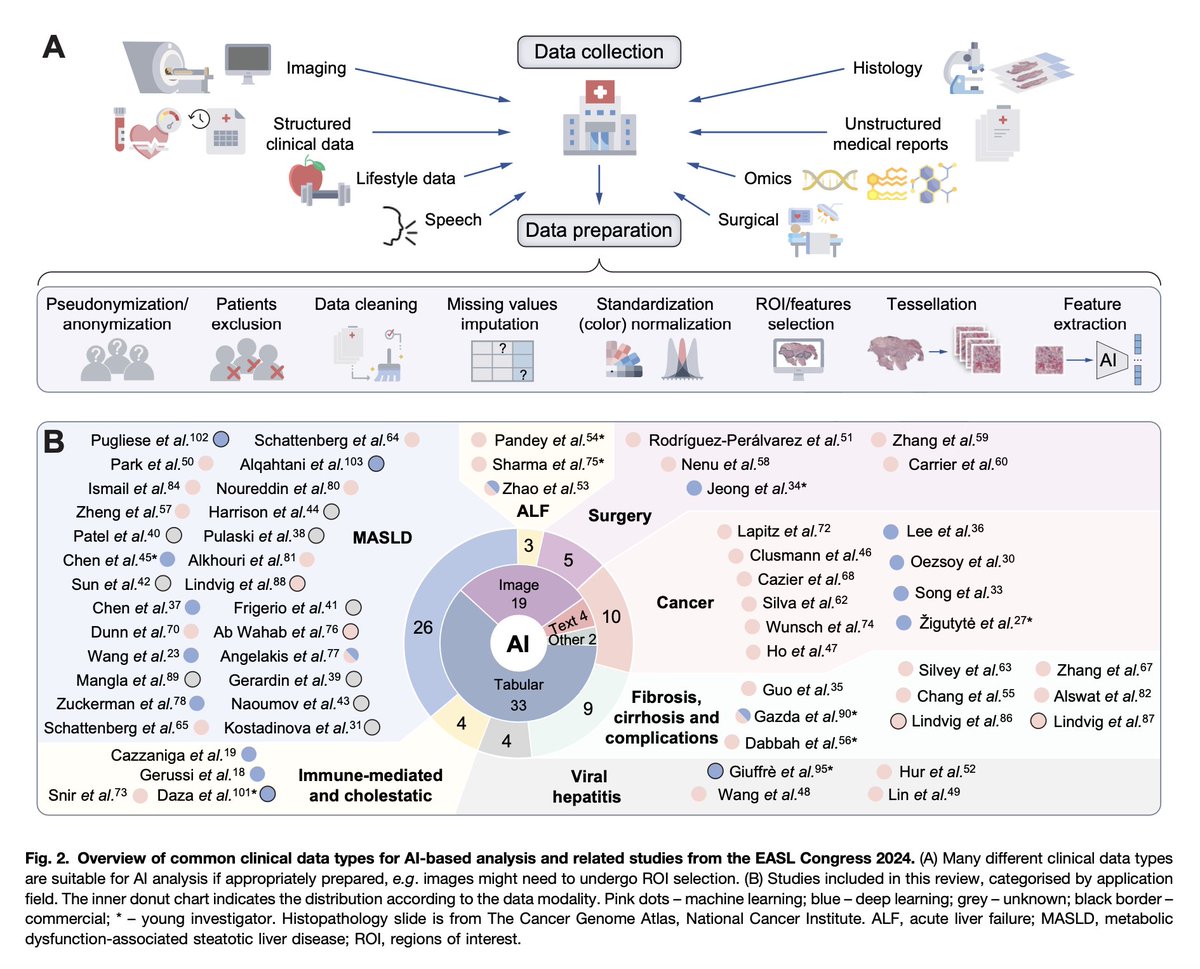
Happy to share a new review article led by Laura @zigutyte from @Katherlab. We surveyed all contributions at Europe’s largest conference on hepatology, @EASLnews 2024. The liver research field is already integrating AI techniques for diagnostics, evaluating treatment effectiveness, assessing risks, and more. https://t.co/zd0lqTB6BT
Today, we hosted the first conference on LLMs in medicine at @katherlab / @tudresden_de, chaired by @IsabellaWies 🤩 We are not just riding the hype train🚆 - we are working hard to provide scientific & clinical evidence for benefits and limitations of LLMs in healthcare
We had a fun session on artificial intelligence at the @dgho_eV German/Swiss/Austrian conference of #hematology and #oncology in Basel 🇨🇭Both the main room and the overflow room were overflowing ... thanks to excellent speakers @leukaemielabor@C_V_Schneider & others
This study developed an open-source tool using a LLM to extract important medical information from clinical text, focusing on decompensated #LiverCirrhosis.
The tool identified liver cirrhosis from free text with 100% sensitivity and 96% specificity, and showed strong results for other symptoms inc. ascites & abdominal pain, demonstrating its potential for efficiently analyzing clinical data.
https://t.co/OdqjUj1jIS
This week was about research. It is inspiring to see how people come together, clinicians with computational scientists, all with a common goal, to help cancer patients on their journey.
Together, we are better!
Thanks, @jnkath, for organizing a great AI in medicine week.
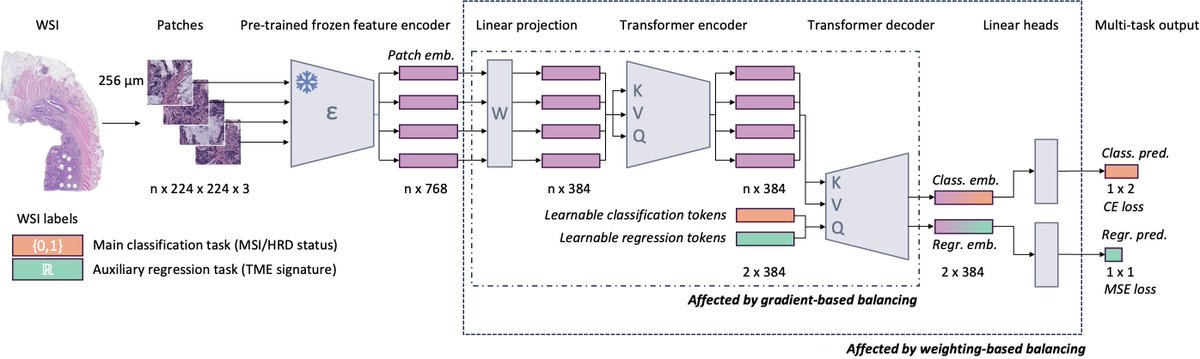
Excited to present my latest work accepted in #MICCAI2024 on joint multi-task learning in computational pathology!
We reach SOTA performance on predicting MSI and HRD status by learning auxiliary regression tasks related to the tumor microenvironment 🔬
https://t.co/YgBowkkU9k
New research from @katherlab, led by @JClusmann : "Prompt Injection Attacks on Large Language Models in Oncology" https://t.co/pw6jBb9uJg We show that vision-language models in oncology can be attacked easily, creating malicious output which could harm patients.
@tudresden_de@NCT_UCC_DD@NCT_HD@EKFZdigital@DKFZ
New preprint from @katherlab, led by @IsabellaWies - large language models can solve one of the hardest problems in medical informatics - robustly anonymizing unstructured medical documents. This unlocks a large source of clinical data for downstream AI applications. Available open source.
@NCT_UCC_DD@DKFZ@NCT_HD@tudresden_de @prof_ebert @NEJM_AI@EricTopol @Medizin_TUD
Out today in @Nature - a broad overview of AI in oncology, happy to have contributed to this along with many colleagues and friends @PrelajArsela@anantm & others