Assistant Professor: Baylor University @Baylor_Business. Prev: Bath @columbia_biz; @CUBoulder (psych) @NotreDame Views my own; tweets are not endorsements
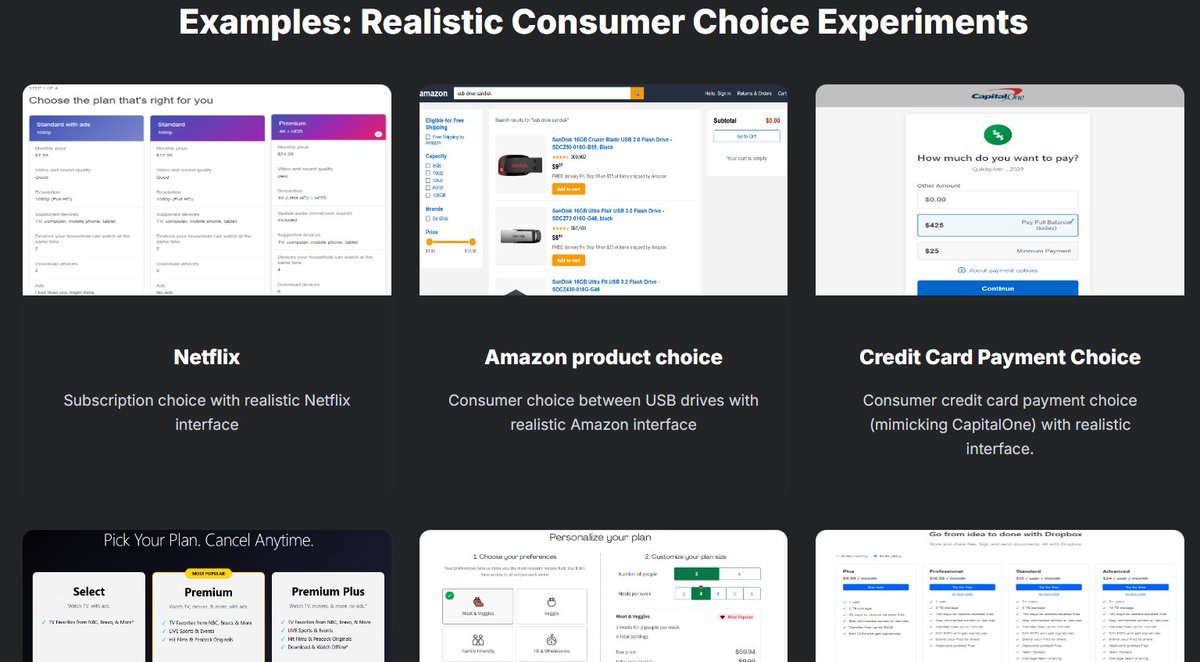
Want to make your research look, feel, & function like real online choices? I'm making a tool called Experimental Realism AI to do that. Try it out! https://t.co/Pqc36A1Udv Check out our examples, try the tool itself, & see how to integrate it with Qualtrics.
New on the SSPP: How do digital nudges used by online retailers influence consumer choices? @KellenMrkva, Ashley Otto, and Yuna Choe invite your predictions!
https://t.co/syB1upjEHK
⏱️ 10 min
📚 Econ, Psych
📅 Closes: April 18
@sdellavi@evavivalt
Last year, we published a paper showing that AI models can "debunk" conspiracy theories via personalized conversations. That paper raised a major question: WHY are the human<>AI convos so effective? In a new working paper, we have some answers.
Co-authors: @GordPennycook@DG_Rand
TLDR: facts
Do a benefit cost analysis of US AID and you will be hard-pressed to find another agency that does so much good per dollar spent. We should be grateful to people like Atul who has taken time from his medical practice to help the poor, sick and starving around the world.
New WP!
The illusory truth effect (repetition -> belief) is core to psych of beliefs, & thought to be a deep bias impacting misinfo, persuasion & advertising
Why would cognition include such a flaw? We argue it is a rational adaptation to high-quality info environments 🧵1/
How Test Optional Policies in College Admissions Disproportionately Harm High Achieving Applicants from Disadvantaged Backgrounds, by Bruce Sacerdote, Douglas O. Staiger, & Michele Tine in @nberpubs https://t.co/ZzFGoZnYxl
With differentiated products and heterogeneous consumers, it may be hard for choices to deliver maximal welfare. We might regret choices we make, and we might miss out on products we would have enjoyed. @ReimersImke and @criedl explore this https://t.co/7oy2CXB7GY
New paper alert 🚨
Excited to share that our new paper, "When and Why Consumers (Erroneously) Believe Income Impacts the Enjoyment of Consumption Experiences," has been published in @JCRNEWS!
Check it out here: https://t.co/hl0pg9DKcc
A quick🧵
Accepted Paper Alert 🚨
Our experiment on LLM search, designed before we knew Microsoft or Google would go into LLM search, was just accepted at CHI
https://t.co/yuvuLGQhsA
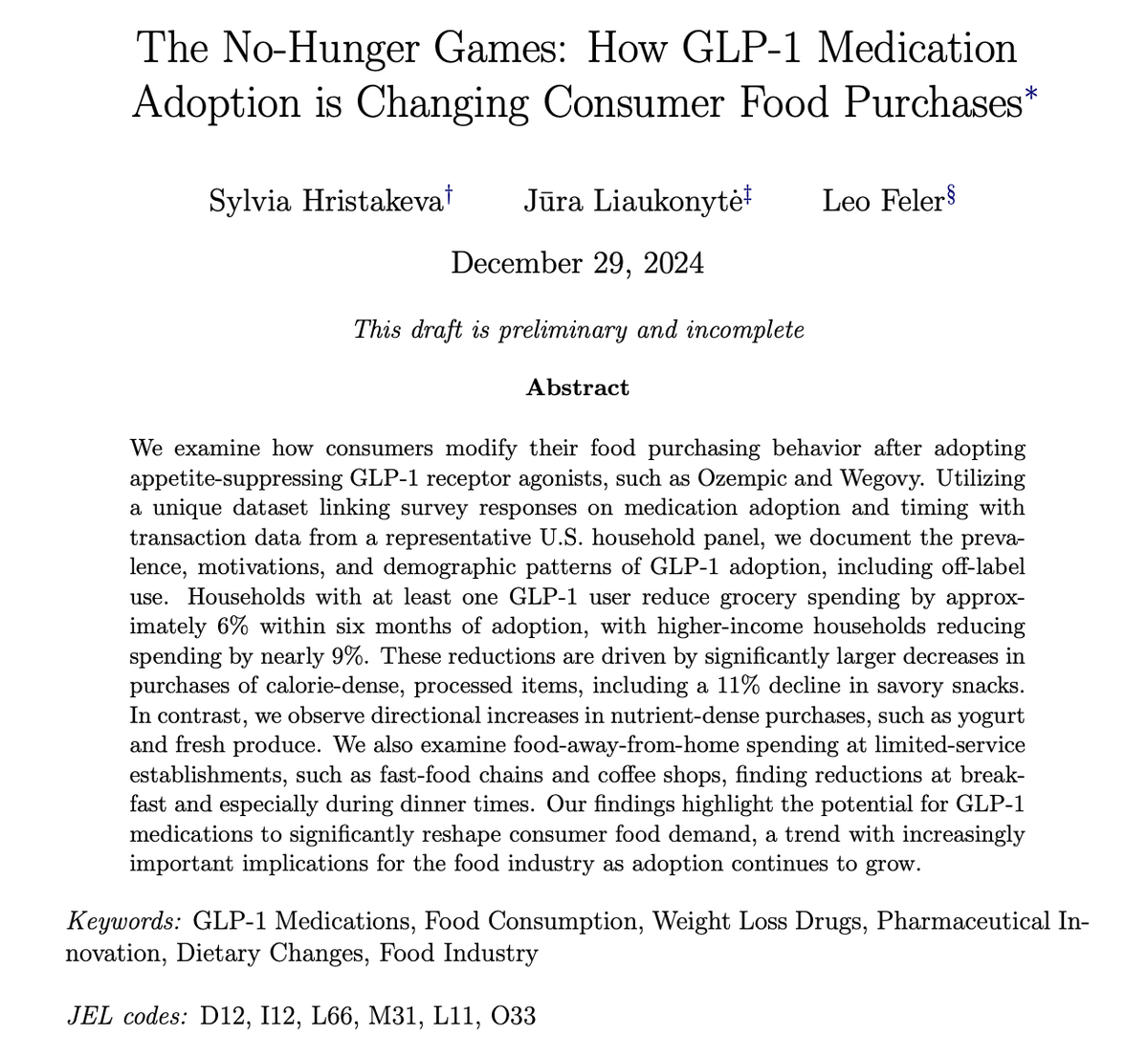
🚨Closing out 2024 with new paper with @hristakevas and Leo Feler: How GLP-1 medications like Ozempic are reshaping food demand and changing the rules of the game for the food industry.
In our new @PNASNews paper, across 21 experiments with 23,000+ participants, we identify a critical distortion that shapes decisions involving tradeoffs: we find that people systematically overweight quantified information in such decisions. Paper: https://t.co/q6bgaJpEPq 🧵
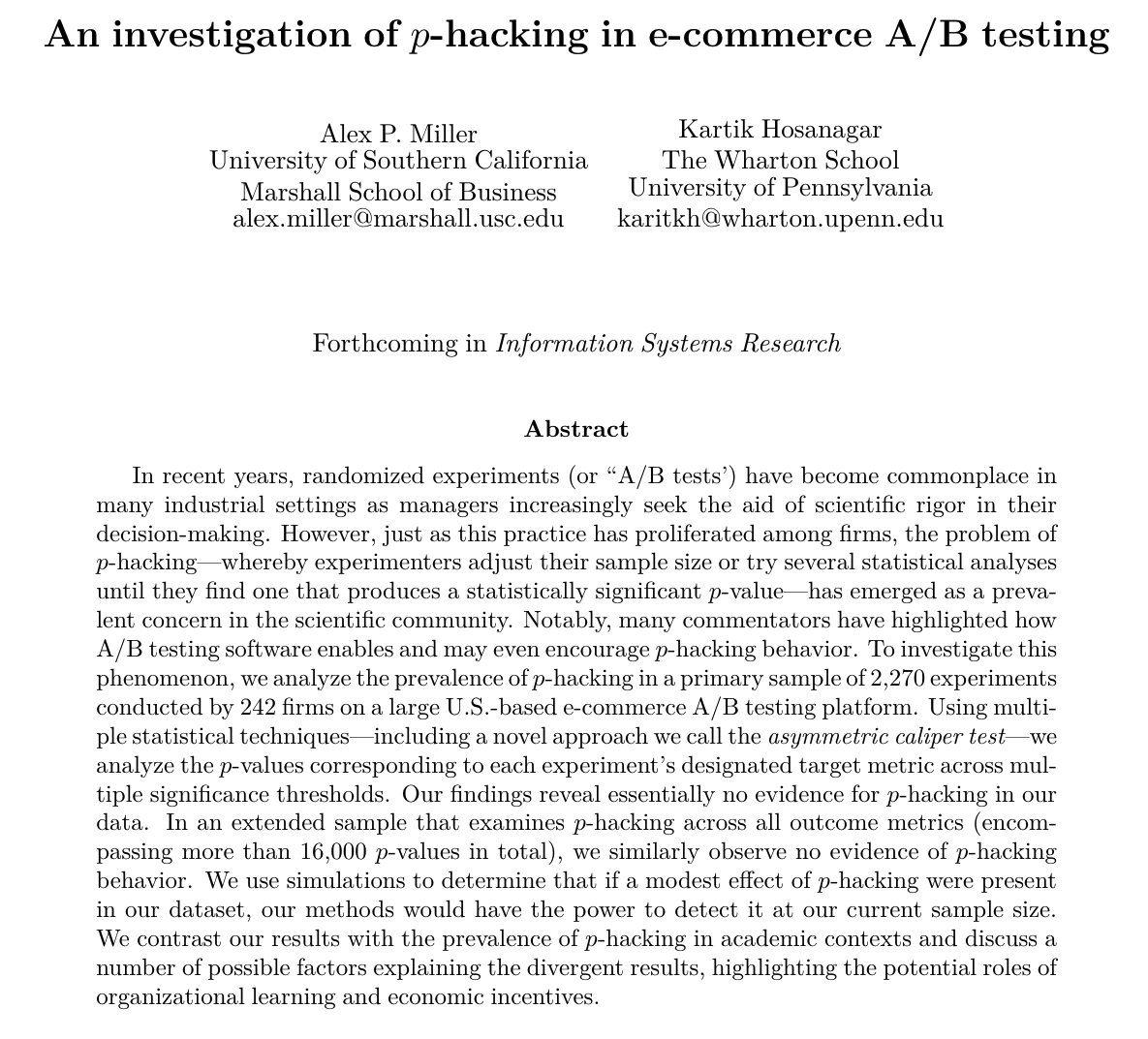
💡I am happy to announce new research with @KHosanagar. Available below and forthcoming in 𝘐𝘯𝘧𝘰𝘳𝘮𝘢𝘵𝘪𝘰𝘯 𝘚𝘺𝘴𝘵𝘦𝘮𝘴 𝘙𝘦𝘴𝘦𝘢𝘳𝘤𝘩.💡
Link (PDF): https://t.co/HObSypD81s
We study p-hacking, A/B testing, data-driven decision making, and more.
Short thread below👇
🚀Now out in @NatureHumBehav 🚀
How can we reduce dishonest behavior in a tax evasion game?
A classic method is through honesty oaths. But… do all honesty oaths work the same?
To answer this question, we adopted a mega-study approach, testing 21 different honesty oaths on more than 20.000 people.
The results are quite surprising: both experts and laypeople failed to predict the most effective interventions.
Some oaths worked, others didn’t. The most effective oath almost halved tax evasion.
So, which oath was it?
It was one that highlighted specific behavior:
“I hereby declare that I will provide honest information when reporting my final income from the sorting task.”
You can read the full paper here: https://t.co/vJw0v0EgBu
This project was wonderfully led by Janis Zickfield: @Goatfield2
w/ @kascigala, @CElbaek, John Michael, Mathilde Tonnesen, @gabriellevy1, Shahar Ayal, @IsabelThielmann, @LailaNockur, @E_yal_Pe_er, Rachel Barkan, Simen Bo, @bahniks, Daniele Nosenzo, Ralph Hertwig, Nina Mazar, Alexa Weiss, Ann-Kathrin Koessler, @MontalRoni51916, @shafenbraedl, Yngwie Asbjorn Nielsen, @PatKanngiesser, Simon Schindler, Philipp Gerlach, @NCKobis, Nicolas Jacquement, @mVranka, @danariely, @jareefbnmartuza, @feldman_yuval, @mbialek82, @jan_k_woike, Zoe Rahwan, @alicia_seidl, Eileen Chou, @agnekaj, @simeonschudy, @UGlogowsky, Anna Czarna, Stefan Pfattheicher, Panagiotis Mitkidis.
1. Too often, businesses make people jump through endless hoops just to cancel a subscription.
Today @FTC finalized a rule requiring that businesses make it as easy to cancel a subscription as it is to sign up for one.
https://t.co/kAQM7OChHe
In 2 digital field experiments, we found that unfollowing hyperpartisan influencers on Twitter:
-Reduced partisan animosity by 24%—with effects persisting for 6 months!
-Increased satisfaction with Twitter
-Led people to share higher-quality news
https://t.co/OqdS56xHg3 (thread)
Interesting post by @GiveWell about their work in appraising the effectiveness of charities and how that lines up with baseball statistics https://t.co/lb9g6UX8oj
🚨New in @NatureHumBehav 🚨
Will misinfo warning labels backfire for ppl who distrust fact-checkers? No!
Labels reduce belief in & sharing of false news even for those highly distrusting of fact-checkers - warning labels are a key tool for platforms!
https://t.co/Le9nZftM2N