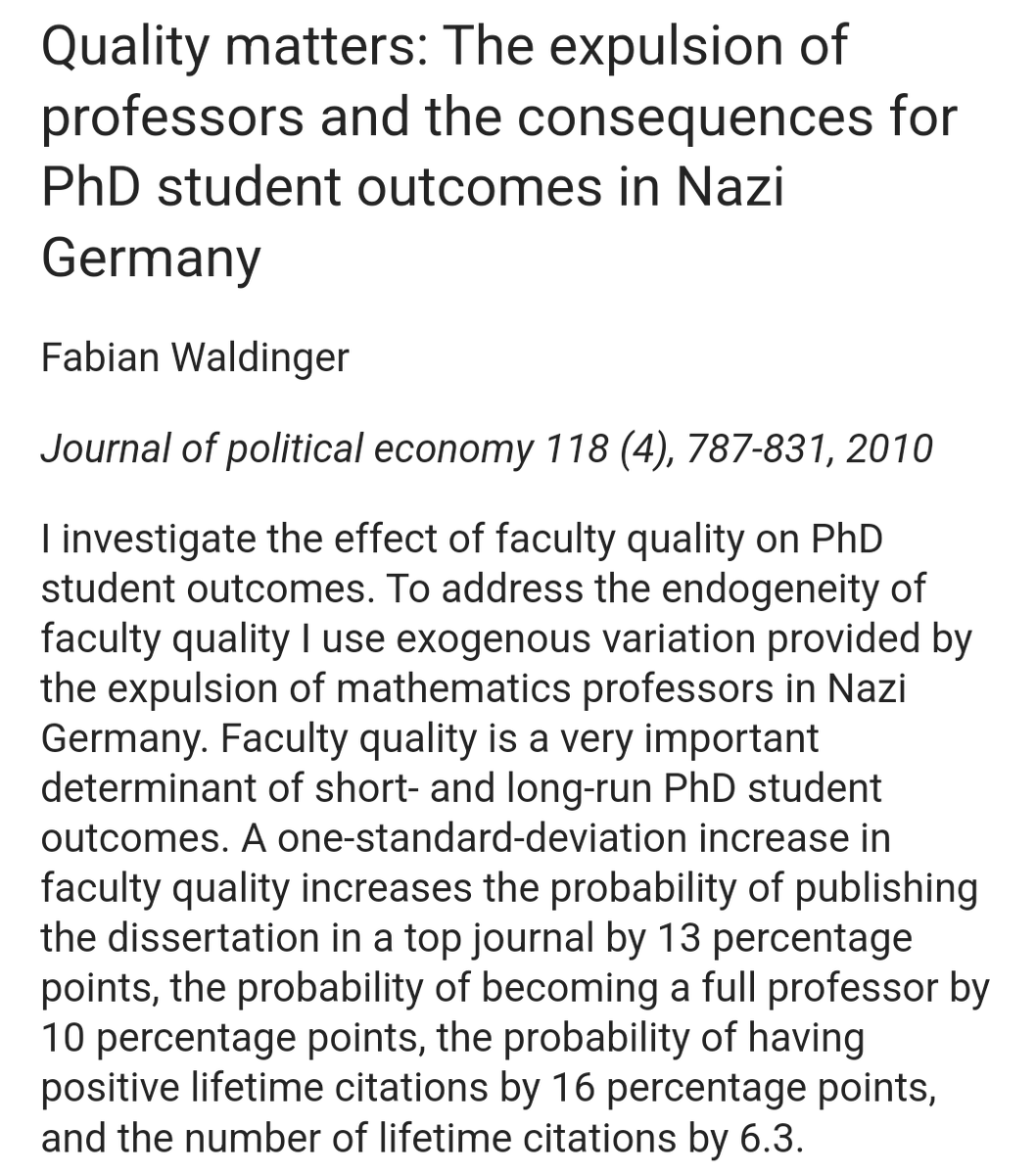
A very interesting, and IMO mechanistically plausible, argument. It the sort of argument scholars of AI in science *could* be measuring/testing but currently aren't
Seeing this study being widely re-shared with the take away that now AI >= human in peer review, in every dimension. People need to tone it down a little... This is primarily GPT evaluating Claude's comments. To me, the more useful signal is the 3 past editors of unnamed journals rating human vs Claude reviews, but this is only related to just 10 papers, it's not clear the editors have specific expertise in the paper topics or methods, and it reads as though the editors looked at the reviews but not the actual papers. I know we will need AI in the loop in some fashion to manage the paper deluge. I also realize that AI is already widely used in peer review and it's better to step in to manage / govern that process than let people do whatever they want. In my experience, AI certainly surfaces useful / good comments, particularly on methods, but many of the comments can be pedantic. Many models also still have terrible judgment about the other aspects that determine a study's value, e.g., whether the question is important. We're not yet at the point of ditching the human. Note: I'm pushing back here on the interpretations people are sharing when circulating this work, not the discussion in the paper itself.
Randomized Experiments in the Science of Science:
Lessons from Peer Review and the Evaluation of New Knowledge, @nberpubs chapter
https://t.co/M9iPIGnYtO
An analytic synthesis of all journal-published RCTs in #ScientificEvaluation and #PeerReview.
In retrospect it is surprising that OpenAI released o1-preview. As soon as they showed off reasoning, everyone copied it immediately.
And if they had held off releasing a reasoning/planning model until o3 (& called that GPT-5) it would have been a startling leap in AI abilities.
🚨New WP🚨
I used to think AI would replace workers.
Studying a database with the near universe of commercial AI (including GenAI + factory, and office tools) I found the opposite:
AI increases employment by giving low-skilled workers expert knowledge.🧵
💥 I’m starting something new inside OpenAI! It’s called OpenAI for Science, and the goal is to build the next great scientific instrument: an AI-powered platform that accelerates scientific discovery.
Bana, S., Boudreau, K. (2025) — AI-ENABLED JOB MARKETS & MARKET PARTICIPATION: A FIELD EXPERIMENT ON HOW AI SHAPES JOBSEEKERS’ EXPECTATIONS OF COMPETITION
Field experiment showing that use and disclosure of AI reduces jobseeker participation by about 25%. https://t.co/zcg0IKz74C
Best analogy for @karpathy Vibe Coding.
Is watching @justinbieber conduct an orchestra.
With no sheet music, no conducting training—just vibes, hums and vision.
And it's the future of how creators and designers will work.
We will think in ''concept level'', orchestrating AI to bring ideas to life. @antonosika on the @20vcFund
Listening, iterating, and flowing with it.
Bieber is like master Vibe-Designer here.
It's hypnotic and awesome to watch this tbh. 😎🥰
This is what 'text-to-x' paradigm will do for behavior.
And why the @lovable of this era are creating.
(sourced from his IG LIVE)
Call for papers:
HEC Paris AI & Entrepreneurship Workshop (#3)
Topics: Entrepreneurship & AI, and implications of AI for orgs & markets, entrepreneurship, …
When: Dec 13
Where: HEC Paris
Keynotes: @EmmaBrunskill@lugaricano
Deadline: Sept 22
Info: https://t.co/VL0PsBNfIB
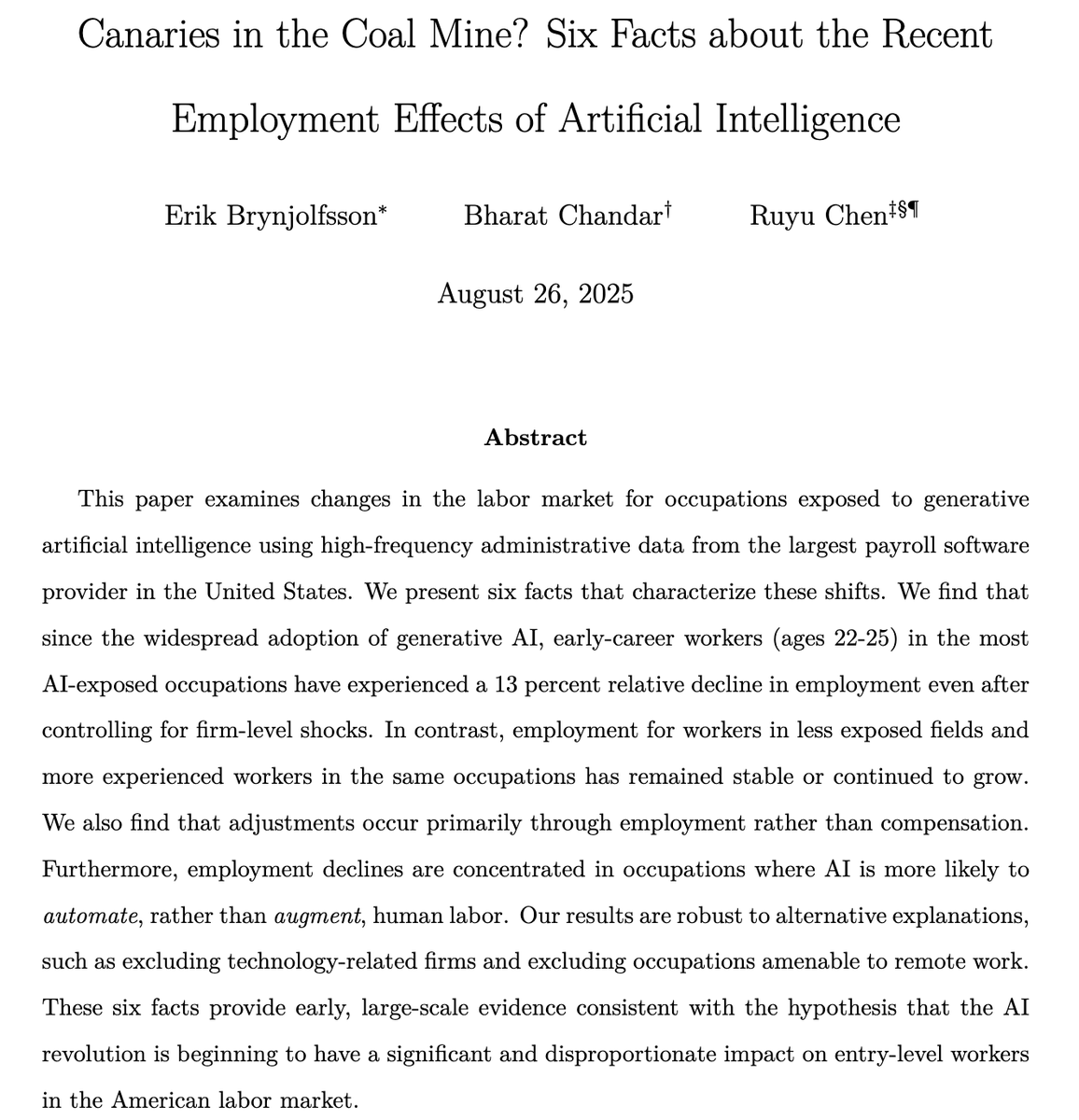
Is AI already impacting the job market?
A new paper from me, @erikbryn, and @RuyuChen at @DigEconLab digs into data from ADP.
We find some of the ***first large-scale evidence of employment declines for entry-level workers in AI-exposed jobs.***
A thread on our paper:
Kevin Boudreau, Lars Bo Jeppesen, Milan Miric "ARTIFICIAL INTELLIGENCE AS A PLATFORM TECHNOLOGY: STRATEGIC IMPLICATIONS OF COMPETING ON TOP OF AN AI PLATFORM". forthcoming chapter in HANDBOOK ON AI & STRATEGY eds. Felipe Csaszar and Nan Jia https://t.co/8h9LBO3PQ4
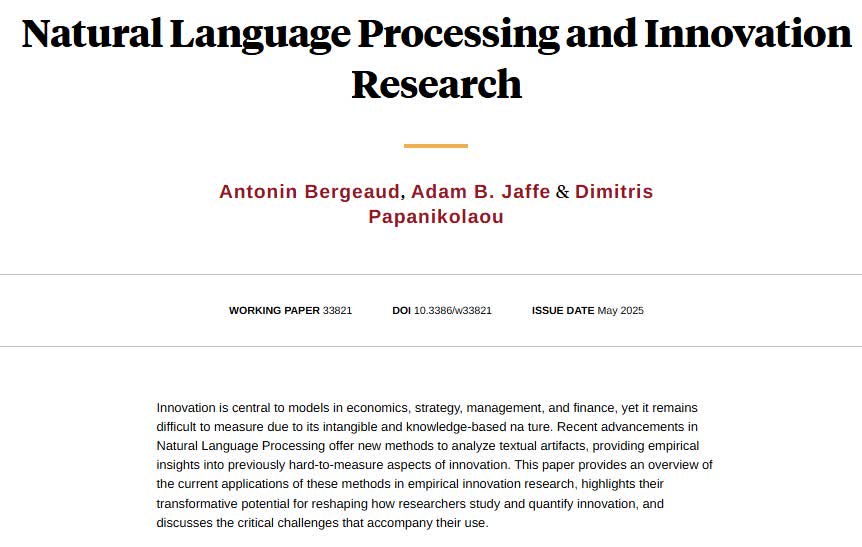
Assessing the potential and pitfalls of using Natural Language Processing in social science research on innovation, from @a_bergeaud, Adam B. Jaffe, and @DimitrisPapan20 https://t.co/vyYCsYHgQc
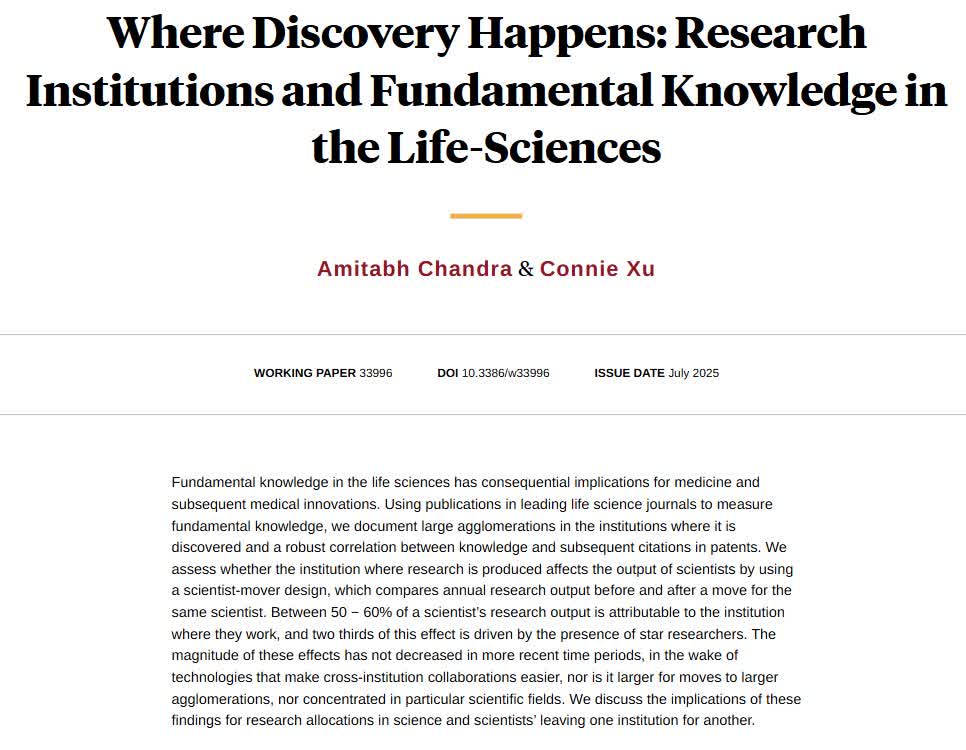
Between 50 to 60 percent of a scientist's research output is attributable to the institution where they work, and two thirds of this effect is driven by the presence of star researchers, from @amitabhchandra2 and Connie Xu https://t.co/1xicac80UF