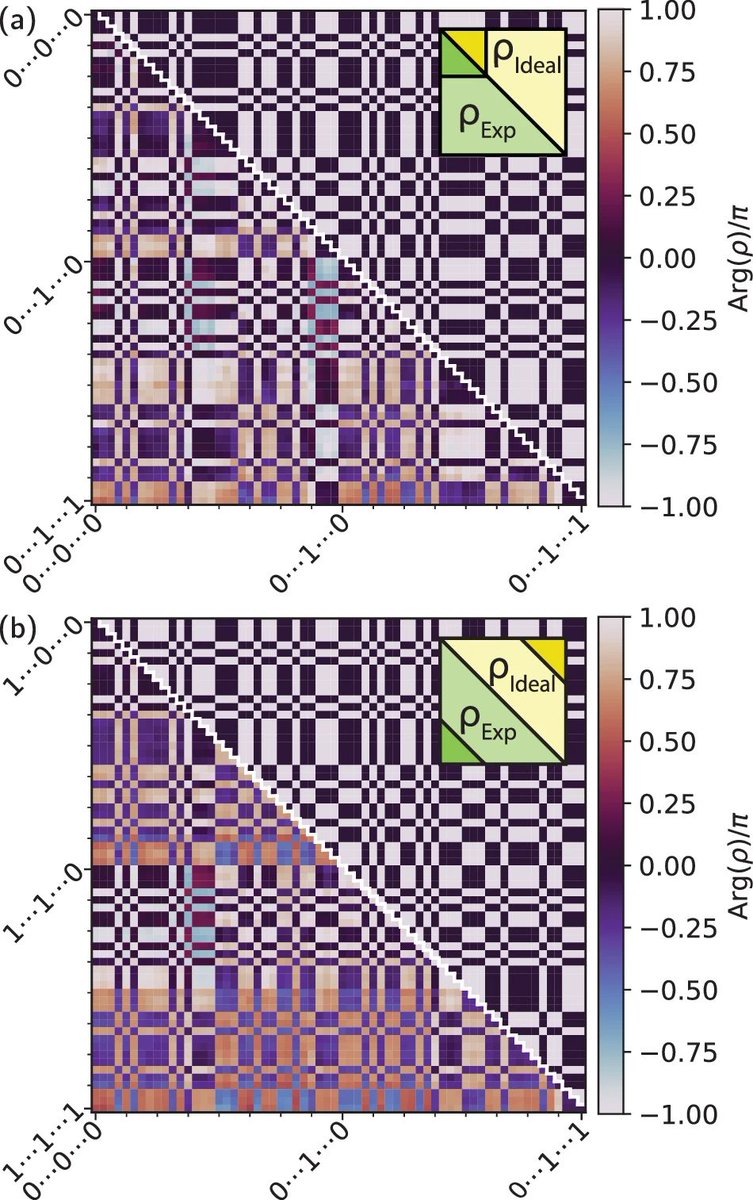
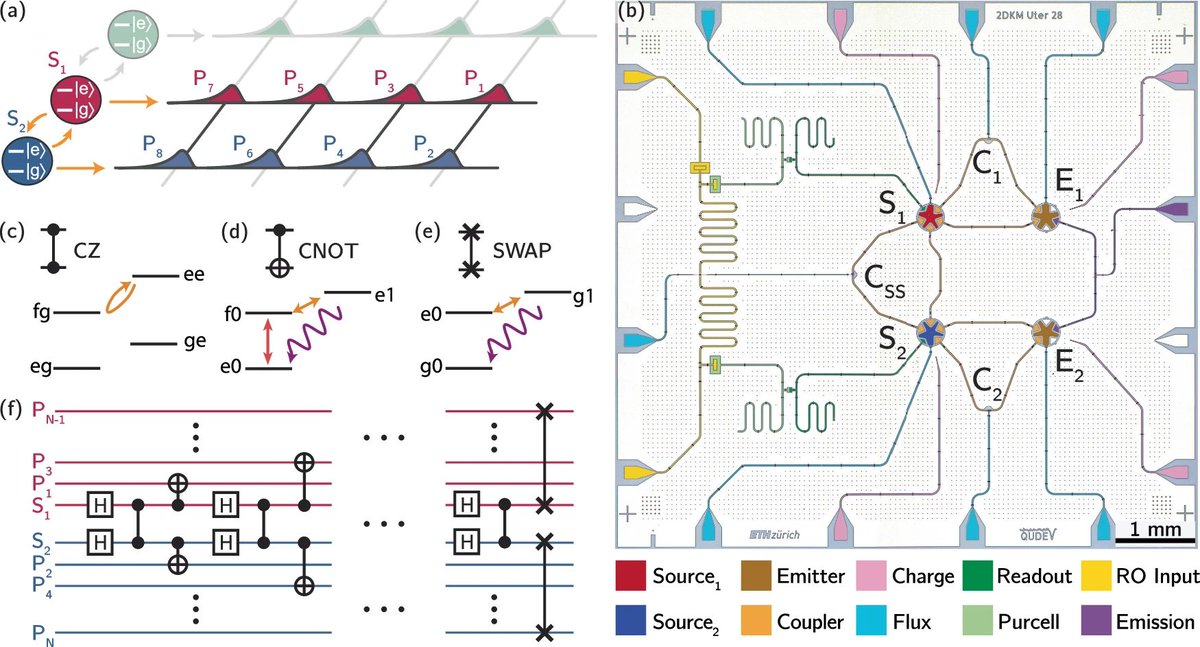
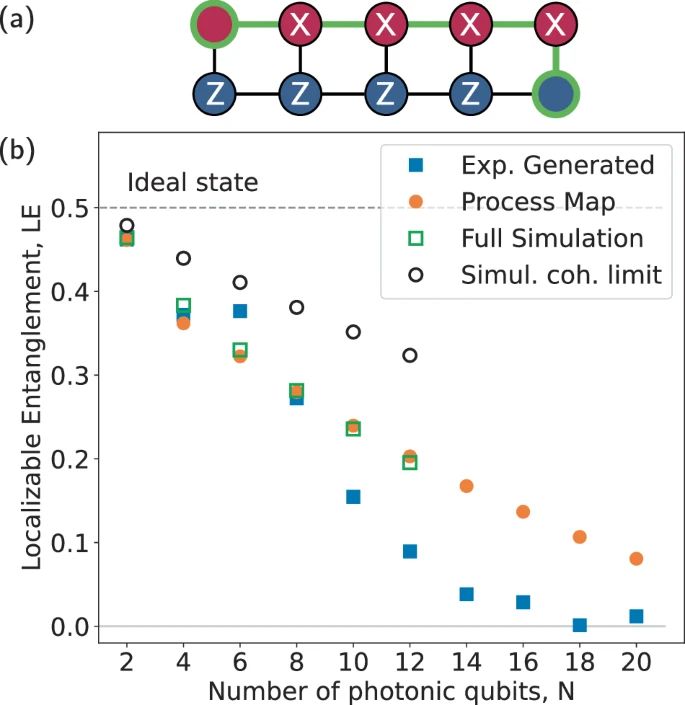
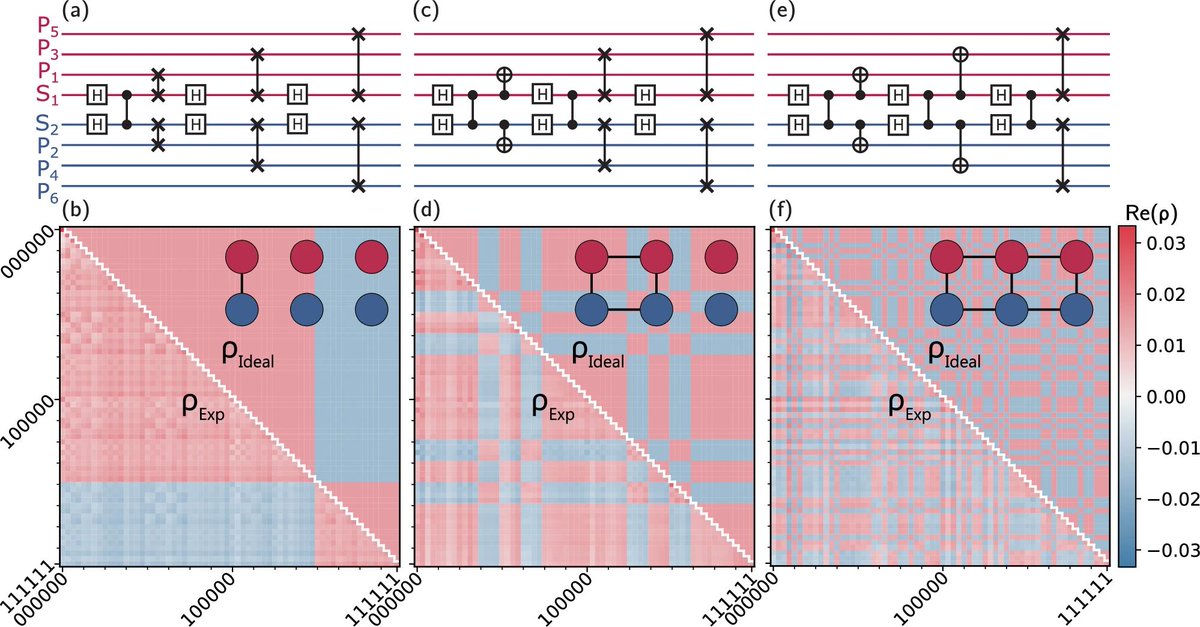
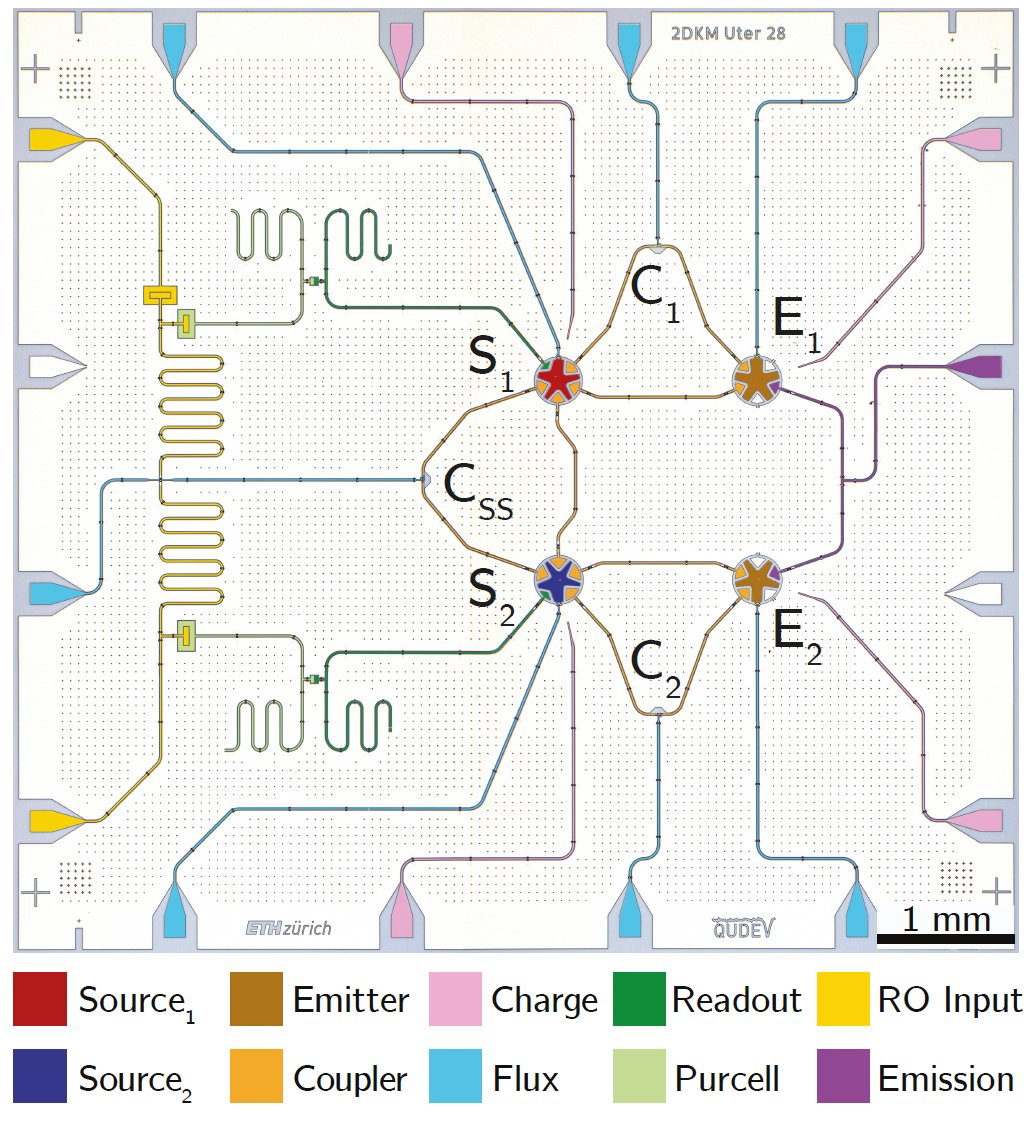
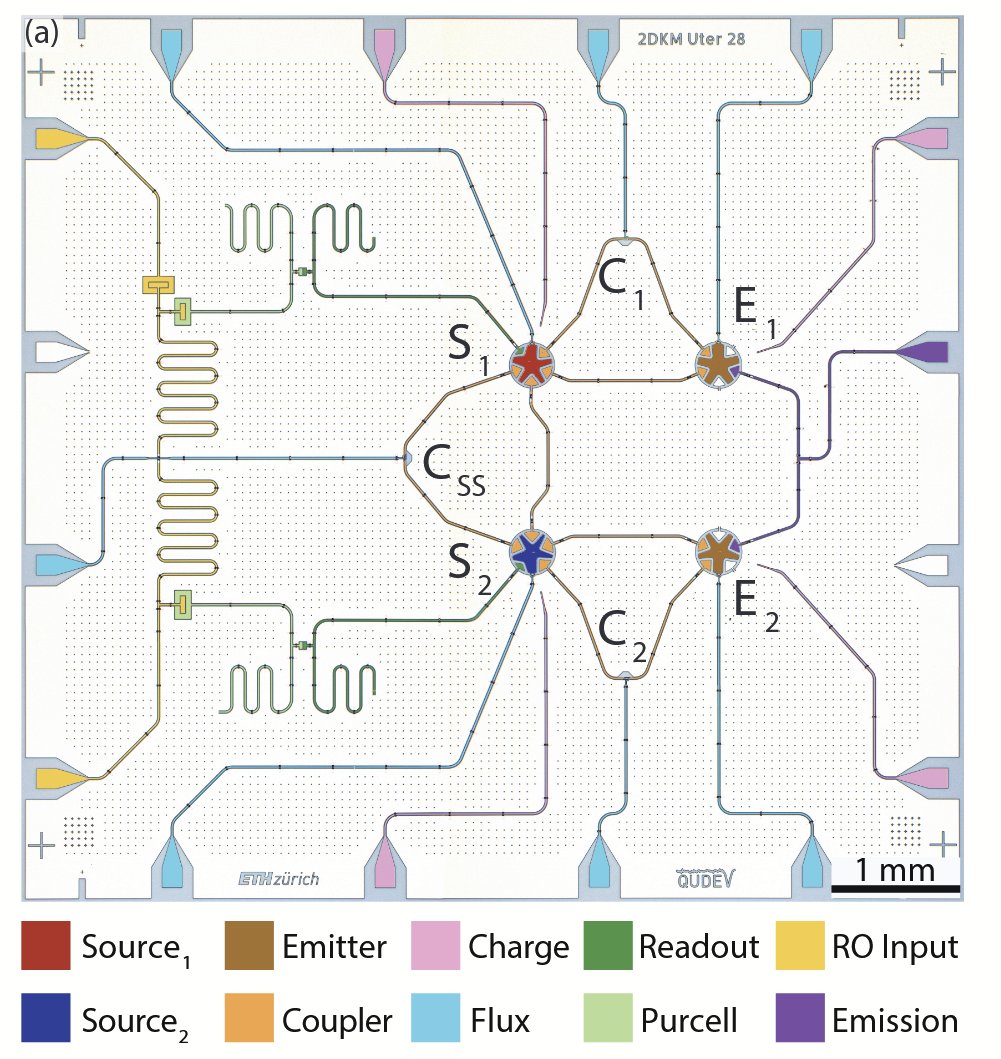
Check out our new article in Nature Communications on "Deterministic generation of two-dimensional multi-photon cluster states" by James O’Sullivan, Kevin Reuer, Aleksandr Grigorev, Xi Dai, Alonso Hernández-Antón, Manuel H. Muñoz Arias, Christoph Hellings, Alexander Flasby, Dante Colao Zanuz, Jean-Claude Besse, Alexandre Blais, Daniel Malz, Christopher Eichler & Andreas Wallraff. In this work we have investigated the entanglement generated in a series of up to 20 microwave frequency photons created with a superconducting quantum circuit. Check out some of the density matrices of the large entangled state shown below.
Read more using this open access link https://t.co/FZ6m1E0HPe or use this link to a pdf https://t.co/bkyB3qnA1t .
The work was done in a collaboration with Institut quantique - Université de Sherbrooke, Université de Sherbrooke, Københavns Universitet - University of Copenhagen. The experiments were performed at our Quantum Device Lab which is part of the Department of Physics (D-PHYS), ETH Zurich, and the Quantum Center, ETH Zurich.
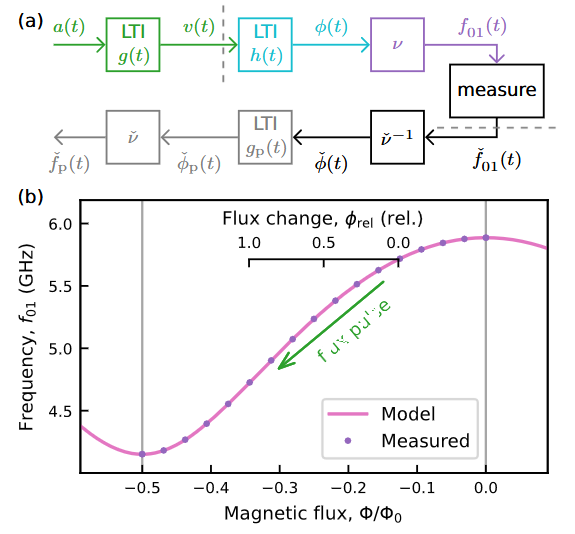
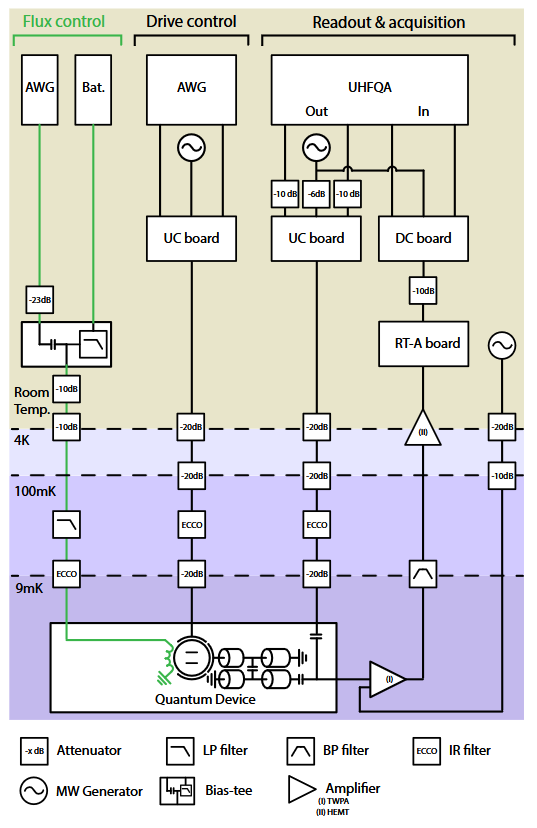
Are you curious how to control the transition frequency of your superconducting qubit accurately using magnetic flux? This is useful in many experiments performed with superconducting circuits, e.g. in quantum computation, or when using qubits as sensors for electromagnetic radiation. In the new manuscript "Calibrating Magnetic Flux Control in Superconducting Circuits by Compensating Distortions on Time Scales from Nanoseconds up to Tens of Microseconds" we document the methods which we use in our @qudev Lab (@ETHQuantumCntr, @ETH_physics) and at the @ETH_en Zürich - @psich_en Paul Scherrer Institut #Quantum Computing Hub.
Read the @arxiv abstract here https://t.co/TDuOSK7OrC or directly download the manuscript here https://t.co/ymVTgBbnCO.
The work was done by Christoph Hellings, @NathanLacroix, @AntsRemm, Richard Boell, Johannes Herrmann, Stefania Lazar, @SebKrinner, @FrancoisSwiadek, Christian Kraglund Andersen, @eichler__chris, @AndreasAtETH and supported by @IARPAnews , the @snsf_ch, and the @ETHFoundation1 .
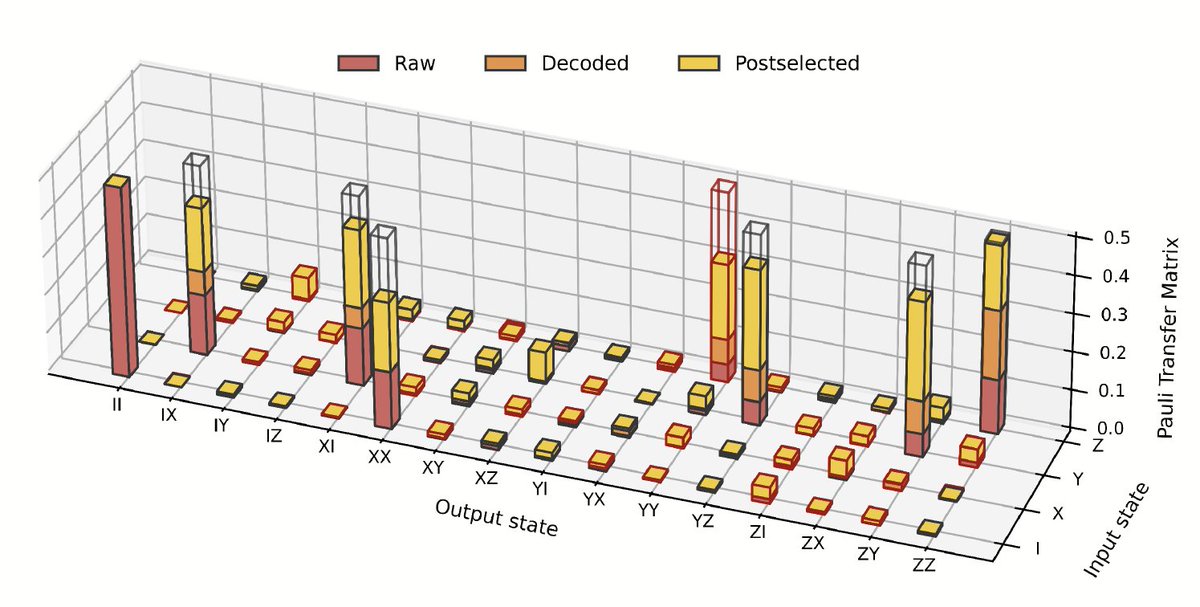
Check out our new @qudev lab (@ETH_physics@ETHQuantumCntr) paper on entangling #quantum error corrected logical qubits in superconducting circuits entitled "Realizing Lattice Surgery on Two Distance-Three Repetition Codes with Superconducting Qubits" out on @arxiv today (https://t.co/qU55mWY6q5).
The work was done in collaboration with @fz_juelich and @RWTH Aachen, and was executed at the @ETH_en Zurich - @psich_en Quantum Computing Hub.
The work was supported by @IARPAnews, by @SBFI_CH, by @Innosuisse, by the @ETHFoundation1 and by @ETH #Zurich.
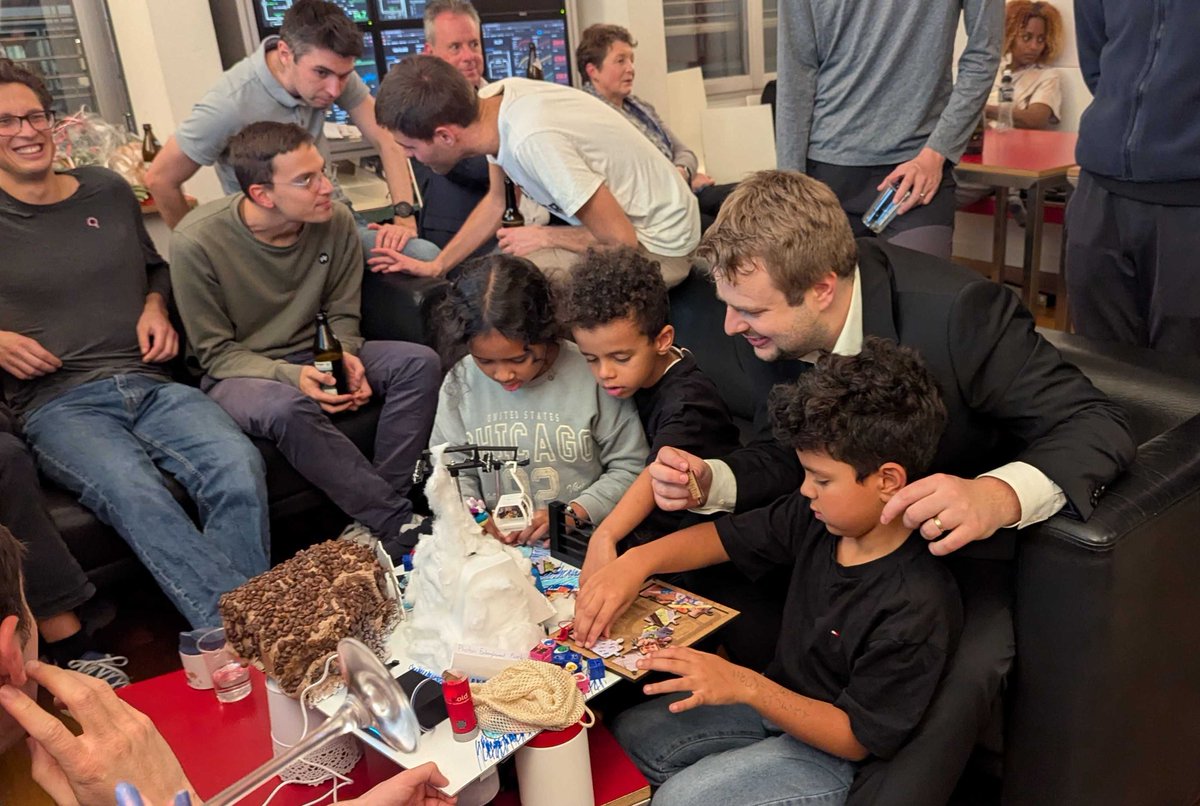
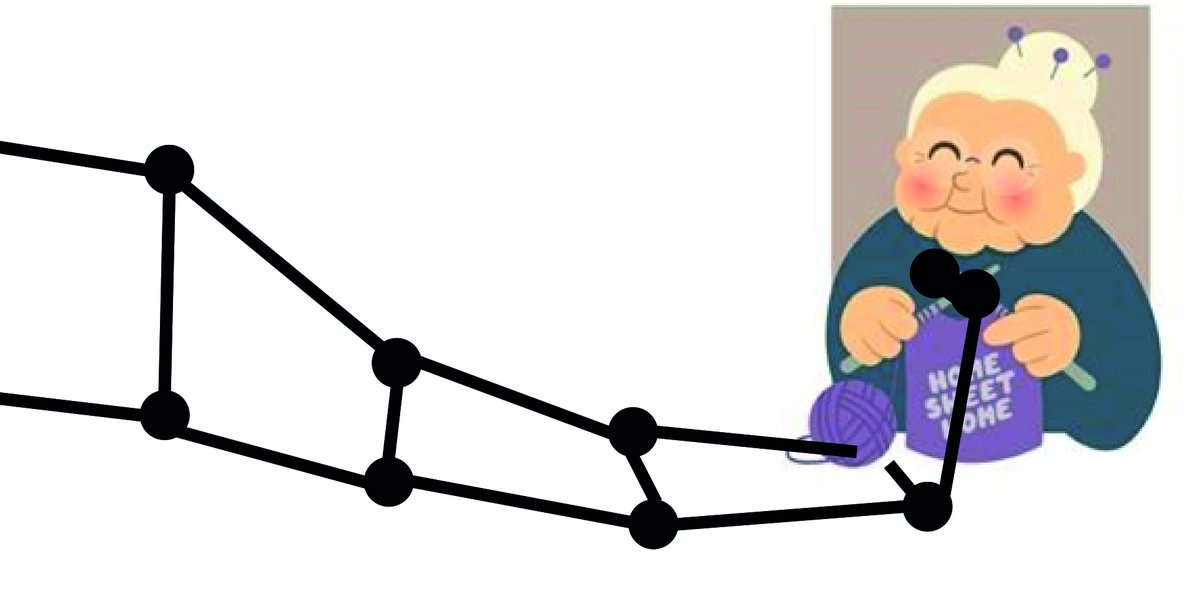
Also the PhD students of @qudev made an amazing PhD hat, complete with a ski 🎿 mountain, a reinforcement learning agent game and a photon knitting machine!! And a Mathematica code reading exercise!
#PhDone!!! Successfully defended my PhD yesterday with @AndreasAtETH@eichler__chris and Florian Marquardt in the examination committee and all of @qudev@ETH, friends and family in the audience. I'm very happy, relieved and grateful for everyone who supported me along the way.
A knitting machine spitting out entangled microwave photons!
Check out our new manuscript: https://t.co/vKmyAYdtVD!
We generate up to 20-qubit two-dimensional cluster states, to our knowledge the largest ever generated deterministically with discrete-variables!
This source of entangled graph state can be used for error-corrected quantum communication and for measurement-based quantum computing.
In addition, the methods used for generation and characterization may find useful applications in other platforms.
New @qudev@ETHQuantumCntr@ETH_physics@ETH_en manuscript on Complete Self-Testing of a System of Remote Superconducting Qubits out on @arxiv today.
This work was done in collaboration with @UnivParisSaclay@CNRS@CEA_Officiel and led by @simonstorz at @ETH.
Read more about it here: https://t.co/k7LEXHe7gH .
We make use of our 30-m-long #quntum link and our capability to perform loophole-free Bell tests which allows us to explore non-local #physics.
Verifying a quantum device without trusting its internal workings: we present device-independent self-testing with superconducting circuits, out on arxiv today.
Have you ever wondered what it is like to study quantum engineering?
In this wonderful new video, Quantum Engineering Master’s students at @ETH_en Zurich share their experiences.
https://t.co/iQVGHcexAJ
I didnt make it to this year's #APSMarchMeeting. However, my colleague James O'Sullivan will present our work @qudev@ETH_physics on generating a large entangled 2D cluster state in session M53 today https://t.co/vQoIaJ3kNg! Dont miss his talk about our quantum knitting machine!
Want to know how we entangle more than 10 propagating microwave photons at our @qudev lat at @ETH_physics@ETHQuantumCntr@ETH_en?
Go and attend James O'Sullivan's talk at the @APSphysics March Meeting in Minneapolis on Wednesday in Session M53: #Quantum Communication, Room: 202AB (https://t.co/9u68GDzZbL).
James lovingly calls this device the #quantum knitting machine.
#apsmarch @APSMeetings
Looks very delicious. Too bad, I could not enjoy a piece during our virtual celebration. Now that I look at it again, the connectivity of the chocolate neural net reminds of a 7-qubit device, we’ve made in the past to do a number of nice experiments…Coincidence?