NVIDIA shipped a new frontier model - Nemotron 3 Ultra, and we have already integrated it with the SERV Reasoning engine.
The base model scored 79.61 on our standard DeFi benchmark. Armed with SERV, it jumped to 90.78.
Thats +11.17 points gain.
SERV makes all models smarter.
Our agent just got a major upgrade - XONA agent is now powered by SERV Reasoning by @openservai.
We have been testing SERV in the Private Beta and it has far outpaced our default production stack running on Gemini frontier model. SERV delivers faster responses at a significantly lower cost, while maintaining the same 100% reliability in our workflow benchmark.
SERV Reasoning vs. Gemini on our agent workflow:
→ Accuracy & reliability: 100% for both models (20/20)
→ Latency: SERV responded 1,004 ms faster
→ Cost efficiency: SERV is 5x more cost-efficient
This upgrade helps us deliver better-performing resources for agents across the Agentic Commerce ecosystem.
Same reliability. Faster execution. Lower cost
We have anthropic and openAi about to trade at 1 trillion united state dollars
You genuinely think a decentralised alternative like $tao cant go to tens of billions just based on this?
Don’t overthink, trust the pump
We've been pretty quiet about what we're building. That changes now.
Our reasoning framework is currently beating every @OpenAI model on industry standard benchmarks. There are six models in development. SERV-nano just matched GPT-5.4 at 20x lower cost and 3x the speed. The research paper backing it is in peer review at a top-1% AI journal. The UAE government is running it in production, so are 10+ enterprises.
Nothing comes even close.
This goes far beyond any wrapper or prompt engineering gimmick, we've developed an entire AI reasoning layer from scratch: structured, bounded, deterministic using machine readable code instead of vague english prompts.
Any builder or enterprise swaps two lines of code and their agents get much cheaper and much smarter instantly. The self-serve API is about to open, in a multi-phase rollout.
More soon.
While some projects further dilute their share holders to line their pockets $XMW does the exact opposite.. now approaching over $800,000 in buybacks that are locked for 10 years the commitment to the token holder is on the front of Morphware’s priority. ⚡️
🟢 100% of all $BTC mining profits are put directly into buybacks! ⚡️
🟢$200,000 invested monthly for additional miners ! ⚡️
“Every single $XMW token will be bought back” - Kenso Trabing ⚡️
Virtune just listed a Bittensor $TAO ETP on Nasdaq Stockholm.
Let me explain how big this is:
Virtune is a Swedish regulated crypto asset manager. They're not some random startup. They manage over $300 million in assets across 21 crypto ETPs with 152,000+ investors. They reached profitability in Q4 2024. They're listed on Nasdaq Stockholm, Nasdaq Helsinki, Deutsche Börse Xetra, and Euronext. These are regulated European exchanges, not crypto exchanges.
Their products are 100% physically backed. They use Coinbase as custodian. They're regulated by the Swedish Financial Supervisory Authority. This is real institutional infrastructure.
On December 19, 2025, they launched Virtune Bittensor ETP (ticker: VIRTAO). This is their 21st product. It gives 1:1 exposure to $TAO through a regulated exchange traded product.
Nordic investors can now buy $TAO through their regular brokerage accounts. Avanza, Nordnet, SAVR, Montrose.
The same platforms they use to buy stocks:
No crypto exchange needed.
No wallet needed.
No custody risk.
Swedish investors can hold this in their ISK accounts. That's a tax advantaged investment account in Sweden. Capital gains are taxed at around 0.9% annually on the account value instead of 30% on realized gains. This makes $TAO accessible to wealth that would never touch a crypto exchange.
Virtune has 152,000 investors across their 20 other products. That's 152,000 people who already trust them, already have accounts, and can now add $TAO with one click, distribution.
The Nordic region has some of the highest crypto adoption rates in Europe. Sweden, Norway, Denmark, Finland. High wealth, high tech literacy, high crypto awareness. And now they have regulated $TAO access.
But here's what most chose to ignore. Virtune chose $TAO as product number 21. They've launched Bitcoin, Ethereum, Solana, Polkadot, Cardano, XRP, Chainlink, Avalanche, and others. They have a Coinbase 50 Index ETP. They have staking products. They understand the market.
They chose to launch a standalone $TAO product. Not bundled in an index. Not paired with anything. A dedicated Bittensor ETP.
Virtune is saying, "There's demand for this, and $TAO deserves its own product." That doesn't happen unless they see institutional and retail interest.
This follows Grayscale's Bittensor Trust launch in the US. We're now seeing regulated $TAO products on both sides of the Atlantic. US investors get access through Grayscale. European investors get access through Virtune. The infrastructure is being built.
The timing is perfect. We just passed the first halving. Emissions dropped 50%. The build phase is starting. Subnet economics are maturing. Revenue is growing. And now institutional access is expanding.
Most crypto projects pump first, then try to build legitimacy later. Bittensor is doing the opposite. Building infrastructure, generating revenue, launching institutional products, while trading at $229 per $TAO with a $2.20 billion market cap.
This isn't about Virtune making $TAO pump. This is about $TAO becoming accessible to capital that requires regulated products. Pension funds. Family offices. Wealth managers. Retail investors who won't use crypto exchanges.
That capital is measured in trillions. And it's now getting access.
When Grayscale launched GBTC in 2013, it was the first regulated Bitcoin product in the US. Bitcoin was $100. Institutional access changed everything.
Grayscale also just recently announced that GTAO is now SEC reporting. Making GTAO the first publicly quoted U.S. investment product for $TAO.
$TAO is getting the same treatment at $229. Regulated products in the US and Europe. Before mainstream awareness. Before the $19.9 trillion-dollar AI market by 2030 realizes decentralized infrastructure is cheaper and better.
Virtune sees it. Grayscale sees it.
This all puts $TAO in a category most crypto assets never reach.
The question is who else is paying attention.
$TAO.
Over the last five to six months, Morphware has entered a new phase of growth.
Our roadmap was clear. New clients onboarded in April. UAE deal in Q3. Infrastructure scaling in Q4. Everything aligned exactly when it needed to.
Today, multiple sites are under development. Each location is being prepared with proper wiring, transformer stations, cooling and all required infrastructure. This is not a temporary setup. This is long term capacity being built the right way.
There is only one moment to scale correctly. We executed that phase. Now it is time to optimize.
Supply chain management becomes critical at this level. Shipping new miners. Moving client equipment. Managing real world assets like transformers, containers and high voltage hardware. All of it needs to run smooth and fast.
Our goal is simple. New sites must be plug and play. Clients connect to Morphware Power without friction. No delays. No custom fixes. One standard. One system.
Because of our growth in 2025, we made a strategic decision. We will build our own mining and AI containers in Paraguay. No overseas shipping. No waiting times. No order limits.
These Morphware containers will be fully integrated, branded and ready for deployment. This lowers base costs, improves margins and gives us full control over delivery speed.
For new clients moving to Paraguay, we will offer the option to buy or rent these containers. Plug in. Power on. Start operating.
That adds another revenue stream in 2026 and on top of that, it’s creating jobs for the locals.
Scaling. Optimizing. Delivering.
Morphware. $XMW
🚨 $XMW 🚨 - Want to see why @MorphwareAI is gonna be a top 25 projects?
Most crypto projects generate almost no revenue relative to their market cap.
I had Chat rank the Top 25 cryptos by Revenue / Market Cap 👇
BREAKING NEWS FROM PARAGUAY HQ: MORPHWARE EXPANDS POWER SALES WITH NEW CLIENT!
We did it again. We’ve signed another client to a major energy contract for the next two years.
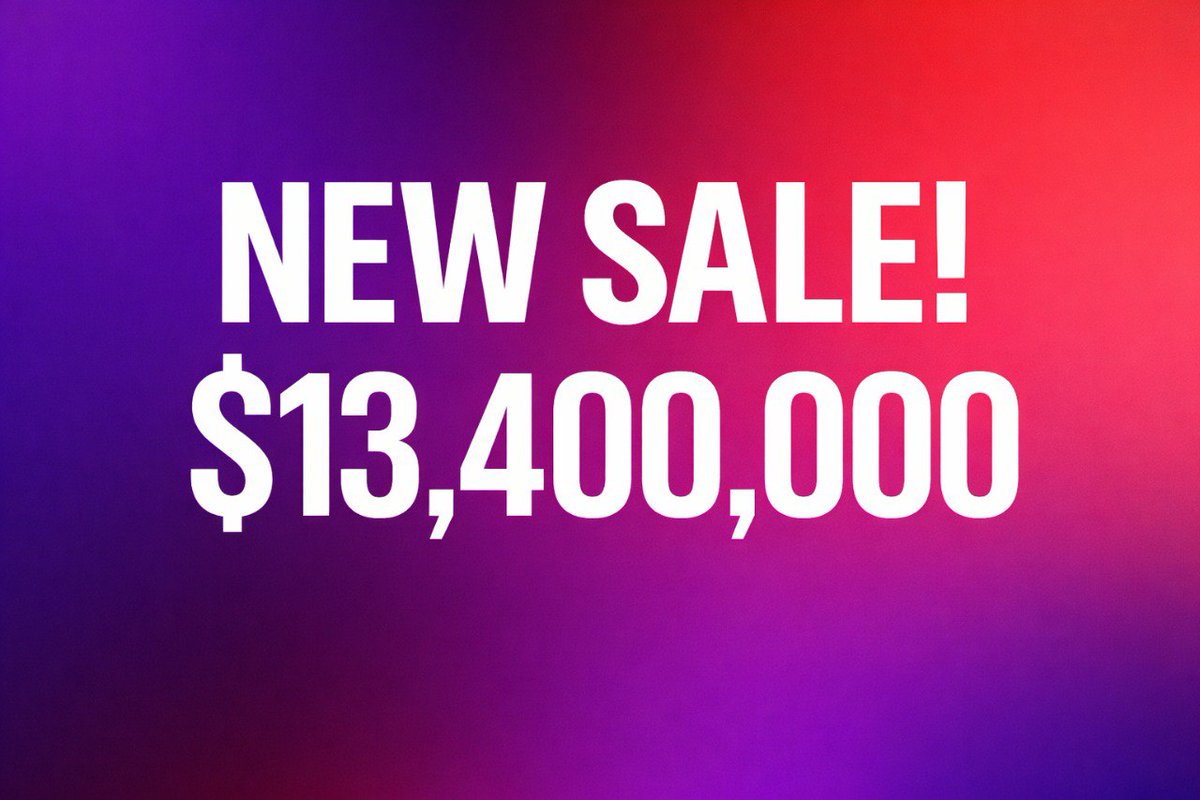
They will purchase $6,700,000 worth of energy per year from us. Over the two-year term, that adds $13,400,000 in revenue to the project. Over the same 24 months, we will also allocate $1,340,000 toward purchasing new miners.
We keep building. $XMW
With the first Bittensor halving complete, I can’t help but recall Bitcoin’s first halving, which I was fortunate enough to witness. History doesn’t repeat, but the rhymes are unmistakable; both the parallels and differences between the two are striking:
Same: A Decentralized Alternative for Global Challenges
Bitcoin launched during an unprecedented wave of central bank liquidity. By its 2012 halving, the Fed had tripled its balance sheet to $3 trillion, demonstrating how deeply monetary systems are tied to political interests. For many, this was the first time they questioned the foundations of money, who controlled it, and what these trends meant for the future.
Meanwhile, in a fringe corner of the internet, a radically different idea was taking shape. Bitcoin’s halving showed that predetermined disinflation was possible, even as nation states inflated global money supply at a historic scale.
Today, AI is expanding at an exponential rate, challenging entrenched industries and even our sense of humanity. This movement has been dominated by massive corporations - each with its own agenda - while governments scramble to regulate. And once again, in a fringe corner of the web, Bittensor offers a decentralized alternative: open competition driving AI infrastructure, training, and application without centralized control.
Same: Technical Familiarity Remains a Hurdle
Participating in Bitcoin in 2012 required technical knowledge. Public information was scarce, and understanding was predicated on familiarity with hash functions, peer-to-peer networking, and monetary plumbing. Most users still relied on the reference client and downloaded the full blockchain, as light clients and Coinbase had just emerged.
Bittensor feels similar today. In addition to general crypto knowledge, understanding the network means having a grasp of AI infrastructure as well. Browser wallets exist, but the command line interface remains the most powerful way to interact with Tao and subnets. We’ve seen Bittensor investment funds recently launch and tooling is improving rapidly, but genuine understanding of the core fundamentals remains limited to relatively few.
Same: Small Community with a Rising Tide
Early Bitcoin was driven by cypherpunks, libertarians, and curious technologists - people motivated by ideals, not just profit. The small community was driven largely by personal relationships. People who would eventually become leaders of major companies (and serious competitors with one another) openly collaborated and shared ideas for the sake of the broader industry.
After the 2012 halving, Bitcoin’s price surged 20x, attracting venture capitalists, megacorps, scammers, and the press. The core enthusiasts remained, and even grew, but signal became harder to find amid the noise.
Bittensor is still in its heavy signal phase. While monetary opportunity exists – as it always did with Bitcoin - general uncertainty and technical complexity remains a hurdle for the general populace. Conviction about Bittensor’s potential impact remains a driving force for those currently involved, and it's still easy to reach leaders on X, Discord, conferences, and in commercial collaborations. There will never be a time as good as today to build relationships in this industry.
Same: No Precedent for Valuation
Bitcoin was completely novel at launch, making valuation nearly impossible. Was it a payment network? A store of value? A tool for buying drugs? In 2012, debates raged. Thirteen years and a 7,500x jump in value later, investment banks regularly publish Bitcoin research while sovereigns incorporate it into sophisticated strategies.
Bittensor faces similar questions today. The network actively incentivizes productive outputs, but how does that translate to investment value? What is the relative value of Tao and subnet tokens? What makes a sustainable subnet? Answers will come through debate and experimentation, but for now, long-term valuation is yet to be clearly defined.
Different: Crypto Plumbing Is Already Mature
When buying Bitcoin in 2012, I had to hand cash to a convenience store clerk and punch numbers into a MoneyGram phone, hoping my account at Mt. Gox would be credited in the coming days.
Bittensor benefits from more than a decade of crypto infrastructure - exchanges, companies, and regulations - enabling rapid capital flow when interest spikes. But this maturity also makes attention harder to capture. Crypto is vast now; garnering focus on distributed AI is far more challenging than when Bitcoin was the only game in town.
Different: Risk Tolerance Has Changed
Bitcoin thrived on its free, unregulated nature, both ideologically and practically. Today, institutional capital, regulatory frameworks, and existing reputations of people involved mean risk tolerance is far lower. Imagine the community reaction if something as "unsavory" as Silk Road appeared on a Bittensor subnet.
Different: Diversity of Involved Parties
Bitcoin’s early days were dominated by Austrian economists and cryptography wonks. Bittensor subnets have already attracted a far broader mix: scientists, cybercrime experts, quantitative traders, marketers, and graphics specialists, reflecting AI’s sweeping potential across industries.
In 2012, Bitcoin offered an alternative to centralized money. As 2025 comes to a close, Bittensor is offering us an alternative to centralized intelligence. I assumed Bitcoin’s wild ride was a once-in-a-lifetime event. Now, as I approach my second first halving, I have a sense we just might get one more.
The first 2MW transformer has arrived at our new site.
This is the real deal. Physical infrastructure. Real world assets being installed piece by piece. We are not talking about scaling. We are doing it. Every week. Every upgrade. Every megawatt.
High tension. High growth. High conviction.
$XMW
Why I keep talking about $TAO.
Real talk. 2021 did not shake out weak hands.
It robbed people blind and burned trust to the ground.
14 billion dollars stolen in 2021 alone.
2.8 billion of that was rug pulls.
46,000 plus reported victims to the FTC.
Over 1 billion in documented losses in 2021 to 2022.
And around 95 percent of NFTs are now effectively worthless.
That is not volatile markets.
That is extraction.
Look at the NFT graveyard.
Jack Dorsey’s first tweet sold for 2.9M
Today it struggles to fetch 4 dollars. Four.
Justin Bieber’s Bored Ape bought for 1.3M
Now worth around 60,000.
Madonna’s Ape bought for 466,000.
Now closer to 53,000.
These were not experiments in digital culture.
They were products designed to be dumped on the people who trusted them most.
Behind it all was the same playbook.
1. Create artificial scarcity
Limited NFTs, hidden or unlimited token supply, make it sound rare.
2. Manufacture FOMO
Celebrity endorsements, you are still early, Discord hype, Telegram raids.
3. Promise utility
Games, metaverse, community, yield. Almost none of it ever shipped.
4. Extract value
Projects launched, insiders and founders dumped into retail FOMO.
Exchange supply was just a constant stream of sell orders.
5. Disappear
Discord goes quiet. Website not updated. Founders lawyer up and move on.
Max supply more like unlimited or hidden.
Utility was promised, never delivered.
Revenue source was retail FOMO.
Revenue destination right into founder wallets.
Staking fake yields and ponzinomics.
Transparency Discord announcements, then silence.
End state founders rich, retail broke AF.
So when people say retail abandoned crypto, I get it.
If you lost a few thousand dollars on something you genuinely believed in, you did not just lose money.
You lost confidence in your own judgment.
You felt stupid. Embarrassed. Used.
The reasonable conclusion was simple.
The game is rigged. I am exit liquidity. I am out.
And honestly, that conclusion was correct for 2021.
Now here is why I am still here.
And why I keep talking about Bittensor and $TAO.
Because structurally, it is the opposite of that playbook.
Where 2021 projects lived on retail FOMO, Bittensor lives on real demand for AI.
Money in and money out look completely different.
Money comes from enterprises and developers paying for AI services.
Money flows back into the network through subnet tokens and $TAO economics.
Look at actual revenue, not roadmaps.
Targon, Subnet 4, is not selling vibes. It is selling enterprise inference.
Tens of millions of dollars worth of Nvidia hardware behind it.
Over ten million dollars a year in revenue from customers using the system.
Chutes is building serverless AI compute that looks a lot more like an AWS competitor than a meme coin.
Celium did over a million in a handful of months.
Ridges is hitting coding accuracy close to frontier models.
Dippy has millions of users in production.
That is not we are going to build a metaverse someday.
That is already live product with paying customers.
Now overlay the token design.
Bittensor does not hide its supply.
There are 21 million $TAO. Full stop. Same hard cap as Bitcoin.
The model around $TAO looks more like this:
Subnets provide useful services.
Those services generate real revenue.
That revenue supports subnet tokens and demand for compute.
Scarce $TAO sits underneath the whole thing as the base asset.
They sold pictures of rocks and called it the future.
This time, we are building actual infrastructure for decentralized intelligence.
Retail is still stuck replaying the old trauma.
They hear new project and instantly think I am the bag holder again.
I do not blame them.
At some point, we are going to look past the scars and ask
Not what is the next meme, but what is actually being used, who is paying for it, and where does the money go.
Those two things should not be put in the same bucket.
Eventually the market will stop treating them as if they are.
$TAO Bittensor scarcity is approaching.
December 12 triggers the issuance halving.
New TAO supply will be reduced by half.
Selling pressure is expected to drop by half.
The remaining effects depend on market behavior.
Liquidity shifts, miner dynamics, subnet rotation and $dTAO mechanics will only be confirmed in real time.
The protocol sets the conditions. The market determines the outcome.