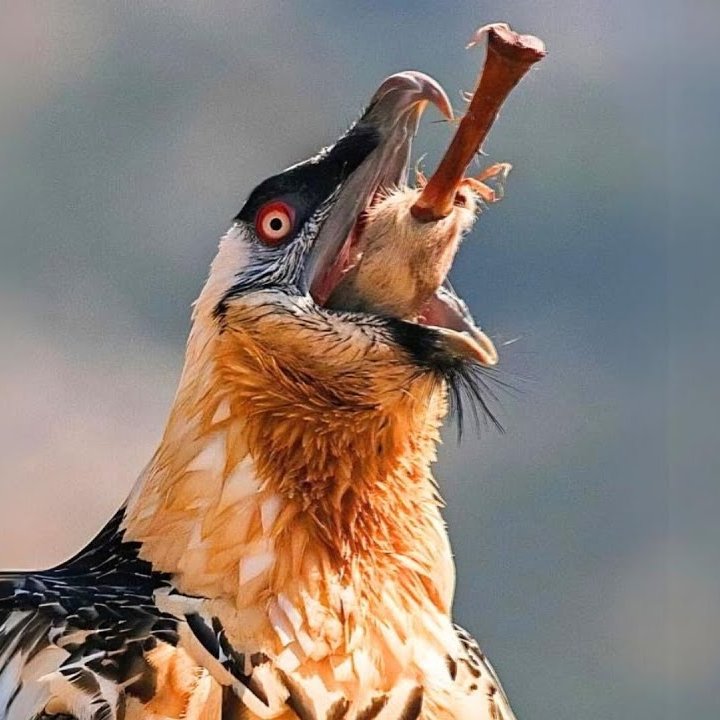
Vultures eat anthrax, botulism, rabies, and cholera for breakfast.
Their stomach acid is among the most corrosive in the animal kingdom, with a pH around 1, low enough to dissolve the bones, hide, and pathogens of dead animals that would kill almost anything else.
A vulture eating a diseased carcass isn't a vector for disease, it's a terminus. The disease chain ends in the vulture's gut, and that's pretty hardcore.
When vulture populations crashed in India in the 1990s, rotting livestock carcasses sat where vultures used to clean them.
Feral dogs and rats took over the cleanup, both of which actually do spread rabies. Researchers later linked the vulture collapse to roughly 500,000 deaths in India over the following decade.
The same collapse is now underway in sub-Saharan Africa. Six of eleven African vulture species are threatened with extinction, primarily from poisoned poaching baits.
The animals nobody finds cute are doing more public health work than most of the species we actively protect.
The trend of telling people they can’t celebrate their marathon if it’s not done in a certain time is dumb. It’s hard to move yourself 26.2 miles at any pace. Period. Anyone that takes that on and finishes is impressive in my book. In all things in life, run your own race.
There is a keyhole in Rome that lets you see three countries at once...
It sits in a green door at the top of the Aventine Hill. Press one eye to the lock, and the dome of St Peter's Basilica appears at the end of a long corridor of laurel hedges, framed perfectly inside a circle of metal barely an inch wide.
The dome is a kilometer and a half away, but through the keyhole it looks impossibly close. As if you could reach through and touch it.
The door belongs to the Sovereign Military Order of Malta, the only order from the Crusades that still exercises sovereignty today. The villa behind the door has extraterritorial status and it's treated as separate from the surrounding Italian territory.
This is why one keyhole holds three sovereign jurisdictions. The garden in front of you is the territory of the Order of Malta — not a country in the conventional sense, but a sovereign subject of international law, with its own passports, ambassadors, and a permanent observer seat at the United Nations. The land between the garden and the dome is Italy. The dome itself stands inside the Vatican. Three sovereignties in one glance...
None of this was an accident.
In 1765, the Venetian architect Giovanni Battista Piranesi was commissioned to redesign the priory. He laid out the gardens, planted the laurels, and aligned everything toward the distant dome of Michelangelo's masterpiece. He was building a telescope made of trees.
When he died in 1778, he was buried inside the church behind the door, a few steps from the keyhole that became his most famous design...
There is a region in southeastern Spain called Almería. If you pull it up on satellite imagery, you will assume the screen has glitched. A vast, blinding white scab where a landscape used to be.
It's not a glitch. It's 64,000 acres of plastic greenhouses. So much plastic sheeting that it is, genuinely, visible from space. The entire region has been wrapped in industrial farming film to grow tomatoes, peppers, cucumbers and lettuce for European supermarkets in January.
The plastic has created its own microclimate. The reflective surface is so vast it has measurably lowered local temperatures by bouncing sunlight back into the atmosphere. Scientists have a name for it. The Albedo effect of Almería. The only place on earth where human activity has cooled the local climate, and they did it by accident, while building the world's largest open-air plastic factory.
The plastic itself is single-use agricultural film. It sits in UV light for three to five years, degrades into microplastics, blows into the Mediterranean, and ends up in the ocean and the soil. Every year, 45,000 tonnes of plastic waste is generated just from replacing degraded greenhouse covering. Every year. Just the covering.
Inside, workers from Morocco and sub-Saharan Africa labour in 45°C heat for €30 a day. No contracts. No rights. Spraying crops with pesticides at concentrations that would be illegal on outdoor fields. Ventilation: minimal. Chemical exposure: constant. The aubergine looks lovely.
The groundwater underneath Almería is so contaminated with agricultural runoff that it has been declared unusable. The region now imports water from elsewhere in Spain while sitting on top of a poisoned aquifer it created. The land that was meant to feed Europe more efficiently has become a place that needs water flown in to keep the show running.
And this is what supplies your fresh vegetables in January. Grown in plastic factories. By exploited workers. Using groundwater they have already destroyed. Wrapped in more plastic. Shipped across Europe. Refrigerated the whole way. So a person in Manchester can have a tomato in February that tastes of nothing.
But sure. Cattle grazing on Scottish hills are the environmental problem.
Pull the satellite up. Have a look. Then tell me which system is the one that needs explaining.
Israel destroyed the statue of Jesus Christ in the Christian village of Debel, South Lebanon.
Now they’re bulldozing the solar panels that provide electricity and water.
Not military targets.
Critical infrastructure.
This is the deliberate targeting of civilian life.