@froehlichmmm I am very bullish on sub <30 bn models because the big models are very under trained ( theoretically ) and smaller models when trained on your data will outperform the frontier :)
Introducing Flint, @Recursive_SI’s first model: a fast local coding model built with our automated research system, the Eureka Machine.
• Best-in-class fast local coding
• Up to 2x faster than comparable models: 125+ tokens/sec on a MacBook Pro, 150+ on RTX Spark
• Built from scratch in under 4 months
Private, unmetered intelligence on your own machine. Open weights available now on @huggingface, run it locally on your favorite framework or try it for free on @opencode or @pidotdev.
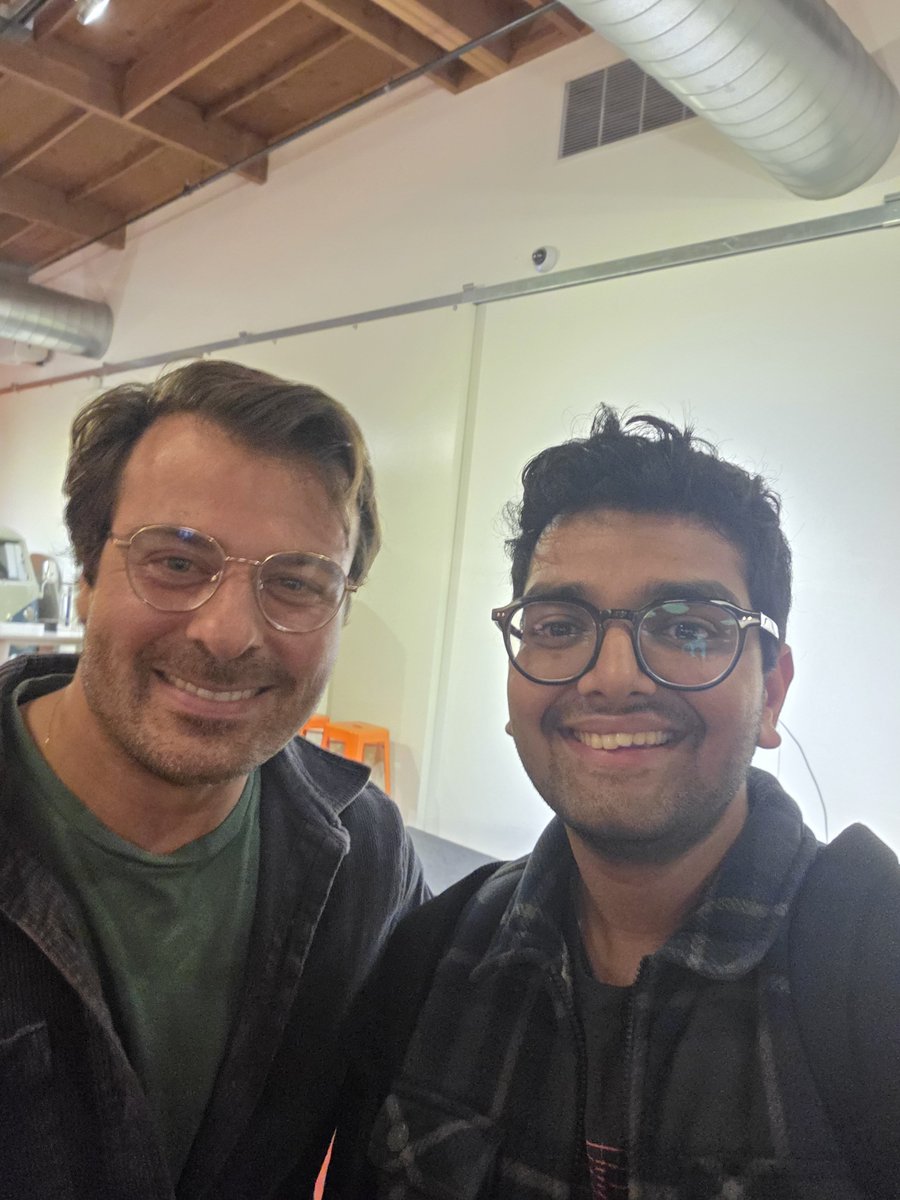
Meeting @FrancoisChauba1 at the @ycombinator paper club.
Discussed briefly about the future of local models, his idea was that we would have a million models and router between them.
My idea : Generate synthetic environments at scale and post train <30Bn model to exceed the frontier performance while keeping the costs 10x lower :)
Pretty optimistic on the future of small models ( <30B is not small but substantially big as well ).
#PaperClub
From YouTube to IRL. Having a lot of fun :0
I loved @ben_burtenshaw and @SergioPaniego course on training agents, lots to learn from them.
TLDR; Use TRL or MILES haha :)
@nvidia says that @harvey post trained nemotron 3 on their trajectories / tasks and it started to push the pareto frontier.
Better then the frontier while being 100x cheaper.
But my question is if the infrastructure ( i.e. GPUs and training algorithms is fixed ) who takes care of the data ?
I think the future are data labs who curate these specialized corpus of data for enterprise and customers and help them dominate the pareto frontier.
Seems dystopian that you can get performance and low cost together.
#PytorchConference #Pytorch
Pre-training is returning diminishing gains. Post training and test time compute is where the gains lie.
@sarahookr keynote at @PyTorch highlighted how the race towards efficiency is shifting to data, harness and multiple levers of optimization.
At Leibler, we believe the training stack is largely figured out, data is missing for small efficient models.
The missing piece? Making it very easy for anyone to generate their own data and build models that work better for their tasks.
Our direction seems to be right :)
It is so scary! Kinda nerfed right now.
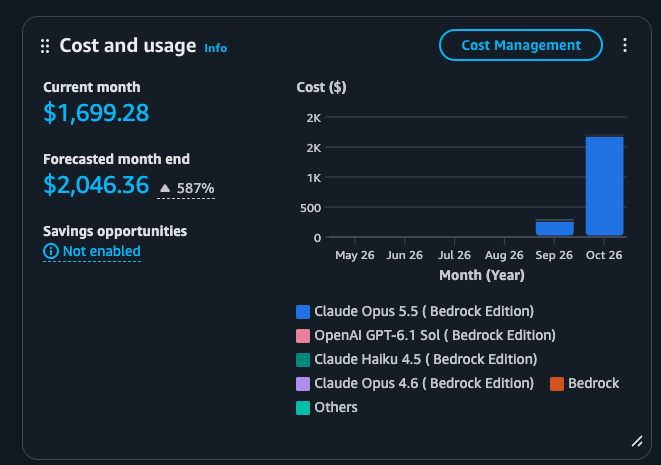
One of the experiments consumed about $2000 in Opus 5.5 tokens, which ran for about 6 hours.
Now I feel the need of the product which I am building. Kinda crazy bro that in 5 hours I can burn through my networth :0