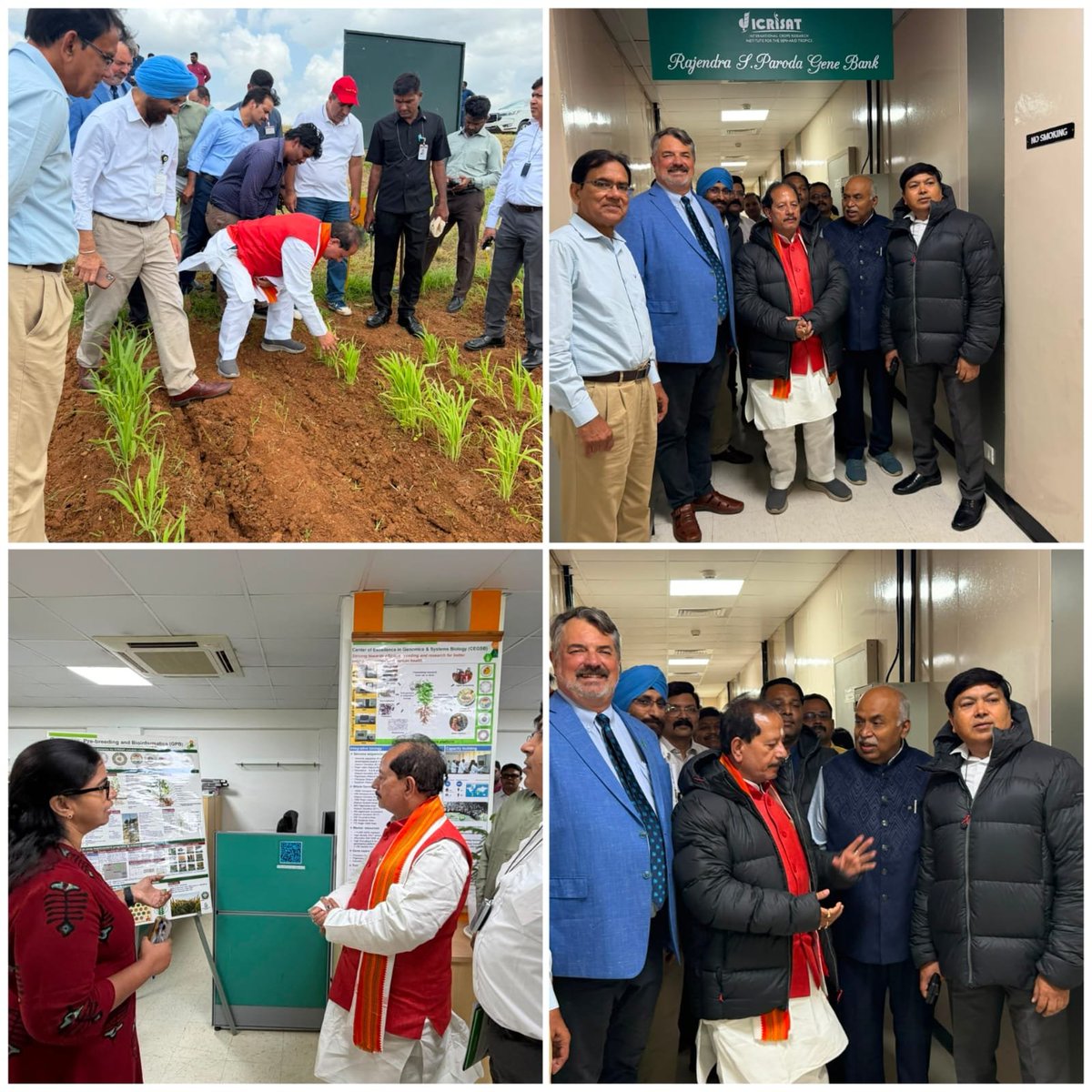
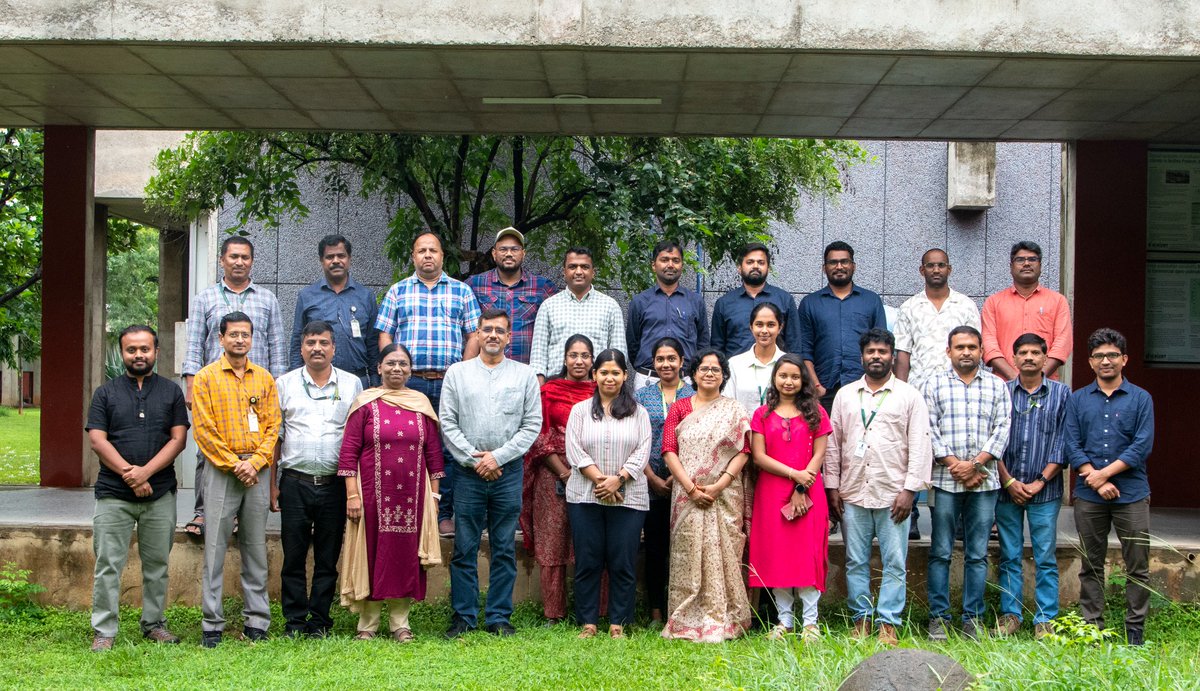
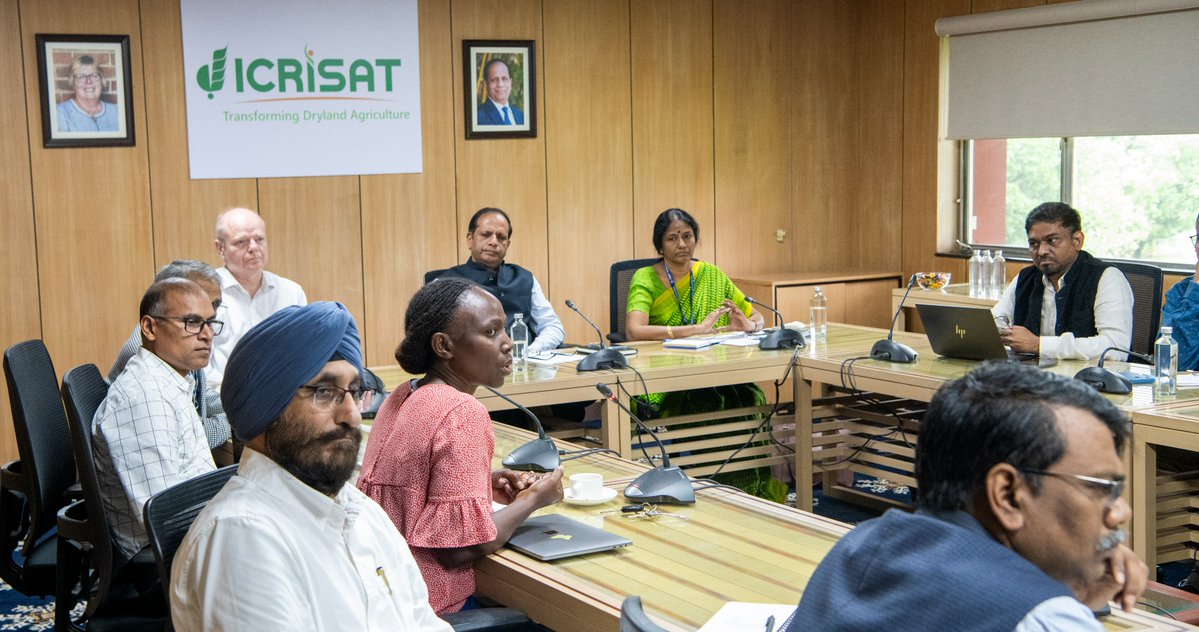
📍 ICRISAT, पटनचेरु, हैदराबाद
आज बिहार कृषि विभाग के वरिष्ठ अधिकारियों के साथ ICRISAT, पटनचेरु का दौरा कर बिहार की कृषि के लिए उपयोगी आधुनिक तकनीकों, अनुसंधान एवं नवाचारों की जानकारी ली तथा बिहार सेंटर ऑफ एक्सीलेंस फॉर मिलेट्स वैल्यू चेन (BCoEMVC) परियोजना की प्रगति की समीक्षा की।
इस दौरान ICRISAT के वरिष्ठ वैज्ञानिकों के साथ श्री अन्न (मिलेट्स), जलवायु-अनुकूल खेती, कृषि अनुसंधान, मूल्य संवर्धन एवं किसानों की आय बढ़ाने से जुड़े विषयों पर विस्तार से चर्चा हुई। साथ ही जीनबैंक, स्पीड ब्रीडिंग, जीनोमिक्स, रीजनरेटिव एग्रीकल्चर एवं एग्रीबिजनेस इनोवेशन जैसी अत्याधुनिक सुविधाओं का भी अवलोकन किया।
हमारा स्पष्ट लक्ष्य है कि कृषि अनुसंधान और आधुनिक तकनीक का लाभ प्रयोगशालाओं तक सीमित न रहे, बल्कि सीधे किसान के खेत और उसकी आय तक पहुँचे।
BCoEMVC को खाद्य एवं पोषण सुरक्षा के क्षेत्र में एक मॉडल सेंटर के रूप में विकसित करने तथा बिहार को श्री अन्न की मूल्य श्रृंखला में पूर्वी भारत के अग्रणी राज्यों में स्थापित करने की दिशा में ICRISAT के साथ मिलकर निरंतर कार्य किया जाएगा।
बिहार के किसान, कृषि वैज्ञानिक, युवा और उद्यमी मिलकर कृषि में नई संभावनाओं का निर्माण करेंगे—समृद्ध किसान, समृद्ध बिहार और विकसित भारत के संकल्प के साथ।
#VijayKumarSinha
#ICRISAT #Millets #ShriAnna #Agriculture
🌾 🔬 Behind every resilient harvest is decades of science, partnership and local knowledge.
🌍 CGIAR works to turn scientific breakthroughs into practical solutions that farmers can use today and adapt for tomorrow.
📺 https://t.co/h3MSXqT9U3
#WithScienceWeCan#FoodSystems
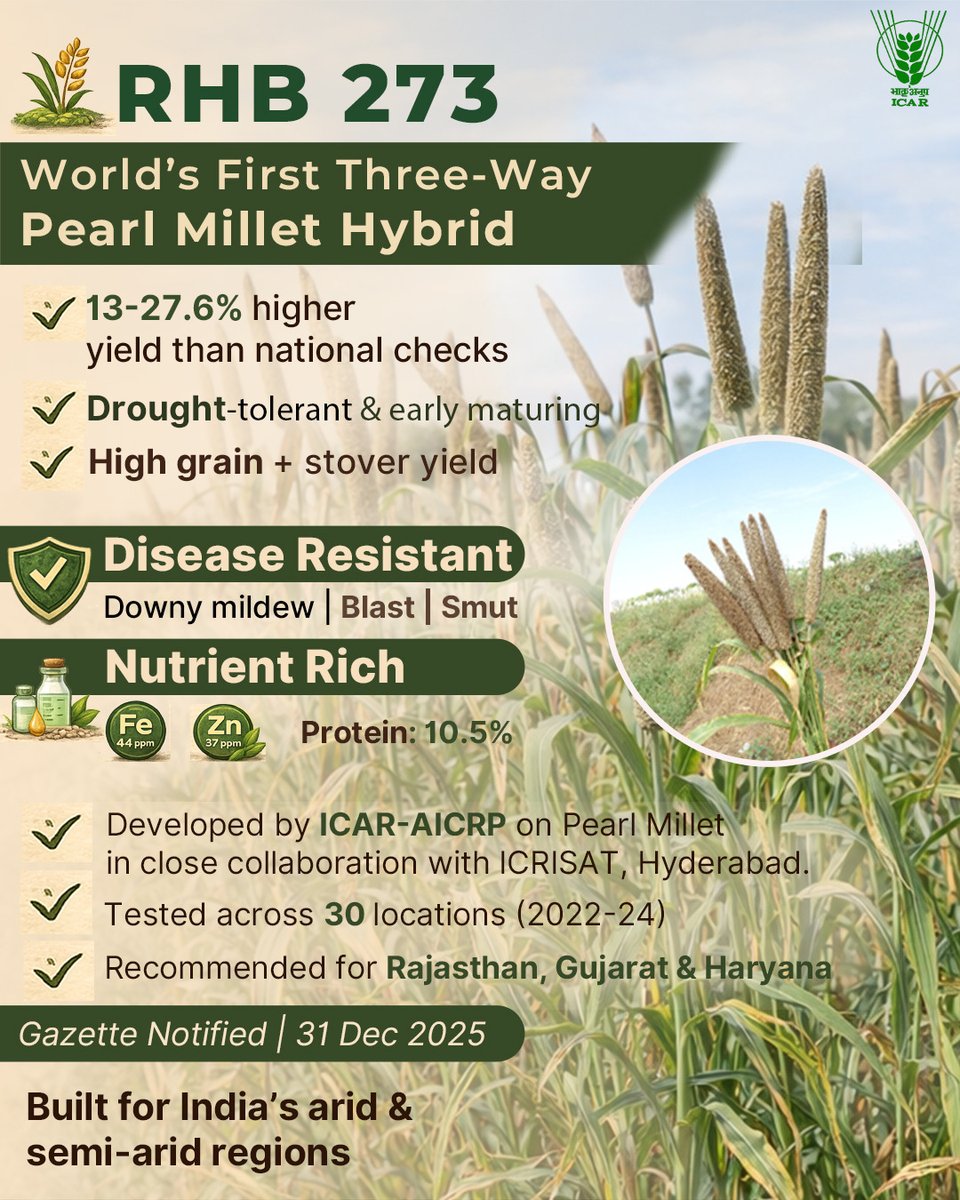
#ICAR develops RHB 273, the world’s first three-way pearl millet hybrid. With 13–27.6% higher yield, strong disease resistance & rich nutrition, it’s farmer-ready for dry regions.
@ChouhanShivraj@PIB_India@AgriGoI
Glad to welcome the Honorable Governor of Telangana, Shri Jishnu Dev Varma (@Jishnu_Devvarma), as Chief Guest for the National IP Yathra 2026 today.
ICRISAT Director General Dr Himanshu Pathak (@HPathakOfficial) welcomed him, following which the Honorable Governor inaugurated the Udyam Pradarshan Technology Exhibition and delivered the inaugural address, emphasizing the importance of knowledge transfer in IP management.
He also unveiled ICRISAT’s recent research outputs, including the world’s first extreme heat-tolerant pigeonpea (ICPV 25444) and the world’s first drought-tolerant three-way pearl millet hybrid (RHB-273), and inaugurated the Biochar Systems Research & Innovation Hub at ICRISAT.
Warm wishes on India’s Republic Day!
As the @CGIAR center headquartered in India, we joined the nation in celebrating the 77th Republic Day.
Sharing glimpses from our Republic Day celebrations at ICRISAT Headquarters, as we reaffirm our collective commitment to advancing India’s vision for food security and climate-resilient agriculture.
This breakthrough as a result of collaborative efforts.superior grain and fodder yields enhancing climate resilience & food security..Being part of this breeding process has been an incredible learning journey. My sincere thanks to Dr. SK Gupta and @ICRISAT for this opportunity.
#pressrelease#News
ICRISAT and Partners Announce Release of the World’s First Three-way #PearlMillet Hybrid
ICRISAT, in collaboration with the Indian Council of Agricultural Research (@icarindia) and the All India Coordinated Research Project on Pearl Millet (AICRP) at the Rajasthan Agricultural Research Institute (RARI), has developed #RHB273, the world’s first three-way pearl millet hybrid. Announced by the Union Minister of Agriculture & Farmers Welfare (@AgriGoI), Shri Shivraj Singh Chouhan (@ChouhanShivraj), on 4 January 2026, this hybrid is among 184 improved crop varieties released for cultivation in India.
@HPathakOfficial
Read more: https://t.co/o75qMoqcFy
#pressrelease
ICRISAT Releases First-Ever Biofortified #PearlMillet for Zimbabwe and the ESA Region
Two new pearl millet varieties, Iniadi Composite 1501 and ICMP 177003, have been released in #Zimbabwe and the Eastern and Southern Africa (ESA) region as the region’s first #biofortified millet with naturally high #iron and #zinc.
This breakthrough marks a major step forward in tackling #malnutrition, improving food security, and strengthening climate resilience for millions of smallholder farmers.
Read more: https://t.co/ZuETSwvYPC
ICRISAT researchers visit the Bihar Centre of Excellence for Millets Value Chain (BCoEMVC) in Mayapur, Gaya, on 19–20 November 2025.
The team, led by Dr S K Gupta, Principal Scientist, Pearl Millet Breeding, along with Dr Rajan Sharma, Principal Scientist, Crop Protection & Seed Health reviewed the ongoing field trials for finger, little, barnyard, pearl, kodo, and foxtail millets. The visit focused on evaluating progress in breeding, pathology, entomology, agronomy trials, and germplasm improvement.
Today, we commenced the 117th Board Meeting at ICRISAT Headquarters, Hyderabad.
We extend a warm welcome to all our Board Members and look forward to a week of insightful discussions and strategic guidance to further scale ICRISAT’s impact across the drylands of Asia, Africa, and beyond.
Excellent summary of our recent ICMR-INDIAB diet paper by @Toi_pushpa_n which is very important for making national policy-level decisions. The key message is that even a 5% reduction in carbohydrates in Indian diets, if replaced with plant protein or with egg or fish, can help slow down the diabetes epidemic. Nicely covered by @timesofindia and Pushpa Narayan.
#Diabetes #Prevention #Diet #Type2Diabetes #Nutrition #Carbohydrates #Protein #Fat #IndianDiet #Fibre
@narendramodi@PMOIndia@MoHFW_INDIA@JPNadda@DrJitendraSingh@ICMRDELHI@ICMRNIN@icmr_nie@WHO@Nature@NatureMedicine@DMDSC
This year’s #NobelPrize in Physiology or Medicine has been awarded to three scientists for discovering how the immune system distinguishes friend from foe.
Read more: https://t.co/NcWqfZofin
Mary Brunkow and Fred Ramsdell – who have been awarded the 2025 Nobel Prize in Physiology or Medicine – gained decisive insights into how autoimmune diseases arise.
Brunkow and Ramsdell made a key discovery in 2001, when they presented the explanation for why a specific mouse strain (named scurfy) was particularly vulnerable to autoimmune diseases.
The medicine laureates had discovered that the mice have a mutation in a gene that they named Foxp3. They also showed that mutations in the human equivalent of this gene cause a serious autoimmune disease, IPEX.
The 2025 #NobelPrize in Physiology or Medicine has been awarded to Mary E. Brunkow, Fred Ramsdell and Shimon Sakaguchi “for their discoveries concerning peripheral immune tolerance.”
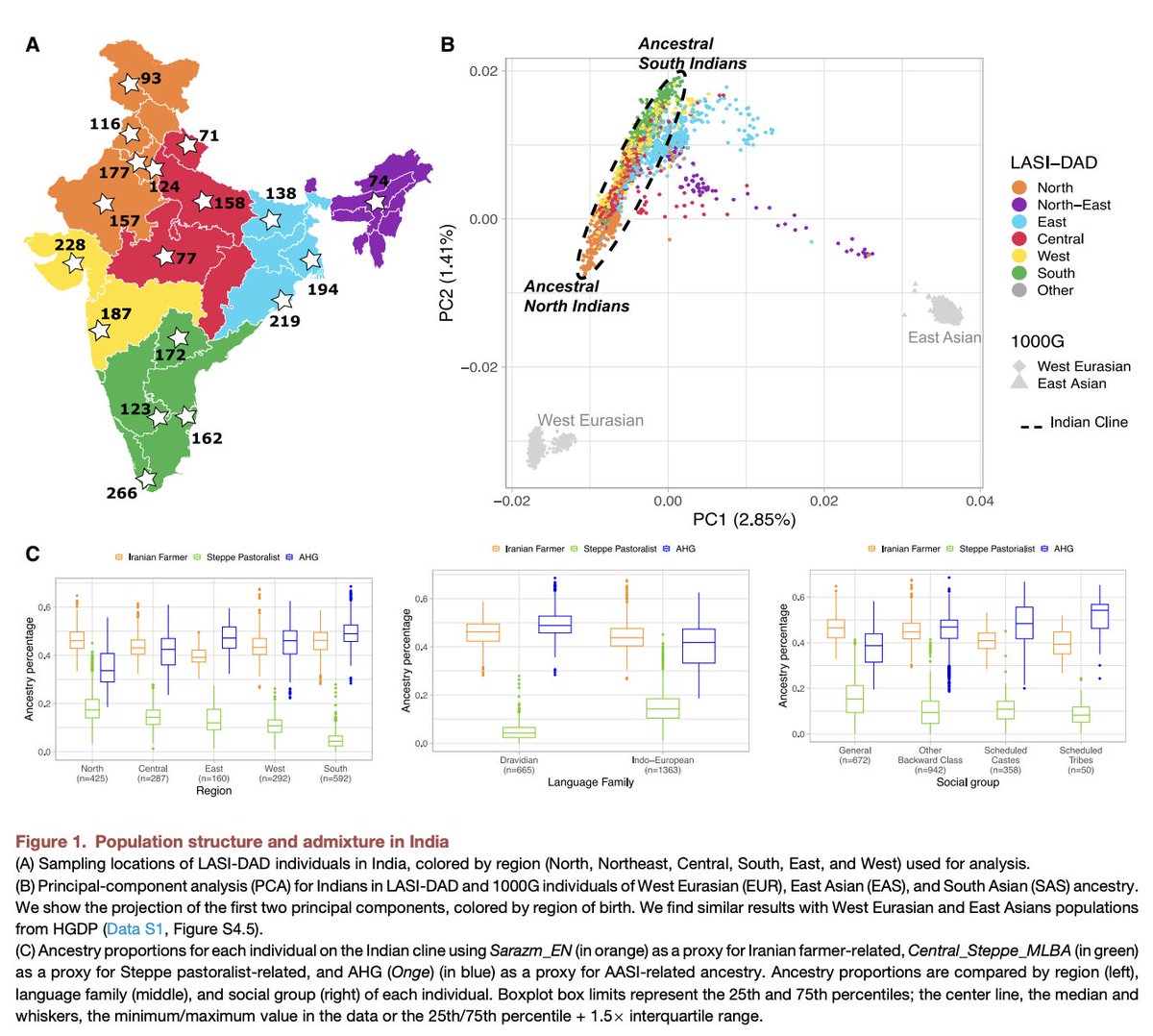
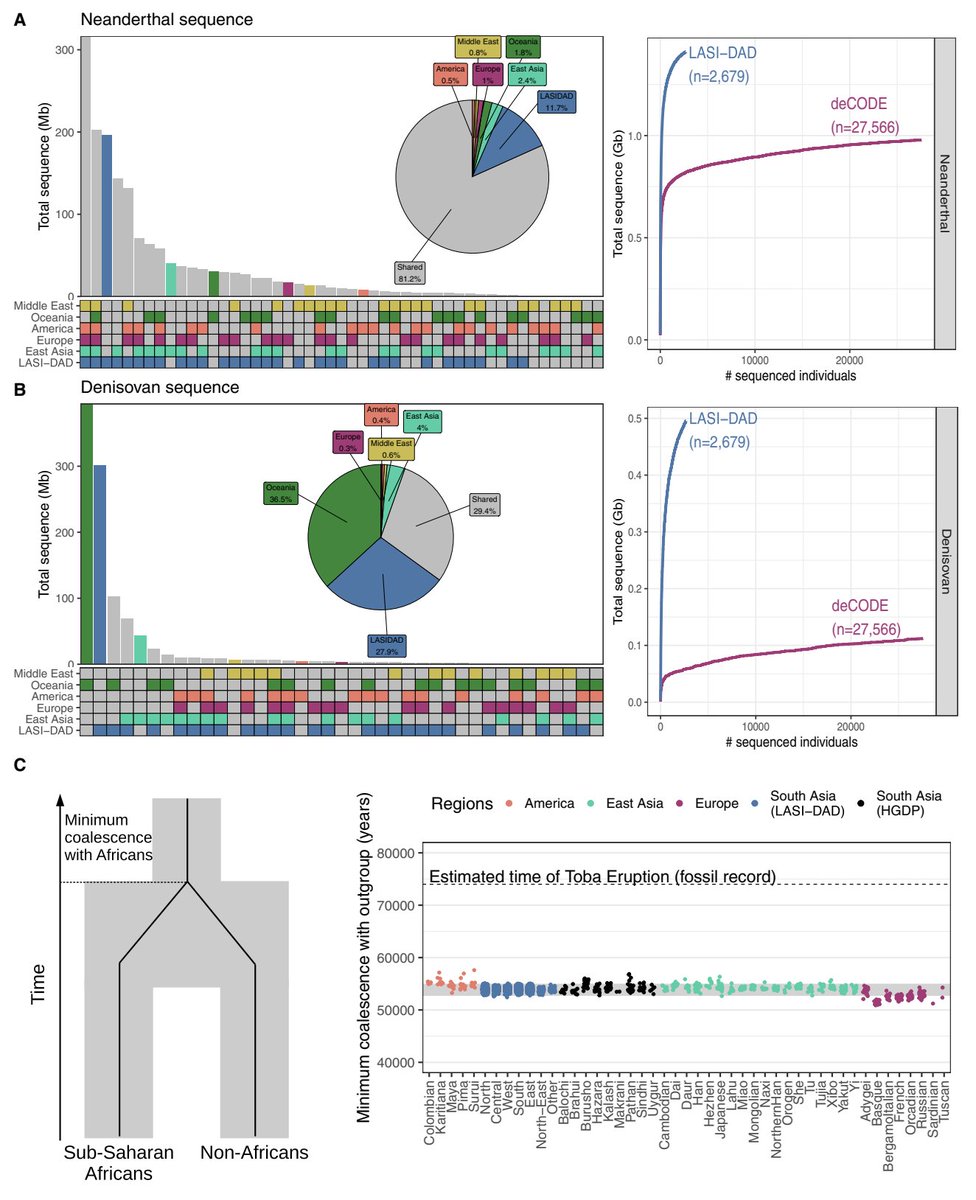
WGS analysis of ~2,700 Indians (largest to date) https://t.co/8TTdZ10yIE @CellCellPress
- Most variation traced back to a single out-of-Africa event 50,000 years ago, with subsequent gene flow from Neanderthals & Denosivans.
- All had a 4th degree relative or closer within the dataset (!)
- Most Indians today are enriched for genetic variation from sources similar to: Andamanese hunter-gatherers, ancient Iranian farmers, and Steppe pastoralist groups
- Lots of founder events / endogamy increase homozygosity, contributing to enrichment for autosomal recessive disease
- Indians have a larger burden of population-specific Neanderthal ancestry vs others, contributing to adaptation & disease (largely related to immunity)
Today, we convened the "Sensitization Workshop on Inclusive and Nutrition-Sensitive Agri-Food Systems."
The session featured dynamic group discussions on challenges and potential solutions linked to food supply chains, food environments, and consumer behavior. The workshop fostered greater awareness and a shared understanding among participants on embedding inclusivity and nutrition sensitivity into agri-food systems. It also paved the way for future capacity-building initiatives and strengthened cross-disciplinary collaboration within ICRISAT’s research programs.
Today, we convened a dynamic discussion on mainstreaming millets, led by Dr Himanshu Pathak, Director General of ICRISAT; Dr Tara Sathyavathi, Director of IIMR; and Dr Sean Mayes, Global Research Program Director for Accelerated Crop Improvement, ICRISAT.
Together, the ICRISAT and @IcarFor teams explored ways to accelerate millet research by harnessing the combined strengths of these two leading institutions.
🎥 Watch Kuldeep Singh, Head of the @ICRISAT Genebank, explain why pearl millet is his favourite crop.
The ICRISAT genebank conserves dryland crops: sorghum, chickpea, pigeonpea, groundnut and seven millets. It has distributed 1.6M samples to date.
➡️ https://t.co/nq7ZRL9hHV
The Cell Press Forum on drought & water (in)security, featuring Bridget Scanlon @UTAustin, Chris Funk @ucsantabarbara, Luxon Nhamo @WaterResearchSA & Maria Rusca @OfficialUoM is available on demand. Explore how climate-driven drought is reshaping lives. https://t.co/xEjlWxuesx
Commodity Central | Dr. Prakash I. Gangashetty of ICRISAT explains the research behind the first heat-resilient pigeon pea and its implications across India
He notes that the research was initiated to develop varieties suited for post-rainy and summer conditions, capable of withstanding temperatures up to 40–45°C
Watch the full interview here:
https://t.co/mvBPBc5kEF
@Ashesha_A@PrakashGangash1