#HeavyRainfall Watch from Sunday night to Monday in Western #Nepal
Both forecast models show that heavy rainfall is possible in the southwestern part of Sudurpashchim👇
More updates tomorrow!!
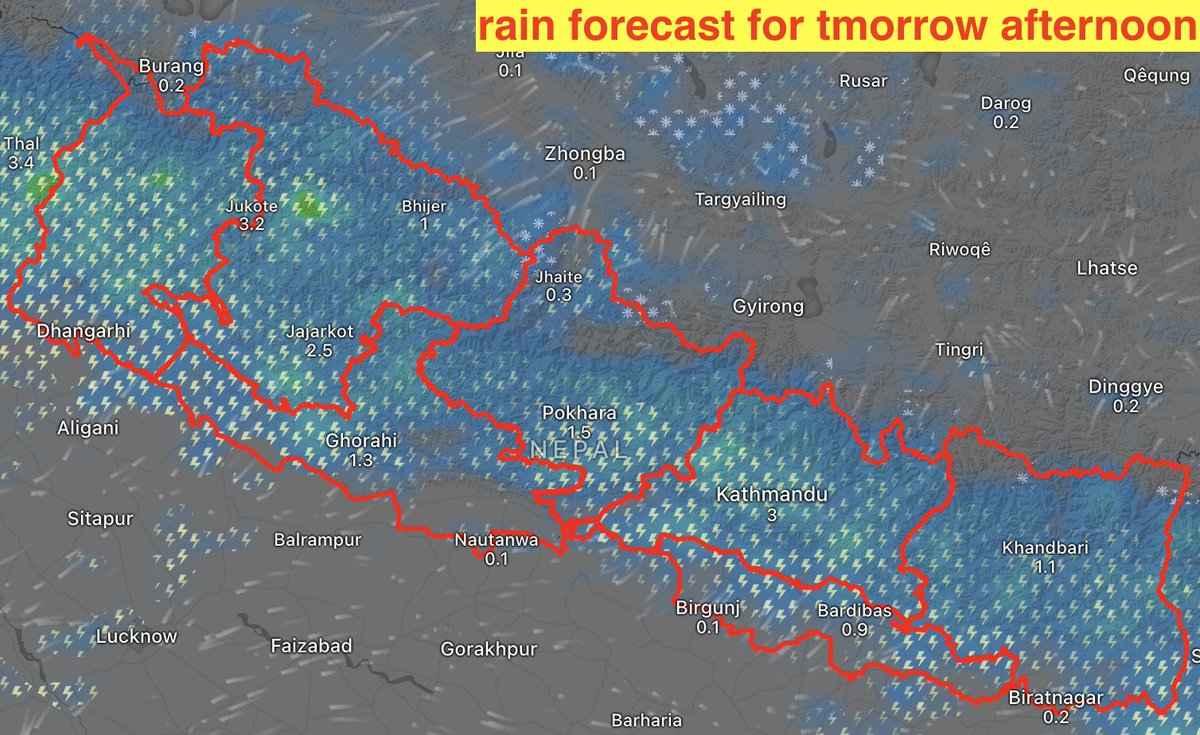
#WeatherUpdate Convective clouds produced good rain this afternoon, highest rainfall measured from #DHM station at Kapan👇. More rain (with thunderstorm) is forecast in western #Nepal later tonight and all over the country tomorrow afternoon👇
Clouds and total rain in last 6-hr👇
1950, the year Maurice Herzog and Louis Lachenal first scaled Annapurna, was when carbon emissions that are causing glacier melt truly took off.
75 years on the landscape of the Annapurna region has undergone dramatic changes—most notably due to the impacts of climate change.
Rikha Samba, a key glacier located in the Annapurna Conservation Area (ACAP), is receding at an alarming rate. In this series of repeated photographs from 2012 to 2024, we witness the glacier's steady disappearance, offering a striking visual representation of global warming’s effects on High Mountain Asia.
Rikha Samba has long been an important glacier for scientific monitoring, While sporadic observations date back to the 1970s, continuous annual mass balance measurements have been conducted since 2011, making it one of the most thoroughly studied glaciers in the country. Its optimal size makes it well-suited for long-term monitoring and a key indicator of regional climate trends. The glacier contributes meltwater to the Kali Gandaki River and it is especially crucial for downstream communities in arid zones such as Jomsom, where glacier melt provides a vital and often a major source of water during the dry seasons.
This footage is particularly poignant in light of a recent event on May 12, when scientists, monks, and local community members came together to honor Yala Glacier—a nearby glacier that has shrunk to the brink of disappearance. As more glaciers in the region continue to recede or vanish, the risks for communities that rely on glacial meltwater grow increasingly urgent.
The consequences of retreating glaciers extend beyond local impacts. The glaciers of the Hindu Kush Himalaya feed some of Asia’s largest rivers, which provide water to 2 billion people. As these glaciers continue to melt, the livelihoods of millions are at risk, with increased flooding, landslides, and long-term water shortages in the future.
The rapid retreat of glaciers in the Annapurna region is a stark reminder of the global climate crisis. With the situation growing more dire by the day, the global leaders must take immediate action to reduce carbon emissions and safeguard the world's vulnerable ice reserves.
#AnnapurnaDay #SaveOurSnow
Snow in the Hindu Kush Himalaya has hit a 23-year low, imperilling the water supply for two billion people across Asia. This alarming decline is impacting major river systems of Asia, exacerbating water stress in downstream communities already battling intense heat. "This is an alarming trend," states Sher Muhammad, Remote Sensing Specialist at ICIMOD, highlighting the "continuous succession" of these deficits.
Understand the far-reaching consequences of this critical situation, read more: https://t.co/XAcjEiEMNN
#SaveOurSnow #SnowReport
SHOCKING level of blasting work by L&T going on for Lakhwar dam on Yamuna shaking landslide prone hills & puring enourmous debris in river without any thought on repercussions on precious aquatic life, water quality, d/s projects. @byadavbjp@cleanganganmcg@pushkardhami
🔔#Earthquake (#भूकम्प) M5.0 occurred 65 km NE of #Birendranagar (#Nepal) 10 min ago (local time 20:07:50). More info at:
📱https://t.co/QMSpuj6Z2H
🌐https://t.co/KDZjXiJBo7
🖥https://t.co/qEl1jXErIu
Get ready to summit the world, one peak at a time! Join us on a virtual adventure as we countdown to #InternationalMountainDay. Over the next week, we will explore the #SevenSummits. Today, on Day 1 of Peak Week, we celebrate the iconic #MountEverest of Asia.
#Landsat#SRTM
Physicists think AI is physics.
Statisticians think AI is statistics.
Mathematicians think AI is mathematics.
Psychologists think AI is psychology.
Neuroscientists think AI is neuroscience.
And they’re all right.
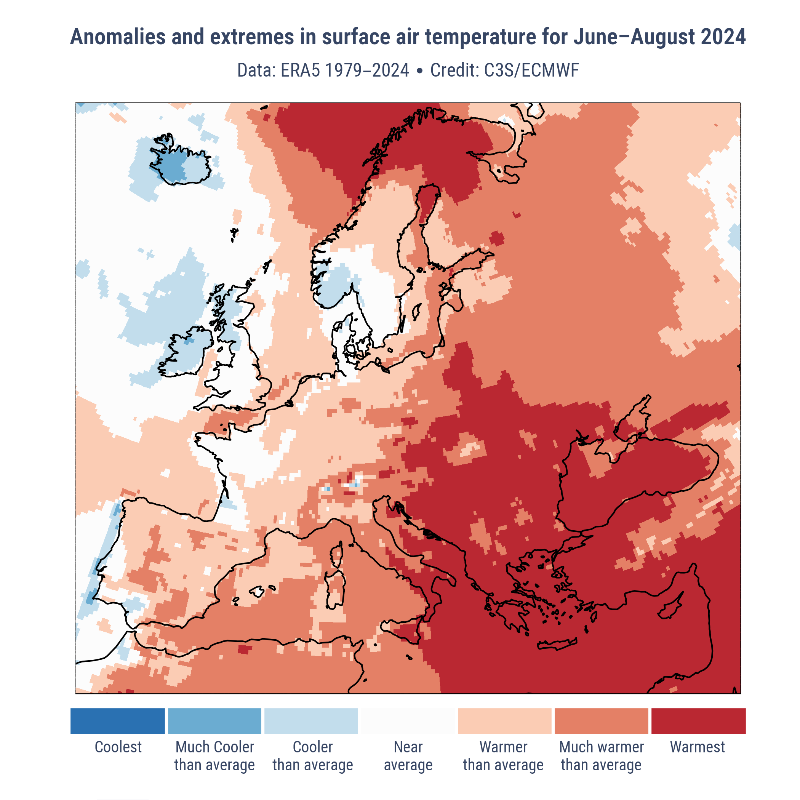
The world's warmest August completes the hottest boreal summer on record. 🌡️
At 1.51°C above pre-industrial levels, August 2024 became the 13th month since July 2023 in which the global average surface air temperature exceeded 1.5°C.
Read the latest @CopernicusEU bulletin. ↓