This is the most popular analog computer ever produced.
And you never knew you used it.
But what is it?
It is the automatic transmission in a gasoline car.
For more than eighty years the automatic transmission has been quietly performing continuous real-time computation using pressurized fluid instead of electricity or silicon. Vehicle speed, throttle position, and the current gear are converted into their physical analogs—fluid pressures. Those pressures are then compared, summed, and routed through a network of valves. The result is a precise decision: which gear should be engaged right now. No binary digits. No clock cycles. Just physics doing arithmetic.
The heart of this analog computer is the valve body. It is a precision-machined block of aluminum containing a labyrinth of channels, spools, springs, and orifices. In pure hydraulic form it is the entire program. A governor valve generates a pressure proportional to output-shaft speed. A throttle valve (or vacuum modulator) generates a pressure proportional to engine load. These two pressures meet at shift valves. When one pressure overcomes the other by a designed margin, the shift valve moves, redirecting high-pressure fluid to a clutch or band servo and the transmission changes gear.
The logic is written in the diameters of the spools, the strengths of the springs, and the sizes of the orifices. Change any of those physical dimensions and the “software” changes.
This system worked with remarkable perfection. It was continuous. There was no sampling delay. As road speed rose or the driver pressed harder on the accelerator, the pressures changed smoothly and the transmission responded in real time. It was robust. Heat, vibration, and electrical noise that would cripple early digital electronics were largely irrelevant to a hydraulic circuit.
It was self-powered: the same oil pump that lubricated the gears also supplied the computational fluid. And it was cheap enough, once mass production began, to put sophisticated control into every family car.
The first production automatic, General Motors’ Hydra-Matic of 1940, already contained the essential analog elements. By the 1950s and 1960s the valve body had become a masterpiece of fluidic computation.
Engineers could tune shift points, firmness, and part-throttle behavior simply by altering spring rates and orifice diameters. For decades this purely analog machine handled everything from city traffic to highway cruising with a smoothness digital systems still struggle to match.
Then the modern car demanded more information. Engine temperature, altitude, wheel slip, and emissions constraints all needed to influence shift strategy.
Adding dozens of extra hydraulic sensors and valves would have made the valve body impossibly complex. The elegant solution was hybridization. A small digital computer was given authority over a few solenoid valves. Those solenoids open or close hydraulic passages, translating binary commands into pressure changes. The original analog computer still does the heavy lifting—comparing pressures and applying force—while the digital computer supplies higher-level intelligence and adaptation.
The two copper-colored solenoids visible on many modern valve bodies are the interface between the two computational worlds. The digital side can now take engine coolant temperature into account so the transmission stays in a taller gear longer when the engine is cold, improving both fuel economy and emissions. It can delay upshifts during hard acceleration or command a downshift the instant the driver demands more power. Yet the fundamental decisions still occur in the continuous domain of fluid pressure.
So the next time you feel a seamless gear change, remember: you are riding with one of the most successful and widely produced analog computers in history. It has been calculating with oil for longer than most of us have been alive, and it still works almost perfectly.
The analog computer:
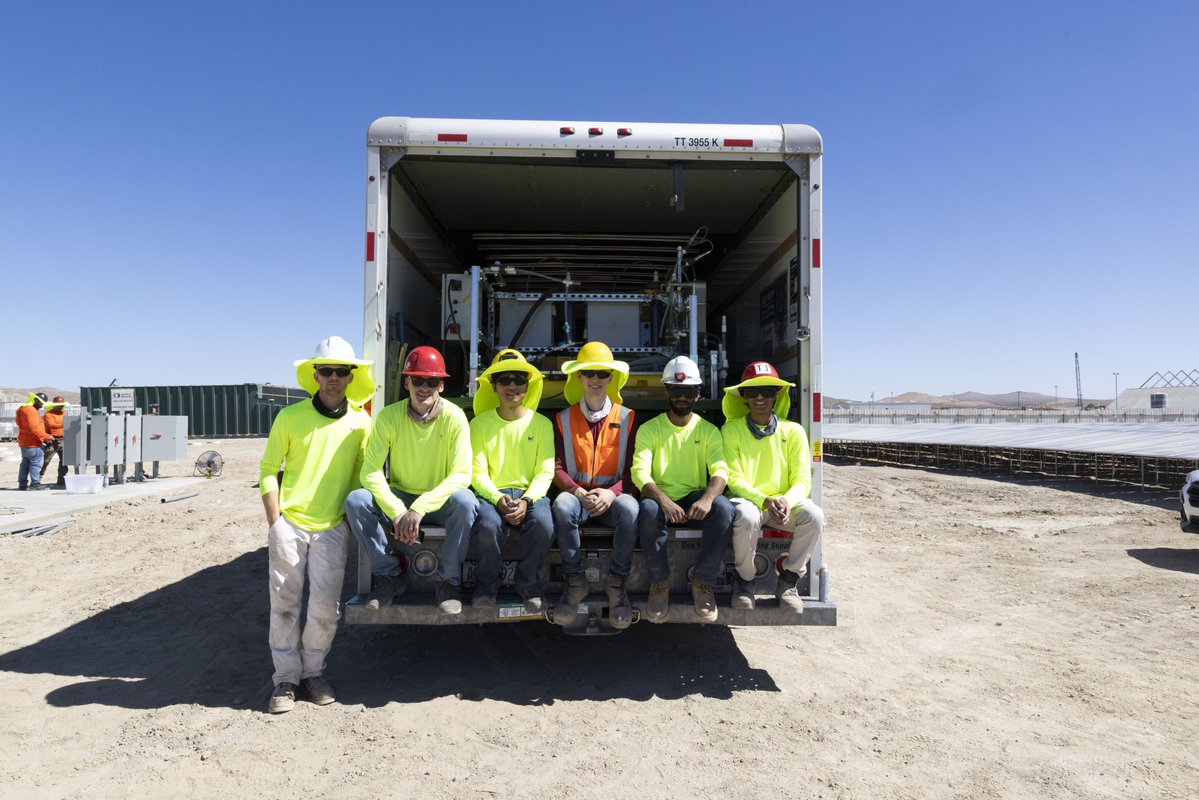
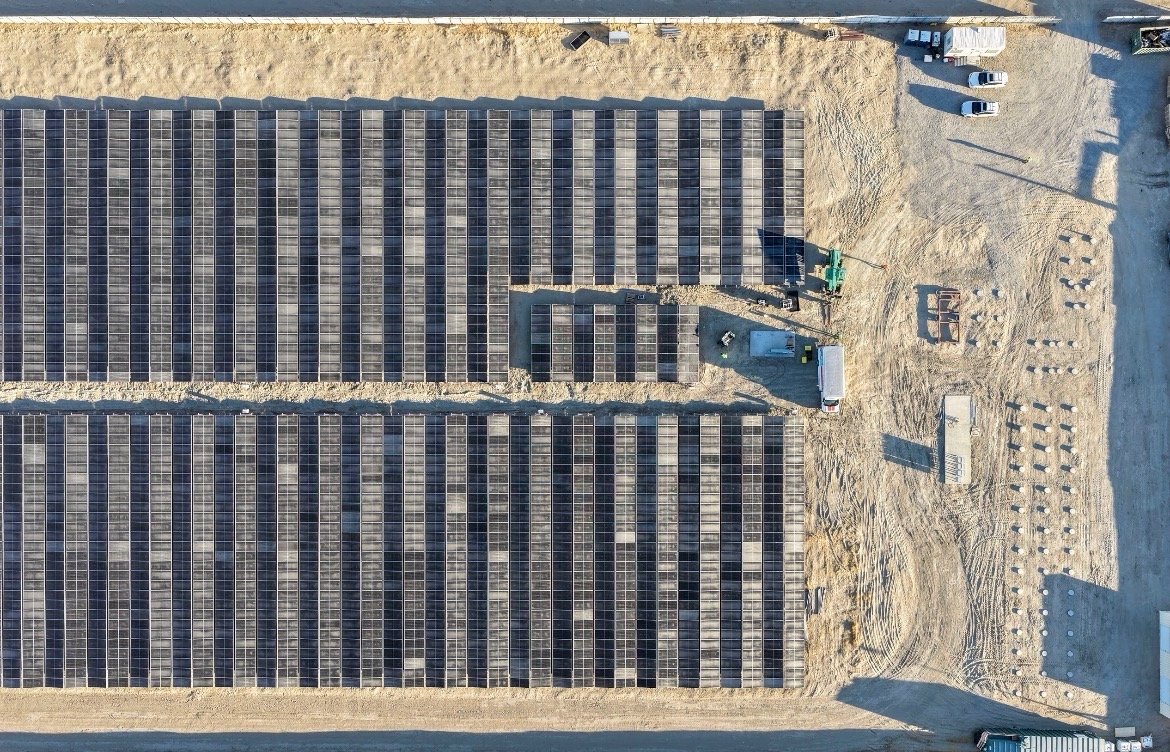
Last week the hydrogen electrolyzer team @terraformindies pulled off yet another first, the sustained production of >99.9% pure H2 from our vertically integrated, California-manufactured electrolyzer stack while it was coupled directly to a solar array at our Muroc desert test site.
WTAF?
Most commercial electrolyzers need carefully conditioned power from expensive battery-meditated backup systems. Ours runs directly off the sun. Clouds pass, the day turns to night, and we maintain purity from a stack whose Bill of Materials cost is well below $100/kW.
Terraform's single-minded focus on capex reduction has allowed us to convert sunlight to hydrogen in an unprecedented demo at a cost below $2/kg. If that wasn't enough, we have a crystal clear plan of steady execution to push that cost below $1/kg in the coming years.
Rather than linger on this point in response to experts-with-spreadsheets who said this was not only beyond my team, it was forbidden by known laws of physics, let me tell you a bit about how we actually pulled this off.
We started building this test site in March. Once the panels and electrics were in place the CO2 team were the first to demonstrate production on site. Close behind them the electrolyzer team planned the logistics necessary to project substantial operational ability into a hostile test site in the middle of nowhere. It's no good to find you're missing a wrench half way through the day!
Much of the test prep was completed before dawn, when the panels go live. The sun came up and the stack immediately started splitting water into hydrogen and oxygen. The team carefully monitored purity and flammability as the sun climbed through the sky. As designed, the stack warmed up and conducted even more power, maintaining solid production until late afternoon when the setting sun shaded the panels.
Terraform's synthetic fuel system is uniquely designed to follow the sun and extract the maximum possible value from cheap solar panels.
Hydrogen is a pernicious molecule. It leaks through and embrittles metals, burns almost invisibly at a wide range of mixtures in air, burns hot and fast and can easily undergo detonation transition, and has about half a dozen other spookily dangerous properties. My advice is to never work with it unless you absolutely have to. The Terraformer produces and consumes H2 in one compact discrete area with a minimum of complexity and fuss, and as expected this demo was completed in accordance with our rigorous safety standards and no unscheduled excitement!
This successful demonstration was also a profound milestone for the team after a testing anomaly last December compelled us to finally rip off the bandaid and move decisively towards the "future design" with half the parts but considerable complexity in assembly. No-one else makes electrolyzers this way and we, more than anyone, know exactly why. And also how to do it anyway, translating directly into a unique cost advantage.
A huge congratulation to Ken, Sherman, @ckalitin, Nikhil, Abdullah, and Aaron for their successful test campaign.
Terraform's hydrogen and CO2 are the chemical precursors for synthetic methane and methanol, which we make in our own synthetic fuel reactor.
Combined, we make oil and gas out of sunlight and air. We are breaking the geological and geographical monopolies on oil production.
In the limit, Terraform will deploy these electrolyzers by the millions and they will all be plug-and-play with solar PV arrays.
The Muroc smoke test campaign is far from over.
We will win!
Been staying at this hotel, I was in room 21 but a couple hours ago the staff asked me to move to room 42. “Sure” I say, “what’s the reason?”
I shit you not, they told me an infinitely large bus with infinite people just pulled up and they all need a room
J'ANNONCE que je suis en train de préparer une vidéo dédiée à la réparation électronique, une sorte de guide pratique ultime pour réparer des appareils, en particulier pour ceux qui ne sont pas très calés en électronique.
Elle sera publiée dans le courant du mois prochain 🧐
Less than 100 miles away, about 50 tons of steel and copper are spinning at exactly 3,600 RPM. A giant rotor slews magnetic fields through copper windings and, per Faraday and Maxwell, induces a synchronized 60 Hz sine wave across an entire grid.
That electromagnetic wave propagates through grain oriented silicon steel, laminated transformer cores, kilometers of aluminum conductor steel reinforced cable, SF₆ insulated switchgear, substations switching hundreds of kilovolts, distribution transformers, oxygen free copper wiring, silicon MOSFETs, ferrites, multilayer ceramic capacitors, and the USB C cable plugged into my phone.
There, power feeds a capacitive touchscreen. A transparent matrix of indium tin oxide is deposited on glass. The controller continuously scans the grid. My finger changes the mutual capacitance by a fraction of a picofarad, perturbing the local electric field just enough for dedicated analog front ends to detect before software reconstructs the touch.
Iron ore. Bauxite. Silica sand. Copper ore. Lithium brines. Rare earths.
Refined. Alloyed. Crystallized. Doped. Implanted. Deposited. Etched. Polished.
We purified sand into nearly perfect single crystal silicon, grew boules, sliced wafers, placed dopant atoms with nanometer precision, fabricated chips containing tens of billions of transistors, synchronized them with clocks billions of times per second, and engineered them to execute matrix multiplications at a scale no human could comprehend.
Somewhere along the way, matmuls started to look like us.
That is an astonishing thought.
The towers of abstraction are staggering. No one person built this. No one person fully understands it. Yet every morning millions of people wake up tired, answer emails, argue over specifications, chase margins, fix defects, make payroll, and try to cover their mortgages. Somehow the whole machine keeps humming.
A planetary Swiss watch assembled from physics, markets, bureaucracy, ambition, error, and human necessity.
And after all of that, I touch a piece of conductive glass and step into the Roman forum of modern thought, where millions of minds test ideas against one another in real time.
Clockwork humanity.
It staggers the mind.
The Clacton spear, which dates back 420.000 years and is the earliest piece of human worked wood from anywhere in the world.
On display in @NHM_London it really should be better known. It was created before Homo Sapiens even evolved. Clacton seems to be in the news for other things this week, but it is very interesting that it is also the home of human wood working. #clacton #clactonspear #hominin #hominid #homoheidelbergensis
A hydraulic jump kills energy through a turbulent cascade, big eddies breaking to small until heat wins. Fusion plasmas fight the same physics: turbulent eddies leak heat from confinement. Master how energy moves across scales, master the star in a bottle.
Cavitation is geometry as a weapon. A bubble collapses and its own spherical shape focuses diffuse energy inward, crushing trapped gas to thousands of kelvin at the center. No added energy
Future optics may be made from plasma. By using electrodes to reshape electron density, scientists can create a rapidly changing lens that bends light in real time, correcting turbulence for laser communications. A living optic made of ionized gas. 11 year old video
Who needs mysterious Thai-based crypto-billionaires or convicted criminals called Posh George? You can support Team Binface by bunging me the cost of a trio of affordable croissants (£3) at https://t.co/F8x87pEplq. Or don’t. I love you either way.
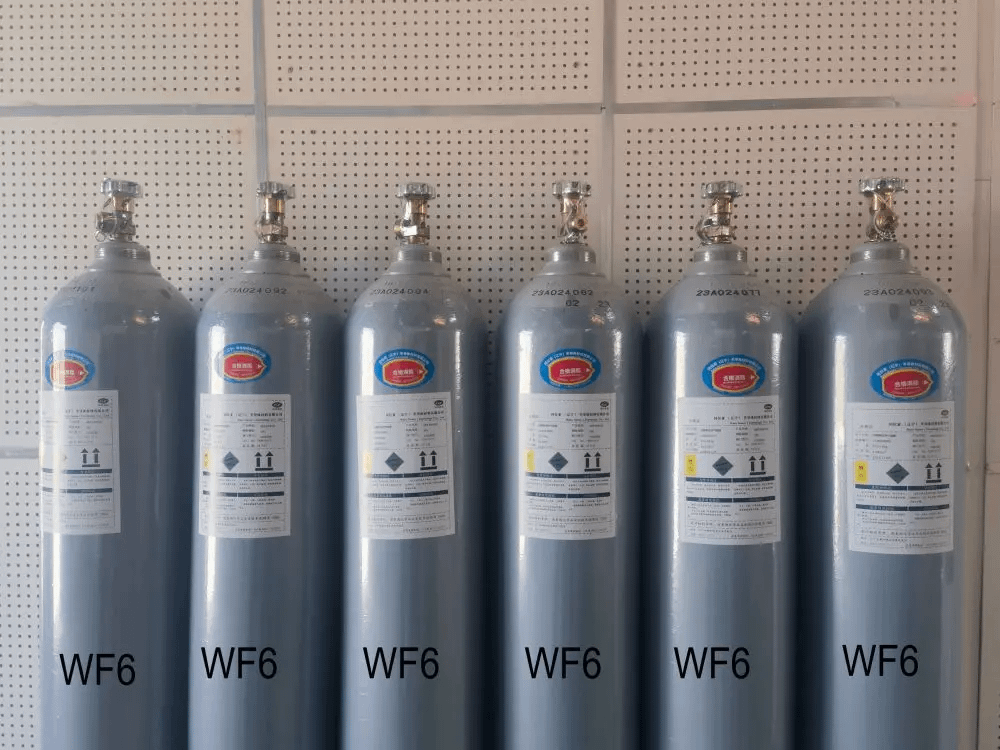
Samsung, SK Hynix, and TSMC source 80% of their WF6 from Japan. Two Japanese companies produce 25% of the world's tungsten hexafluoride. Both Kanto Denka and Central Glass are stopping all WF6 production on July 1. We manufacture chemicals. WF6 is a chemical. The semiconductor industry never asked what it's made from. WF6 deposits the tungsten contact plugs inside every advanced chip on Earth. There is no substitute for running production lines. Qualifying a new supplier takes 12 to 18 months. Building new capacity takes two to three years. China controls 80% of the tungsten powder WF6 is made from. Japan's tungsten imports from China have been zero since February. The two producers survived on stockpiles for five months. The stockpiles are gone. WF6 prices are up 232.7% year over year. Upstream tungsten powder is up 557%. Only six companies produce 90% of the world's supply. Two just quit. Every AI accelerator, smartphone chip, and SSD depends on a gas about to lose a quarter of its supply.
Apple put $13 million into replacing a material aluminum smelters burn through every 25 days. The first batch of carbon-free aluminum went into a MacBook Pro. Global aluminum production is 73 million tons a year. Hall-Héroult has been the only way to make aluminum since 1886. It has two carbons: the electricity it pulls, and the anode that burns up in the cell. A 415 kg carbon block dissolves every 25 days. That's 1.5 tons of CO2 per ton of metal, before counting the power source. Replacing the carbon anode is one of the hardest materials-science problems in extractive metallurgy. It requires a material that survives 960°C molten cryolite for years without contaminating the metal. Parts per million of iron degrades the aluminum. The replacement is a cermet: nickel ferrite ceramic with a copper alloy binder. Alcoa worked on the materials science for four decades. Rio Tinto had the cell design. Apple brokered the partnership in 2018. Last November, Elysis ran a 450 kA cell at Alma, Quebec. The anode emitted oxygen instead of CO2. It lasted 30 times longer than carbon. The first new aluminum chemistry in 140 years.