Fewer than 300 people in human history have ever seen this with their own eyes.
Earth spinning beneath them.
Nothing between their face and the infinite void except a helmet visor. 🌍🚀
It’s called an extravehicular activity (EVA)—a spacewalk.
You leave the station, secure yourself to the spacecraft, and spend hours working in the vacuum of space.
On the happy occasion of the #IndependenceDay of the Republic of North Macedonia 🇲🇰 we extend to all its citizens our sincere and best wishes for a prosperous future and a successful integration process in the #EU. 🇦🇱🤝🇲🇰
Gëzuar Ditën e Pavarësisë!
Minister @TKajzer and #NorthMacedonia’s FM @TimcoMucunski discussed 🇲🇰’s European path.
Minister Kajzer stressed: “Slovenia is a strong supporter of #EU enlargement to the #WesternBalkans. 🇲🇰 belongs in the European family.”
Minister Mucunski outlined North Macedonia’s progress on its path towards 🇪🇺 membership and stressed that they count on #Slovenia’s continued support 🇸🇮.
He also invited Minister Kajzer for a bilateral visit 🤝
Respect for Kosovo and Albanians is crucial for peace in North Macedonia and the region.
Compromise and diplomacy are the only paths forward.
#Kosovo#NorthMacedonia#Diplomacy
https://t.co/1sCPGdRfpq
The Albanian who resurrected Egypt without speaking a word of Arabic.
Muhammad Ali Pasha, born of Albanian parents in Kavalla, arrived in Egypt in 1801 as a junior Ottoman officer. Within 4 years he was Viceroy. He abolished the Mameluke dynasty in a single night (1811), centralised power, modernised the army & laid the foundations of the modern Egyptian state.
As Prof. Roy Casagranda notes this Albanian didn’t just govern Egypt; he recreated it from the ruins of Ottoman neglect and Napoleonic disruption.
His dynasty ruled Egypt until 1952. His mosque still dominates Cairo’s skyline. 200 years on, his aura is inescapable.
🇦🇱 Albania gave Egypt its greatest builder. History rarely gets the credit right.
The Macedonian politician of Albanian origin, Ali Ahmeti, has sent a letter to the international community, expressing concern about the stability situation in North Macedonia (RMV) and the entire region.
https://t.co/0SulN2in8Y
Following months of intensive and often challenging negotiations, #HLPF2026 concluded today with the adoption of the Ministerial Declaration📄another testament to the power of multilateralism. Consensus was hard-earned, making today's outcome more meaningful.
This year's Forum reviewed progress on #SDG6💧, #SDG7⚡, #SDG9🏗️, #SDG11🏙️ and #SDG17🤝, reaffirming the urgency of accelerating implementation across the entire #Agenda2030.
Serving as one of the co-facilitators of this process has been both a privilege and a responsibility for 🇦🇱. Throughout the negotiations, our objective was to foster an open, transparent and inclusive process that reflected the priorities and perspectives of all Member States.
Ambassador @suelajanina is deeply grateful to the President of @UNECOSOC for the trust placed in her, to the fellow co-facilitator Ambassador @MichaelKanuSL for the outstanding partnership throughout the negotiations, to all Member States for their flexibility and commitment to consensus, and to the UN Secretariat @UNDESA for its invaluable support.
Now the focus shifts from commitments to delivery🌏#Agenda2030 #HLPF2026
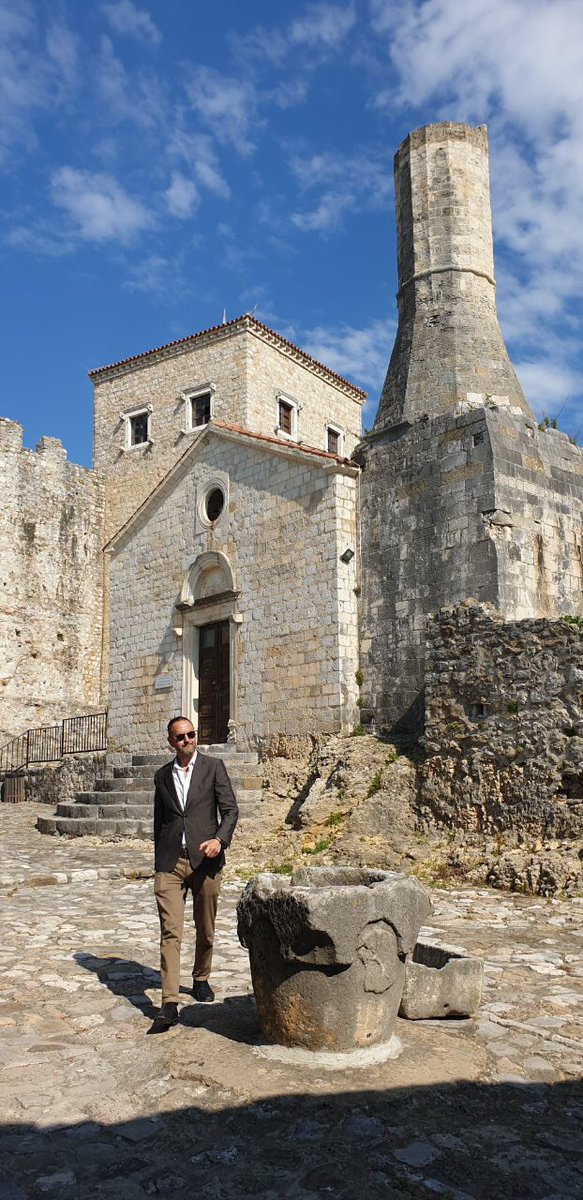
During the summer political lull, a national controversy has been manufactured out of a single phrase. The debate over whether “Ulqin is an Albanian city” has become like arguing over the color of a building’s facade while the foundations are being altered underneath.
The real issue is not medieval history or ethnic symbolism; it is the proposed amendments to Montenegro’s Law on Local Self-Government, which critics argue would centralize power and weaken the competencies and political weight of municipalities that function as cities. In that context, “Ulcinj is a city” is not a history lecture it is a political slogan defending Ulcinj’s legal and institutional status today.
“Ulcinj was a city” refers to its centuries-old urban continuity. “Ulcinj is a city” refers to its current legal status. “Ulcinj will always be a city” rejects any reform perceived as diminishing that status. “Ulcinj is a city with an Albanian majority” is a demographic fact. ���Ulcinj is an Albanian city” is a political and cultural statement about its majority language, identity, and traditions—not necessarily a territorial claim.
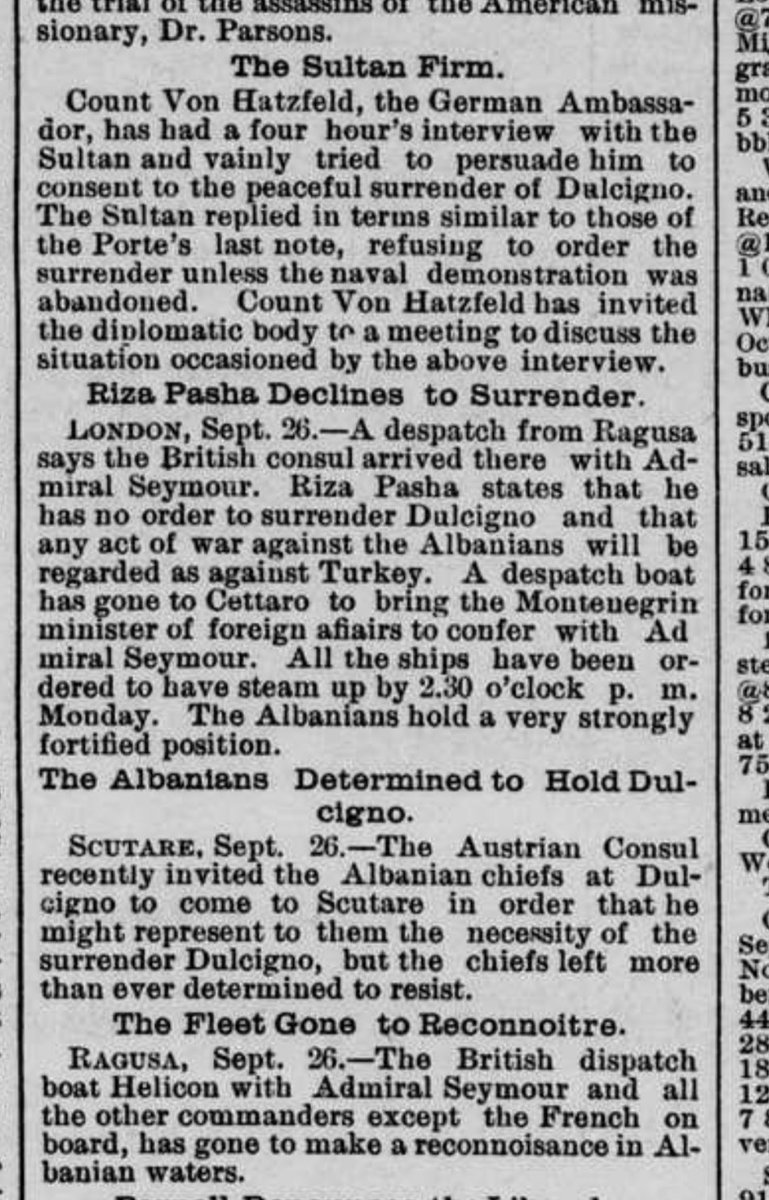
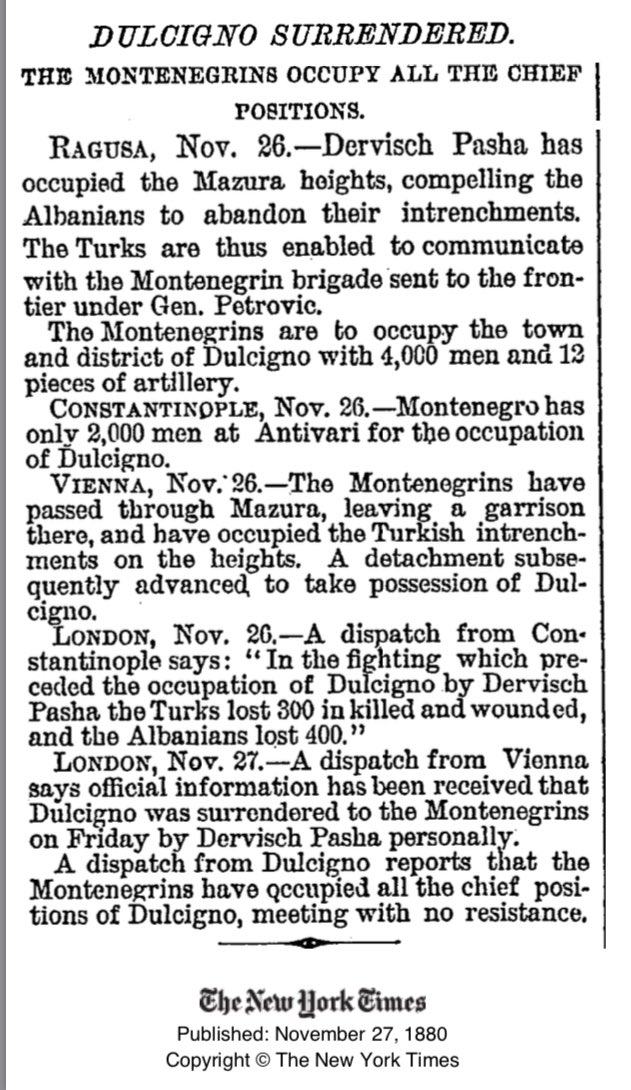
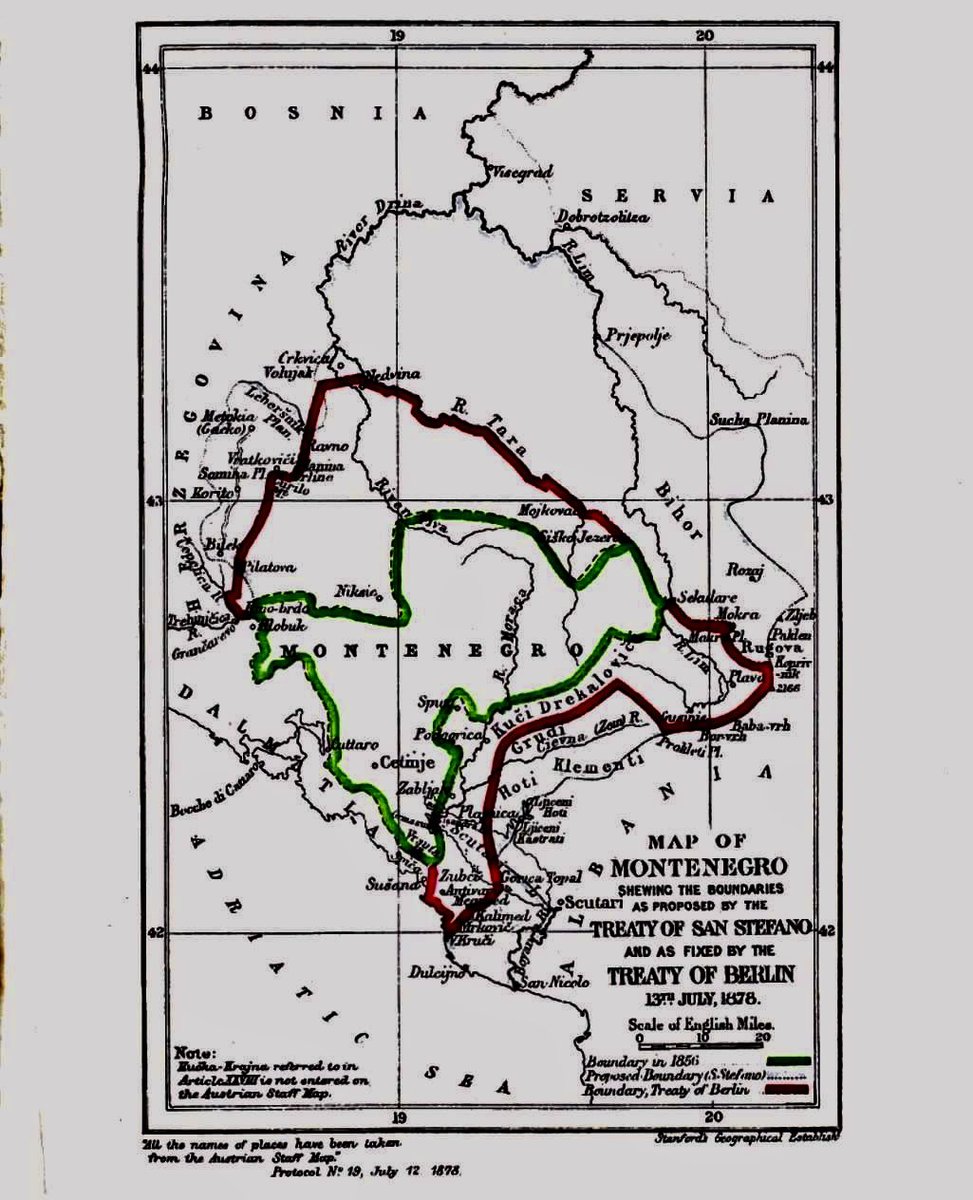
Ironically, many contemporary reactions ignore that this characterization is hardly new. When Ulcinj was transferred to Montenegro in 1880 under the decisions of the Great Powers following the Congress of Berlin, contemporary sources openly described it as an Albanian town. Memoirs attributed to Prince Nikola of Montenegro, Edith Durham, and Baron Franz Nopcsa all discussed Dulcigno within an Albanian ethnographic and cultural context. At the time, this was not treated as the existential controversy it is being portrayed as today.
Instead of debating what these legal changes mean for Ulqin’s future, politics has inflated a symbolic phrase into a national spectacle. Good material for a few days of headlines but a poor substitute for a serious discussion about whether Ulcinj should emerge stronger, more autonomous, and a genuine European tourism metropolis, rather than a city with fewer powers than it had yesterday.
ALLOTTED BY THE POWERS TO THE FUTURE AUTONOMOUS ALBANIA: A GORDIAN KNOT.
Drawn by R. Caton Woodville.
AT THE TOWN THE MONTENEGRINS DECIDED TO CONTINUE TO BESIEGE IN DEFIANCE OF THE WISHES OF THE GREAT POWERS.
A SCENE AT SCUTARI, A THORN IN THE FLESH OF PEACE-DESIRING EUROPE.