In our recent paper we show that TDP43 mislocalization and condensates in axons and neuromuscular junction cause Neurodegenration in ALS by inhibiting local synthesis of mitochondrial proteins https://t.co/sx5O45BY5Z
Dwivedi and Roy review how epigenetic changes and RNA modifications work together to regulate gene expression in the brain, and propose that this interaction helps shape vulnerability and resilience to neuropsychiatric disorders. https://t.co/EoIx3DjovH
The Jackson Laboratory is a wonderful, collaborative place to pursue basic & translational science. On the faculty job market? I strongly encourage you to consider joining us in Bar Harbor, Maine!
Apply: https://t.co/blNIfvWMNG
#JAXresearch#JAXstemcellsdev
Ellis et al. show that cellular stress downregulates the ALS-associated protein STMN2 through impaired translation and stress granule-mediated mechanisms independently of TDP-43 dysfunction. https://t.co/pY196GZc9p
RANBP17 Overexpression Restores Nucleocytoplasmic Transport and Ameliorates Neurodevelopment in Induced DYT1 Dystonia Motor Neurons https://t.co/g2g46r9nuN
Amyotrophic lateral sclerosis (ALS) is a neurodegenerative disease characterized by progressive weakness due to degeneration of upper motor neurons in the brain and lower motor neurons in the brainstem and spinal cord.
Learn more in this Review: https://t.co/nTf7K6bkIn
Proteolytic cleavage of G3BP1 by calpain 1 couples NMDAR activation to mTOR-dependent local translation | EMBO Reports | Springer Nature Link https://t.co/bSpwMQzZvn
Small heat shock proteins HspB1 and HspB5 differentially alter the condensation and aggregation of the TDP‐43 low‐complexity domain - Walker - 2026 - Protein Science - Wiley Online Library https://t.co/F1aV6jC5Hq
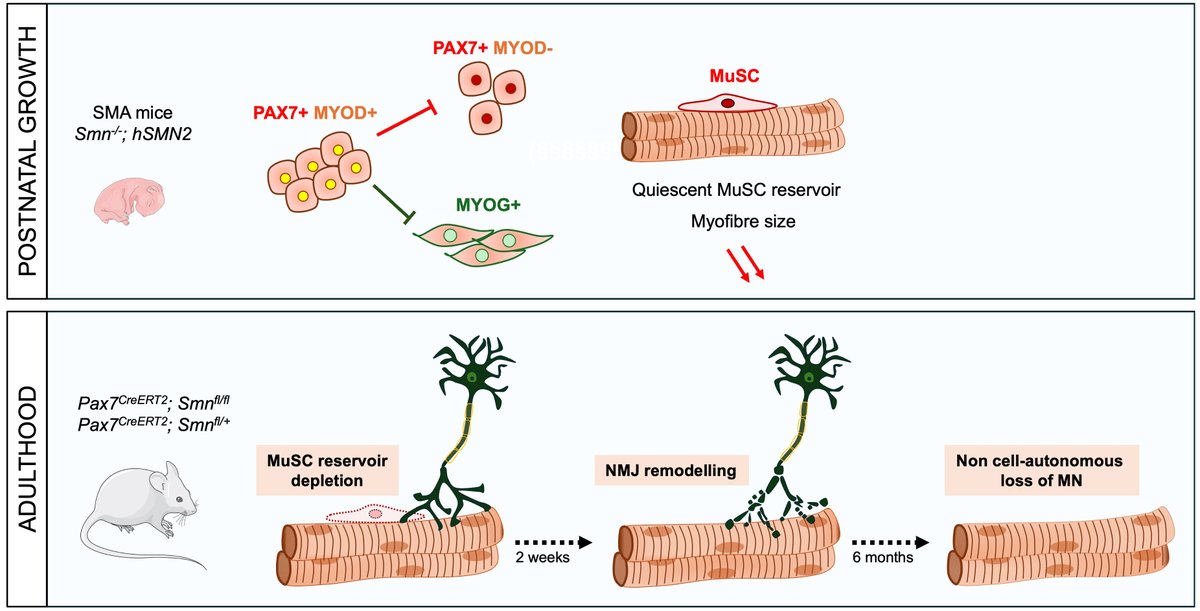
Mecca et al. investigate the role of muscle stem cells in SMA and show that their depletion disrupts neuromuscular junctions and leads to motor neuron loss in the spinal cord. They conclude that muscle stem cells represent potential therapeutic targets. https://t.co/wWcg0eoby2
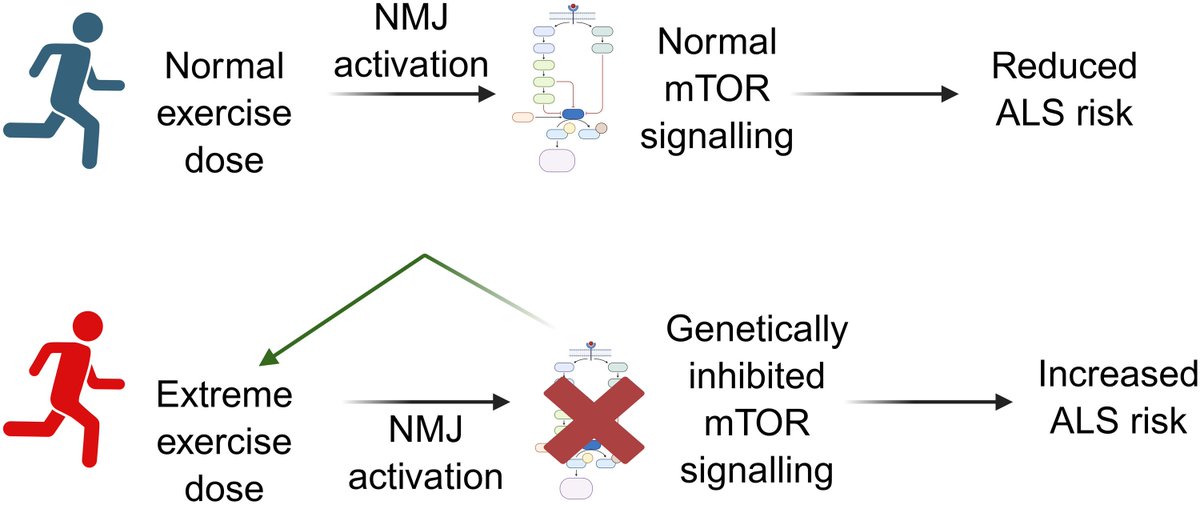
O'Brien et al. demonstrate a link between ALS and extreme exercise in males which is potentially mediated via failed mTOR signalling at the neuromuscular junction. https://t.co/SpCnO3xKey; https://t.co/Z2ONeJPjaR
Drs. Yi Zeng, Aaron Gitler, and colleagues show that loss of TDP-43 from neuronal nuclei of human brain and disease-causing mutations in TDP-43 are associated with widespread changes in alternative polyadenylation. 🧠 @StanfordMed@NatureNeuro | https://t.co/3LtW0oV4PU