Thank you @JuravinskiRI for this award to launch ELEVATe-PM!
We aim to integrate innovative MRD blood tests in the curative setting - starting with RCC, bladder cancer, & AML - while harnessing AI/data analytics to enhance efficiencies
@HamHealthSci@McMasterU@StJoesHamilton
We are on the cusp of a wave of new therapies for some of the worst diseases. But the world won’t benefit unless the US fixes its drug regulatory system. My new essay for @nytimes, on how slow clinical trials are now the biggest obstacle to curing cancer.
https://t.co/a5qf9bAKXL
- I interviewed dozens of researchers, especially oncologists at leading U.S. centers. A striking consensus emerged: science is no longer the main bottleneck to new cancer drugs. It is our ability to test discoveries in patients through clinical trials.
- The cost of starting a Phase 1 trial in America has roughly doubled over the past decade. As a result, companies increasingly take early trials abroad: Australia’s Phase 1 trial volume has nearly doubled in a decade, driven mainly by U.S. companies.
- Unfortunately, the underlying incentives are badly asymmetric: Institutions can be blamed for harms caused by moving too fast, but almost no one is blamed when patients deteriorate during avoidable delays. One doctor called the emerging system “ritualized safety over actual risk assessment.” Or as, @DavidHongMD put it: "We often forget that the biggest risk is the cancer itself."
- This problem is becoming more urgent because medicine itself is changing. Sequencing, biological engineering and A.I. make increasingly personalized therapies possible. But our regulatory system was mostly built for standardized drugs tested in large populations.
- @sytse, the co-founder of GitLab, shows what personalized medicine can achieve: after relapsed osteosarcoma and being told there were no options left, he pursued a highly individualized approach and has now been cancer-free for a year. But doing so required extraordinary resources and regulatory expertise.
- Pierce Ogden’s father was less lucky. After molecular analysis identified a drug that might target his glioblastoma, the manufacturer agreed to provide it. But administrative barriers delayed access until it was too late. “My dad was ready to try anything,” Pierce told me. “But the system is paternalistic.”
- The A.I. revolution is making this bottleneck more important, not less. A.I. relies on relevant data. Information from early-stage trials could compound with A.I. tools to achieve truly revolutionary medicines. Without the data, this is far less likely to happen.
- Another important shift is that innovation increasingly comes from academic labs and small biotech companies rather than Big Pharma. These small companies find it far harder to unable to absorb delays and regulatory barriers.
- Apart from cancer, China is the biggest winner from America's outdated medical regulations. China has a much faster trial system, with testing often starting a full year earlier. This allows Chinese pharmaceutical companies to experiment and improve medicines while American companies play with mice. Today, half of all drugs licensed by major pharmaceutical companies originate there, up from less than 5 percent only a decade ago.
- But we don't need to copy China. The best model is Australia: lots of on-site scientific and ethics reviews, and requirements that are proportionate to small, early-stage trials. Phase 1 studies there begin roughly 6–12 months faster, without any notable increases in adverse safety events.
- Operation TrialBlazer, a 2026 HHS initiative is a good start in this direction, but we need legislative action by Congress to truly make Phase I trials faster and more efficient!
I want to thank everyone who helped me with this article: everyone I interviewed and the amazing editors at the Times. This is the result of a months long journey of extensive interviews and research.
Special thanks go to those who came on the record. One of the features of the system is an atmosphere of fear, where practitioners are afraid to publicly come out and explain these issues. So anyone who does is a hero in my book!
Don’t do it alone. Keep going despite failures. Recognize the role luck can play in success. Three lessons that guest Dr. Neil Fleshner shares with @LalaniMD and @WallisCJD on pursuing medical entrepreneurship and much more at https://t.co/kSQYsytayu
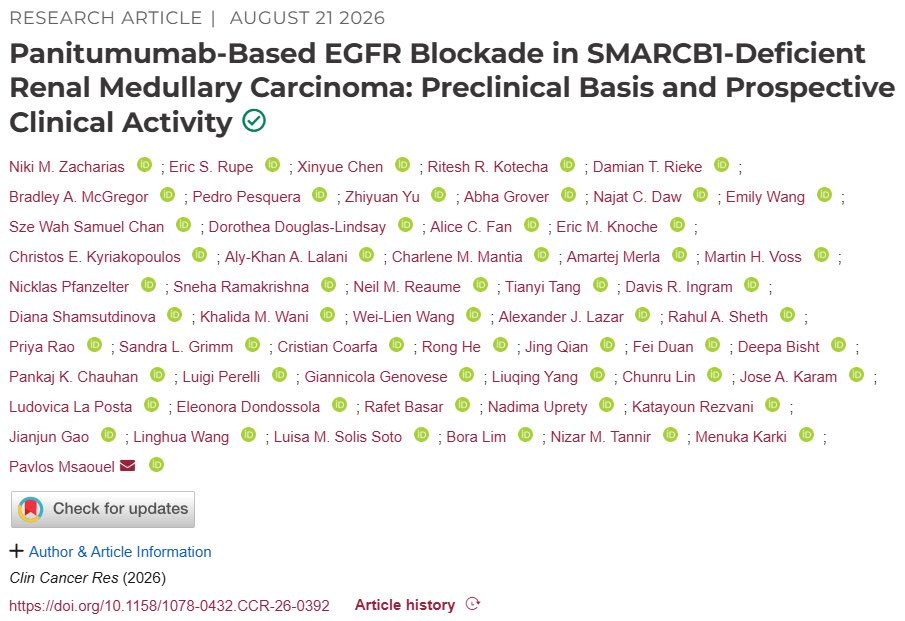
1/5 Our study on panitumumab-based EGFR blockade in renal medullary carcinoma (RMC) is out in Clinical Cancer Research: https://t.co/mU9znGC4mq #MsaouelLab, #endRMC#kidneycancer
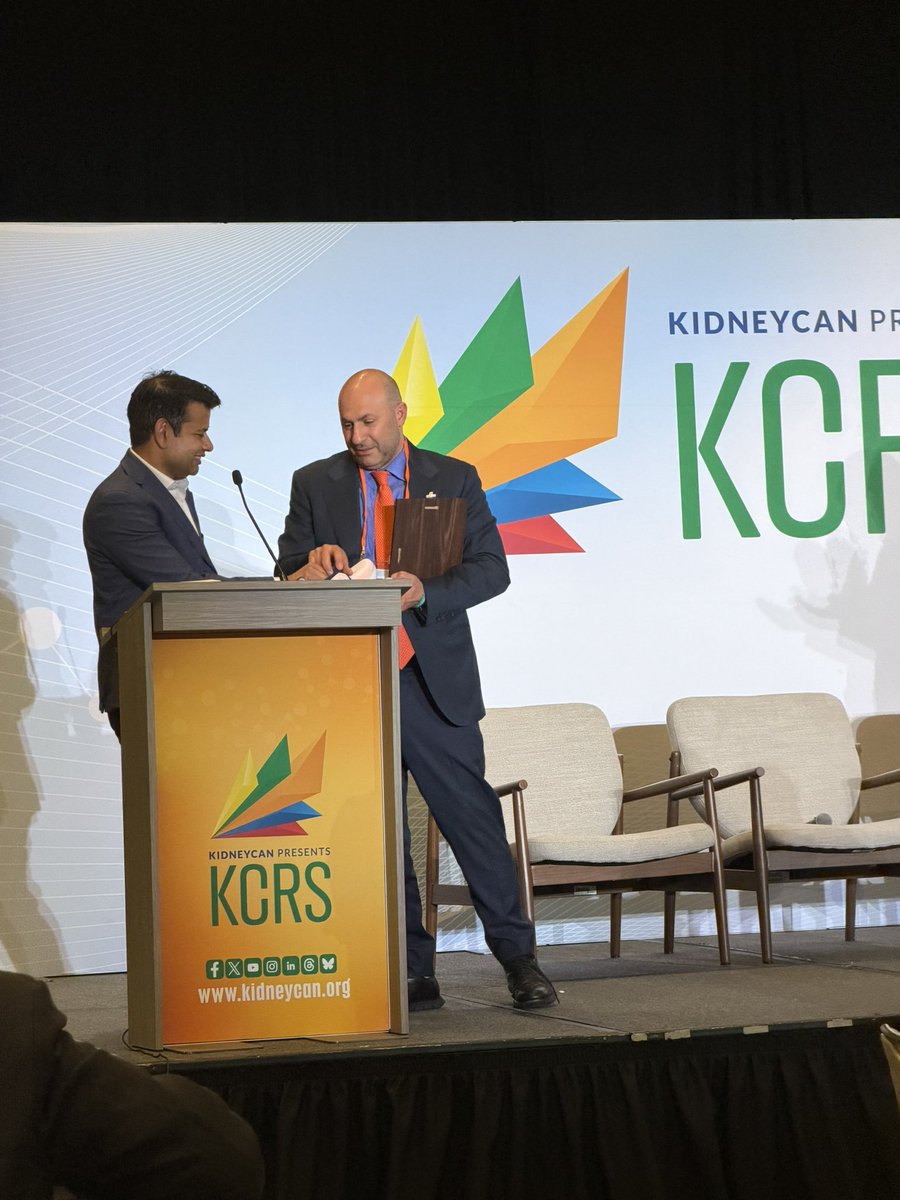
Toni, you have touched the lives of so many human beings - patients, families, colleagues, mentees.
You are the most deserving of this award, congratulations and most importantly, THANK YOU!
#KCRS26
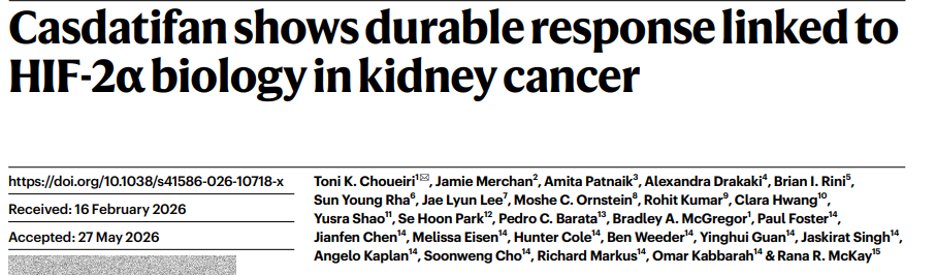
1/ Results from #ARC20 trial are out in @Nature!
This trial evaluated the HIF-2α inhibitor Casdatifan in heavily pretreated advanced ccRCC and provides important insights into HIF-2α biology and response. This is the 2nd HIF2 inhibitor with enough activity to move to a pivotal study after Belzutifan, cementing the 2019 @nobelprize story with @kaelinlab et al
Check it out: https://t.co/ZCBMtlx8VP
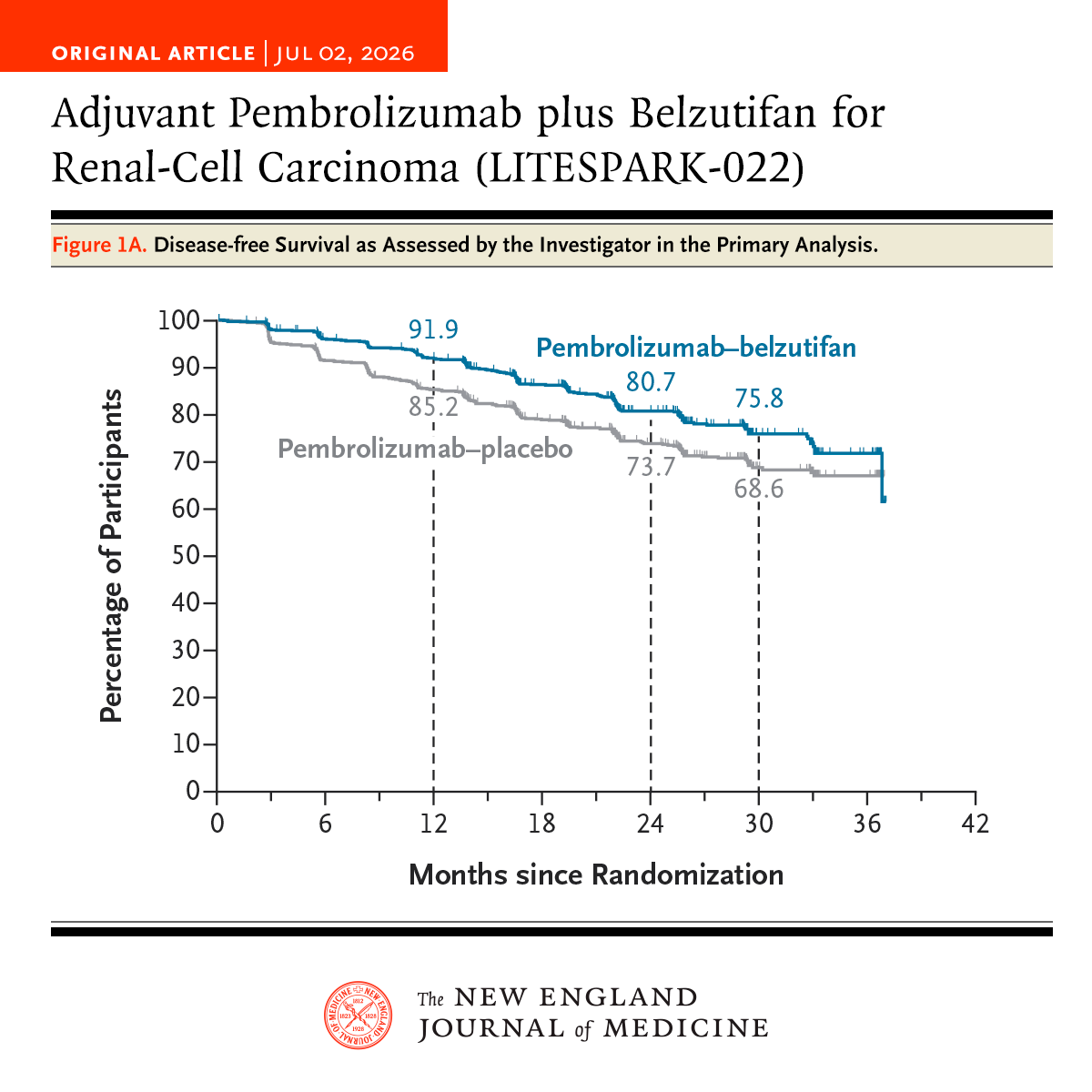
In patients with resected clear-cell renal-cell carcinoma, pembrolizumab plus belzutifan led to higher disease-free survival than pembrolizumab alone but with an increased risk of grade 3 or higher adverse events. Full phase 3 LITESPARK-022 trial results: https://t.co/CF0F3TFyxd
NEJM subscribers can use AI Companion to ask questions about this article and quickly find the details you need.
#CYTOSHRINK: Evaluating SBRT to the primary tumor in de novo advanced #RCC. @lalaniMD@HamHealthSci and @l_ballas@CedarsSinai discuss the CYTOSHRINK study, randomizing 67 de novo advanced #RenalCellCarcinoma patients two-to-one to stereotactic body radiation plus nivolumab/ipilimumab versus nivolumab/ipilimumab alone. https://t.co/3sEuKjzO8w
June is here! Mark your calendars! - ✈️no boarding pass required! #CUAHighlights of ASCO 2026
@ASCO
>>> click to register https://t.co/Eep0T0SF3a
@lalaniMD
Presented at #ASCO26:
In high-risk localized prostate cancer, ADT plus apalutamide led to a pathological complete response or minimal residual disease and 5-year metastasis-free survival in a greater percentage of patients than ADT plus placebo. Full phase 3 PROTEUS trial results: https://t.co/UxXUkYwd8Z
Editorial: A Watershed Moment in the Perioperative Treatment of Prostate Cancer https://t.co/XgeWL3lqy6
@ASCO
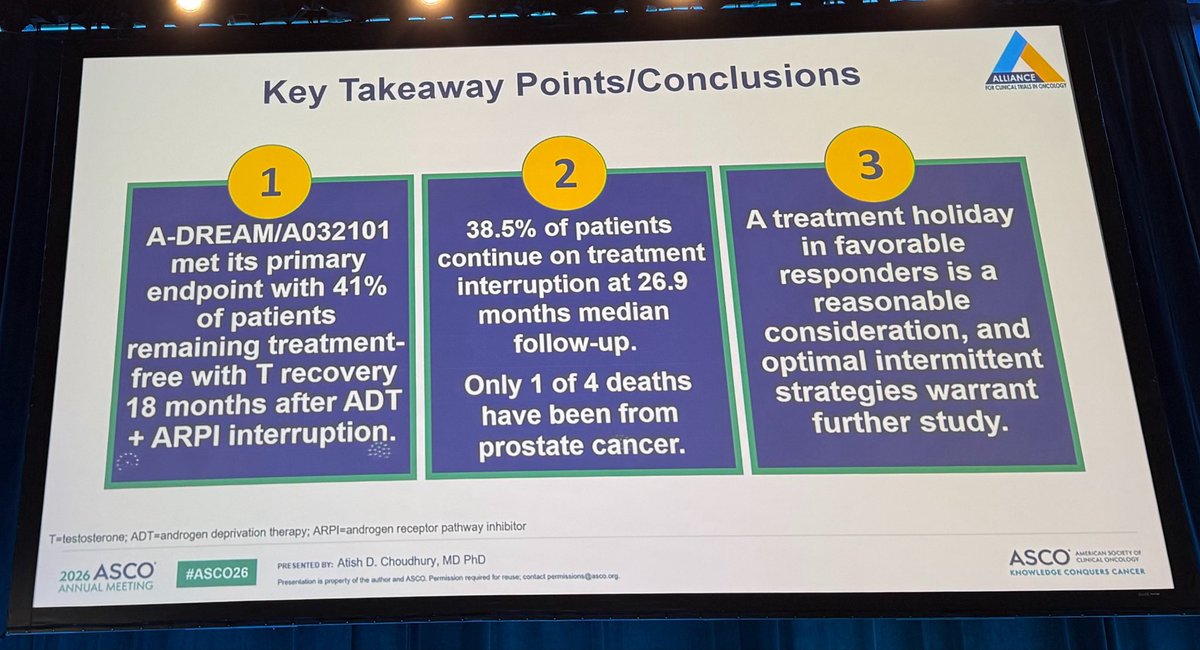
Congrats @AtishChoudhury 👉Can we safely de-intensify Rx in exceptional responders with mHSPC/ mAPMS #prostatecancer ? #ASCO2026 A-DREAM data👉Rx holiday after ADT + ARPI may be feasible, with 41% remaining treatment-free with testosterone recovery at 18 mos @OncoAlert@urotoday
Presented at #ASCO26:
In patients with metastatic prostate cancer with gene alterations, talazoparib–enzalutamide led to better progression-free survival outcomes than placebo–enzalutamide but with more serious adverse events. Full phase 3 TALAPRO-3 trial results: https://t.co/MFVGDGwPzc
Editorial: Precision Intensification in Metastatic Prostate Cancer https://t.co/Q7rjJJ7wJL
@ASCO
#CYTOSHRINK: Evaluating SBRT to the primary tumor in de novo advanced #RCC. @lalaniMD@HamHealthSci and @l_ballas@CedarsSinai discuss the CYTOSHRINK study, randomizing 67 de novo advanced #RenalCellCarcinoma patients two-to-one to stereotactic body radiation plus nivolumab/ipilimumab versus nivolumab/ipilimumab alone. https://t.co/3sEuKjzO8w
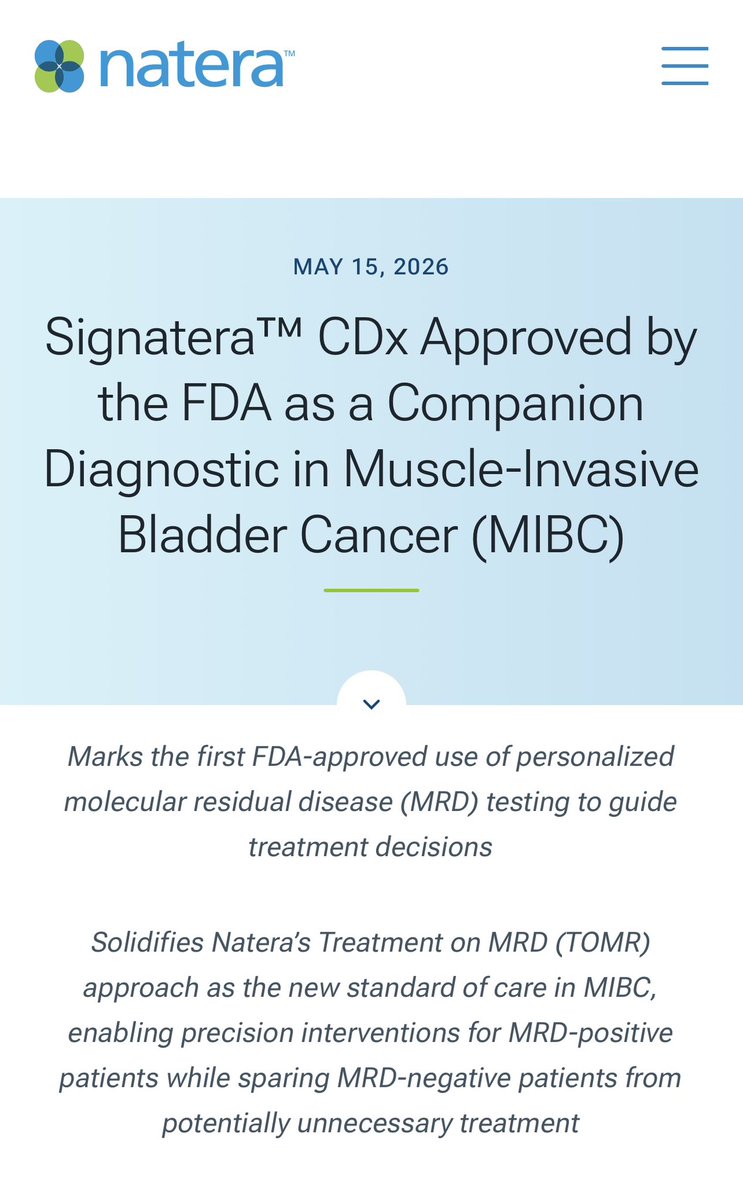
The FDA approves the signatera ctDNA assay for muscle invasive bladder cancer patients post surgery.
This is based on the results of Imvigor011 study (atezo vs placebo in ctDNA positives, surveillance for the ctDNA negatives).
It opens a new chapter for personalised therapy in urothelial cancer. Focusing on early treatment for those patients that need it and sparing those at lower risk potentially harmful treatment makes sense.
‘It is the first companion diagnostic approval in the field of blood-based MRD.’
https://t.co/dGAIblVrzc
With so many options in #Genomics, how do you balance everything that could be tested with what’s useful in clinical practice? Dr. @ResearchWyatt joins Dr. @LalaniMD and Dr. @WallisCJD to discuss the real-world use of genomic testing in GU cancers: https://t.co/xipk6Ukova
#CYTOSHRINK: Evaluating SBRT to the primary tumor in de novo advanced #RCC. @lalaniMD@HamHealthSci and @l_ballas@CedarsSinai discuss the CYTOSHRINK study, randomizing 67 de novo advanced #RenalCellCarcinoma patients two-to-one to stereotactic body radiation plus nivolumab/ipilimumab versus nivolumab/ipilimumab alone. https://t.co/3sEuKjzO8w
For over 50 years, the Ismaili community has helped shape Canada’s social and cultural fabric.
It was a pleasure to take part in today’s groundbreaking alongside His Highness Aga Khan V for the first dedicated Jamatkhana in Quebec, in Laval. It will create a space for prayer, dialogue, and community life, and continue to strengthen inclusion and belonging for generations to come.
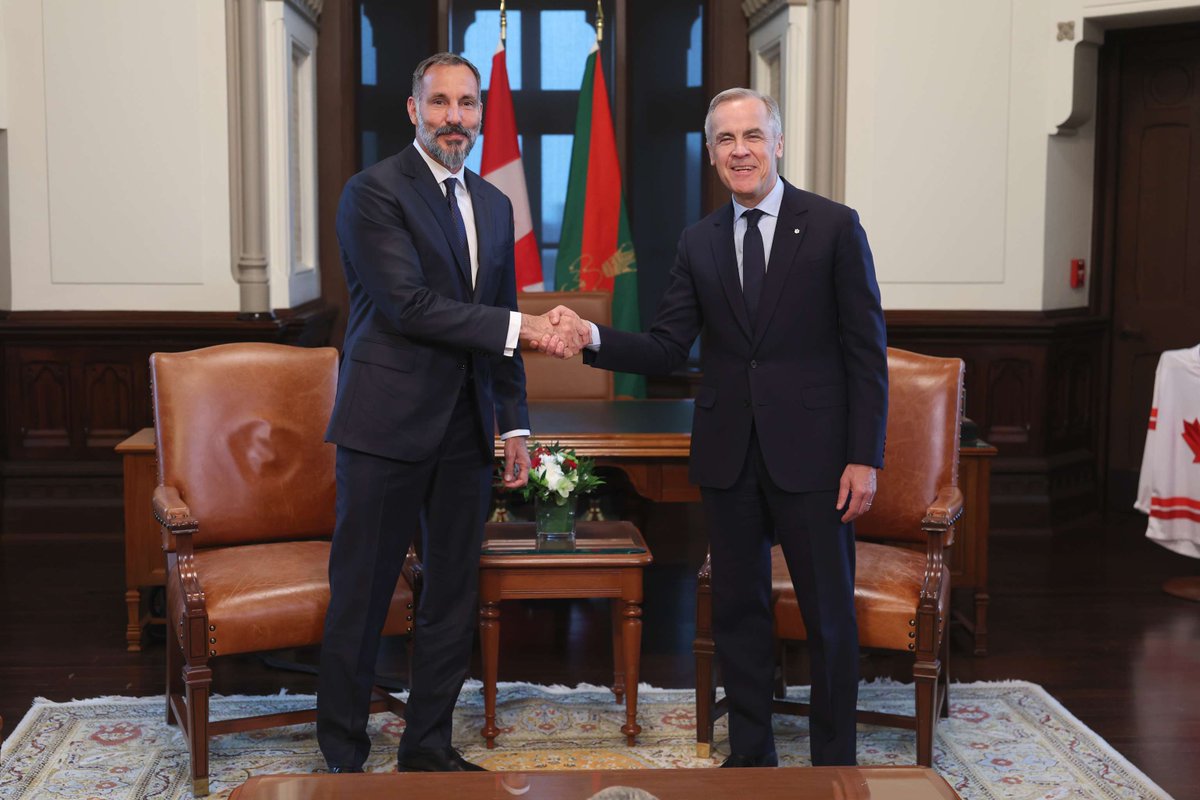
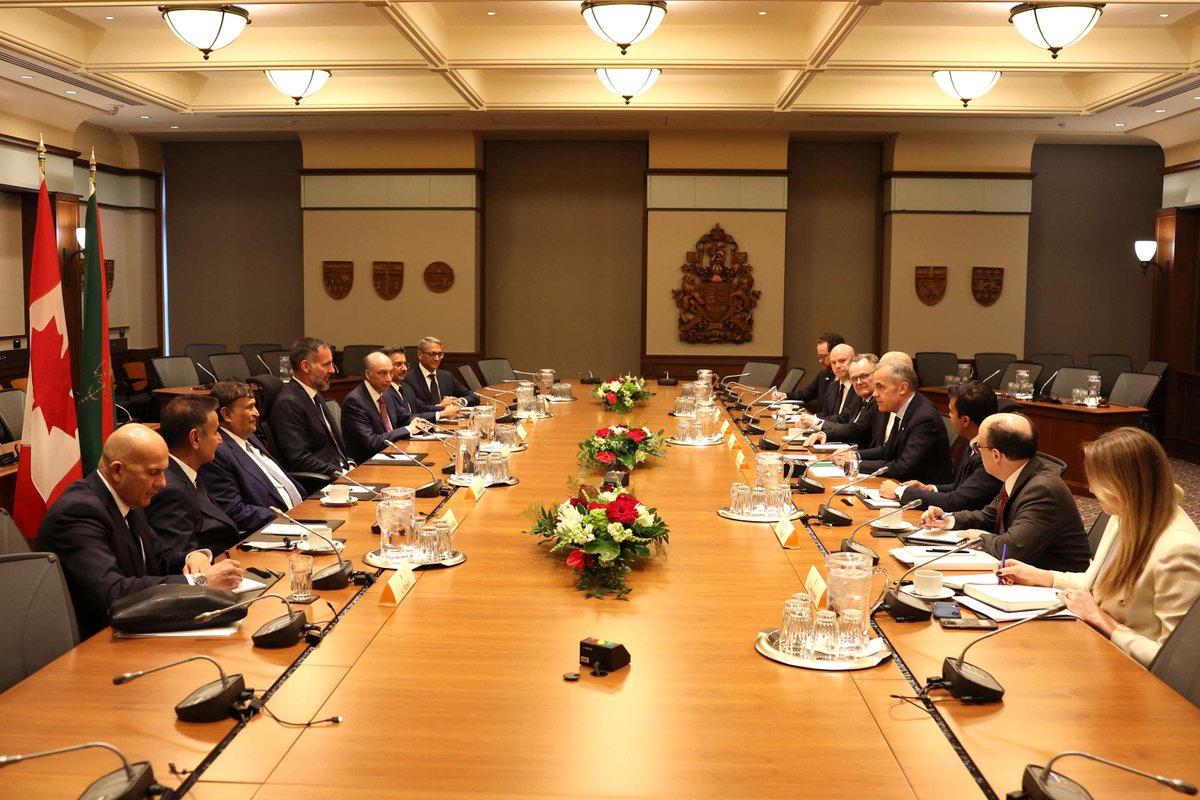
Yesterday, His Highness the Aga Khan began his first official visit to Canada, marking a milestone in a relationship between the Imamat and Canada that spans more than five decades. His Highness met with Prime Minister Mark Carney and was hosted at dinner by Governor General Mary Simon and His Excellency Whit Fraser. His Highness also met today with Senators and Members of Parliament at the Delegation of the Ismaili Imamat.
Prime Minister Carney and His Highness released a joint declaration outlining new partnerships in housing, economic development and other areas of mutual interest, setting the stage for renewed collaboration.
During substantive discussions with Prime Minister Carney, three priority areas were advanced.
First, affordable housing. Prime Minister Carney welcomed investments by the Ismaili Imamat in multi-generational not-for-profit housing projects across Canada. Through Build Canada Homes, the Government of Canada will also forge a long-term partnership with the Ismaili Imamat to develop low- and middle-income housing projects.
Second, development collaboration. The leaders announced the creation of an Economic Partnership Platform to strengthen development financing. FinDev Canada and the Aga Khan Fund for Economic Development will pool public and private capital to invest in infrastructure, renewable energy and agriculture across Africa and Asia. Prime Minister Carney and His Highness also committed to ongoing joint development programming in economic opportunity, health, education and pluralism, including in critical regions such as Syria. Opportunities were identified in skills development, energy, and leveraging Canadian innovations and technology in sectors such as agriculture and climate.
Third, principled global diplomacy. Recognising the urgent need for quiet, principled diplomacy to save lives, end conflict, and preserve human dignity, the Imamat and Canada renewed their commitment to work together towards these goals.
His Highness underscored the importance of new forms of partnership and reaffirmed the readiness of the Imamat, AKDN, and the Canadian Ismaili community and its institutions to serve as reliable partners.
Photos: AKDN / Akbar Hakim