Exercise intensity modulates interorgan communication and is associated with cardiometabolic health outcomes in humans
👉 Sprint interval training, often lasting less than 5 min of total work, “results in similar, if not superior, whole-body metabolic adaptations” compared with 30 minutes of low or moderate intensity exercise.
https://t.co/O8nyLlg9ke
Why have antioxidant supplements not helped reduce the incidence of cancer and in some trials shown an increase?
Suppression of T cell immune response to cancer
@ScienceMagazine
https://t.co/JGsP0hGzxD
https://t.co/C5X6qUz7hX
Confirmation non seulement de l’efficacité du daraxonrasib sur les cancers mutés RAS - ici les cancers pulmonaires - mais surtout tout de même la toxicité de la molécule …
Plus de 50% de grade 3 c’est énorme.
Et 300 mg la dose max, c’est la dose de l’essai de phase 3 sur le cancer du pancréas.
Gageons que les prescripteurs seront très prudents … et adapterons très vite les doses à la baisse.
Ça ne change rien au fait qu’on attend la molécule avec impatience.
Mais elle sera complexe à manier.
Why do some ADCs cause more neutropenia/neuropathy, while others bring ocular toxicity?
We often assumed:
unstable linker → premature payload release → toxicity.
So, make the linker more stable → safer ADC.
Not necessarily.
<1% of the injected ADC typically reaches the tumor, while much of the ADC is processed outside it. A more stable linker can mean greater exposure to intact ADC, with normal-tissue uptake and intracellular catabolism creating a different pattern of toxicity.
The clinical lesson:
Stabilizing the linker may not eliminate toxicity.
It may SHIFT it.
The goal is not the most stable linker.
It is the right linker stability for that ADC.
Colombo R, et al. Ann Oncol. 2026;37:902–917.
#MVOnco #ADC #AntibodyDrugConjugates #Oncology #CancerResearch #MedicalOncology
In NSCLC with 𝘌𝘎𝘍𝘙 exon 20 insertions, first-line sunvozertinib led to longer progression-free survival than chemotherapy. The most common adverse events of grade 3 or higher were elevated creatine kinase, diarrhea, and anemia. Full phase 3 WU-KONG28 trial results and Research Summary: https://t.co/a2rEpZHUq6
ESMO 2026: AFTER ONE ARPI, CHANGE THE MECHANISM
ARPI → ARPI? Think twice. ESMO highlights compelling cross-resistance between abiraterone ↔ enzalutamide, with only modest efficacy from the second ARPI.
PSMAfore: ¹⁷⁷Lu-PSMA-617 vs ARPI switch → rPFS HR 0.41, with delayed worsening of QoL and pain.
CARD: after docetaxel + progression ≤12 months on an ARPI, cabazitaxel beat ARPI switch → rPFS HR 0.54 | OS HR 0.64.
Practical message: after progression on an ARPI, think CHANGE THE MECHANISM, rather than reflexively recycling the AR pathway.
📖 Fizazi K, et al. Ann Oncol. 2026;37:590–604. ESMO Clinical Practice Guideline.
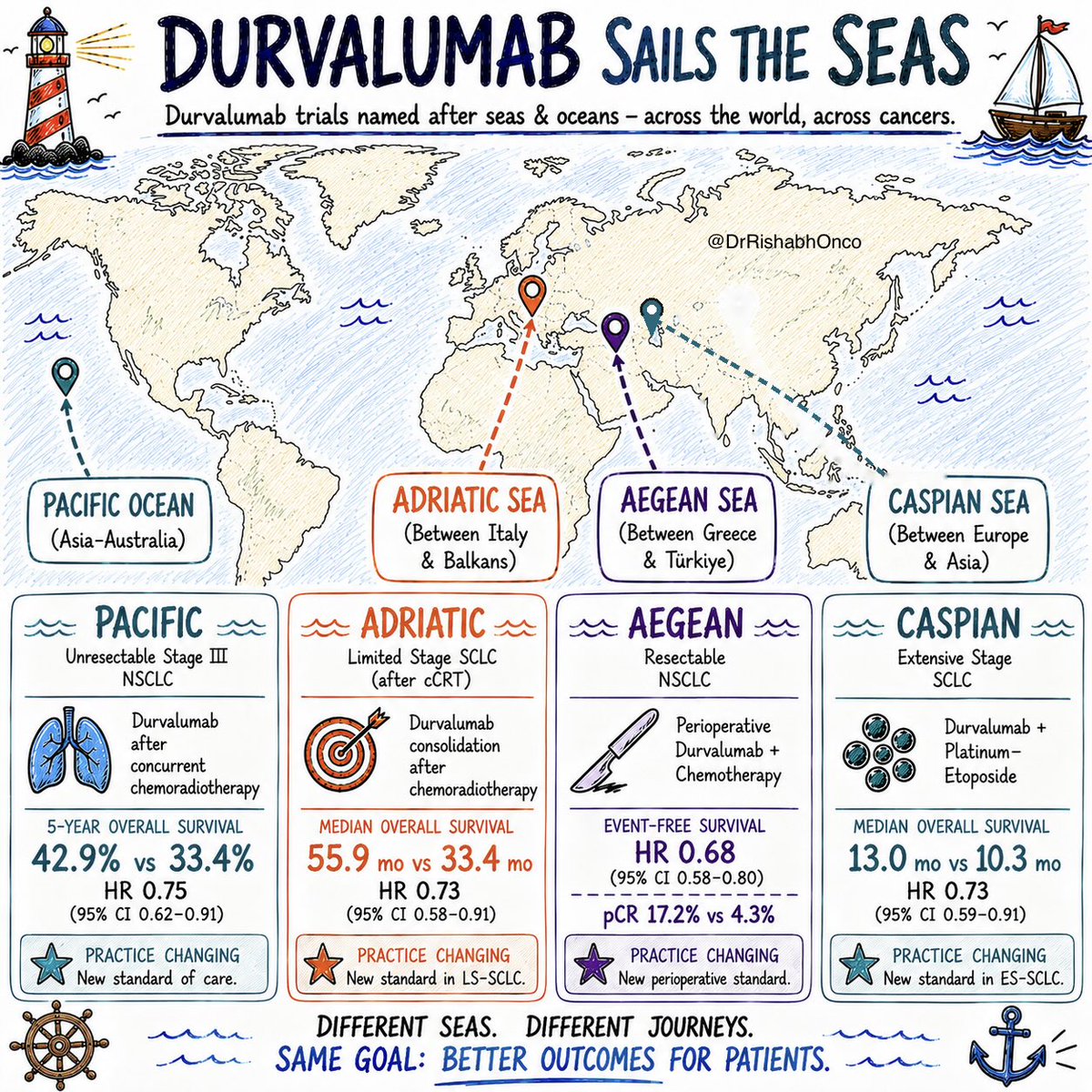
🌊 Ever wondered why so many durvalumab trials sound like a geography quiz?
After the mountains, durvalumab goes to the seas:
PACIFIC → unresectable stage III NSCLC
Durvalumab after cCRT
5-y OS 42.9% vs 33.4%
CASPIAN → ES-SCLC
Durvalumab + platinum-etoposide
mOS 13.0 vs 10.3 mo
HR 0.73
AEGEAN → resectable NSCLC
Perioperative durvalumab + chemotherapy
EFS HR 0.68
pCR 17.2% vs 4.3%
ADRIATIC → LS-SCLC after cCRT
Durvalumab consolidation
mOS 55.9 vs 33.4 mo
HR 0.73
Four waters. Four landmark trials. One easy way to remember durvalumab. 🌊
📌 Bookmark this before your next thoracic oncology clinic.
@ASCO@oncoalert
#Oncology #LungCancer #Durvalumab #ThoracicOncology
🚨 NEW ASCO 2026 Living Guideline: HR+/HER2− Stage I–III Breast Cancer
A few recommendations worth bookmarking 👇
🔹 Endocrine therapy remains the backbone of systemic treatment.
🔹 Low ER expression (<10%), stage II–III: neoadjuvant treatment may follow a TNBC-style regimen with taxane + carboplatin + anthracycline + pembrolizumab.
🔹 Neoadjuvant CDK4/6 inhibitors: insufficient evidence for routine use.
🔹 Adjuvant CDK4/6:
• Abemaciclib × 2 y for monarchE-eligible patients
• Ribociclib × 3 y for NATALEE-eligible patients
📌 ASCO suggests using absolute risk to guide CDK4/6 treatment:
25% 10-y breast cancer mortality risk → recommend
10–25% → consider
<10% → generally do not recommend
⭐ If eligible for both, the Panel favors abemaciclib over ribociclib, citing shorter treatment duration + demonstrated OS benefit.
🧬 High-risk germline BRCA1/2 or PALB2 → offer 1 year adjuvant olaparib; ASCO prioritizes olaparib over CDK4/6 inhibition when both apply.
Verdict: Early HR+/HER2− breast cancer management is becoming increasingly risk-adapted, genomically informed, and targeted.
@ASCO@OncoAlert #BreastCancer #Oncology
Le communiqué de presse de @moderna_tx et @Merck fait beaucoup de bruit.
L’action de @moderna_tx a plus que doublé en une séance, avec un bond ayant atteint +160 % en cours de journée.
Business is business !
Mais de quoi s’agit-il exactement ?
D’un vaccin thérapeutique personnalisé à ARNm, l’intismeran autogene (V940/mRNA-4157), fabriqué à partir des mutations propres à la tumeur de chaque patient afin de présenter au système immunitaire des néoantigènes tumoraux.
Et surtout, il faut bien comprendre dans quelle situation il est testé.
👉 Ce n’est pas chez des patients ayant un mélanome métastatique évolutif.
Il s’agit d’un traitement ADJUVANT, c’est-à-dire donné après chirurgie complète d’un mélanome à haut risque de récidive.
L’étude INTerpath-001 est le grand essai de phase III confirmant les résultats prometteurs de la phase IIb KEYNOTE-942 (cf diapo) publiée en 2024.
🔗 https://t.co/xuc1pggrAb
1 137 patients présentant un mélanome de stade IIB à IV complètement réséqué ont reçu :
pembrolizumab + vaccin ARNm personnalisé
versus
pembrolizumab seul.
Le traitement de référence en adjuvant repose aujourd’hui notamment sur une immunothérapie anti-PD1 seule chez les patients à risque élevé de récidive avec d’autres possibilités dans certaines situations, notamment en cas de mutation BRAF.
Et qu’annonce le communiqué ?
✅ amélioration statistiquement significative de la survie sans récidive (RFS) ;
✅ amélioration de la survie sans métastase à distance (DMFS).
C’est évidemment très intéressant.
Et c’est une véritable étape dans le développement des vaccins anticancéreux personnalisés à ARNm
Mais nous n’avons toujours pas les résultats !
Pas de publication.
Pas de courbes de survie.
Pas de hazard ratio communiqué.
Pas de différence absolue de récidive.
Et surtout, pas encore de démonstration d’un bénéfice en survie globale (OS) : les données d’OS sont encore immatures.
Autrement dit, nous savons que l’essai est positif, mais nous ne savons pas encore de combien.
Or, entre un HR à 0,80 avec quelques points de différence absolue et un HR proche de 0,50 reproduisant les résultats spectaculaires de KEYNOTE-942, l’impact clinique n’aurait évidemment rien à voir.
La phase IIb KEYNOTE-942 était certes très encourageante : avec environ 5 ans de recul, le signal observé suggérait une réduction importante du risque de récidive avec V940 + pembrolizumab.
C’est précisément ce que le phase III devait confirmer.
Donc oui : l’annonce est scientifiquement importante.
Mais transformer aujourd’hui un communiqué industriel sans résultats chiffrés en « révolution contre le cancer » est prématuré.
Attendons la présentation scientifique, les courbes, la magnitude du bénéfice, la toxicité détaillée et, à terme, la survie globale.
En oncologie, « essai positif » est une information.
La taille du bénéfice est ce qui permet de savoir si l’on change réellement la pratique.
🙏🙏
(Aucun lien ou conflit d’intérêt)
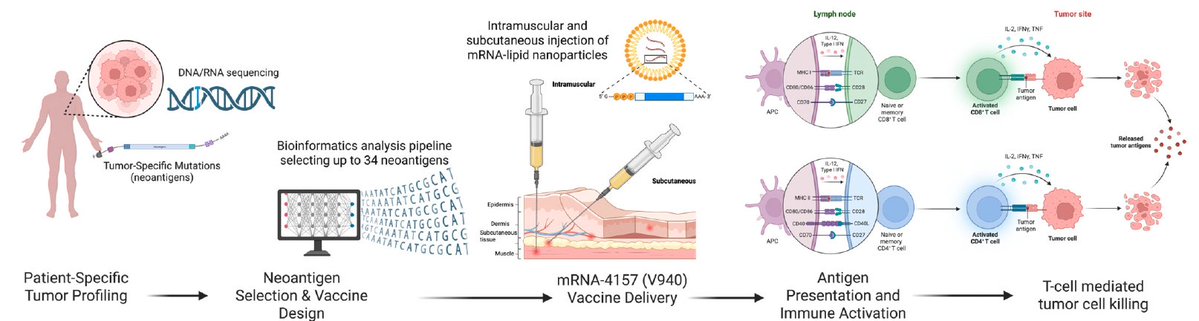
🧬 HOW DOES A PERSONALIZED mRNA CANCER VACCINE ACTUALLY WORK?
As an oncologist, and also as a university professor, I strongly believe that understanding how a new treatment works is often the best way to understand why it may eventually change our clinical practice.
So, what exactly is a personalized mRNA cancer vaccine?
The concept is both sophisticated and surprisingly intuitive.
1️⃣ Start with the patient's own tumor 🧬
Every cancer is genetically different.
By sequencing tumor DNA and RNA, and comparing this information with normal tissue , we can identify tumor-specific mutations.
Some of these mutations generate abnormal proteins that are not present in healthy cells.
These are called neoantigens.
And importantly, they can become molecular "flags" allowing the immune system to distinguish cancer cells from normal cells.
2️⃣ Select the best targets 🎯
Not every mutation will generate an effective immune response.
Bioinformatic algorithms therefore analyze the patient's tumor and predict which neoantigens are most likely to be recognized by their immune system.
In the case of intismeran autogene, up to 34 patient-specific neoantigens can be selected.
3️⃣ Build an individualized mRNA therapy 💉
Here comes the fascinating part.
A synthetic mRNA sequence encoding those selected neoantigens is manufactured specifically for that individual patient.
Think about what this means.
We are no longer simply choosing the best available drug for a patient.
We are manufacturing a treatment based on the molecular identity of that patient's own cancer.
4️⃣ Teach the immune system what to recognize 🛡️
After administration, the mRNA enters cells and provides the instructions to produce the selected neoantigens.
These neoantigens are processed and presented to the immune system, activating tumor-specific CD4+ and CD8+ T cells.
The objective is to generate an immune response capable of recognizing cells carrying those same neoantigens.
5️⃣ Let T cells search for the cancer 🔎
Those activated T cells can then recognize tumor cells displaying the corresponding antigens and potentially destroy them.
This is why combining personalized vaccination with PD-1 blockade such as pembrolizumab makes so much biological sense:
🎯 The vaccine may teach the immune system WHAT to attack.
🔓 Checkpoint inhibition may help the immune system KEEP attacking it.
And this is where, in my view, the concept becomes much bigger than one drug or one tumor type.
For many years, we have defined precision oncology as:
“the right treatment for the right patient.”
Personalized mRNA vaccines introduce an even more ambitious paradigm:
“a treatment designed and manufactured specifically from the molecular characteristics of one patient's cancer.”
@OncoAlert@_SEOM@moderna_tx@GEPAC_
Figure adapted from: doi:10.3390/cancers17091408.
Over the last few hours, many colleagues and friends have contacted me about the positive Phase III results announced for intismeran autogene (V940/mRNA-4157) — interestingly, not only from the scientific and clinical perspective, but also asking what these results could mean from an investment perspective.
I am certainly not a financial analyst, so I will stay where I feel much more comfortable: the science and the clinical implications.
And while the announcement is genuinely exciting, I think it is equally important to discuss what we still do not know.
The big story here goes far beyond melanoma. For the first time, we may be witnessing the Phase III validation of a completely new drug-development platform in oncology: individualized mRNA-based cancer vaccines.
The concept is remarkable. Instead of developing one drug for thousands of patients, tumor-specific mutations are identified and used to design an individualized therapy targeting neoantigens specific to that particular patient's cancer.
If this approach proves reproducible beyond melanoma — with pivotal studies also exploring other tumors — we could be looking at a major step forward for precision oncology.
But enthusiasm should not prevent us from asking difficult questions.
I see three important areas of uncertainty.
1️⃣ We know the trial is positive. We do not yet know HOW positive it is.
The press release tells us that INTerpath-001 met its primary endpoint of recurrence-free survival (RFS) and the key secondary endpoint of distant metastasis-free survival (DMFS), with statistically significant and clinically meaningful improvements.
That is excellent news.
But we have not yet seen the hazard ratios, confidence intervals, absolute differences, Kaplan-Meier curves or the complete dataset.
And the benchmark is exceptionally high because the randomized Phase II study produced impressive long-term results:
➡️ 5-year RFS: 72.4% vs 49.1% — HR 0.51
➡️ 5-year DMFS: 83.9% vs 65.4% — HR 0.41
I am including those data and the trial design in the accompanying figures.
Replicating effects of this magnitude in a much larger Phase III trial would be extraordinary. But it also creates very high expectations. A statistically significant Phase III result could still appear disappointing to the market if the magnitude of benefit is substantially smaller than what we saw in Phase II.
And there is another important endpoint: overall survival (OS).
The press release does not report an OS benefit. In the Phase II study, the OS curve shows an encouraging trend, but without a statistically significant difference.
Why does this matter?
Because in the adjuvant setting our ultimate objective is not simply to delay recurrence. We give additional treatment after potentially curative surgery because we ultimately want to prevent more cancers from returning and help more patients live longer.
RFS and DMFS are extremely important endpoints and can support regulatory decision-making, but mature OS will remain an important piece of the clinical story.
2️⃣ Personalized medicine at this level creates an unprecedented logistical challenge.
This is perhaps one of the most fascinating aspects of the technology.
We are moving from:
“the right drug for the right patient”
towards something even more ambitious:
“a drug specifically manufactured for one individual patient.”
Tumor tissue must be obtained and analyzed, relevant mutations and neoantigens identified, an individualized mRNA construct designed and manufactured, quality controlled, transported and finally administered — all within a clinically meaningful timeframe.
If successful, this would represent a giant leap for precision oncology.
But scientifically elegant does not necessarily mean operationally simple.
Manufacturing capacity, turnaround time, reproducibility, international distribution and the ability to deliver treatment outside highly specialized centers will ultimately determine how scalable this approach can become.
3️⃣ And inevitably: what will individualized cancer treatment cost?
This deserves a much broader discussion than a LinkedIn post, and this is certainly not intended to reopen the debate about the price of cancer medicines.
But economics matters when assessing the real-world impact of a technology.
A therapy manufactured individually for every patient will inevitably face different economic challenges from a conventional drug produced at scale.
The key question will therefore not only be:
Can we manufacture it?
but also:
Can healthcare systems afford to provide it broadly?
Pricing, reimbursement and health-technology assessment could ultimately influence access — and potentially delay it significantly in some healthcare systems, including countries such as Spain.
This is relevant clinically, but also when trying to extrapolate impressive scientific results into future commercial value.
None of these questions diminish what has just been achieved.
Quite the opposite.
A positive Phase III trial potentially validating individualized mRNA vaccination in cancer is a remarkable scientific milestone.
But there is an important distinction between:
a positive trial → a successful drug → a successful platform → a commercially successful platform.
We have potentially crossed the first major bridge.
Now we need to see the complete Phase III data, understand the magnitude and durability of benefit, follow overall survival, and ultimately determine whether these results can be reproduced in other malignancies.
If they can, melanoma may eventually be remembered not as the destination, but as the proof of concept that opened the door to an entirely new way of developing cancer treatments.
And that, scientifically, is what I find most exciting.
#Oncology #CancerResearch #mRNA #CancerVaccines #PrecisionOncology #PersonalizedMedicine #Immunotherapy #Melanoma #ClinicalTrials #DrugDevelopment #Biotechnology #TranslationalResearch #Innovation #Healthcare #Pharma
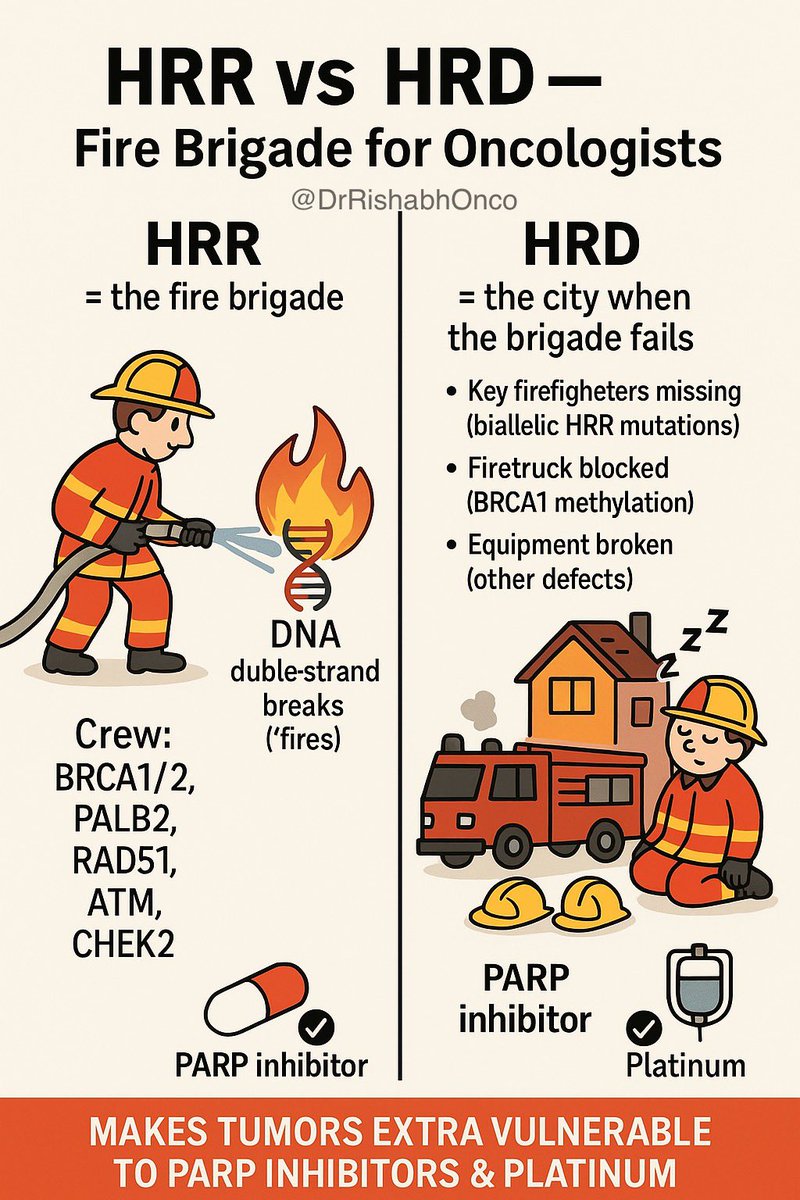
🚒 HRR vs HRD - Fire Brigade for Oncologists
👨🚒 HRR = the fire brigade
•Homologous Recombination Repair pathway
•Crew members = BRCA1, BRCA2, PALB2, RAD51, ATM, CHEK2
•Job: put out the DNA “fires” (double-strand breaks) with precision
🔥 HRD = the city when the brigade fails
•Brigade missing key firefighters (biallelic HRR mutations)
•Firetruck blocked (BRCA1 promoter methylation)
•Equipment broken (other defects)
👉 Outcome: Fires spread → genomic chaos (scars, LOH, instability)
This chaos ironically makes tumors extra vulnerable to PARP inhibitors & platinum 💥
⚕️ Clinical pearl:
•HRR = the pathway (who’s supposed to fight fires)
•HRD = the phenotype (city actually burning because the squad isn’t functional)
•Not every HRR mutation causes HRD → need biallelic inactivation or scar signatures.
🔖 Save this: next time you interpret an NGS report or trial readout, you’ll know exactly whether the “fire brigade” is working or not.
#OncoTwitter #MedTwitter #CancerResearch
@OncoAlert@myesmo@asco@esmo_open
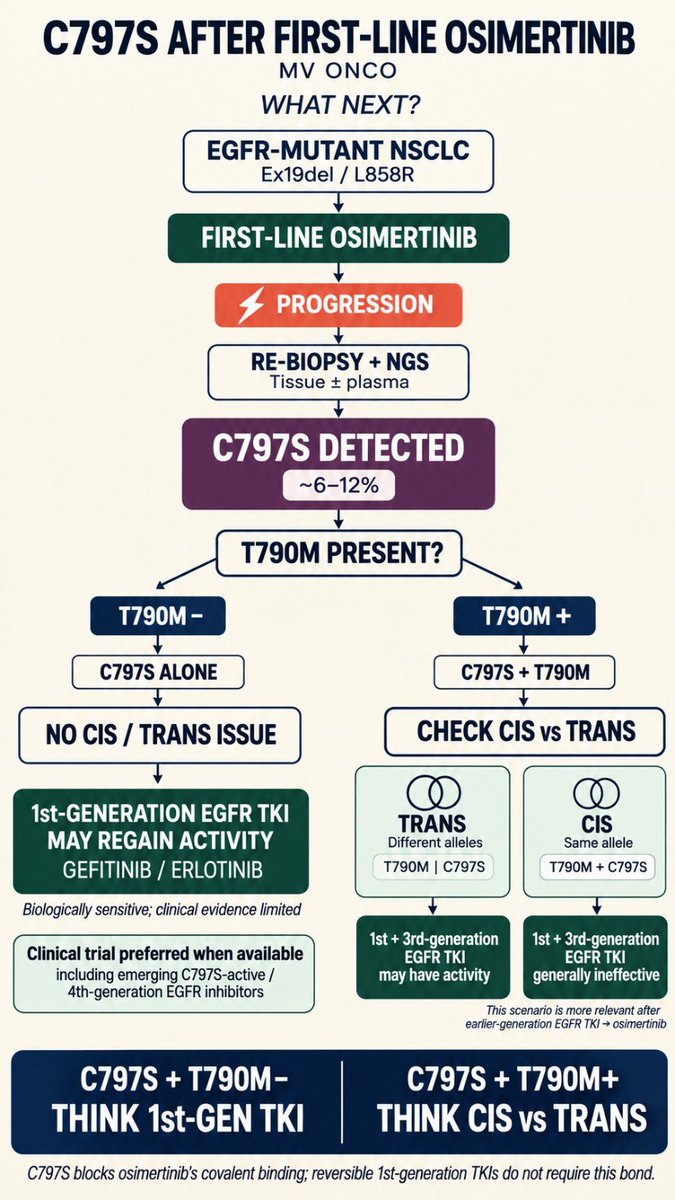
C797S after first-line osimertinib — one distinction matters.
🔹 C797S + T790M− → no cis/trans question; reversible 1st-gen EGFR TKIs may regain activity, although clinical evidence remains limited.
🔹 C797S + T790M+ → now cis vs trans matters.
A simple way to remember an increasingly complex resistance mechanism. 🧬
#LungCancer #NSCLC #EGFR #Osimertinib #Oncology
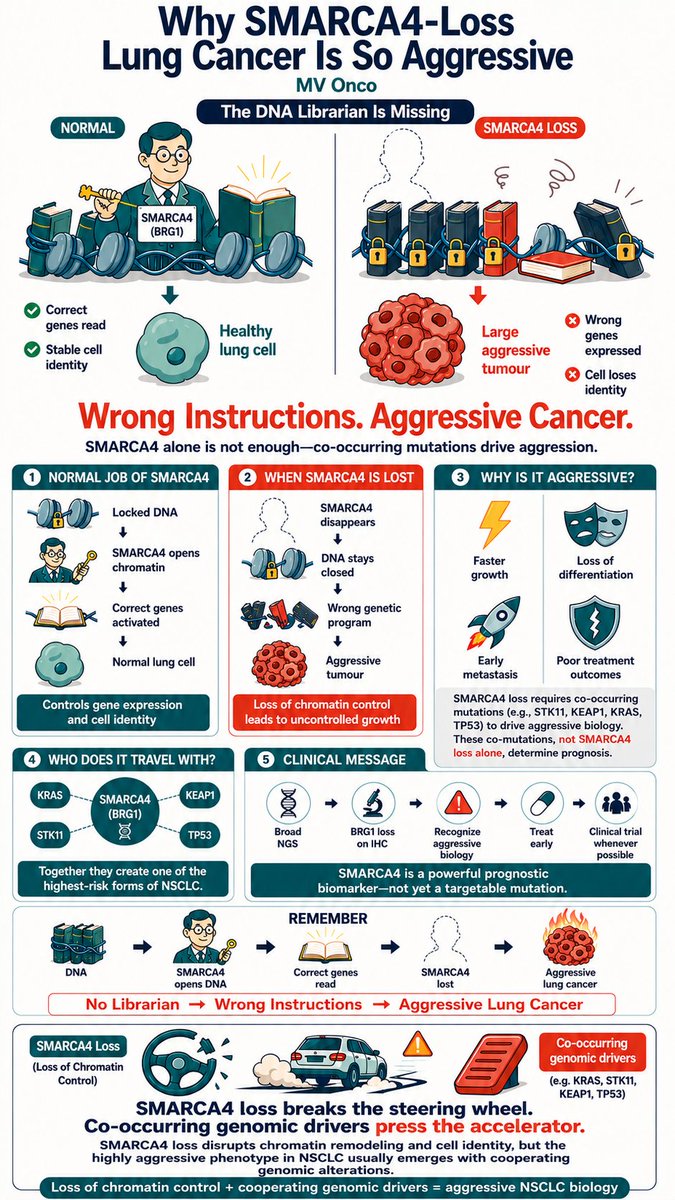
🧬 Why is SMARCA4-loss lung cancer so aggressive?
Think of SMARCA4 (BRG1) as the cell's DNA librarian. It opens chromatin so the right genes can be read and helps maintain normal cell identity.
When SMARCA4 is lost: 🔹 Chromatin remains closed
🔹 Cell identity is disrupted
🔹 Tumors become more aggressive and poorly differentiated
But here's the key point:
🚗 SMARCA4 loss breaks the steering wheel—it doesn't press the accelerator.
The most aggressive NSCLC usually emerges when SMARCA4 loss coexists with other genomic alterations such as KRAS, STK11, KEAP1, or TP53, creating a high-risk biological phenotype.
Clinical pearls • Consider broad NGS in advanced NSCLC. • Confirm BRG1 loss with IHC when appropriate. • Recognize the aggressive clinical behavior of SMARCA4-deficient tumors. • Enroll eligible patients in clinical trials whenever possible.
💬 What has been your experience managing SMARCA4-deficient NSCLC?
#LungCancer #NSCLC #ThoracicOncology #SMARCA4 #BRG1 #MolecularOncology #PrecisionOncology #MedicalOncology #Pathology #CancerGenomics #MVOnco
Why can EGFR-mutant lung cancer transform into small-cell lung cancer? 🫁➡️🧬
Not all resistance is caused by a new mutation. Sometimes, the same tumour changes its identity.
Key takeaways:
🛡️ TP53 preserves genomic stability.
🎭 RB1 maintains adenocarcinoma cell identity.
⚠️ Loss of TP53 + RB1 creates the conditions for lineage transformation.
💊 EGFR-TKIs do not cause this transformation—they select for pre-existing transformed clones.
🔬 Small-cell transformation often loses dependence on EGFR signaling and behaves more aggressively.
📌 Rapid progression or atypical relapse on osimertinib should raise suspicion for transformation.
🧪 Repeat biopsy is essential to confirm histologic transformation and guide treatment.
Clinical pearl:
Think of small-cell transformation as the same cancer wearing a different disguise—not a second primary tumour.
#LungCancer #NSCLC #SCLC #EGFR #Osimertinib #PrecisionOncology #MolecularOncology #MedTwitter #Oncology #MVOnco
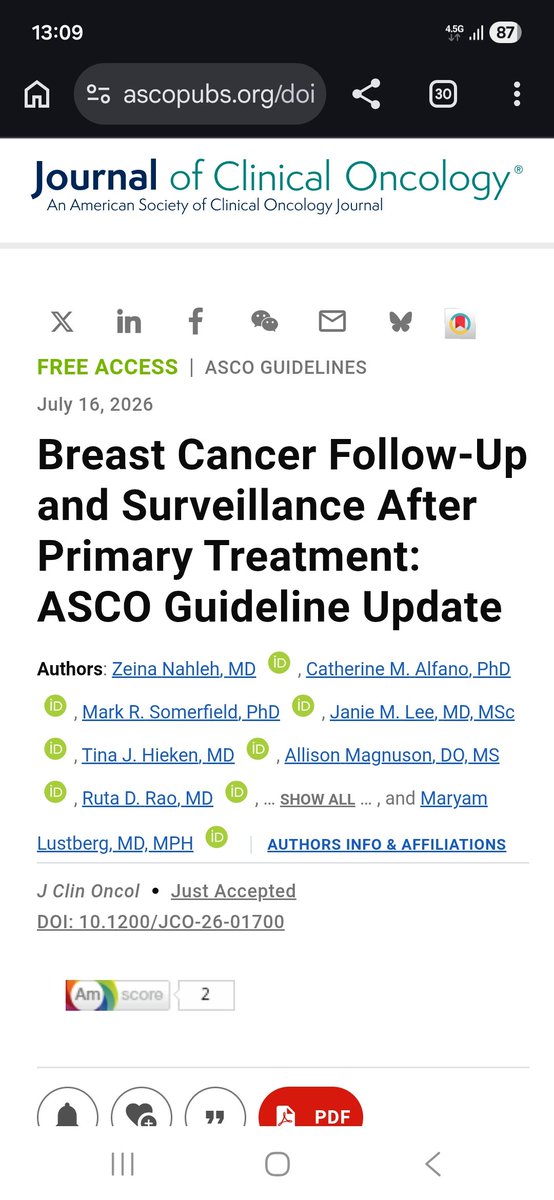
@ASCO proposes risk-adapted follow-up after BC:
Low➡️annually
Intermediate➡️every 6–12 mos for 5–10 years
High➡️every 3–6 mos after active treatment, until year 10!
At year 5, reassess risk; switch to annual follow-up only if low-risk criteria are met!
https://t.co/8t5Pd1JIBQ