Excited to share our new study @ScienceMagazine by the fantastic Raphael Mattiuz and @jboumelha@SinaiImmunol showing how DC build and sustain tertiary lymphoid structures in cancer. A major step toward enhancing anti-tumor immunity (1/2) https://t.co/H8awCDz0HM
CTLA-4 blockade promotes germinal center B cell responses in deep cervical lymph nodes, enhancing glioma-binding IgG and tumor control @SciImmunology
https://t.co/xktwJ2iJIL
New @NatureMedicine paper: A pan-cancer foundation model predicts immunotherapy response and highlights the biology behind it
https://t.co/p27ERHIDew
@harvardmed news: https://t.co/A3OjmNGXJM
Roughly a quarter of patients with advanced cancer respond durably to immune checkpoint inhibitors. The rest endure toxicity and cost with little benefit, and existing tools, TMB, PD-L1 staining, remain unreliable across cancer types and drugs
COMPASS is a pan-cancer foundation model that predicts immunotherapy response from tumor transcriptomes and reveals the reasoning behind each prediction
@HarvardDBMI@harvardMed@Roche@Harvard@BroadInstitute @KempnerInstitute
Tumor irradiation promotes antigen dressing of dendritic cells to enhance CAR T cell persistence and efficacy in lung metastases @NatureCancer
https://t.co/AA3ftQiIFD
New #JITC article: "CAR-engineering of innate and innate-like immune cells: a new horizon in adoptive cell therapy for solid tumors" https://t.co/XNGrn8jKeR
@AliceIndini
We’ve gotten pretty good at reading tumor DNA from blood. Mutations, ctDNA, resistance mechanisms are becoming increasingly accessible from a simple blood draw. But understanding the tumor microenvironment still usually requires a biopsy.
A new @Nature * study used machine learning across millions of spatial transcriptomic profiles to map conserved immune and stromal “neighborhoods,” then showed these patterns may also be detectable from plasma cfDNA.
In melanoma, they were associated with immunotherapy response and outperformed TMB and PD L1 in some analyses.
Still early and retrospective, but the idea that a blood draw might someday reveal not just tumor mutations, but also the surrounding immune environment, is fascinating.✅
Historic FDA approval brings first gene therapy for genetic deafness
The first-of-its-kind genetic medicine treats otoferlin-related hearing loss, and will be made available by Regeneron for free in the United States.
https://t.co/Dw4oUO2NSz
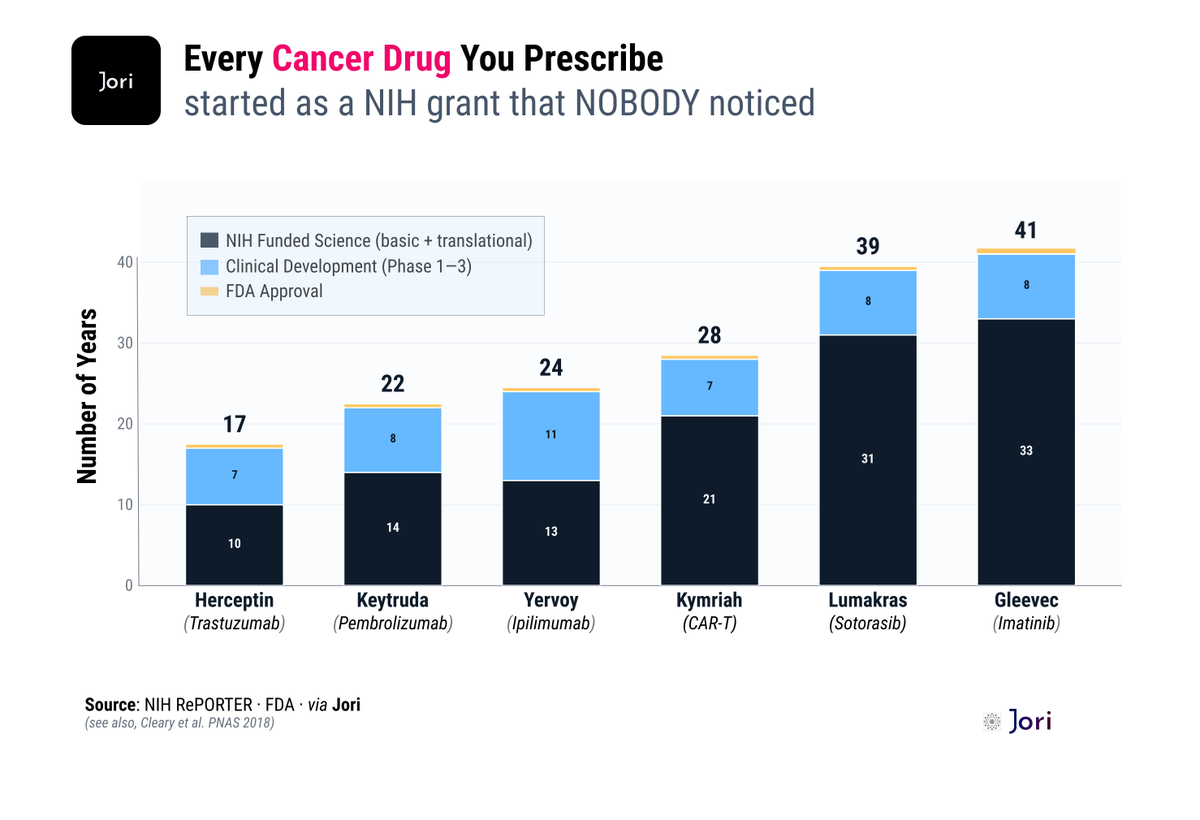
Every cancer drug you prescribe today
was once an NIH grant nobody noticed.
Pharma celebrates launches.
Few notice the 20–40 year runway behind that.
Gleevec took 41 years from NIH-funded discovery of the Philadelphia chromosome → FDA approval.
Behind every “breakthrough” sits a graveyard of failed attempts that made it possible.
Cut that lineage today,
the next Gleevec doesn’t arrive in 2067.
Funded science matters.
If someone says NIH funded science is inefficient,
show them this.
- - - - -
Source: NIH RePORTER · FDA · via @Jori_health
- - - - -
What if you could test a drug on a human organ and simultaneously know what would have happened without it?
That's what we built.
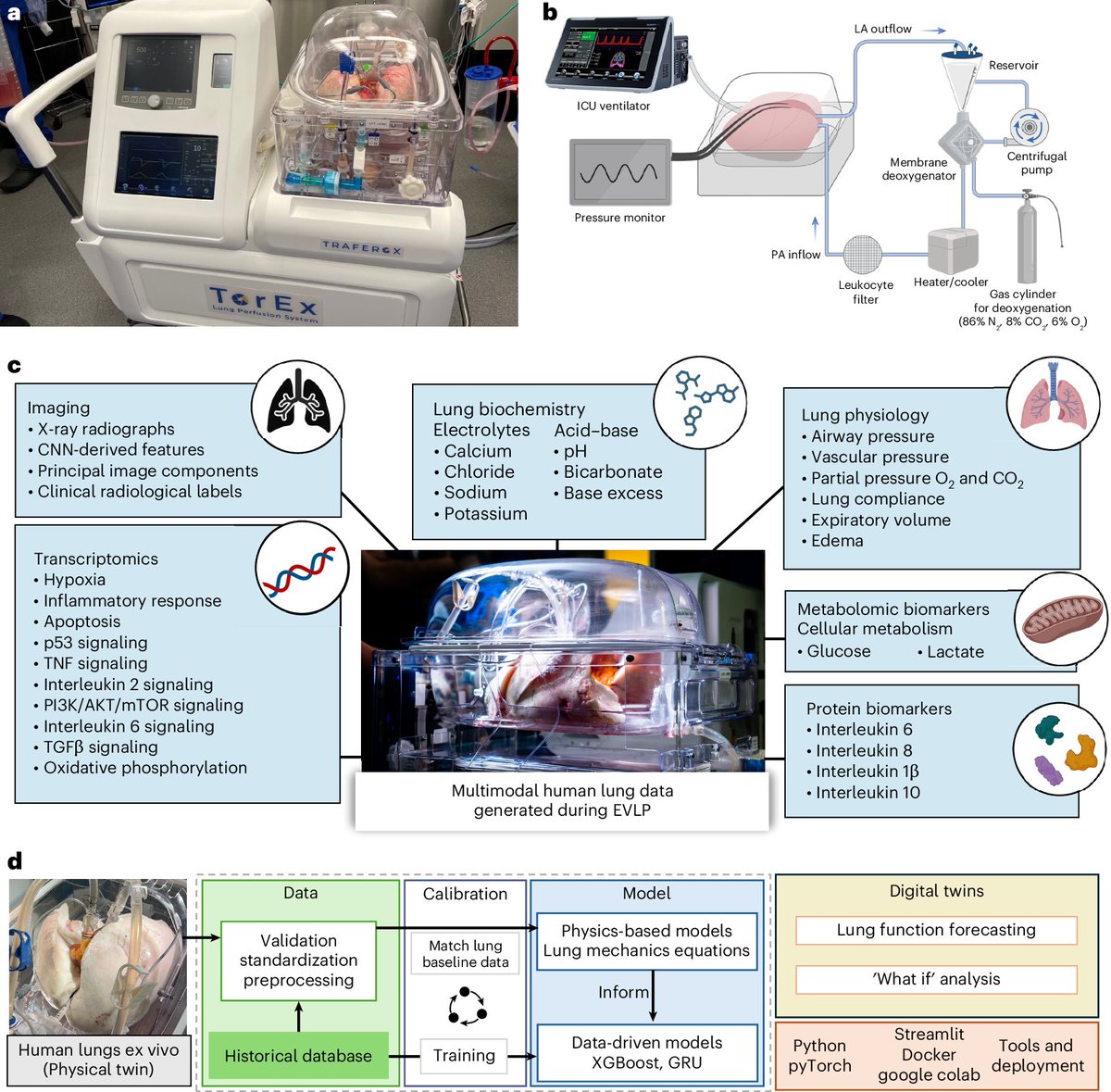
Proud to share our work in @NatureBiotech: digital twins of human lungs 🫁🔥 (paper: https://t.co/Y8wzxNwWfd)
We created digital twins of ex vivo human lungs: multimodal AI models trained on 951 human lungs from the world's largest EVLP dataset at @UHN. Physics-informed ML across physiology, biochemistry, transcriptomics, proteomics, metabolomics, and imaging, all forecasting together.
The key insight: the physical lung receives the treatment. The twin is the untreated control. Paired causal inference on the same organ. No separate cohort. No intersubject noise.
Result: we detected drug efficacy with 6 lungs. Traditional methods would need 18.
This is what precision preclinical evaluation looks like.
From Virtual Cells → Virtual Organs → Virtual Patients.
One step toward virtual organs replacing animal testing.
Huge congratulations to Elly Zhou (a phd student I co-supervise) for leading this work with exceptional rigor, and to Andrew Sage and @SKeshavjee for building the foundation that made it possible.
New @Nature study: >50% of lung cancer metastases are seeded by other metastases, not the primary tumor. This "seeding from seeding" reveals a complex evolutionary cascade that allows cancer to colonize the body.
https://t.co/lYUyfRYOcP
Science does not have to be complicated: Direct injection of an immune therapy drug into tumour reduces side effects without compromising efficacy. https://t.co/PLwfA0Iv4i
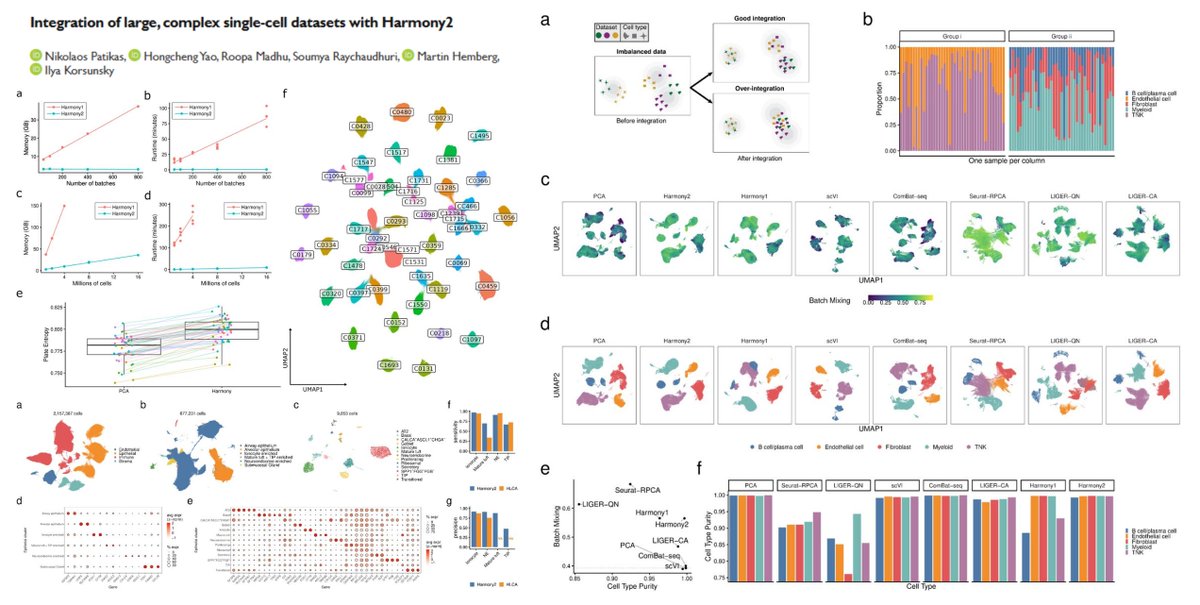
Harmony2 required only 2.1 GB and 1.3 minutes per million cells, and "scales linearly", and can integrate the full Tahoe-100M dataset & Human Lung Cell Atlas (Hierarchical integration)
vs Harmony scVI ComBat-seq Seurat-RCA LIGER-Quantile Normalization/-Centroid Alignment
@m_hemberg@ilyakorsunsky bioRxiv 2026
https://t.co/3tcRb0RBcn
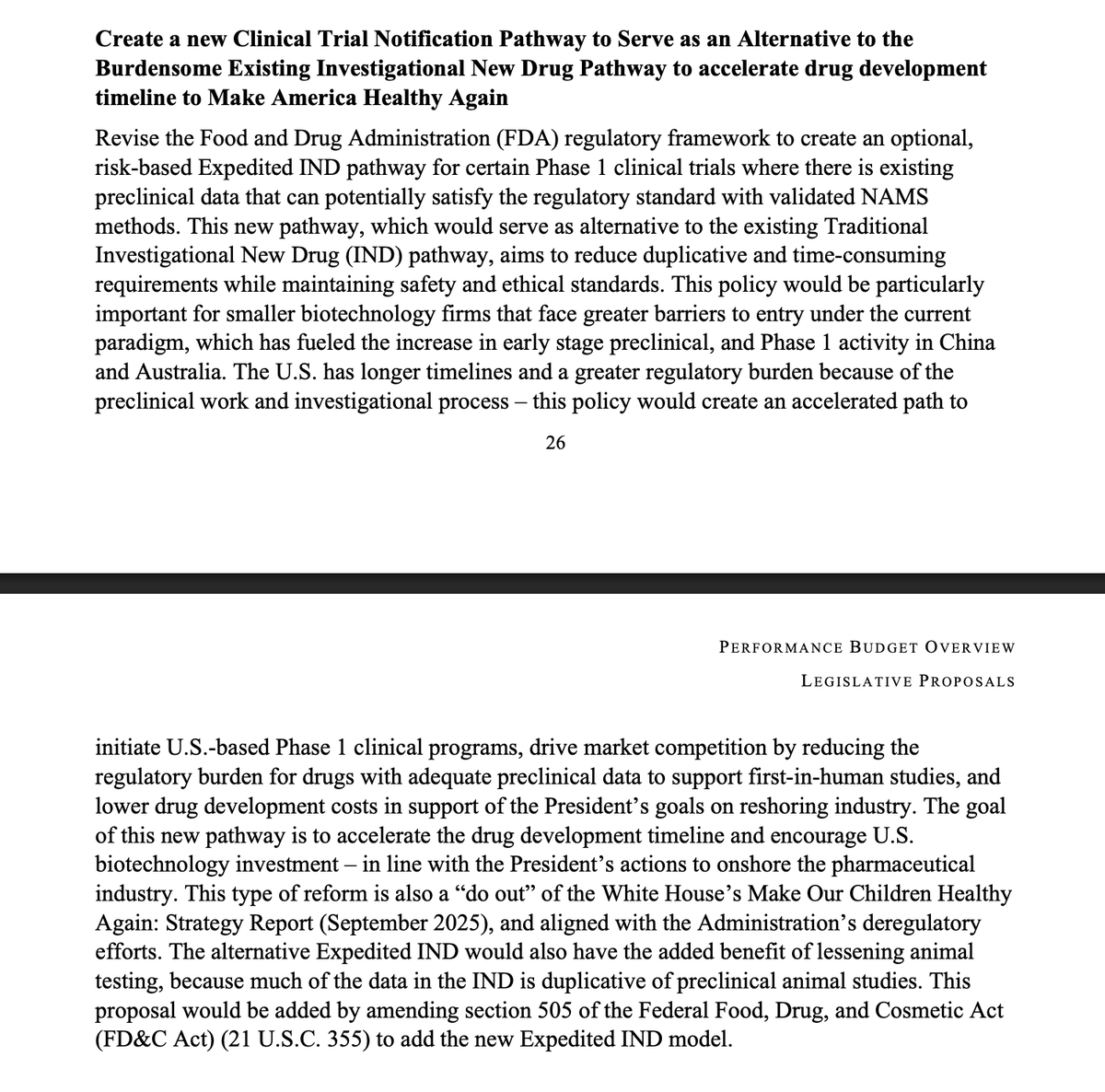
It looks like the White House is finally taking US-China biotech competition seriously. The FDA is putting forward an expedited IND pathway that would shorten time to first-in-human.
Overdue, but good news for American biotech.
This week, the "AI replacing doctors" debate is back. The CEO of America's largest public hospital system says he's ready to replace radiologists with AI. The Stanford-Harvard NOHARM study shows top models outperforming generalists. The discourse is moving fast.
I run AI at @UHN, the largest hospital in Canada. Here's what I actually see.
We've developed AI models across imaging, pathology, and clinical decision support. In controlled conditions, the accuracy numbers are real. In some narrow tasks, models genuinely outperform. That's not hype. But the operational reality of running these systems inside a large hospital teaches you things benchmarks never will.
The errors that hurt patients aren't the confident wrong answers. They're the quiet omissions, i.e., the thing the model didn't flag
because it wasn't in the training distribution. NOHARM found 76.6% of AI errors were omissions. We see this too. And in a hospital, a missed finding doesn't just affect one case. It propagates: the downstream physician trusts the AI read, the patient waits, the window closes.
The accountability structure also doesn't exist yet. When an AI-assisted diagnosis leads to harm, who is responsible: the physician, the hospital, the vendor? In Canada, we don't have a clear answer. No hospital system deploying AI at scale does. That's not a regulatory delay. That's a fundamental gap in the infrastructure for AI-in-medicine.
What I'm genuinely optimistic about: AI is already changing how our radiologists work. Not replacing them, but changing the shape of the job. Routine reads get faster. Their time shifts toward complex cases, clinical correlation, cases where the AI flags uncertainty. That's the right direction.
But "ready to replace radiologists" skips 10 hard years of work on deployment infrastructure, liability frameworks, clinician training, and failure mode monitoring that nobody wants to talk about because it's less exciting than accuracy benchmarks.
The capability question is nearly answered. The deployment question has barely been asked.
CEO story:
https://t.co/4O4Z4tAtpp
NOHARM paper:
https://t.co/Q23ClUl01a
People often ask how breakthroughs occur in cancer biology-often the story is more complex - the survival plot for myeloma outcomes is extraordinary - improvements come about in incremental steps - in my lifetime treatment of Myeloma has almost transformed into a curable disease
It’s well known that inflammation increases cancer risk, but how?
The answer: the epigenome "remembers" inflammation and primes stem cells for cancer.
Here is our paper: https://t.co/FcnkLdpiKZ
And a special shoutout to the lead author @snaga13
A 🧵
From @NatureBiotech: New rules spur cell and gene therapy trials in China
“Once proven safe and effective in investigator-initiated trials, therapies [in China] can then be given to patients as treatments, again without requiring national regulatory approval. And the hospital that made the therapy and conducted the trial can charge for the treatment, creating a financial incentive for hospitals to deploy high-quality cell and gene therapies.
This situation contrasts with that in individual European Union countries, for example, where regulations enable hospitals to deliver investigational cell therapies when few or no approved alternatives remain. But, unlike in China, national regulatory approval is usually needed to go ahead with testing…
In the United States, the process is more onerous. Hospital-developed cell therapies destined for patients require an Investigational New Drug application approved by the US Food and Drug Administration, with some exceptions for compassionate use.”
@US_FDA@HHSGov
https://t.co/UVLks7nncL