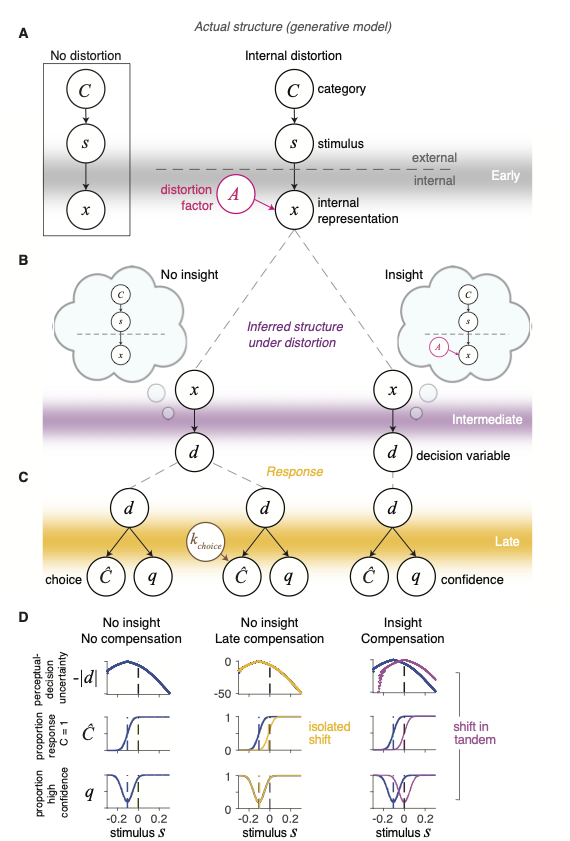
How can we believe something different than what we perceive? Happy to share our work on this with @GuillermoHorga ,@marianne_brkr and Florian Ragalmuto, now out in @NatureComms : https://t.co/41ntZRTSuu
A few years ago, @weijima01 and I started thinking about a relatively underexplored question. Rather than asking how people make decisions, what if we instead characterized what motivates them to engage with a task in the first place?
More in 🧵
https://t.co/ojWghehEfP
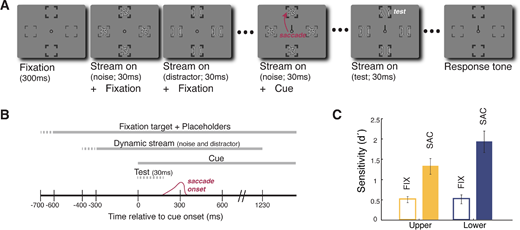
Anna-Chiara Schaub et al. share their findings on Preserved Contextual Modulation of Eye Movements in Psychosis Prone Individuals, https://t.co/jYVtIsjXcR.
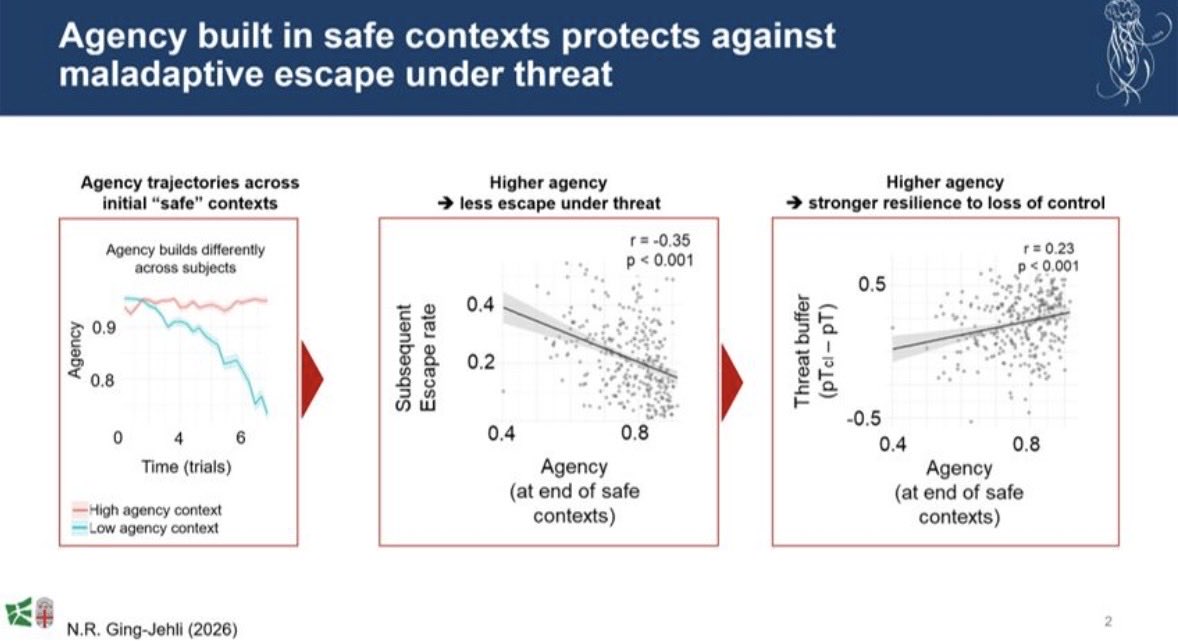
Resilience under threat may depend on what is built before it. We find that #agency accumulated in „failure-safe“ contexts linked to:
• reduced #escape under threat
• adaptive responses when control is lost
New paradigm + MACA-Q model make agency measurable (preprint soon).
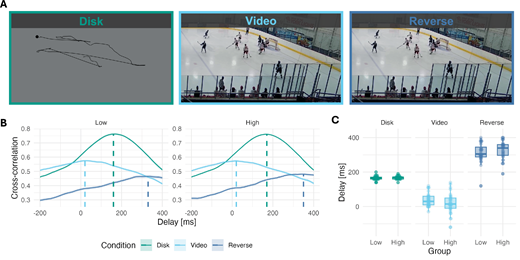
New article in the Eye Movements as Windows to the Mind issue https://t.co/ZK09nJWHjU by Jolande Fooken et al. from Technical University of Darmstadt investigates microsaccadic modulation in goal-directed reaching.
https://t.co/wkp13RvQ4P
📢 #PhD interview season is right around the corner! here's some FREE advice + step-by-step prep guide (currently 50% off!) about how to ace your grad school interviews: https://t.co/GZjrcU5kjg
Thank you @npp_journal
for this recognition! 😇🙏
This #transdiagnostic work with Gearshift Fellowship aims to move beyond static tasks toward dynamic, mechanistic understanding of how people regain agency when control is uncertain and rules change. Super excited for #ACNP2026.
Exciting evidence that the human brain uses an integrated coding format for real-world color/shape conjunctions in short-term memory, but not online vision. Proud to be a coauthor on this ambitious fMRI study with Yaoda Xu, Ben Swinchoski, & Marvin Chun:
https://t.co/SEq6hjKi0o
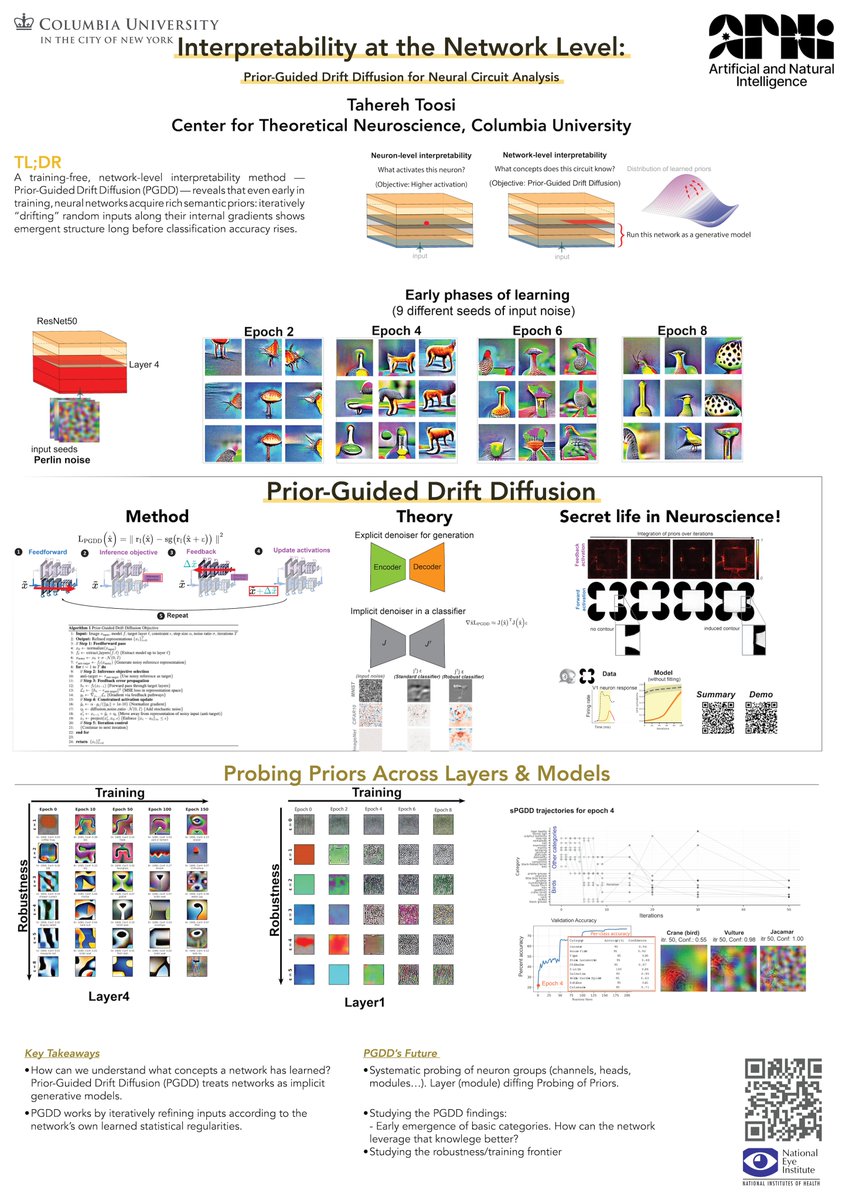
If you are around at #NeurIPS2025, come check out this amazing workshop where I am presenting:
Interpretability at the Network Level: Prior-Guided Drift Diffusion for Neural Circuit Analysis
Models at early epochs know much more than we thought!
https://t.co/QtLU8Sge8S
New article in the Eye Movements as Windows to the Mind issue https://t.co/VFkDpaRO3o by Yuna Kwak, Nina M. Hanning & Marisa Carrasco @NYUPsych finds that saccade direction modulates the temporal dynamics of presaccadic attention.
https://t.co/yOjw416En5
Calling all rising juniors & seniors: Interested in biological or biomedical research? Apply now for our ’26 Summer Undergraduate Research Experience Program! Nine weeks, hands-on research, & mentorship from some of the nation’s top scientists — learn more: https://t.co/dhQol9H28o
📢i'm re-sharing my popular #PhD application guide on applying for STEM PhD programs!💡this year's #application cycle is going to be more competitive than ever, so here's some completely FREE advice that has helped over 150k+ people over the past 6 years 😇https://t.co/a9mALTLzHL
A few months ago now, I wrote a document about my experiences interviewing for AI research jobs before eventually joining @OpenAI. This doc details my process and lessons learned. Hope it's helpful!
https://t.co/jH1mK4Nii5
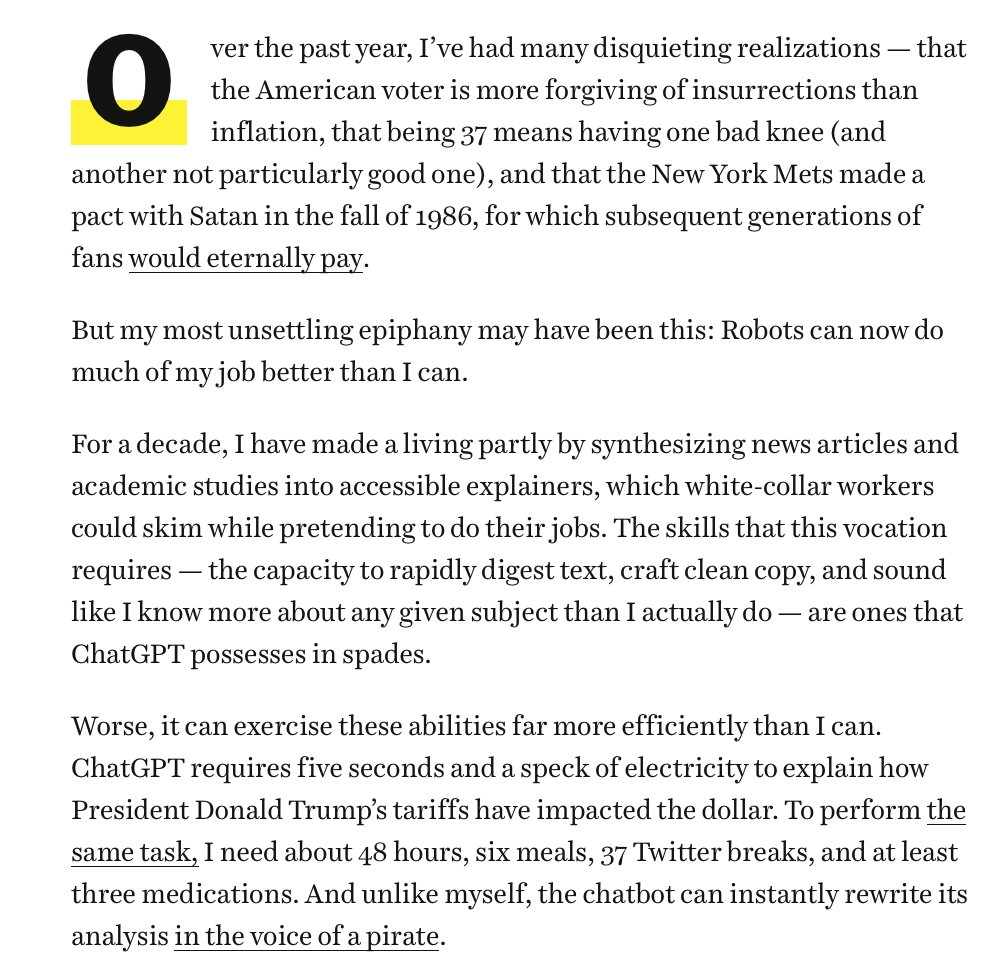
Robots can now do much my job better than I can
This has made me a bit anxious about my own obsolescence
It has also led me to contemplate the one AI dystopia I find plausible: A world where robots free elites of all dependence on most ordinary people.
Link to my essay below
Our paper accepted in BP:GOS! 🔥
Even when learning impairments look behaviorally similar across depression, bipolar, schizophrenia, their computational mechanisms differ. 🧠
👉 https://t.co/MsVYvSzVaZ
Huge team effort! @LnccBrown#ComputationalPsychiatry#AdaptiveIntelligence
Excited to start my lab in 2026 in Switzerland🇨🇭 @unibern to study the hippocampal basis of social fear with a @snsf_ch Starting Grant.
Hiring on all levels! Please share: 1p & 2p calcium imaging, computational & experimental approaches in 🐭
1/2
https://t.co/fFKcq8AZ8f
How does our brain excel at complex object recognition, yet get fooled by simple illusory contours? What unifying principle governs all Gestalt laws of perceptual organization?
We may have an answer: integration of learned priors through feedback. New paper with Ken Miller! 🧵