Our current thesis remains unchanged: PTFE is merely a secondary, non-mainstream solution that is highly unlikely to achieve commercial mass production. Instead, the M10Q configuration remains the clear preferred choice, primarily because it offers a broader pool of qualified suppliers and commands strong deployment support from tier-1 PCB fabricators.
every job will turn into explaining your intentions to ai
explaining what you want to ai is surpringly time consuming, coders already spend 80% of their time doing it, and this will be true for everyone
People -> Ideas -> Products -> Businesses - > Stocks - > Sectors -> Macro -> Markets
The skills most needed today to really make money in this mkt are towards the beginning and end of that flow diagram while ignoring the math you learned and clinged to from a book or in school in the middle of it.
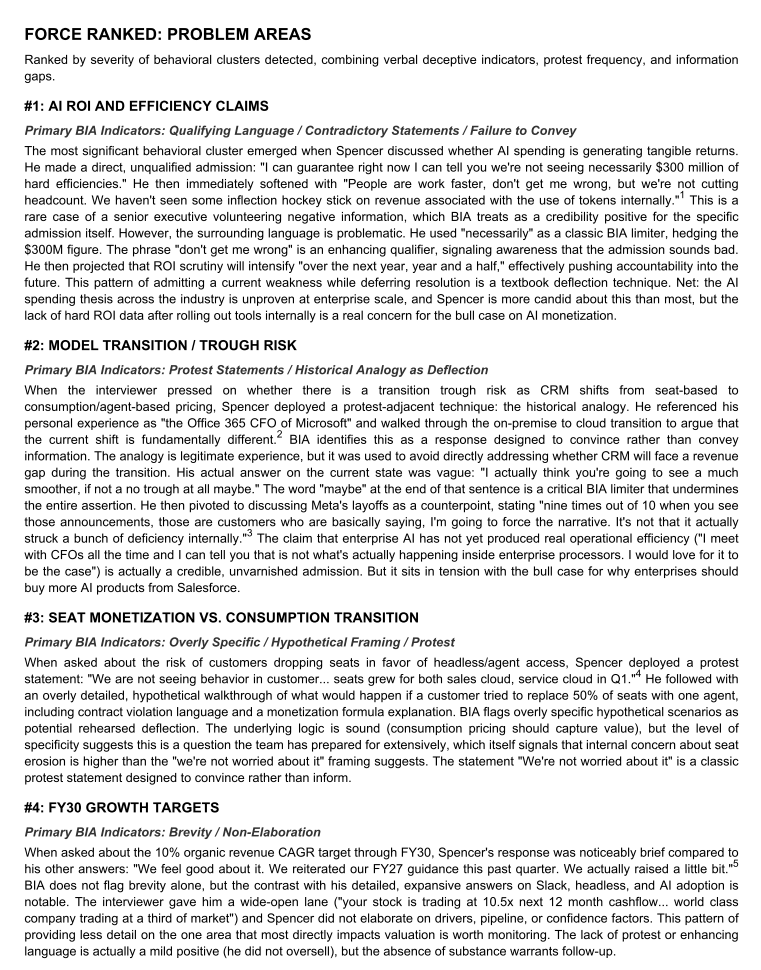
$CRM LANGUAGE ANALYSIS FROM YDAY IR PRESENTATION 1/2
The most significant behavioral cluster emerged when Spencer discussed whether AI spending is generating tangible returns. He made a direct, unqualified admission: "I can guarantee right now I can tell you we're not seeing necessarily $300 million of
hard efficiencies." He then immediately softened with "People are work faster, don't get me wrong, but we're not cutting headcount. We haven't seen some inflection hockey stick on revenue associated with the use of tokens internally." 1 This is a
rare case of a senior executive volunteering negative information, which BIA treats as a credibility positive for the specific admission itself. However, the surrounding language is problematic. He used "necessarily" as a classic BIA limiter, hedging the
$300M figure. The phrase "don't get me wrong" is an enhancing qualifier, signaling awareness that the admission sounds bad. He then projected that ROI scrutiny will intensify "over the next year, year and a half," effectively pushing accountability into the
future. This pattern of admitting a current weakness while deferring resolution is a textbook deflection technique. Net: the AI spending thesis across the industry is unproven at enterprise scale, and Spencer is more candid about this than most, but the
lack of hard ROI data after rolling out tools internally is a real concern for the bull case on AI monetization.
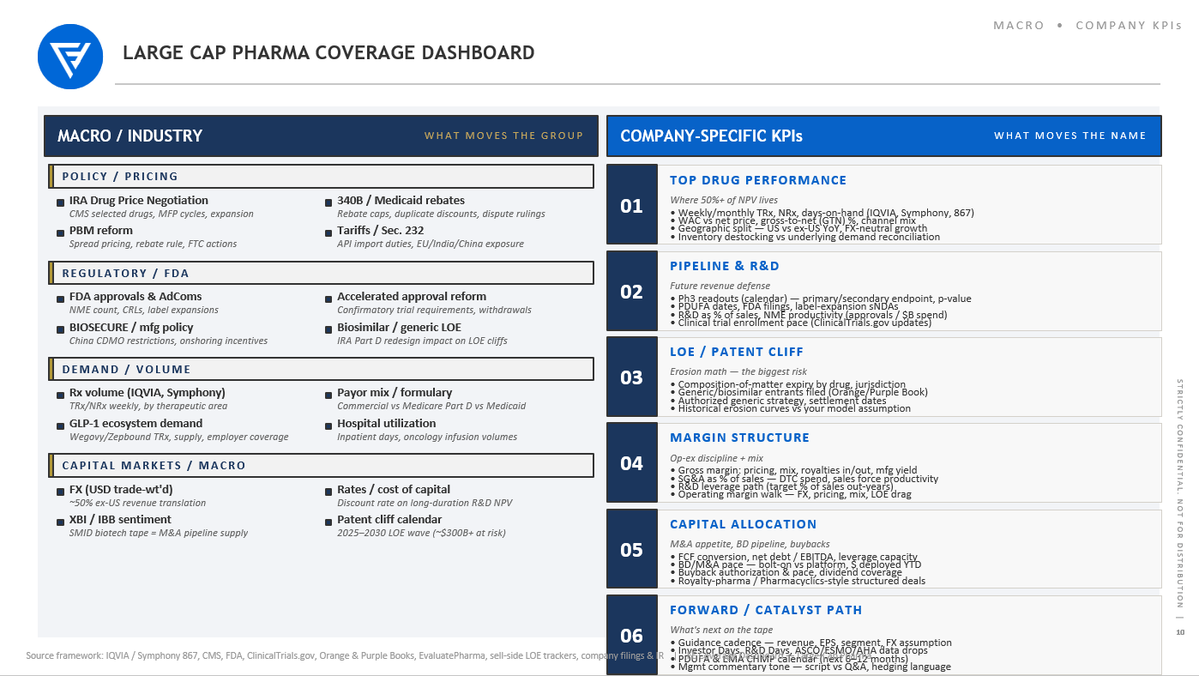
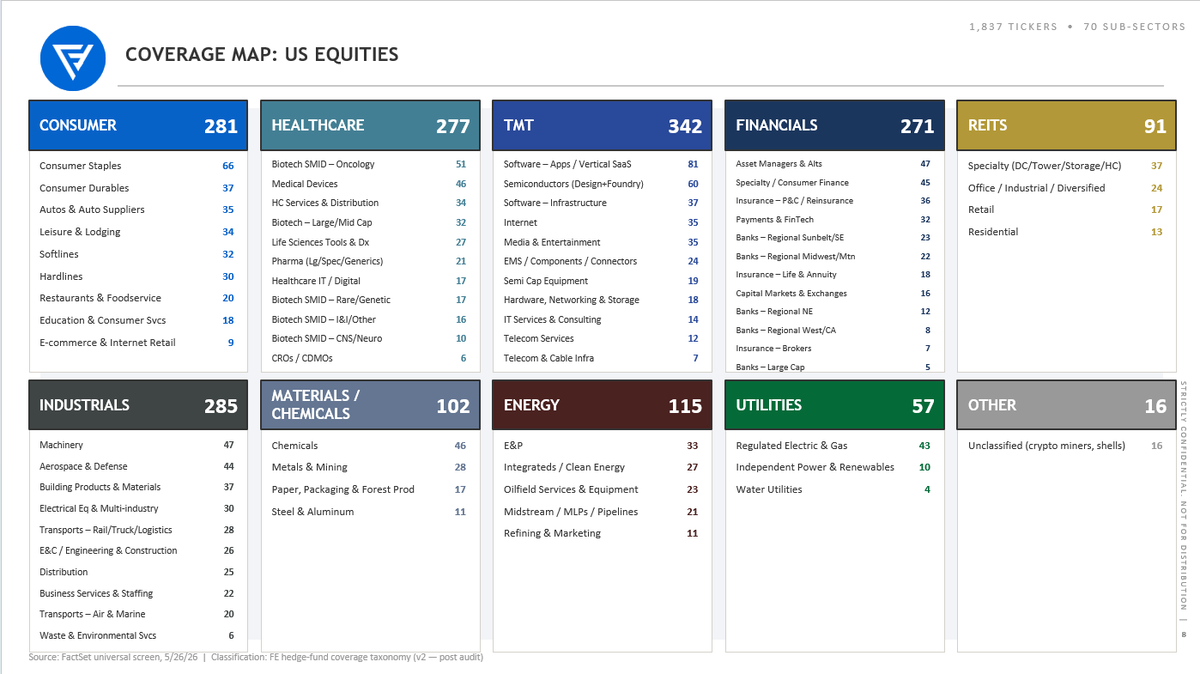
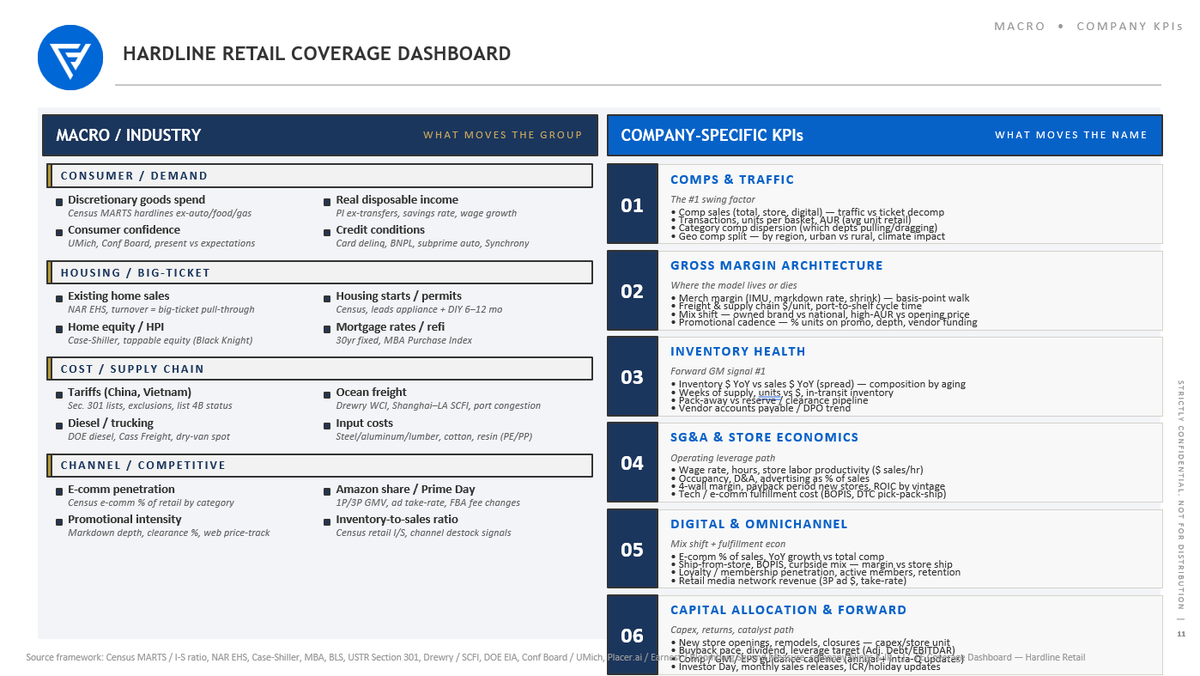
Sharing a few screenshots from one of the more ambitious projects I'm working on right now with respect to agents & investment process: creating coverage dashboard prototypes for all 70 US equity sub-sectors, breaking dashboards into "What Moves the Group" and "What Moves the Name".
I think most technologists don't quite comprehend the investment process differences between a SMID biotech pod analyst vs. a long only midstream MLP analyst vs. an Asian financials Tiger Cub analyst. Public equity investment process is highly heterogeneous and the combinatorial complexity (~a dozen different investors archetypes in ~70 different sub-sectors) hasn't lent itself to easy augmentation with chatbots. Mass customization from a pool of universal process primitives with Agents is a key unlock and I'm wondering how much pre-configuration will happen vs. a thousand flowers blooming from blank agentic workspaces...
My belief: if internal AI teams or vendors can pre-configure coverage dashboards to be immediately value added to the investment process, this forces the agentic "aha moment", accelerates diffusion of agents into investment process, and requires approximately zero time & focus from the investment team (the leverage happens on the back end). Also, if the user interface is configurable, the path to customization from this starting point is immensely easier than solving the blank page problem.
This is VERY conceptual on "what to build" and weak on "how to build", but I'm at the stage on some of this where I am beginning to explore both partnerships with builders and co-development with investment firms.
Please reach out via DM if this resonates.
This is an amazing video recommendation from Jukan about CPO.
_______________________________________________________
NPO is still 50% copper, 50% optics. The real CPO ramp is unlikely to begin until 2027 when 2.5D CPO will have 20% copper and 80% optics.
In 2030, the split will be 100% optics in 3D CPO (COUPE XPU)
The true hurdle is in maintenance for CPO in 2027 and 2030.
Pluggable/OBO/NPO (Green/Yellow): If an optical laser or engine fails, field technicians can easily hot-swap a pluggable module at the faceplate, or replace an NPO module on the board without tossing the expensive ASIC.
2.5D & 3D CPO (Red): Once the PIC and laser/optical components are physically bound inside the package or stacked directly under the ASIC, they can no longer be individually serviced. If a single optical component fails, the entire high-value compute engine (the XPU/Switch) is essentially bricked.
_______________________________________________________
CPO supply chain, per @semivision_tw:
1. CSP
Nvidia $NVDA
AWS $AMZN
Meta $META
ByteDance
Microsoft $MSFT
2. SOI Wafer
Soitec
ShinEtsu
SEMCO
IntelliEPI
3. Connector
Amphenol
Senko
US Conec
T&S Communications
Samtec
LightSense
Siemon
4. Testing
WinWay
MPI Co.
Hon Precision
Chroma
5. Fiber
Corning $GLW
YOFC
Sumitomo Electric
FiberHome
Prysmian
ZTT
Fujikura
Futong Group
Hengtong Fiber
6. ELS
Furukawa Electric
Broadcom
Lumentum
Sumitomo Electric
TE Connectivity
Coherent
O-Net Technologies
7. PIC Design & EDA
IBM $IBM
Intel $INTC
Sicoya
MACOM $MTSI
Juniper
Cisco $CSCO
SiFotonics
POET Technologies $POET
Ansys - part of Synopsys
Ayar Labs
Fujitsu
Marvell $MRVL
Lumentum $LITE
Infinera
Huawei
Ranovus
Cadence $CDNS
Skorpios
Synopsys $SNPS
OpenLight
8. Foundry
TSMC $TSM
Intel $INTC
Tower Semi $TSEM
Applied Optoelectronics $AOI
Silex
GlobalFoundries $GFS
Samsung
United Microelectronics $UMC
Acacia
STMicroelectronics $STM
9. EIC & DSP Design
Broadcom $AVGO
Coherent $COHR
Lumentum $LITE
Infinera
Ciena $CIEN
MACOM $MTSI
10. Light Source
LandMark Optoelectronics
Coherent $COHR
IntelliEPI
iQe
NICHIA
Sumitomo Electric
An interesting shift in data center architecture emerged from $NVDA ’s latest earnings. The company expects $20B in revenue this year from its Vera CPU infrastructure.
Meaning NVIDIA, in its very first year of selling CPUs, is already on track to become the world’s largest data center CPU vendor.
Went through $AMD's May 2026 deck this weekend and it nicely reframes the AI debate away from “is this a bubble?” and toward a better question:
How early are we in actual AI demand?
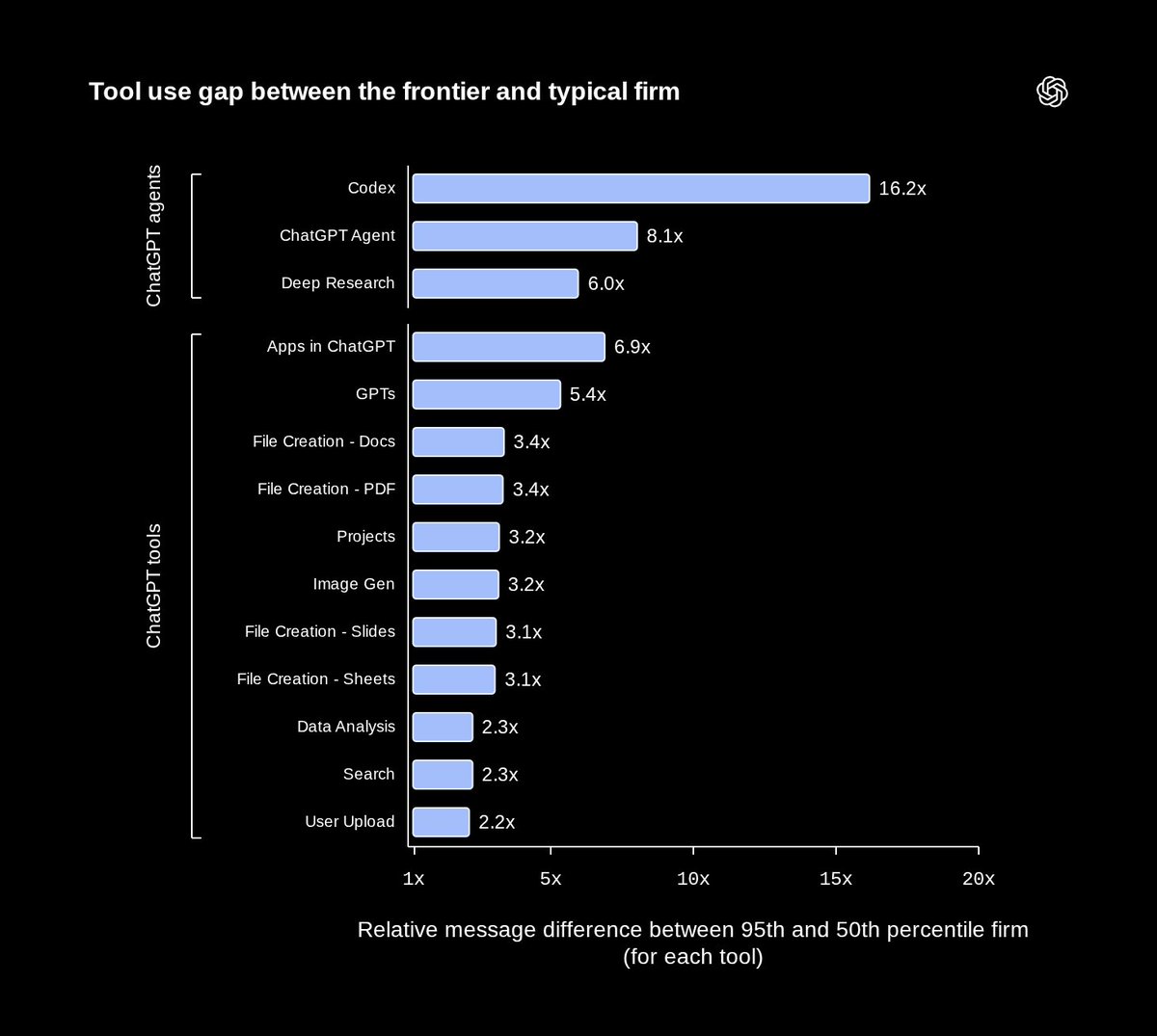
Big difference between employees using chatbots and enterprises rebuilding workflows around AI.
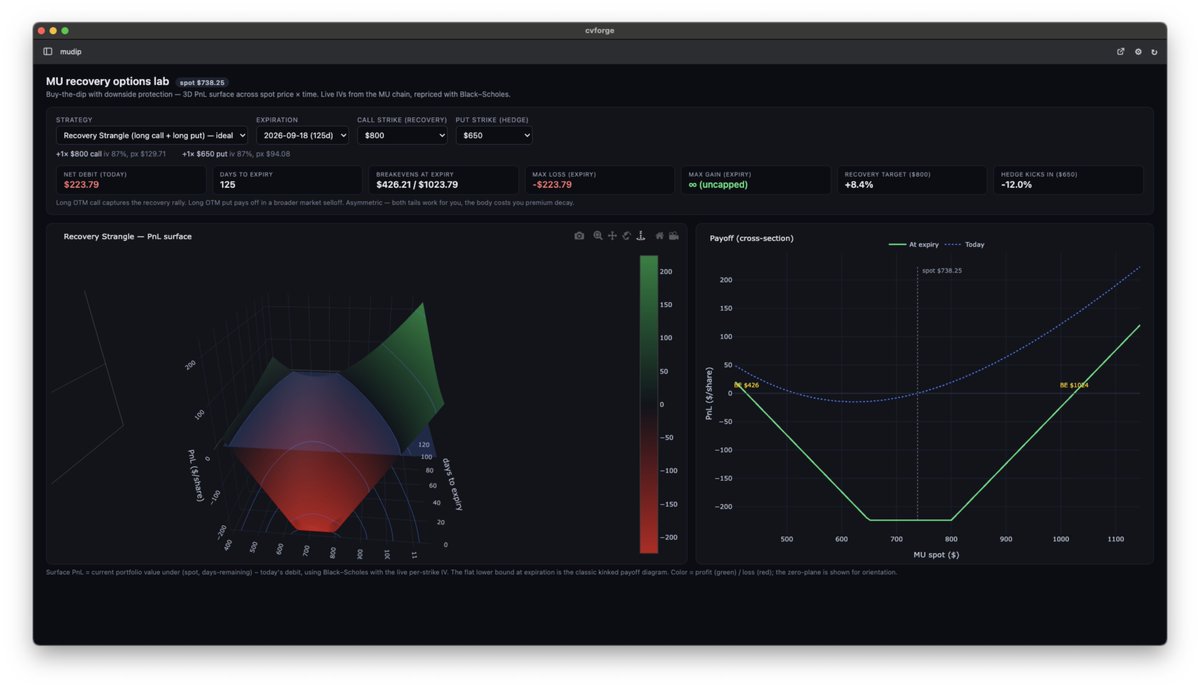
> "if I want to buy the dip on $MU and profit from a recovery to previous highs but also protect myself from a general market selloff - what is the ideal options strategy - give me a 3D PnL surface across spot price and time to better understand"
cvforge:
(this tool is free)
Monthly Wrap Up - May Edition: Sizzling but Safe
Tech rally continues (Nasdaq/SOX/Taiex at new highs) with little overheating sign thanks to strong AI fundamentals amid robust token usage/ARR/capex
Key Updates:
Big 5 CSP Capex:
•2026: +82% YoY (upward revisions for MSFT & META)
•2027: Expect ~+30% upside vs consensus +26%
Price Hike Themes:
•CPU: AMD, Intel, ZDT — another hike likely in late 3Q26
•Memory: MU, SNDK
•Mature Nodes: UMC, TXN
•Copper Foil: Co-Tech, KB, EMC
•Optical Laser: LITE (Buy)
AI Forecast Revisions:
•TSMC CoWoS capacity raised to 145K/175KPM by end-26/27
•Nvidia Rubin MP to Sept.
AI inference ramp. "assume 100M Agentic AI users, 10 agentic task drive 1B agentic execution task workloads, need for 500M CPU cores, at least 2-3M incremental server CPUs (industry ~12-14M server CPUs), underlined by $ARM, $AMD and $INTC ...weekly token generation now >26T"
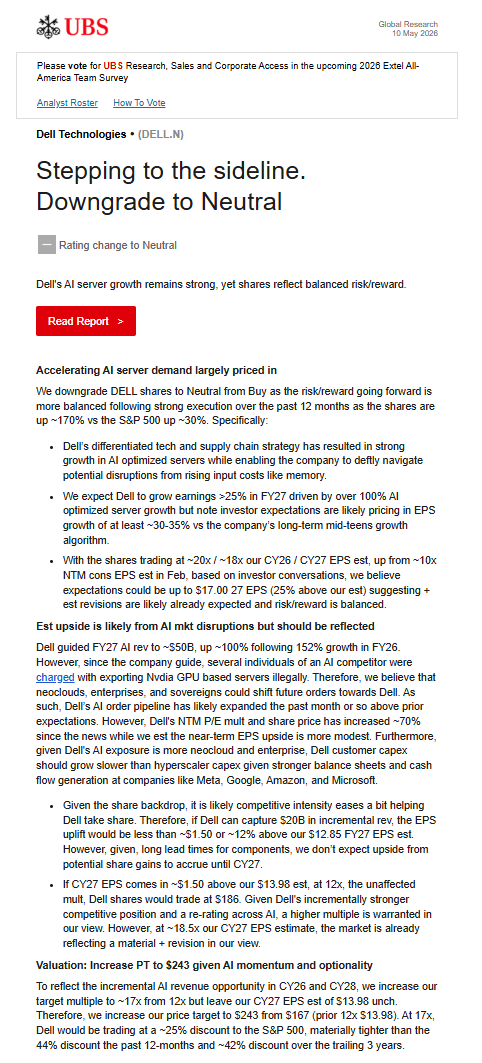
UBS d/g $DELL:
"given Dell's AI exposure is more neocloud and enterprise, Dell customer capex should grow slower than hyperscaler capex given stronger balance sheets and cash flow generation at companies like Meta, Google, Amazon, and Microsoft."
$SMCI, $TSSI