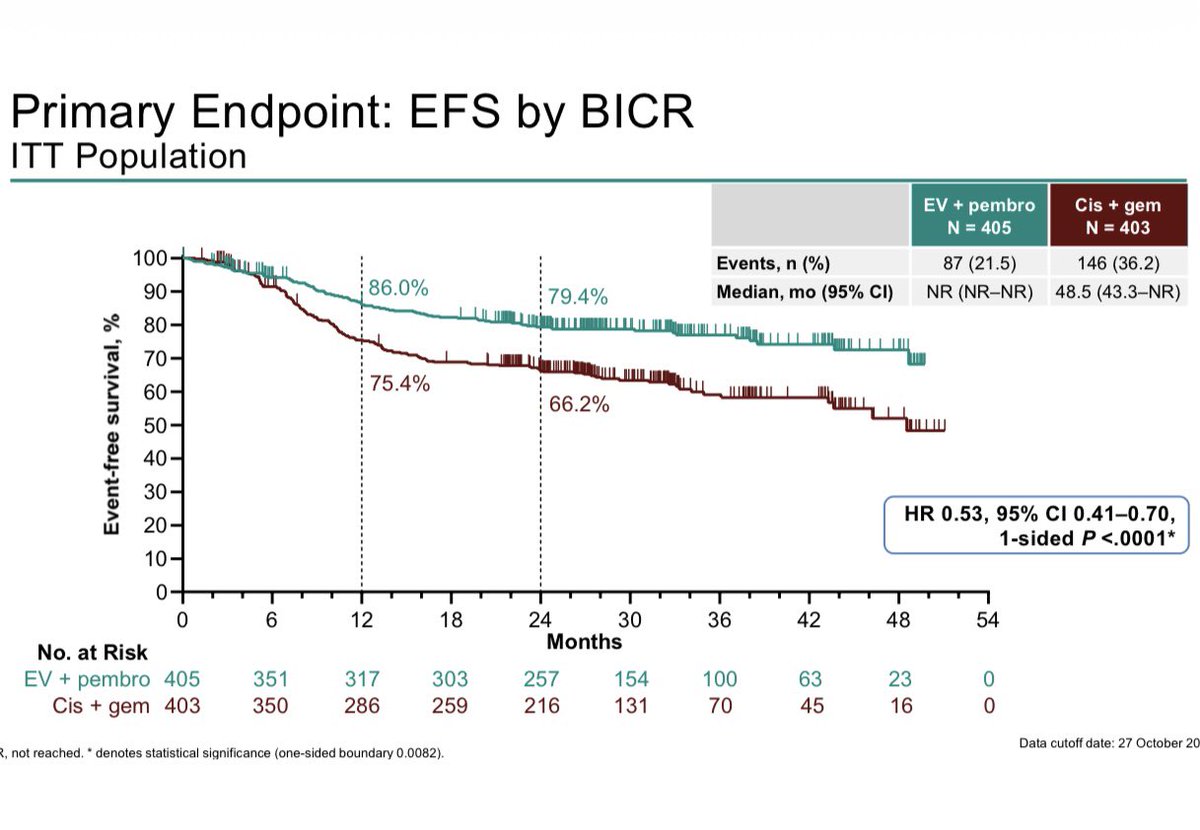
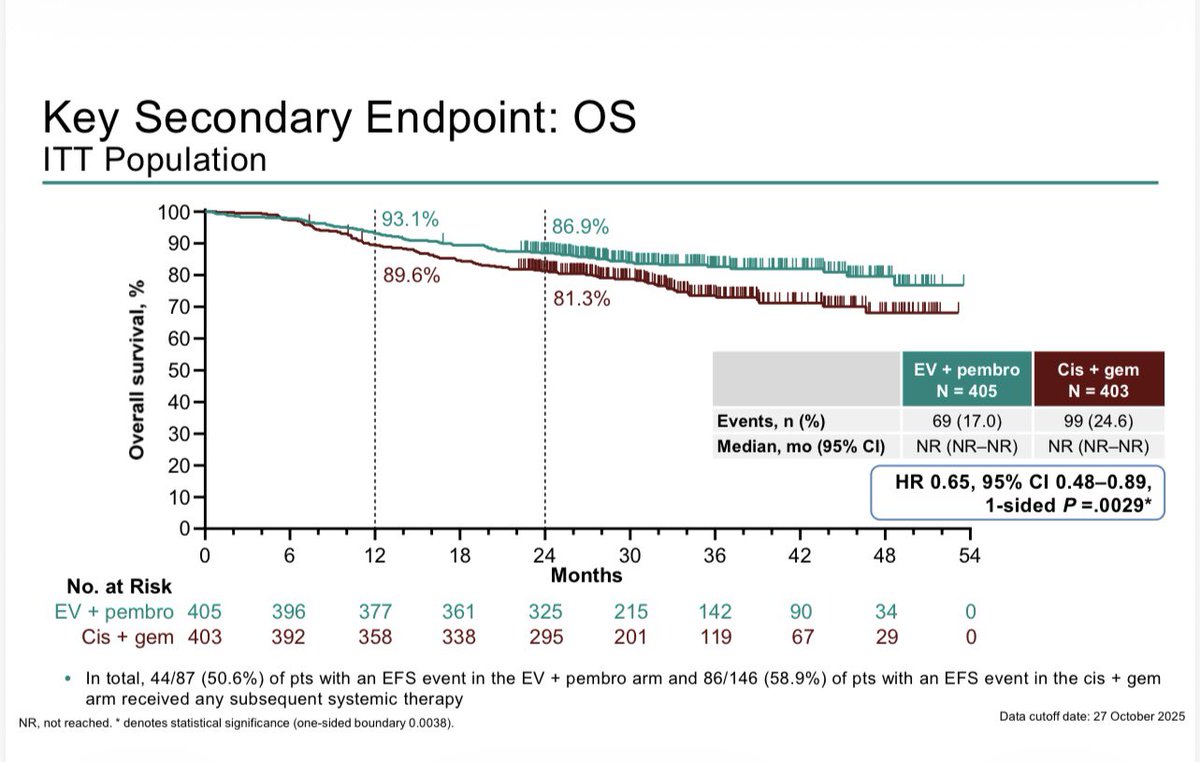
KN-B15/EV303: R3 Perioperative EVP vs Gem/cis in MIBC shows EFS HR 0.53 (0.41–0.70), OS HR 0.65 (0.48-0.89), pCR 56% vs 33%, G3+ tox 76% vs 67% #GU26. About half the patients completed 9 cycles of EVP. These are great results. Gem/cid is harder to beat when not all patients are at risk of relapse. Bladder sparing approaches for cCR (~60%) will be where this ends. ‘EVP 1st, ask questions later’. These studies are needed soon.
3 studies testing Perioperative immune bases therapy (EVP or Gem/Cis/Durva) in muscle invasive bladder all have shown an OS advantage vs standard of care. KN905 (EVP) is distinct in that it’s in a cisplatin ineligible population (accounting for the poor performance of the control arm). It’s also a smaller trial. The control arm of KN-B15 performed slightly better than NIAGARA (Gem/cis for both), but the trials are otherwise similar. The pCR in the EVP trails and the consistent efficacy of EVP is striking. #GU26
Years of work behind this:
📚Dedication | 🤝Partnership | 🧠Expertise
Proud of this collaboration and grateful to the team who made it possible
@ReneeSaliby@MarcMachaalani@AlbigesL@derosa__lisa@DrChoueiri
Ready for the next step—translating MAdCAM-1 into the clinic 👩🔬➡️👩⚕️
IMvigor011
𝗰𝘁𝗗𝗡𝗔+ → 𝗢𝗦/𝗣𝗙𝗦 𝗯𝗲𝗻𝗲𝗳𝗶𝘁 𝘄𝗶𝘁𝗵 𝗮𝘁𝗲𝘇𝗼
𝗰𝘁𝗗𝗡𝗔– → 𝘀𝗽𝗮𝗿𝗲𝗱 𝘂𝗻𝗻𝗲𝗰𝗲𝘀𝘀𝗮𝗿𝘆 𝗜𝗢
Primum non nocere: treating only those with molecular evidence of disease. This is Huge!
Congrats to @tompowles1 and everyone involved 👏
High circulating IL-6/IL-8 is associated with intratumoral myeloid contexture and poor outcomes in advanced renal cell carcinoma patients treated with PD-1 blockade
https://t.co/hHgD53ScS3
The phase II NIVOREN GETUG-AFU-26 trial evaluated nivolumab in a real-world cohort of 353 patients with previously treated advanced clear cell renal cell carcinoma, incorporating a comprehensive translational research program. Baseline blood samples were analyzed to identify circulating biomarkers linked to outcomes, with an initial discovery set of 80 patients revealing five candidates—IL-6, IL-7, IL-8, VEGF, and 4-1BB—associated with overall survival (OS). In the larger validation set, elevated baseline IL-6, IL-8, and VEGF were significantly associated with shorter OS, with IL-6 and IL-8 showing the strongest adverse impact and correlating with a myeloid-enriched intratumoral gene expression profile.
These findings suggest that high circulating IL-6 and IL-8 may indicate a poor-prognosis, myeloid-driven tumor microenvironment in nivolumab-treated aRCC, offering potential guidance for patient selection in future trials. #kidneycancer
@OncoAlert 🚨
@LuciaCarril2@AudeDesnoy@MaximeMeylan@BernardEscudier@AlbigesL
Sasanlimab + BCG improves event-free survival in high-risk #NMIBC: #CREST trial results #JournalClub. @RKSayyid@USC & @zklaassen_md@GACancerCenter discuss this combination with maintenance demonstrating significant improvement in event-free survival with a 32% reduction in risk, achieving 82.1% versus 74.8% event-free survival at 36 months. #WatchNow on UroToday > https://t.co/oXZL9kjCRq
Activity of Platinum Monotherapy in Patients With Metastatic Castration-Resistant Prostate Cancer and DNA Damage Repair Gene Alterations. Co-authored by @mihaela_aldea
Read the full article. https://t.co/R9EbBnnTAs
Perioperative EVP shows ⬆️ EFS,OS & pCR vs cystectomy alone in high risk cisplatin ineligible MIBC (KN901). Highly active systemic vs surgery will rescue many patients with aggressive micrometastatic disease. CRs for EVP=30% in M1 but should be ⬆️ in MIBC https://t.co/MEsZvzktTe
🚨 When EV/pembro is not an option, what's the best first-line strategy for cisplatin-ineligible patients with advanced urothelial carcinoma?
🧪 The SOGUG-AUREA study evaluated split-dose cisplatin + atezolizumab in this setting
📄 https://t.co/VrdQfUYV2f
CHD1 loss reprograms SREBP2-driven cholesterol synthesis to fuel androgen-responsive growth and castration resistance in SPOP-mutated prostate tumors
Study uncovers how loss of CHD1 in SPOP-mutated #ProstateCancer drives castration resistance by reprogramming cholesterol metabolism. Using 🧬genetic and multiomic analyses, the authors show that CHD1 normally suppresses the SREBP2 pathway; its loss boosts cholesterol synthesis, fueling intratumoral androgen production and androgen receptor (AR) activity even after castration.
This mechanistic insight explains why tumors with both SPOP mutations and CHD1 loss become resistant to standard androgen deprivation.
Importantly, combining anti-androgens with cholesterol-lowering drugs shows strong therapeutic potential, highlighting a biomarker-driven strategy for treating this aggressive prostate cancer subtype.
https://t.co/Cov0FrHtvq
Ping
@Silke_Gillessen@AOmlin@bavilima@nataliagandur
🚨📢🚨Disitamab vedotina + toripalimab mejoró SG y SLP vs Gem+platino en pacientes con CUMI avanzado con sobreexpresión de HER2 (IHQ 1+, 2+, 3+)
Grandes cambios el tratameinto de Cáncer Urotelial😍💪👩🔬🗣️
@OncoAlert@Uromigos@TargetedOnc
📌 Ensayo POTOMAC: Durvalumab + BCG mejora DFS en NMIBC alto riesgo vs BCG.
📌 CREST: sasanlimab también con ventaja en EFS (HR 0.68)
Resultados consistentes en etapas tempranas son prometedores.
⚖️ IO-tox es clave en riesgo/beneficio.
@OncoAlert@Uromigos
Always eloquent @AlbigesL gives crystal clear discussion of IO-IO vs IO-TKI decision making for metastatic #kidneycancer. Based on trials & patients. Her #CARE1 trial enrolling well in France & opening in up to 12 countries! Fantastic efforts for our field. #IKCSEU25
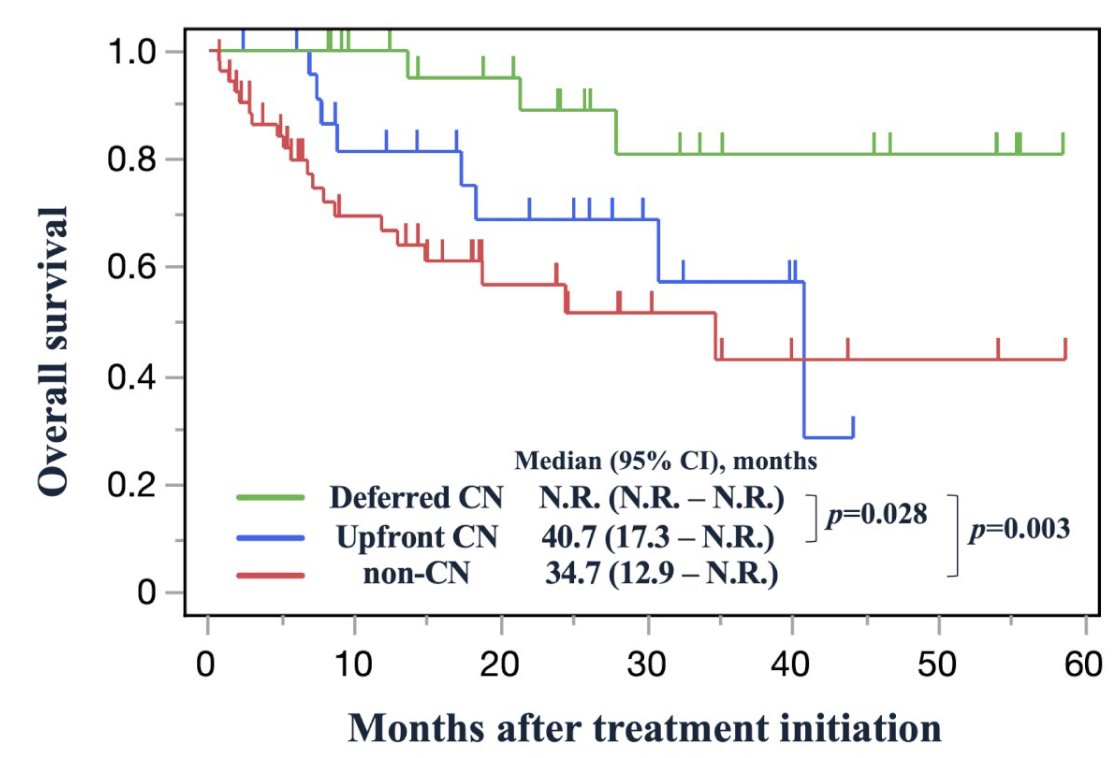
Impact of cytoreductive nephrectomy on immune checkpoint inhibitor therapy: treatment outcomes of immune inhibitor combination therapies for metastatic #RenalCellCarcinoma with primary kidney tumors. Presentation by Toshio Takagi, MD, PhD. #AUA25 written coverage by @zklaassen_md > https://t.co/dKouhKoYok @AmerUrological