Everyone remembers the attack on the Mumbai railway station on 26/11, the gunmen walking the platforms, more than fifty people killed. Almost nobody remembers the announcer whose voice sent hundreds of strangers running the other way while the bullets were still flying.
His name is Vishnu Dattaram Zende.
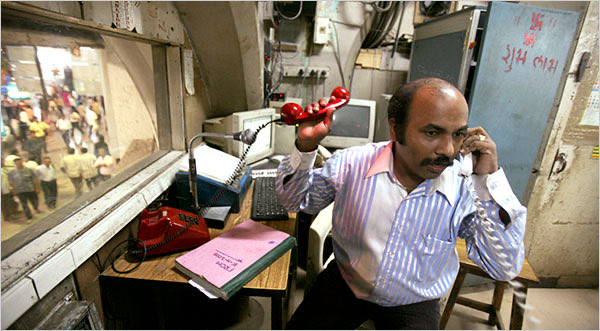
On the night of 26 November 2008, he was on duty in the announcer's cabin at Chhatrapati Shivaji Terminus, a raised glass room looking out over the platforms. It was near the end of his shift when he heard a loud blast and gunfire, and saw people running.
Two terrorists had walked into the busiest station in the country and begun shooting everyone in sight. At that station alone, they would kill more than fifty people.
From his cabin he could see the whole layout, and he understood something fast. Local trains were still pulling in, each one about to pour hundreds of passengers straight onto the platforms where the gunmen were standing.
He had a microphone that reached every platform. He decided to use it, even though it meant staying exactly where he was, in full view, instead of hiding.
He began making announcements, over and over, in Hindi and Marathi, telling people not to come to the main concourse, telling them to leave by the rear exits, warning them away from the guns.
Hundreds of people changed direction because of that voice and walked out of the station instead of into the bullets.
The terrorists worked out where the announcements were coming from. They came and stood almost directly below his cabin. One of them fired up toward him. He kept low, waited, and when he could, went back to the microphone.
He was an ordinary railway announcer on an ordinary shift. He had no weapon and no protection, just a mic and a clear view of what was coming. He stayed at his post and used the one tool he had to push strangers out of the path of the killers.
The men with the rifles are the names everyone remembers from that station. The voice that quietly saved hundreds of the people they came to kill belonged to Vishnu Zende.
I think this is HUGE for $NBIS investors.
SpaceX (AI) publicly shouting out Tavily (acquired by Nebius!)?!
Cursor is a Nebius customer. After SpaceX announced the acquisition of Cursor I wondered if they now have more money to expand on Nebius (awesome) or will be lost as a customer (obv. shit).
Now this shoutout doesn't give more details but it does give a very clear understanding that the parties know each other and it seems very likely they'll respect each other and collaborate (on more) fronts.
Let's see how this plays out. I'm predicting this will not just remain a lil shoutout and proper collaboration will follow.
🔥 India could be sitting at the beginning of a massive Deepwater Oil & Gas capex cycle.
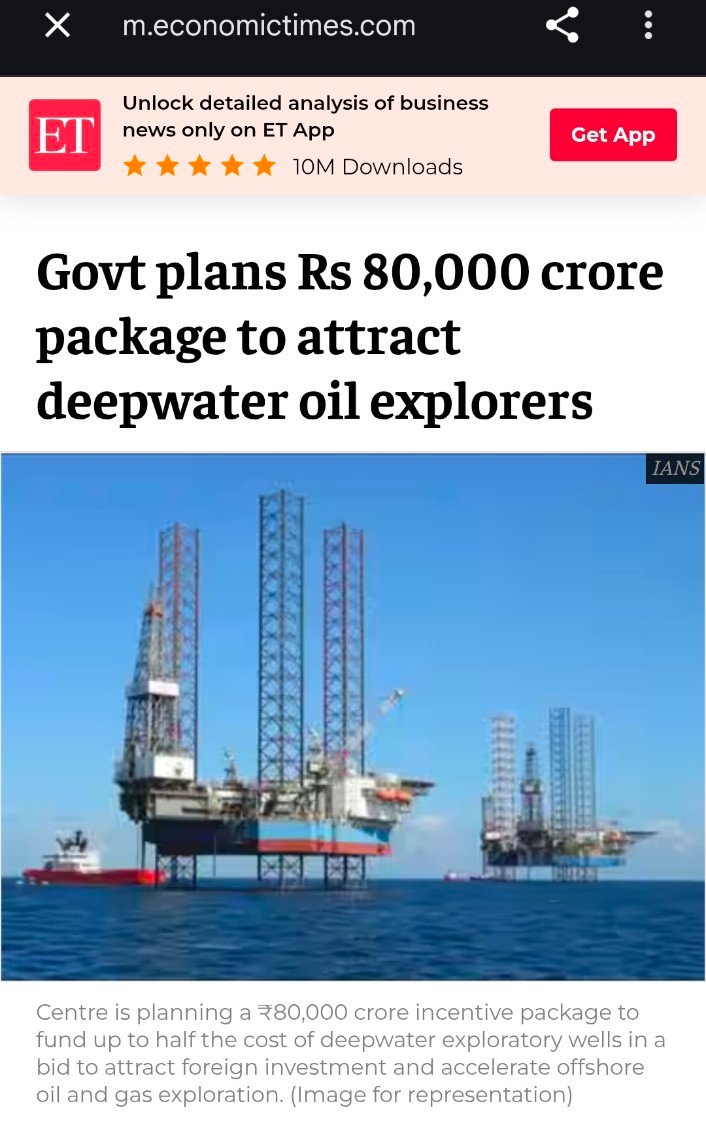
The Government is reportedly considering an ~₹80,000 crore package to support deepwater exploration, potentially funding up to 50% of exploratory well costs.
But the biggest opportunity may NOT be in oil producers.
The real opportunity could be hidden across the entire ecosystem.
A deepwater well can cost ₹1,000+ crore.
And before a single barrel reaches the surface, money flows through:
Seismic & Geophysical Surveys
Drilling Rigs & Drillships
Casing & Tubulars
Drilling Tools & Consumables
Oilfield Chemicals
Logging & Well Testing
Subsea Wellheads & Trees
ROVs & Underwater Robotics
Specialised Offshore Vessels
Platforms & FPSOs
Subsea Pipelines
Electrical & Automation
Inspection & Maintenance
Well Intervention
Production Enhancement
And finally Oil & Gas Production.
🔥 This is where the story gets interesting.
Some companies earn only when a field is discovered.
Others get paid even if the exploration well fails.
And some can keep earning for 15–20 years after production begins.
That is why the real research question isn't:
"Which company produces oil?"
It is:
"Who gets paid every time India drills another deepwater well?"
🔥 Exploration
ONGC
Oil India
Reliance
Vedanta/Cairn
They own the geological upside.
But they also carry the exploration risk.
Government sharing part of the exploration cost could improve the economics of drilling more wells.
🔥 Seismic
Before a ₹1,000+ crore well is drilled, explorers need to understand what lies beneath the seabed.
This creates opportunities in seismic acquisition, processing and interpretation.
Alphageo
Asian Energy Services
This could be one of the earliest layers to see activity if exploration accelerates.
🔥 Offshore Drilling
Then come the rigs.
Deepwater requires highly specialised semi-submersibles and drillships.
The economics can be powerful:
Higher day rates + higher utilisation = operating leverage.
Jindal Drilling and Aban Offshore enter the broader offshore drilling ecosystem.
But not every offshore rig can operate in deepwater.
Rig specifications and actual tender wins matter.
🔥 Drilling Equipment & Import Substitution
Every additional well requires casing, connectors, drilling tools and specialised equipment.
United Drilling Tools is interesting here because it already supplies the Indian upstream ecosystem.
The bigger opportunity?
Import substitution.
Deepwater equipment has high technical and qualification barriers.
A domestic company successfully replacing imported equipment could capture more value than a basic fabricator.
🔥 Subsea: Possibly the most underappreciated layer
Once hydrocarbons are discovered, an entirely new capex cycle starts.
Subsea trees
Wellheads
Manifolds
Umbilicals
Flowlines
Risers
ROVs
Control systems
Much of the sophisticated technology is still dominated by global players.
This could become one of India's biggest localisation opportunities over time.
🔥 Offshore Vessels
Someone must install, inspect and maintain all this equipment underwater.
That requires specialised vessels, ROVs and subsea capabilities.
SEAMEC
Dolphin Offshore
This layer is interesting because specialist assets are scarce and expensive.
When utilisation rises, operating leverage can be significant.
And unlike exploration, maintenance doesn't end after the first well.
🔥 Offshore EPC
A commercial discovery eventually requires billions of rupees of infrastructure.
Platforms
Processing facilities
Subsea pipelines
Compression systems
Offshore structures
This is where L&T becomes important.
Exploration may create the discovery.
But development of that discovery can create a much larger EPC opportunity.
🔥 The hidden recurring-revenue opportunity
Inspection
Repair
Maintenance
Corrosion protection
ROV services
Well intervention
Production enhancement
An offshore platform may operate for decades.
Building it generates revenue once.
Maintaining it can generate revenue repeatedly.
This is why subsea maintenance and offshore services could become one of the most underappreciated parts of the entire theme.
🔥 Think about the cycle like this:
Government Support
Exploration
Seismic
Drilling
Equipment & Consumables
Discovery
Appraisal
Subsea Infrastructure
Platforms & Pipelines
Production
Inspection & Maintenance
Well Intervention
And eventually Decommissioning.
One successful discovery can potentially create years of spending across this chain.
🔥 The companies worth researching are therefore not just ONGC and Oil India.
Direct Exploration:
ONGC, Oil India, Reliance, Vedanta
Seismic:
Alphageo, Asian Energy Services
Drilling:
Jindal Drilling, Aban Offshore
Oilfield Equipment:
United Drilling Tools
Offshore/Subsea Services:
Deep Industries, Dolphin Offshore, SEAMEC
Offshore EPC:
Larsen & Toubro
And there could be another layer of future beneficiaries across specialised pipes, chemicals, automation, corrosion protection and underwater technology if localisation increases.
🔥 The biggest value migration could happen where India currently depends on imports.
High-spec subsea equipment.
Specialised drilling technology.
Premium connectors.
ROVs and underwater robotics.
Sensors and control systems.
Inspection and aftermarket services.
These are difficult to replicate and qualification-heavy businesses.
That is where margins and moats could eventually be stronger.
🔥 What could turn this from a theme into an earnings cycle?
Policy approval
More offshore blocks
More seismic tenders
More wells drilled
Rig and vessel contracts
Equipment orders
Commercial discoveries
Field Development Plans
Large offshore EPC orders
Higher asset utilisation
That is the sequence to track.
🔥 Biggest risk?
₹80,000 crore of incentives cannot guarantee ₹80,000 crore of value creation.
Deepwater geology is brutal.
A ₹1,000+ crore well can still be dry.
And expensive rigs and vessels become liabilities when utilisation falls.
So don't track only the headline.
Track wells drilled, discoveries, order books, utilisation, day rates, capacity additions and cash flows.
🔥 The ₹80,000 crore headline may only be the starting point.
If India enters a sustained deepwater exploration cycle, the bigger opportunity could be the ecosystem that gets paid to find, drill, build, connect and maintain every offshore field.
The winners may not necessarily be the companies selling the oil.
They could be the companies selling the picks and shovels.
#ONGC #OIL #DeepIndustries #DolphinOffshore #SEAMEC #JindalDrilling #UnitedDrillingTools #Alphageo #AsianEnergyServices #LarsenToubro #Reliance #Vedanta
Disclaimer: This post is purely for educational and research purposes. It is NOT a buy/sell recommendation or investment advice. Please do your own research.
FACTS THAT COULD SAVE YOUR LIFE (BUT NOBODY TELLS YOU)
1. Heart suddenly racing for no reason? Don’t “wait it out.” That’s your body screaming danger. Sit down. Slow breaths. If it keeps happening, doctor, now.
2. Vision goes blurry for a few seconds? Not “normal.” That can be a mini-stroke warning. Your brain is asking for help.
3. Chest pain that moves to your jaw or left arm? It’s not gas. It’s not stress. It’s heart attack mode. Call emergency, seconds matter.
4. You smell something burning but nothing’s burning? Your nose isn’t broken, your brain might be. This can be a seizure warning.
5. Sudden worst headache of your life? Don’t sleep it off. That’s how people never wake up. Could be a brain bleed.
This stock made people 40x... then destroyed their conviction.
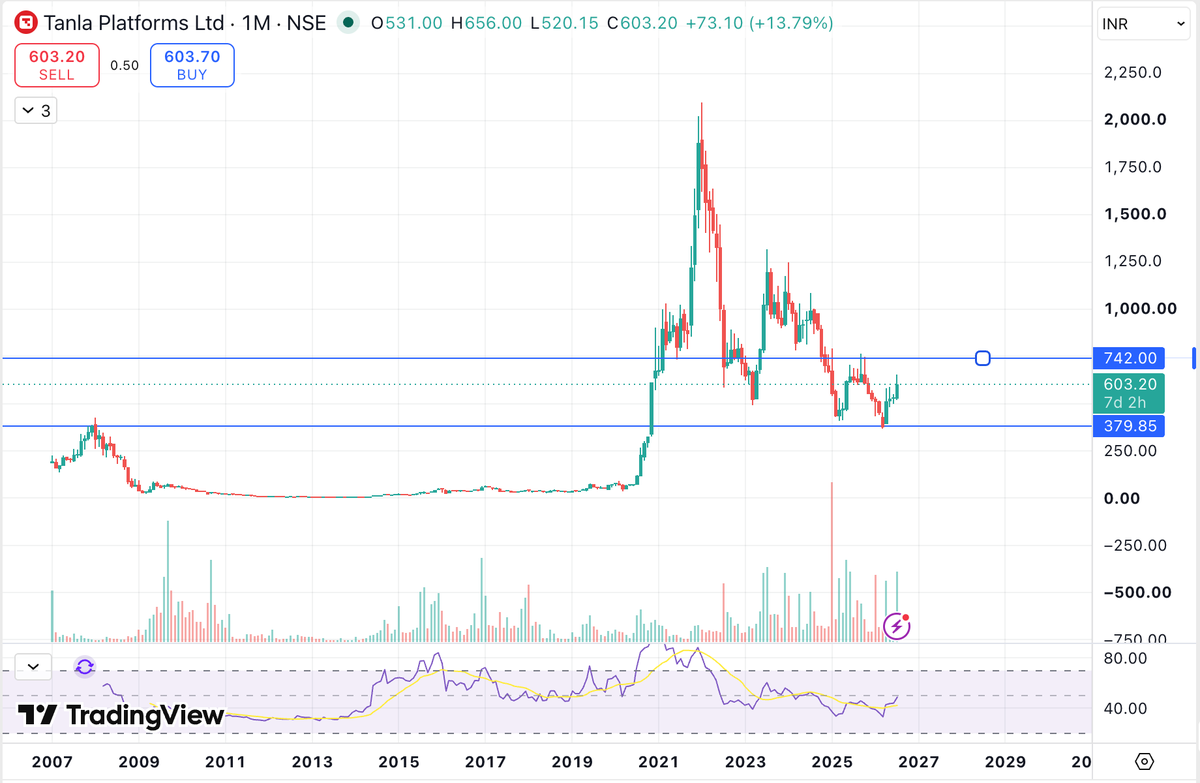
Tanla Platforms went from ₹50 to ₹2,000 in the post-COVID rally.
Today it's trading near ₹600, and almost nobody is talking about it.
But the monthly chart tells an interesting story...
• ₹400 was a resistance for nearly 12 years
• That resistance became support after the breakout
• The stock has defended this level multiple times
The only thing missing?
A monthly close above ₹750.
If that happens, it could mark the beginning of a fresh long-term uptrend.
Sometimes the best opportunities emerge after everyone loses interest.
Is Tanla quietly preparing for its next big move? 📈
#TanlaPlatforms #StockMarket
#EMS
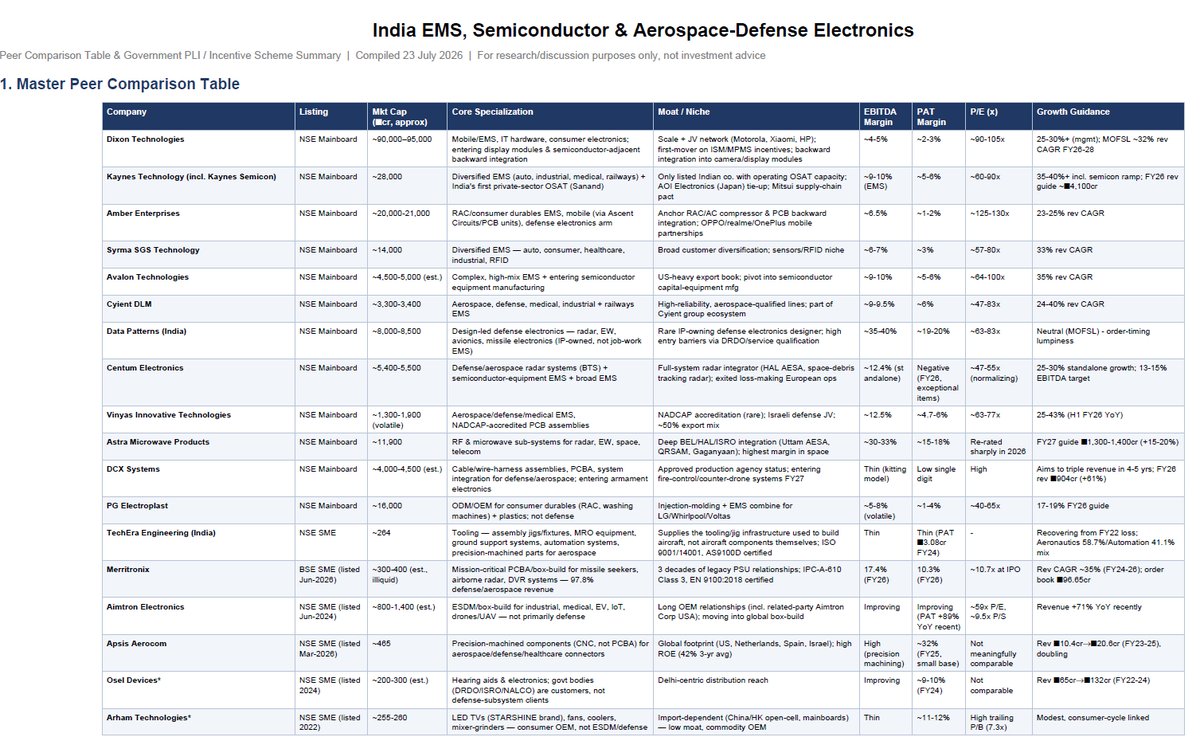
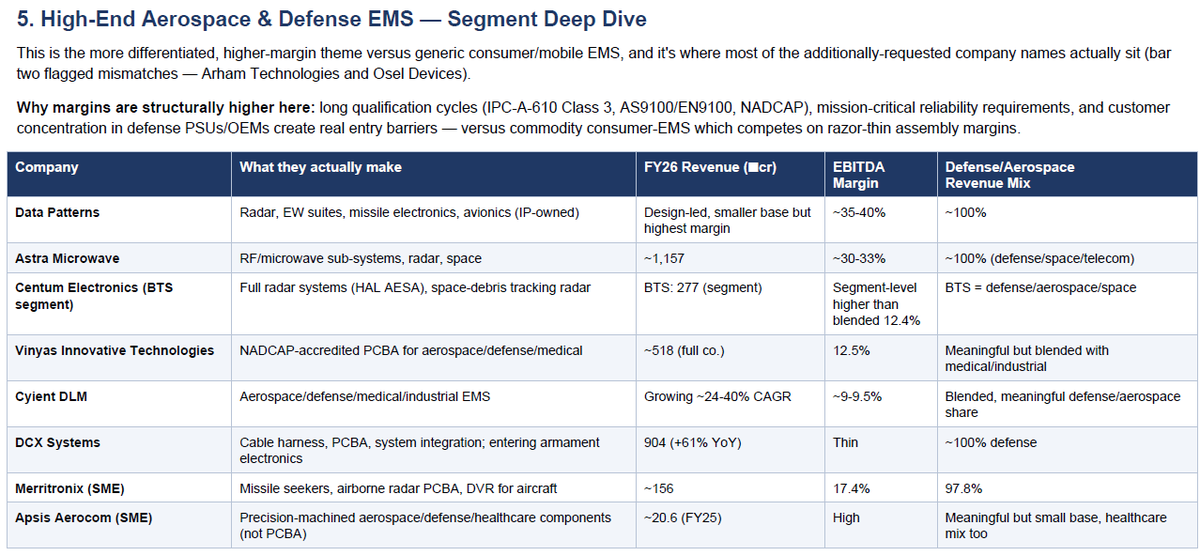
High-End Aerospace & Defense EMS — Peer group analysis attached below👇
Six pillars of Semicon 2.0:
1. Design of chips → strategic & commercial chips
2. Machines and materials → equipment, chemicals, gases, materials
3. Setting up more fabs → silicon display, compounds
4. Strengthening ATMP/OSAT → advanced and legacy packaging
5. Research & Development → advanced technologies (private-company access, not just academic)
6. Talent development → design & manufacturing talent
Opportunity Size / TAM-SAM Framing:
1. Indian EMS market: ~₹2,38,000cr today, projected to reach ~₹11,52,000cr by 2030 (~31% CAGR per IPO research citing industry estimates) — this is the broad TAM most listed names compete for.
2. Aerospace & Defense electronics sub-segment: growing faster than the broader EMS market, cited at ~39% CAGR, i.e., the SAM for names like Data Patterns, Astra Microwave, Cyient DLM, Vinyas, Merritronix, DCX Systems.
3. India's ESDM sector broadly: cited historically at ~16% CAGR (2019-2025) toward a $400bn electronics-production target — this underpins MPMS's own ₹39 lakh cr (~$470bn) mobile-production target for FY31.
4. Legacy-node semiconductor opportunity (28nm+): The realistic near-term TAM — servicing automobiles, consumer appliances, laptops, surveillance, and industrial products — versus competing head-on with Taiwan/China on leading-edge nodes, which the expert explicitly says is not where India should compete for now.
5. Semiconductor equipment/materials supply chain (27-country dependency) is flagged as the multi-year white-space Semicon 2.0 is trying to seed domestically — gases, materials, module manufacturing, PCBs are called out as the "largest immediate investment areas" ahead of full fab buildout.
There are few companies mentioned below👇
Centum Electronics and Vinyas Innovative Technologies are the two names bridging "broad EMS" and "high-end defense/aerospace" most credibly among mid-caps — both carry real defense credentials (HAL AESA; NADCAP) but also real execution/margin-normalization risk just played out in FY26.
Merritronix is the most legitimately positioned (97.8% defense/aerospace revenue, real certifications, cheap relative multiple) but is a genuine micro-cap SME with thin liquidity and cash-flow strain.
Apsis Aerocom is a smaller, adjacent precision-machining story (not PCBA/EMS in the strict sense).
Aimtron is a broader ESDM/box-build story with limited defense mix.
Arham Technologies — LED TV/appliance OEM (fans, coolers, washing machines) for brands; not defense/semiconductor.
Osel Devices — hearing-aid manufacturer selling to govt bodies (DRDO, ISRO, NALCO etc. as customers, not as a defense-electronics vendor); healthcare-electronics, not mission-critical defense EMS.
#EMS #Electronicmanufacturing #ESDM #Dixon #Syrma #Kaynes #Avalontech #Centum #Amber #Vinyas #Aimtron #MRTX #Merritronix #Apsis #Asmtech #Cyientdlm #Datapatterns #Astramicrowave #CGpower
Just go on You Tube and see all foriegn media including
Canada, Australia, France, USA, Chinese channels
all are enjoying and hyping Jantar mantar protest
They don't give a shit about keeping democracy in India
They are just trying to one thing - destabilise
While the issue with paper leak is serious and genuine
But western funded media want to sping every Indian problem into destruction and destability
Just go to instagram you will feel like India is collapsing, boosted by algorithm
Come back to twitter it's very normal, with rational posts boosted
Then go to you tube, every western media is having a good time spreading panic
You will undertsand the problem of paper leak is genuine,
but western powers want instability,
as India's Infra, defence, pharma, tech, now private space rockets are going up up🚀🚀
As Indian moves one step closer to excellence, west becomes more desperate to destroy it
They don't want betterment of youth, they want decimation of our nation
Two isotopes of the same element, differing by three neutrons out of 238, spin apart inside a rotor moving faster than the speed of sound. That tiny mass difference is the entire barrier between reactor fuel and a weapon. 440 reactors in 31 countries run on enriched uranium: 9% of global electricity, 18% in the United States alone. One machine barely moves the needle: a single centrifuge produces only a handful of separative work units a year. Cascades run hundreds to thousands of them in parallel just to make a dent. Each rotor spins without stopping for a decade. One vibration at the wrong frequency tears it apart. Gaseous diffusion needed a thousand-plus stages stacked across buildings the size of small towns to do this job. A modern centrifuge cascade needs as few as ten stages in series, at a fiftieth of the energy. That collapse in scale is why the technology has spread to nations that could never have built a diffusion plant. Every nuclear weapons crisis of the last half century traces back to this machine. Whoever controls the cascade controls who gets the bomb.
We are entering a completely new era of science
Here is Yuji Tachikawa from Japan (Mathematical Physics, String Theory, QFT) on recent progress in his own work using Fable 5 :
"I've been trying out Claude Fable recently, and last night, on a whim, I showed it my research notes about a collaborative project that's seen no progress in the past six months or so and asked for its thoughts. To my surprise, it made a non-trivial observation and essentially solved it."
"I was also surprised that it was using sympy to automatically write code and verify his own predictions."
"Fable probably seems like it properly understands string theory and has intuition too—that's my impression"
🤖 RESEARCH: For 60 years a robot was blind muscle bolted to the floor. Expensive and completely dumb.
Then AI gave the arm eyes and a brain and the economics flipped.
This is the moment robotics stops being a cost center and starts eating labor. The physics finally works, and the market hasn't repriced it.
Robotics has been the future for so long that people quietly stopped believing in it. Sixty years of the same promise and the same caged arm doing the same weld. What actually changed is not the arm. AI finally gave machines the ability to see a messy, unstructured world and decide what to do inside it, and that single shift is dragging the whole industry off the factory floor and into everything else.
Add a labor shortage that will not fix itself and defense budgets rearming after a decade of neglect, and an old boring industry is suddenly holding the hottest story in the market. Here is the whole thing, mapped into five layers plus the giants your broker hides from you.
🦾 INDUSTRIAL & AUTOMATION
This is the oldest money in robotics and it behaves like it. The arm bolted to the assembly line, repeating one motion until the plant reboots. It is a cyclical business that rises and falls with manufacturing capex, and it has been mature for a generation. Boring is the whole point.
Think of this layer as the electrical grid of robotics.
Nobody gets rich betting on the grid, but nothing else runs without it, and reshoring hands it a slow steady tailwind as factories come home. My read is you own this for ballast, not for fireworks. It trades like machinery because that is exactly what it is.
Tickers: $ABB , $ROK and $EMR
🔬 SURGICAL & MEDICAL
This is quietly the best business model on the entire map. You sell the robot once, then you sell the single use instrument for every procedure it ever performs, forever, plus the service contract wrapped around it. The revenue compounds while the machine sits in the operating room earning its keep.
It is the printer and ink trick, except the ink is a surgical handpiece and the customer is a hospital that trained its surgeons on your system and will never leave. That switching cost is the moat. My honest take is this is the least exciting and most dependable money in robotics, the one corner that already prints recurring revenue instead of promising it.
Tickers: $ISRG , $SYK , $MDT , $GMED and $PRCT
📦 WAREHOUSE & LOGISTICS
This is robotics with a customer who has no way out. Ecommerce volume keeps climbing, warehouse labor keeps getting scarcer and pricier, and the fulfillment center is where those two lines collide. The return on automating it stopped being a debate, which is why the largest retailers on earth are paying to automate their own supply chains.
Once one of these systems gets poured into the concrete of a fulfillment center, it is as permanent as the plumbing. You do not rip it out, you build the next decade around it, and that hardens into contracted backlog you can see coming years out. The pure play system builder is the highest torque way to own this. The diversified industrials are the same bet with a seatbelt on.
Tickers: $SYM , $TER , $ZBRA , $HON and $AMZN
👁️ VISION & COMPONENTS
Here is the layer that actually turned the lights on. The arm has existed for six decades. What arrived recently is perception and reasoning, the chips and sensors that let a machine look at a bin of random parts and figure out what to grab. That is the unlock the whole robotics story was waiting for, and the reason it is happening now instead of in 1995.
Watch how the AI boom paid out. The apps and the models got the headlines, the compute layer underneath captured the durable profit, because every last one of them had to buy it. Robots are the same shape. Every arm, every drone, every warehouse bot has to see and think, and they all buy that from the same short list. This is where I would concentrate. You stop guessing which application wins and own the thing all of them need.
Tickers: $NVDA , $CGNX , $AMBA , $TDY , $ADI and $QCOM
🛸 AUTONOMOUS & DEFENSE
This is the lottery ticket shelf, and it carries a live catalyst most of the map does not have. Drones stopped being toys the day cheap quadcopters started changing the outcome of a real war, and Western militaries are now scrambling to rebuild capability they let rot for ten years. The demand here is a national security problem, and national security money does not flinch at price.
These are small jumpy names with revenue growth that reads like fiction until you pull the contracts behind it. This is where the shock numbers on this map live. Treat it like the shale patch in the early days. Most of these wildcatters will not survive, and the handful that hit will be enormous. Size it accordingly, because a lottery ticket big enough to sink your book is not a strategy.
Tickers: $AVAV , $KTOS , $RCAT , $ONDS , $SERV and $TSLA
🌏 THE FOREIGN GIANTS
Here is the part your US broker quietly leaves off the screen. The best of the muscle layer, the companies that set the standard for factory robotics over 40 years, are not American. They are Japanese and German, and they have owned this since before most of the loud new names existed.
The catch is access. Some trade as thin ADRs that barely move, while the real liquidity sits on the home exchange in Tokyo or Frankfurt. Do not confuse missing from your watchlist with missing from the industry. I am listing these for awareness. The friction is getting clean exposure, never whether they matter.
Tickers: $FANUY , $YASKY , $SIEGY and $KIGRY
Step back and the whole board splits into two economies. One side already makes money and sleeps fine at night: the mature arms, the surgical machines locked into hospitals for a decade. The other side is a bet on tomorrow, the intelligence layer that taxes every robot and the defense names that either 10x or go to zero. If you want where I would actually put capital, it is the vision and components layer, because it gets paid no matter which robot company wins the application war.
Now the claim I want you to argue with. The most mispriced idea on this entire map is Tesla sitting in a defense bucket. Optimus is a bet on a general purpose human shaped worker, which is a different universe from a surveillance drone. If it works, it is a bigger market than every other box here combined. If it does not, it is a car company running an expensive science project, and the market is pricing a blurry average of the two. There is no version where it stays in the middle.
@Value2WealthIND So, does TechNVision has control over the four things that make a business valuable: its compute, its models, its proprietary data, and the edge ('alpha') that data gives it over competitors? Its clients can keep data,finetuned models n its infrastructure inside its own walls?