AI is dramatically expanding what researchers can tackle—exactly as Terence Tao describes. It slashes the friction of tedious computations and lets us chase bolder, "crazier" ideas.
In my own work building energy-efficient CO₂ removal systems, I use AI as a tireless and extremely capable collaborator. It runs deep, multi-scale analyses grounded in molecular biology, physics, and thermodynamic first principles, then quantifies every key metric so I can instantly compare iterations.
The real power comes in the loop: I ask the AI to propose targeted improvements toward my core goals (energy efficiency, scalability, cost), including speculative variations I might not have considered. I evaluate them, synthesize the best elements, and feed the next model back in. This cycle has accelerated my progress far beyond what I could do alone.
We’re approaching a tipping point where AI designed CO₂ removal—from ambient air and combustion flue gases—will render today’s CDR pathways obsolete.
@engineers_feed B) $50/ton carbon capture at scale
Energy efficient, massively scalable (Wright's law), Engineered DAC, including durable sequestration, at gigaton-plus annual CO2 removal using renewable solar energy. With today's AI, The finish line is in sight.
OpenAI's business model boiled down:
"Pay us.
Hand over your IP.
Watch us absorb and commoditize whatever you build."
Classic BIll Gates playbook, reloaded for the AI era.
Build the platform (ChatGPT, APIs, the "everything engine"), lure developers and companies to pour their ideas, data, and products into it. Once something proves valuable? Microsoft—sorry, OpenAI—integrates, extends, and extinguishes. Your innovation becomes their feature. Your moat becomes their training data.
This is exactly how Gates built the Office empire:
Lotus 1-2-3 → Excel
WordPerfect / WordStar → Word
Netscape → Internet Explorer
Independent presentation tools → PowerPoint (acquired and integrated)
Email clients → Outlook
Quicken → MS Money
And on and on. Platform power + deep pockets + zero mercy for "partners."
History doesn't repeat, but it sure as hell rhymes. Only this time the platform isn't just Windows—it's the foundation of the entire AI economy. Keep feeding the beast if you want. Just don't act shocked when it bites your head off.
This is a good plan. I (64) and my wife ( 65) have been living it for the past 10 years. We keep our income somewhat lower when the ACA cliff was in effect. Before retiring, I reorganized my taxable portfolio to be all ETFs, so as to minimize taxable distributions. This way, I could recognize just the right amount of income each year and receive the ACA subsidy. For 2025, we benefited from the 0% capital gain as well as the $6,000 extra deduction for being over 65. The key is indeed building the right accounts... and planning.
I've had this a few times. I was treated with a steroid injection in 2009. Disaster. Problem was not resolved until I started foam rolling (IT band style). The key was to roll up to, but not close to the pain area. Also, I normally use a very firm foam roller. When I am working this problem, I use a softer foam roller to start.
@dr_ericberg I tried the sun. I would walk my dogs every day, in the afternoon, during the summer, without a shirt, in Phoenix. I did a vitamin D blood test and had a value of 37. I was much younger back then. I now take 10K IU daily and have a value of 75.8 ng/ml.
Welcome to my world.
My technology will never be built. VC's have made it crystal clear that ideas have no value. My concept will never be built.
I am about to publish an essay stating the following -
"Industrial CO2 capture and geothermal energy generation share a core thermodynamic challenge. This challenge can be met by a single, unified solution—the 'As Passive as Possible' heat engine—a novel technology inspired by nature's 'Biological Toolkit' that can unlock vast, carbon-free electricity."
Obviously, I represent an N=1 study, but this was not an original idea. I struggled with low energy and lethargy in 2017 and 2018. I came across this concept on a fitness message board, t-nation.
I tried kelp supplements without success.
I did the loading phase in 2018 and had success. In 2020, I stopped iodine supplements and the lethargy returned. I restarted and feel more energetic. I try to only take 1 tablet a week, but some times I rundown. I am presently taking 1 every 3, 4 days.
Unfortunately, the medical establishment is not capable of optimizing our health. So we have to make educated guesses.. In addition to this iodine supplement, I also take 10,000 IU vitamin D daily and large amount of quality fish oil daily. Doctors are unable to make such recommendations.
Consider what I'm doing not as advice, but a data point.
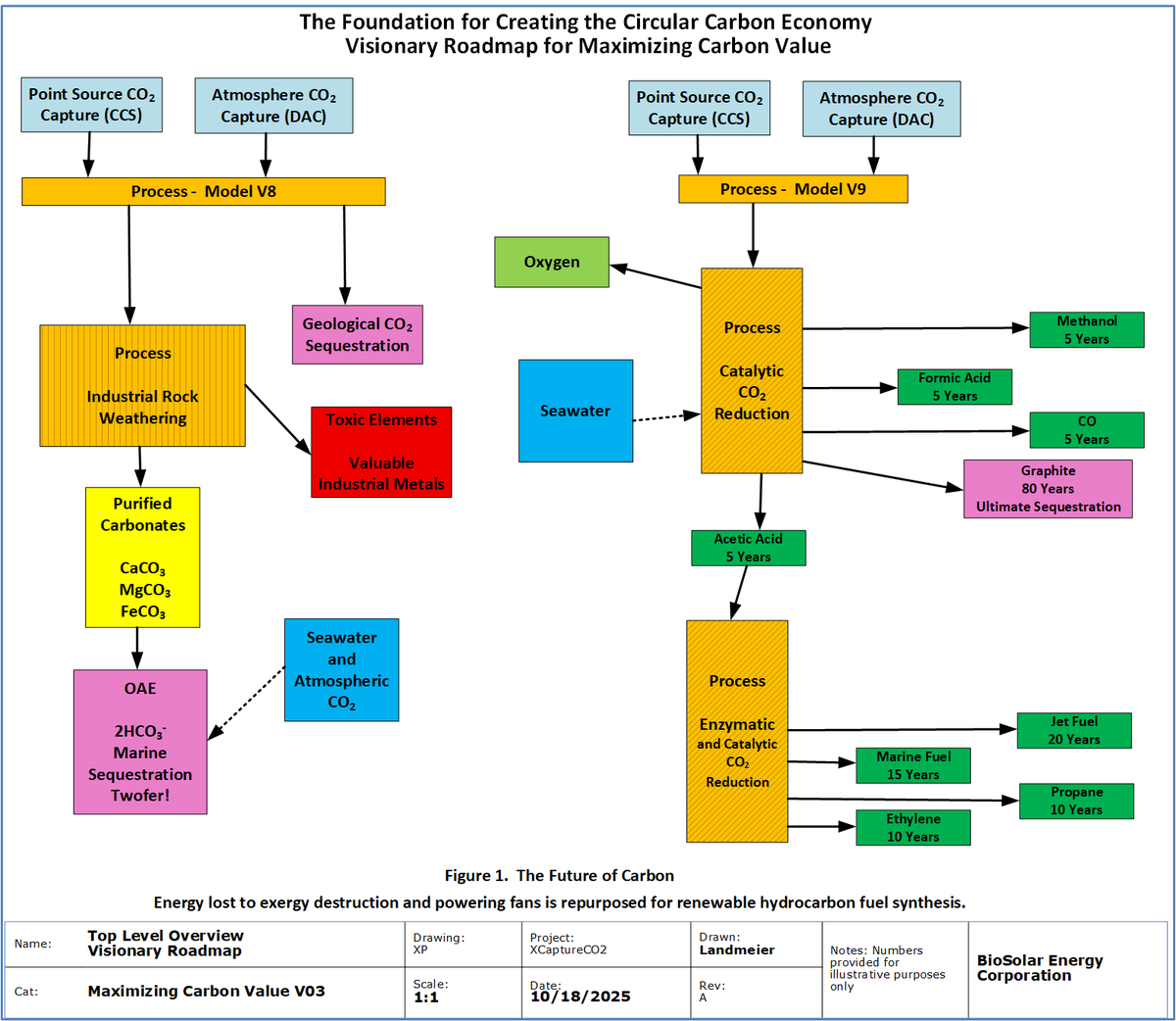
The enzymatic synthesis of hydrocarbons (jet fuel) using CO2 captured from cement and biomass combustion flue gases.
I am doing this now full attention, but I will not commit my retirement funds as it is a capital-intensive problem. Using AI allows me to develop and fully model a workable solution.
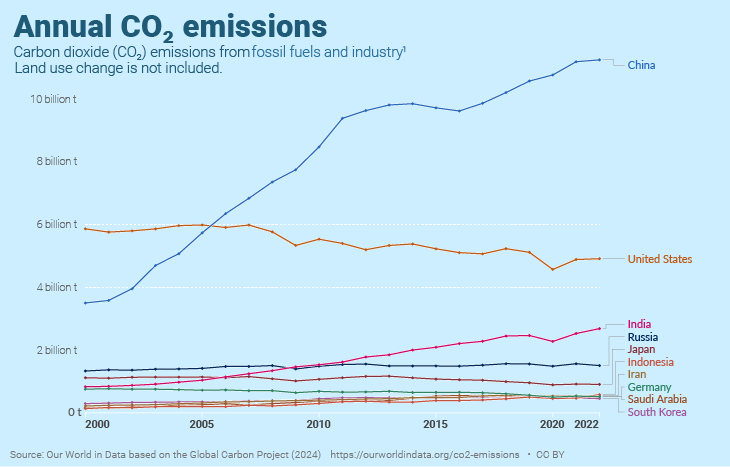
@agelston I am pro-CCS. Here is your world without CCS. IT'S also your future except with India, Indonesia, and Africa catching up to China. Enjoy your warming planet and acidifying oceans.
I have been making this point for some time: the anti-carbon capture and storage (CCS) interests are precisely aligned with fossil fuel executives who do not want to be regulated by policymakers.
We lack energy-efficient CO2 capture technologies because fossil fuel companies have not been serious about their development. From their perspective, why would they successfully develop a technology that would be used to regulate their activities?
I suspect anti-CCS activists are funded by fossil fuel interests.