XRISM: First ESA Announcement of Opportunity open.
The first Announcement of Opportunity for the Guest Observer program of XRISM opened on November 15 2023. Not less than 8% of the total Guest Observing Time, or an equivalent return as mutually agreed, shall be allocated to ESA.
Paper alert‼️
We found a radio emission in Abell 2657 that may be a radio bubble which is being shredded by gas sloshing! The work is based on @LOFAR+@ESA_XMM and MHD simulations. With @fabiogasta, @astrojaz, @AnnalisBonafede++ @IRA_INAF@HambObs
🧵 1/10
https://t.co/KnnWHpHYia
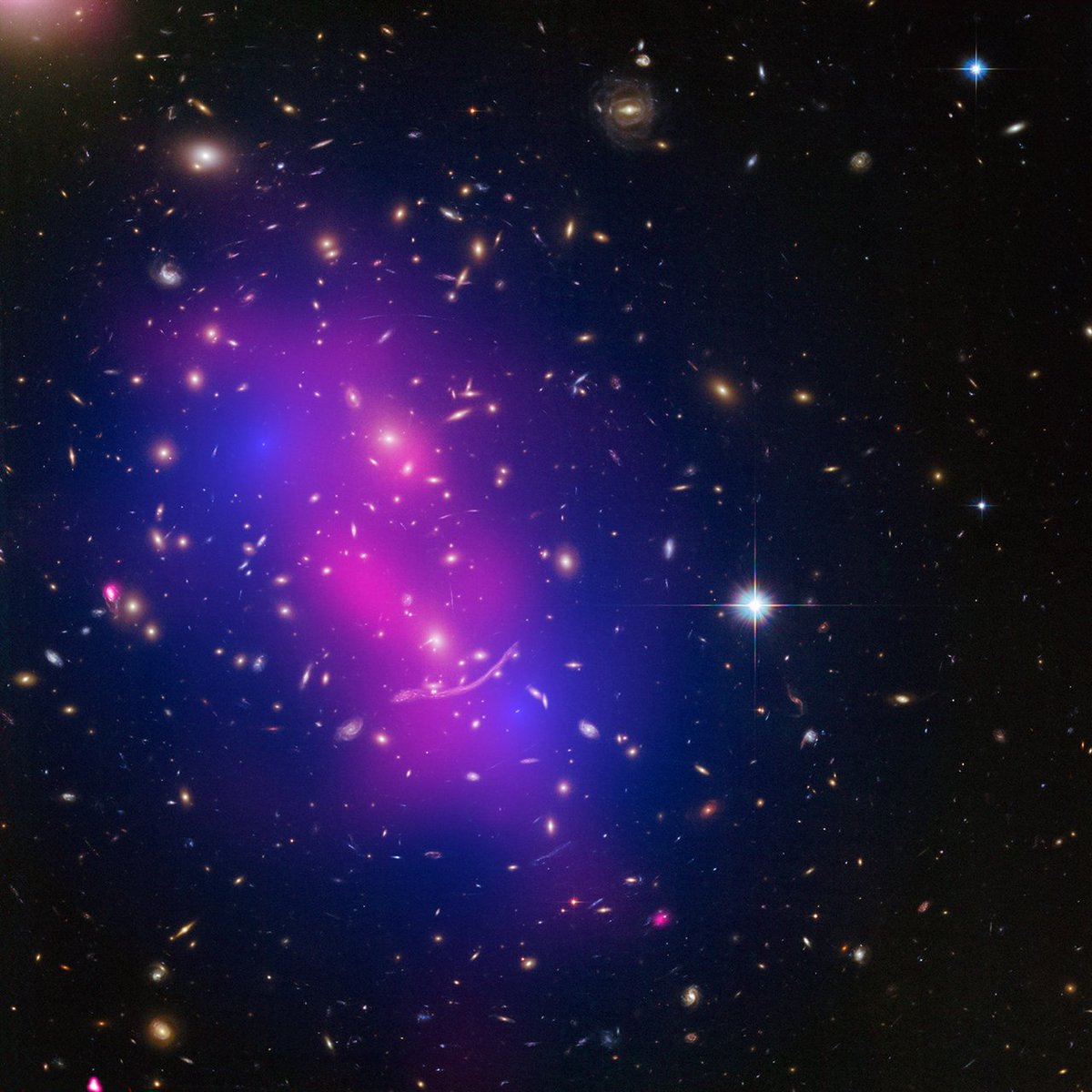
Today Chandra is studying galaxies in the constellation Cetus. Nearby in the sky is Abell 370, a cluster of galaxies located more than 4 billion light-years from Earth. This galaxy cluster is one of the first places where the phenomenon of gravitational lensing was observed.
Today is #LEMpaper day! 📰
Chemical elements are our building blocks... but did you know they are also found in the hot X-ray gas between #galaxies? @LEMXray will determine when and how these #metals traveled from #supernovae out to the largest scales of our Universe!
(1/2)
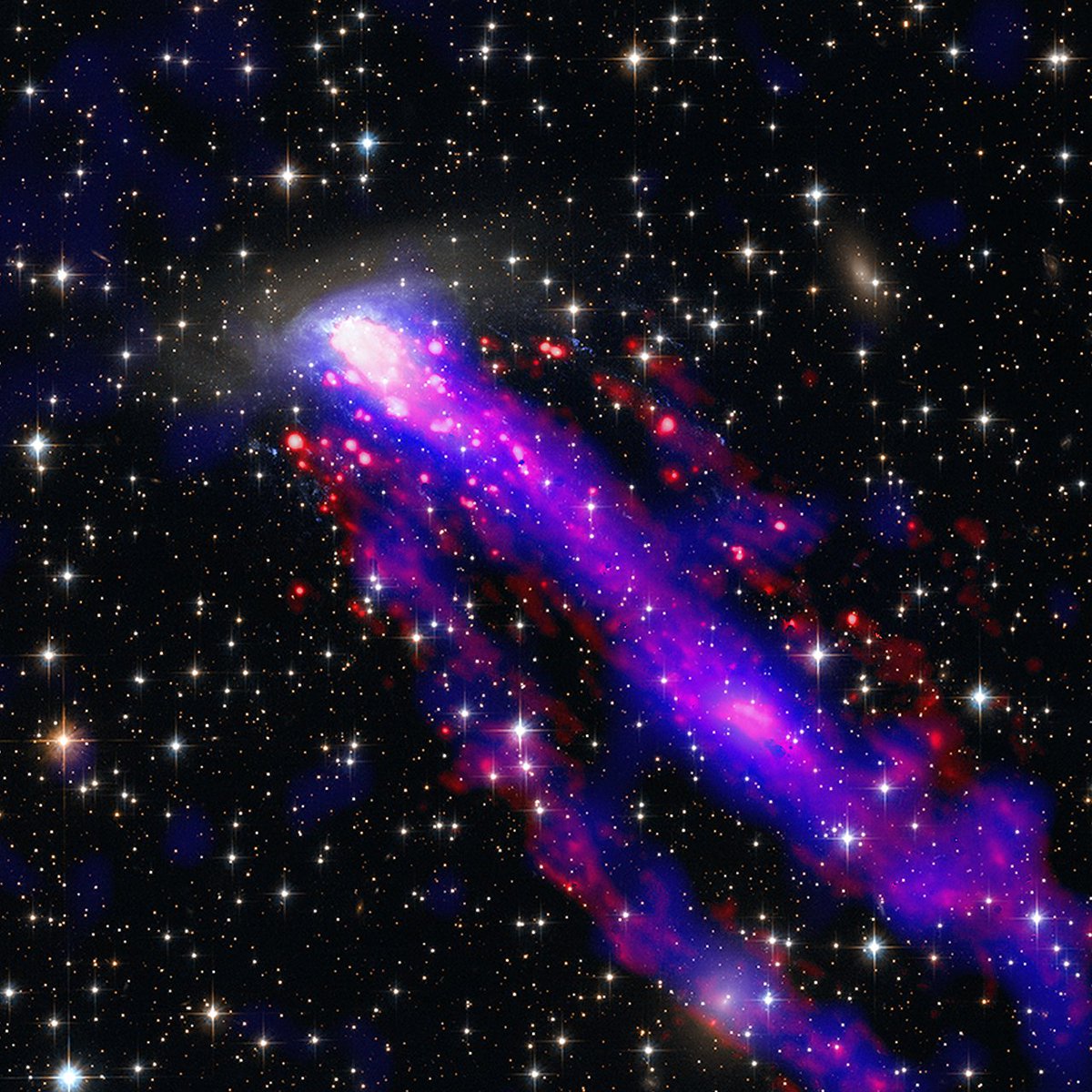
ESO 137-001:
As the galaxy moves through space at 1.5 million miles per hour, it leaves not one — but two — tails behind it. The tails trailing after ESO 137-001 are made of superheated gas. X-rays: blue, optical: orange, infrared: cyan, and light from hydrogen atoms is red.
Two large cold fronts detected in the galaxy cluster Abell 3558 using ESA's XMM-Newton spacecraft. Galaxy clusters contain up to thousands of galaxies bound together by gravity. https://t.co/XT8pskfN0G
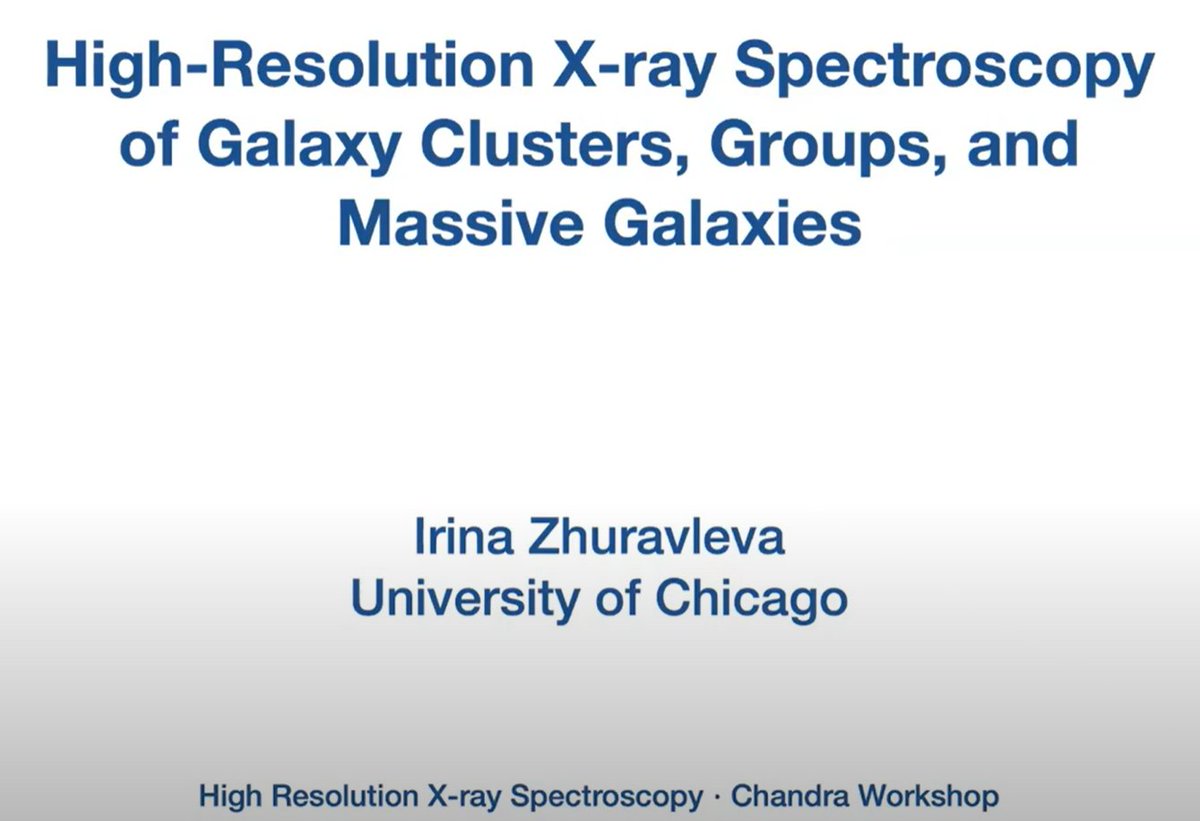
Now that XRISM is in orbit 🛰️, to get a preview of what's to come check out this recent talk by prof. Zhuravleva, @lemxray's Science co-Lead! Irina highlights ✨amazing results from Hitomi✨and shows prospects with XRISM and other future microcalorimeter missions! 🚀
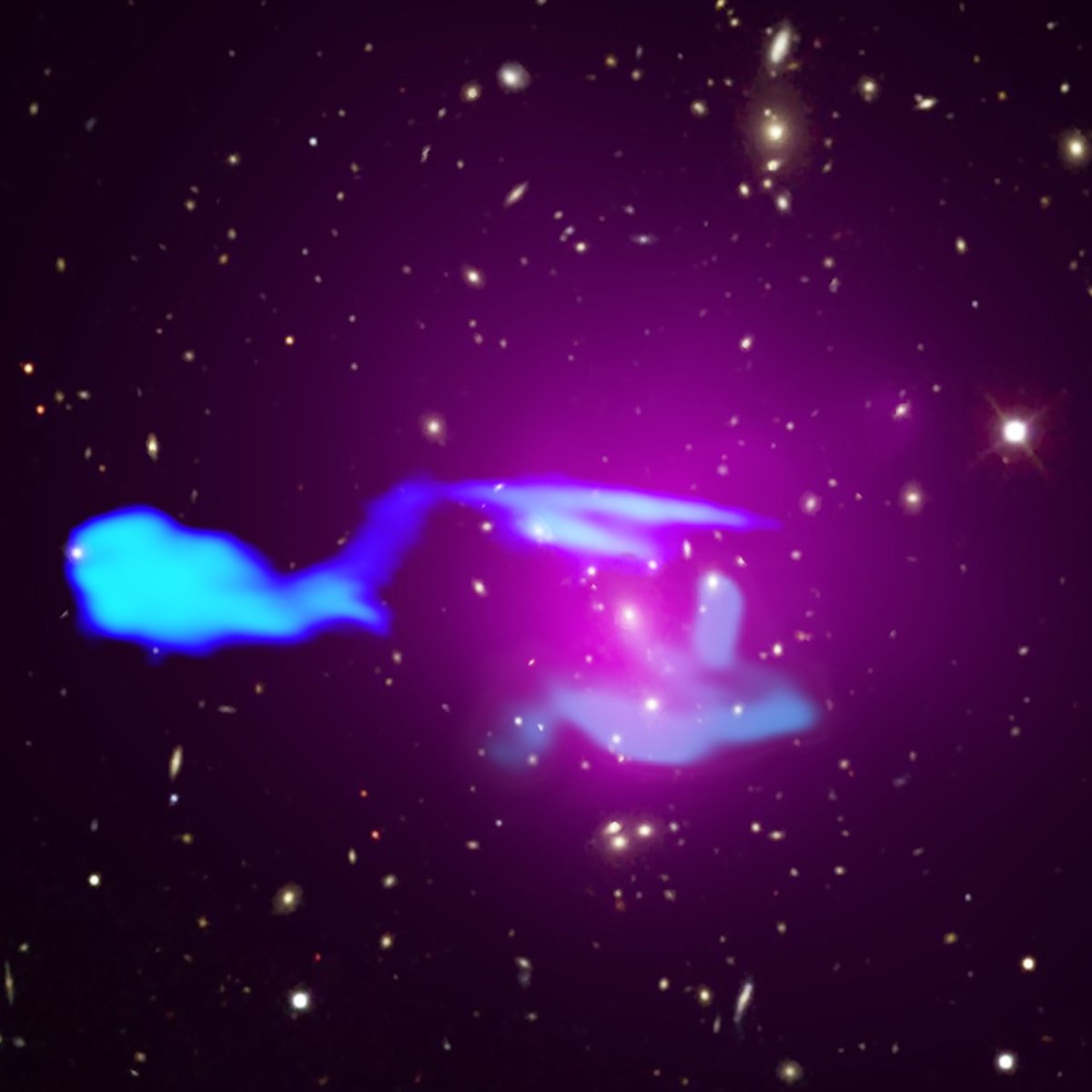
Hidden in a distant galaxy cluster collision, about 1.62 billion light-years from Earth, are wisps of gas that some people think resemble the Starship Enterprise. Others think the wisps look like time-traveling whales in space. Either way, Abell 1033 *engages* on #StarTrekDay!🖖
This just in: @JAXA_en has rescheduled the launch of their XRISM telescope for Wednesday, Sept. 6, at 7:42 p.m. ET (23:42 UTC)! XRISM will help us study some of the hottest spots in the cosmos.
Meet the mission, and tune into JAXA’s livestream with us: https://t.co/GJDJZdrzYI
Two new cold fronts detected in Abell 3558, by @MSMirakhor+ (w/ @astroswalker+)
The two edges are located outside the cluster cooling region, the outermost being at 0.5*R_200, supporting the idea that sloshing motions can extend on very large scales.
https://t.co/vT6Wc0QqzP
Jellyfish are found in our oceans, but did you know they are also swimming in clusters of galaxies? 🪼 When #galaxies move through the intracluster medium, they loses their cooler, metal-rich gas because of ram-pressure. Jellyfish-like tails then shine in soft emission lines!
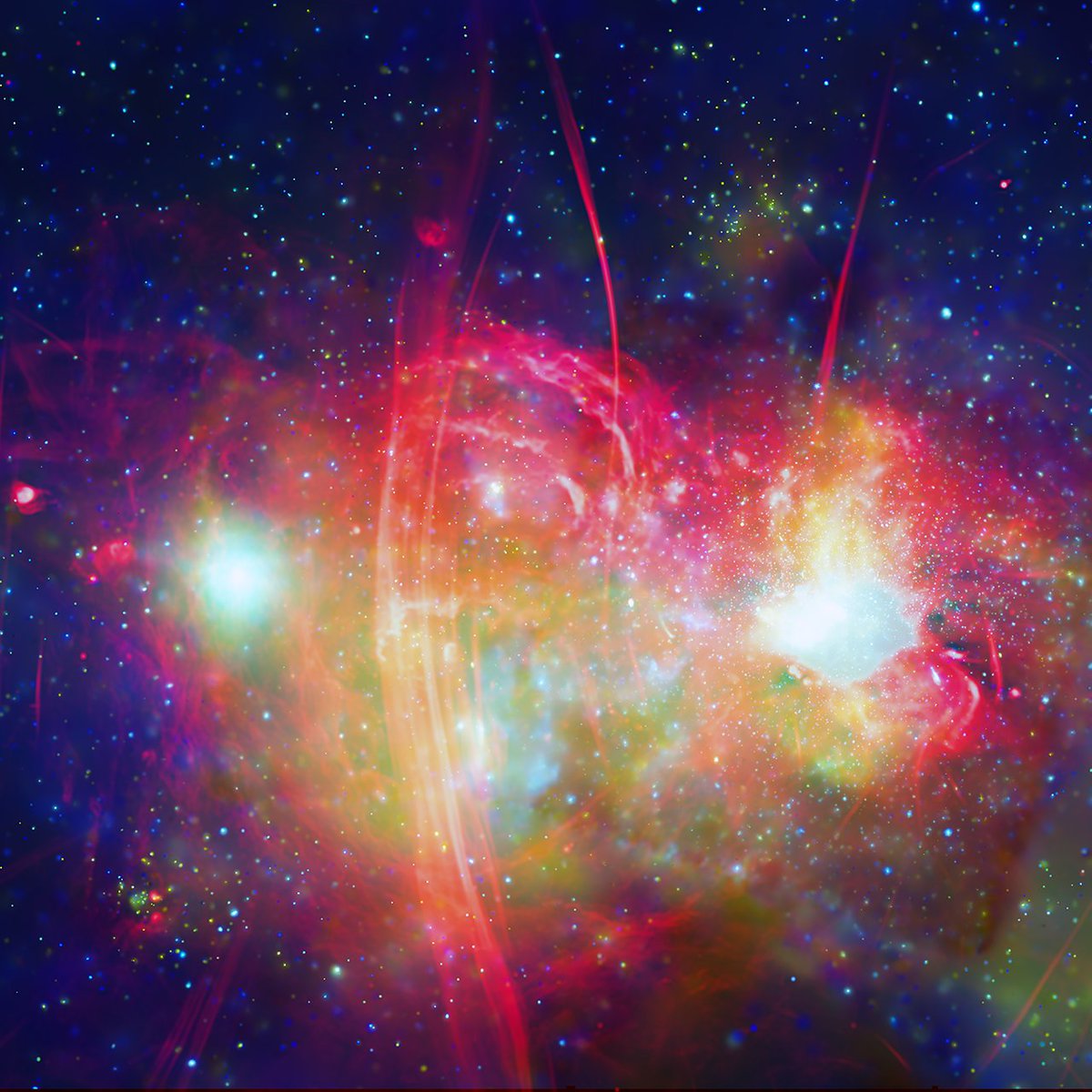
This is the center of our Milky Way galaxy in X-ray and radio light. Some of the exotic objects located here include clouds of gas in the millions of degrees, neutron stars ripping other stars apart, and Sagittarius A* — the supermassive black hole at our galaxy's core.
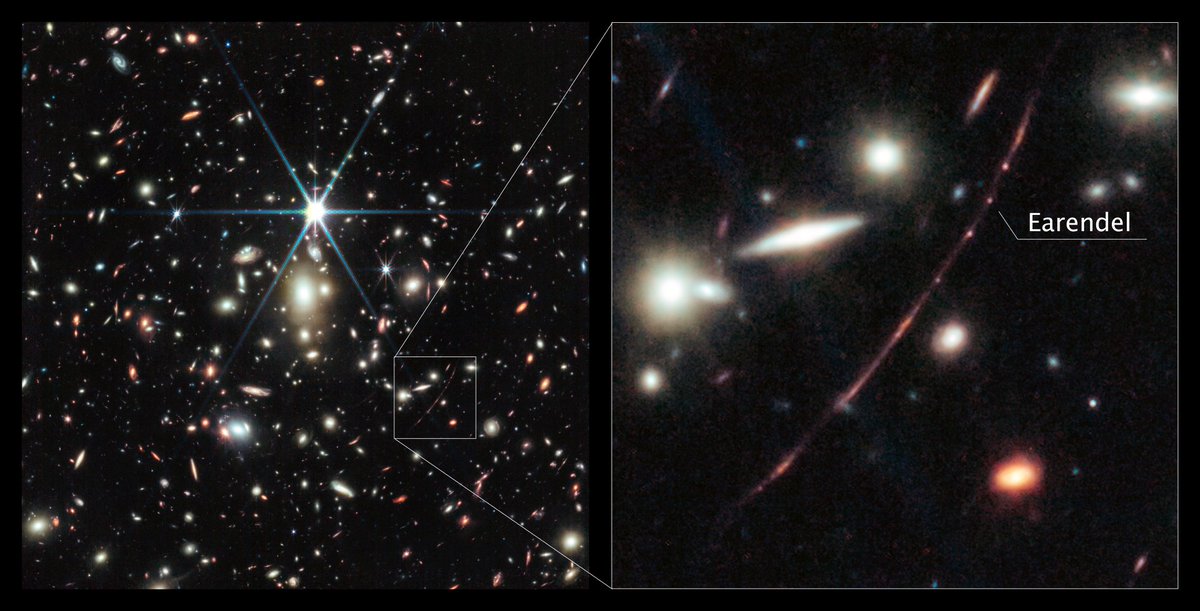
This image from @NASAWebb shows a massive galaxy cluster that contains the most distant star ever detected. The star, nicknamed Earendel, is more than twice as hot as our Sun and about a million times more luminous.
LEARN MORE >> https://t.co/aWyHlWpMTM
It's all glitz and glamour for @NASAHubble ✨
The contents of the globular cluster NGC 6652 sparkle in our own Milky Way galaxy in the constellation Sagittarius, just under 30,000 light-years from @NASAEarth.
Learn more about this image >> https://t.co/qO3t7eXKay
🔍 We're looking through a new lens.
Astronomers used @NASAWebb to capture new images of a galaxy cluster known as "El Gordo" which acts as a cosmic magnifying glass. The results revealed some never-before-seen galaxies.
CHECK IT OUT >> https://t.co/wlK6jg69Ob
The incredible mass of the "El Gordo" galaxy cluster acts as a natural lens, allowing us to see more distant objects behind it through a process known as gravitational lensing. New studies using @NASA's Chandra & @NASAWebb provide new insights: https://t.co/O9VXdTn9Nf
Today Chandra is studying a cluster of galaxies called Abell 262. Located roughly 240 million light-years from Earth in the Andromeda constellation, Abell 262 is considered a relatively small cluster as it contains fewer than 200 galaxies.🌀
This image of supernova remnant DEM L71 reveals an inner cloud of glowing iron and silicon in green and blue. The delicate looking red shell surrounding the cloud — an outer blast wave from the explosion of a white dwarf star — is approximately 60 light-years across.
A monstrous event is happening in the cosmos! 🧟
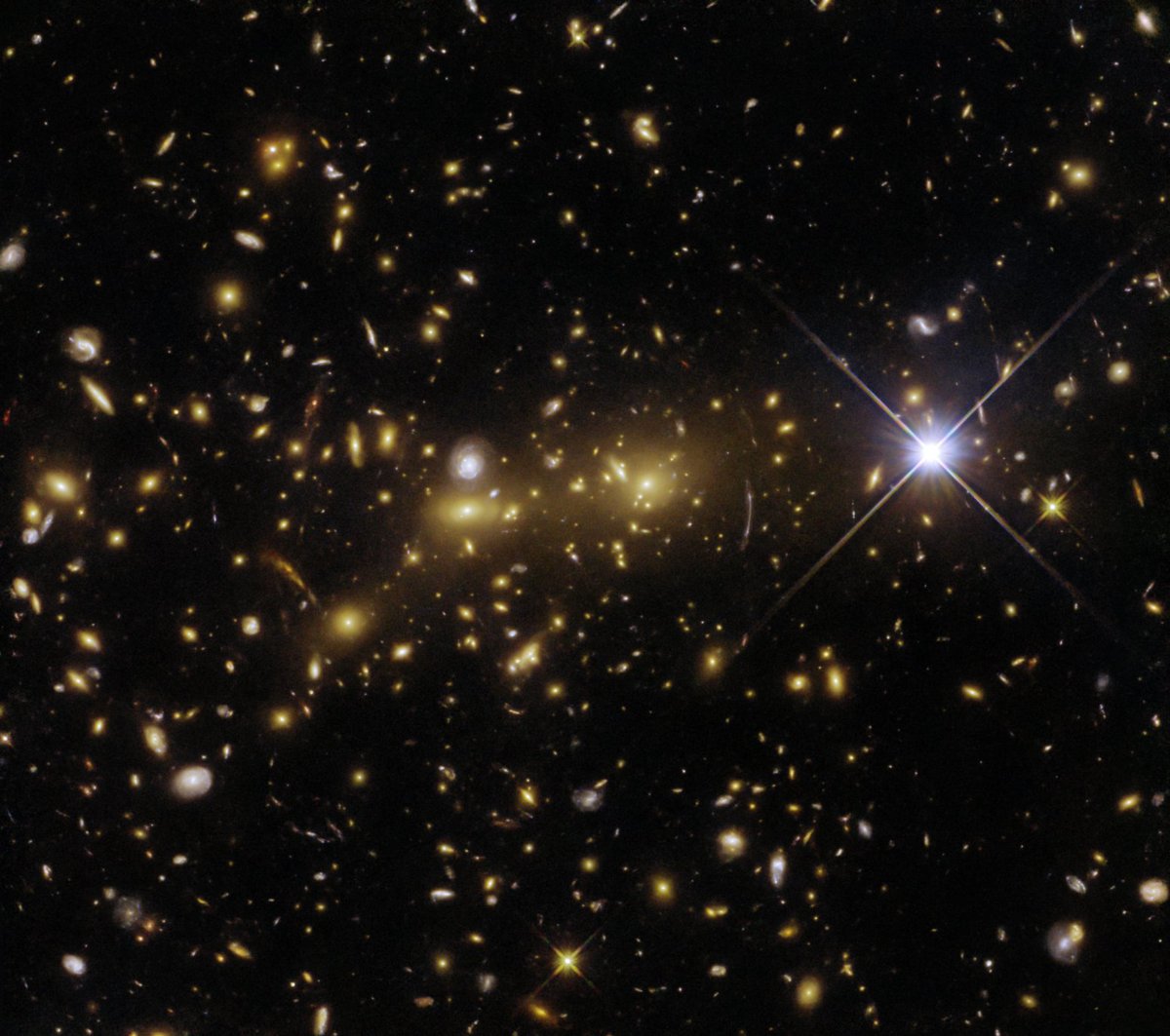
@NASAHubble has captured a monster in the making. This collection of at least two galaxy clusters is merging to create a cosmic monster, a single enormous cluster acting as a gravitational lens.
MORE >> https://t.co/p0E2m5IAUT