Powerful evidence in the Lancet that increased exposure to wildfire-related PM2.5 in our warming world leads to excess mortality in lung cancer patients #OUCH#ClimateChange
https://t.co/TtmhjJJLmP
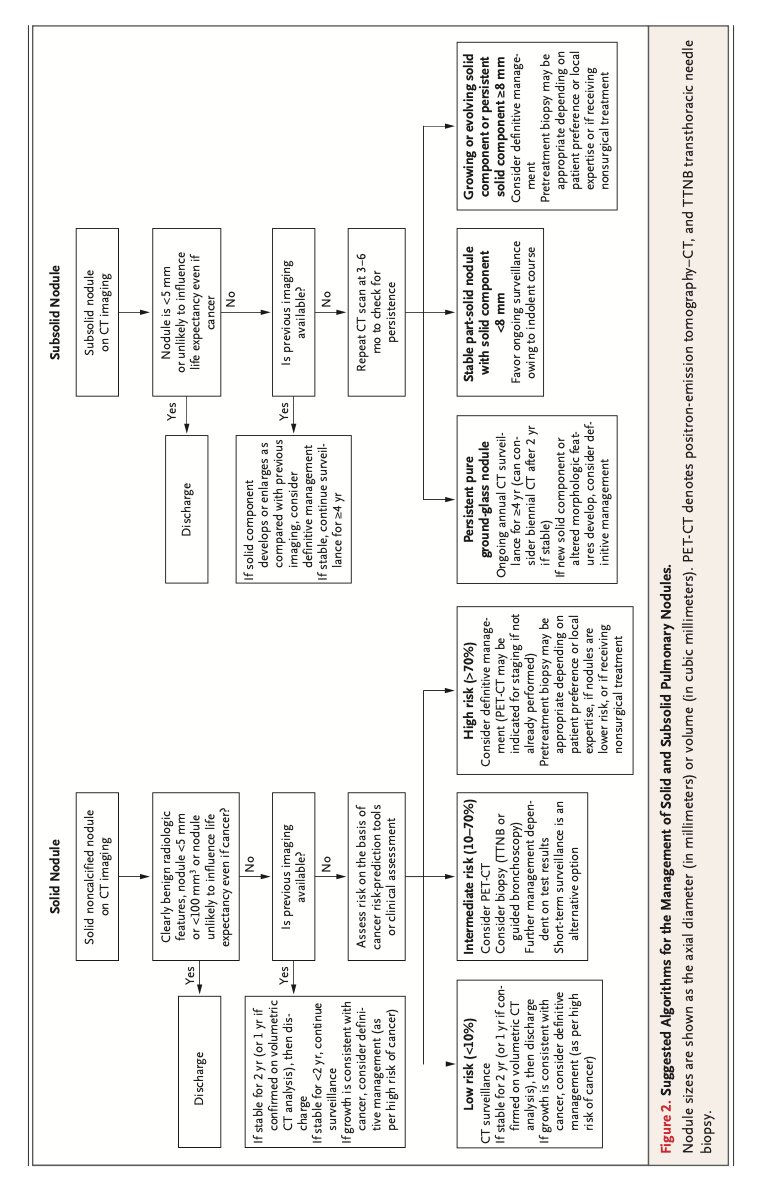
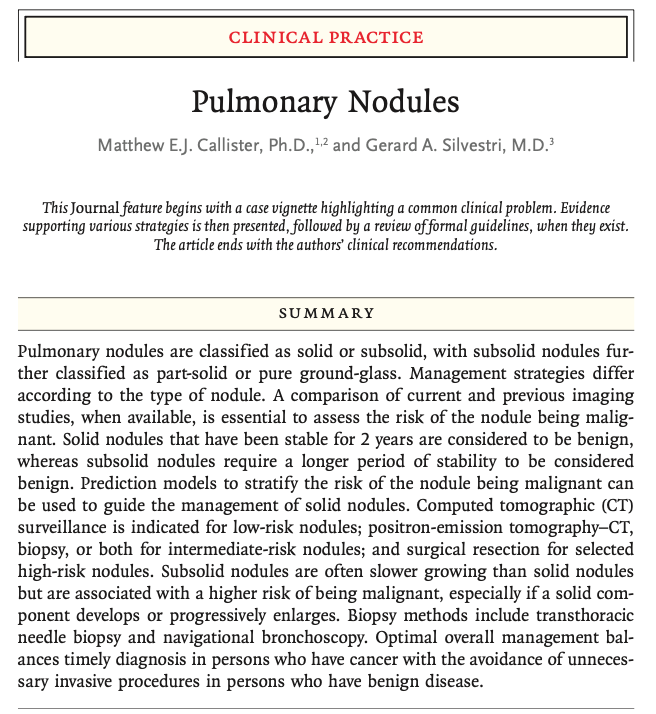
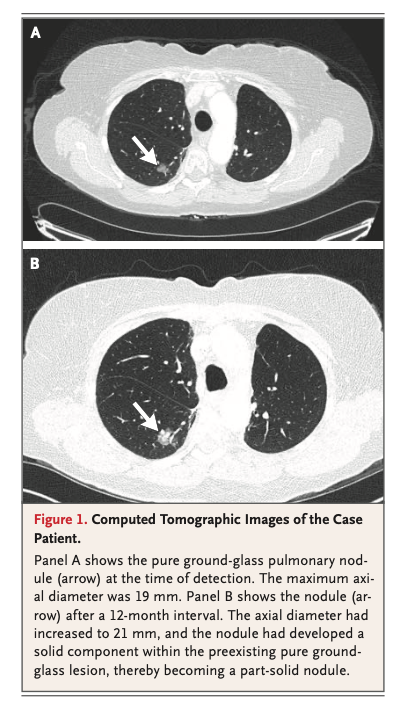
Nódulo pulmonar, la última revisión de NEJM (2026). Puntos clave:
🟢 Un nódulo sólido estable a 2 años es benigno y se da de alta (1 año basta si se confirmó por volumetría). Los subsólidos crecen más lento: requieren ≥4 años de estabilidad antes de llamarlos benignos.
🟢 Importante estratificar con un modelo (Brock si es tamizaje o subsólido; Mayo/Herder si es incidental sólido): <10% → vigilancia por CT; 10–70% → PET-CT y/o biopsia; >70% → manejo definitivo, con cirugía posible sin biopsia previa. Umbrales para PET: ≥8 mm o ≥300 mm³ (abajo de eso es inútil)
🟢 Hasta 60% de los subsólidos desaparecen, así que repite CT a 3–6 meses para confirmar persistencia antes de hacer cualquier cosa.
🟢 La biopsia por broncoscopia navegada puede ser tan buena como la transtorácica (rendimiento 74% (aguja transtorácica) vs 79% (broncoscopía navegada), lo malo: neumotórax 28% vs 3%.
🟢 Solo 3–4% de los nódulos detectados son cáncer; pero 50% de los pacientes sufre distrés durante el proceso.
@AmgenOncology received approval on September 14, 2026 to REDUCE the recommended monitoring period for tarlatamab, which is currently FDA approved for the 2L setting for ES-SCLC.
Specifically, this approved label update reduces the recommended monitoring for cycle 1 day 1 and day 8 of tarlatamab:
⭐️ observation 22-24 hrs ➡️ 6-8 hrs
⭐️ vital signs & assessment follow up on the subsequent day (days 2 & 9)
Note: Patients should remain within 1 hr of the appropriate healthcare setting for 48 hrs, following cycle 1 day 1 and day 8, and care partner support is encouraged.
🔑 These vital updates help our SMASHERS gain improved access to life-changing therapeutics by reducing barriers, such as need for hospitalization for administration and monitoring.
‼️Unmet need: Validated risk assessment tools will be helpful to identify those who may be at risk for high grade CRS and early interventions.
@SclcSMASHERS@FDA@LUNGevity@lungoncdoc@StephenVLiu@HHorinouchi@g_mountzios@sands_jacob@LauraAlderMD@oncodaily@OncoAlert@Latinamd@LuisPaz_Ares@RManochakian@LuisRaezMD@triparnasen@LaurenByersMD@LungCancerEu@alissajcooper@BZhangMD@NaglaAKarimMD@Annechiangmd@IASLC@NCCN@ASCO
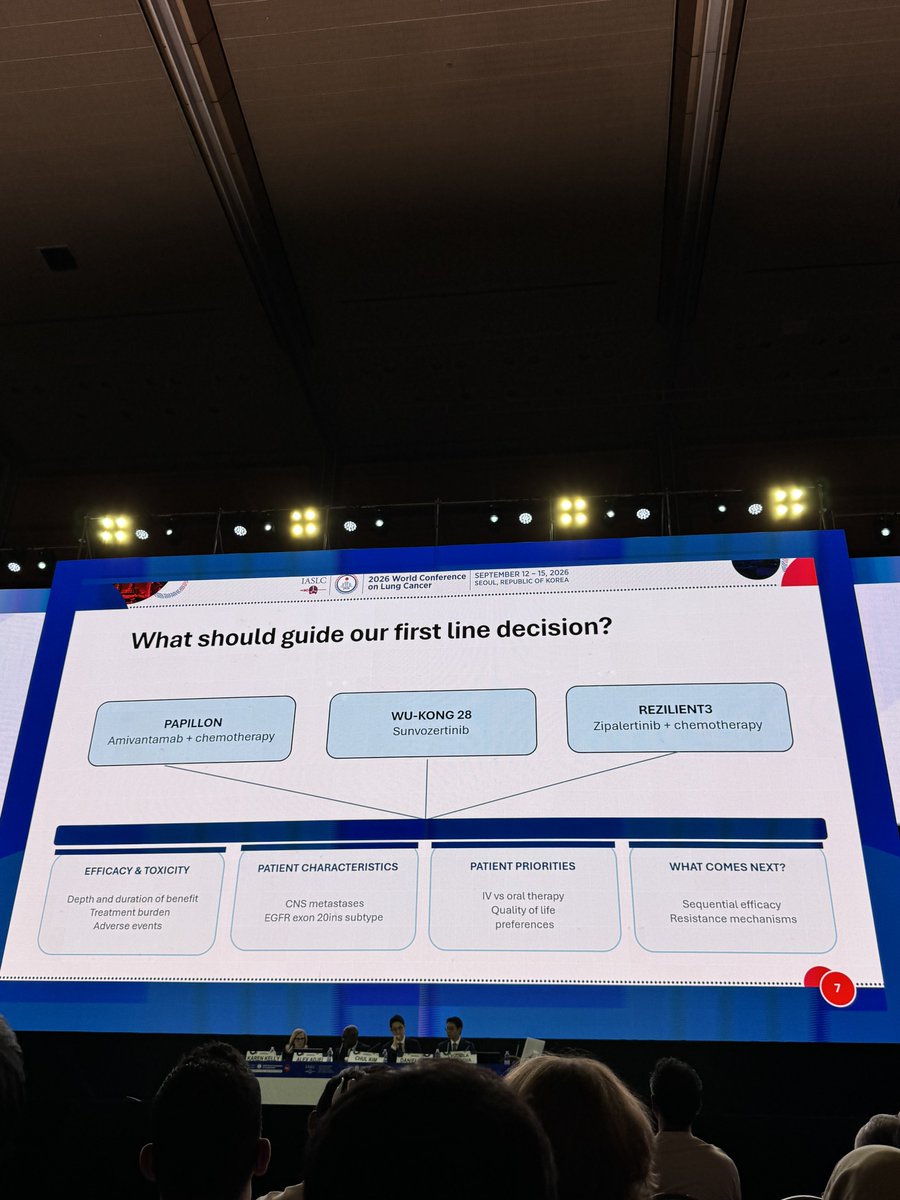
‼️ SAVE THIS TWEET if you see patients with EGFR exon 20 NSCLC ‼️
Beautiful discussion by @LudaBazhenovaMD here at #WCLC26
As new options emerge for our patients, how do we choose?
A patient with prostate cancer is about to start androgen deprivation therapy. Where do you find the cardiovascular guidance—and how do you turn that guidance into a practical risk assessment?
That’s the journey I demonstrate in this video.
I built the Cardio-Oncology Living Guideline to make evidence easier to find and use across cancer types and treatments, with a dedicated cardiovascular risk tool for prostate cancer.
Explore it here:
https://t.co/UaWLmc8byV
In the walkthrough, I show how to:
• Find what has changed: review evidence published since the 2022 ESC cardio-oncology guidelines - https://t.co/ccH3uxffDV and see proposed recommendation updates.
• Navigate to the clinical question: search for a treatment or topic, open the relevant section, and follow the references to the original evidence.
• Assess cardiovascular risk in prostate cancer: start with rapid triage, then add optional Guha–Stabellini scores and AHA PREVENT base-model estimates when the necessary information is available.
• Generate a report: bring the assessment together for clinician review and support clinical documentation.
The rapid triage pathway can be used without entering laboratory values. Numeric assessment sits in a separate tab, so clinicians can choose the level of detail appropriate to the encounter.
AI (OpenAI ASTRA models) helps gather and organize evidence. I personally review every proposed update against the original sources before publication. Human review and editorial accountability are central to this project.
This is an independent educational resource. The website clearly distinguishes proposed recommendation changes from formally adopted ESC guidance.
For our cardio-oncology community, including colleagues in the @ICOSociety, I hope this helps connect evidence reading with structuring an assessment in clinic.
Watch the demonstration, explore the guideline, and try the calculator.
What would make this more useful in your practice? Feedback on navigation, clinical content, and the calculator will help shape the next updates.
#CardioOncology #MedicalEducation
@mcg_urology@md_addison@CardioOncology@OncoAlert@OncBrothers@datsunian@DrGuptaD@daehyunleemd@DrBonnieKy@DrTochiOkwuosa@drbrowncares@MCG_AUG@ACCinTouch@escardio@MCGCardFellows@ASCOPost@neerajaiims@DrChoueiri@PCFnews@montypal@PGrivasMDPhD
👀 WCLC 2026: studies not to miss @IASLC
My selection of the must-see studies at #WCLC26 - the abstracts and presentations worth keeping on your radar throughout the meeting.
📌 Save these for your WCLC agenda!
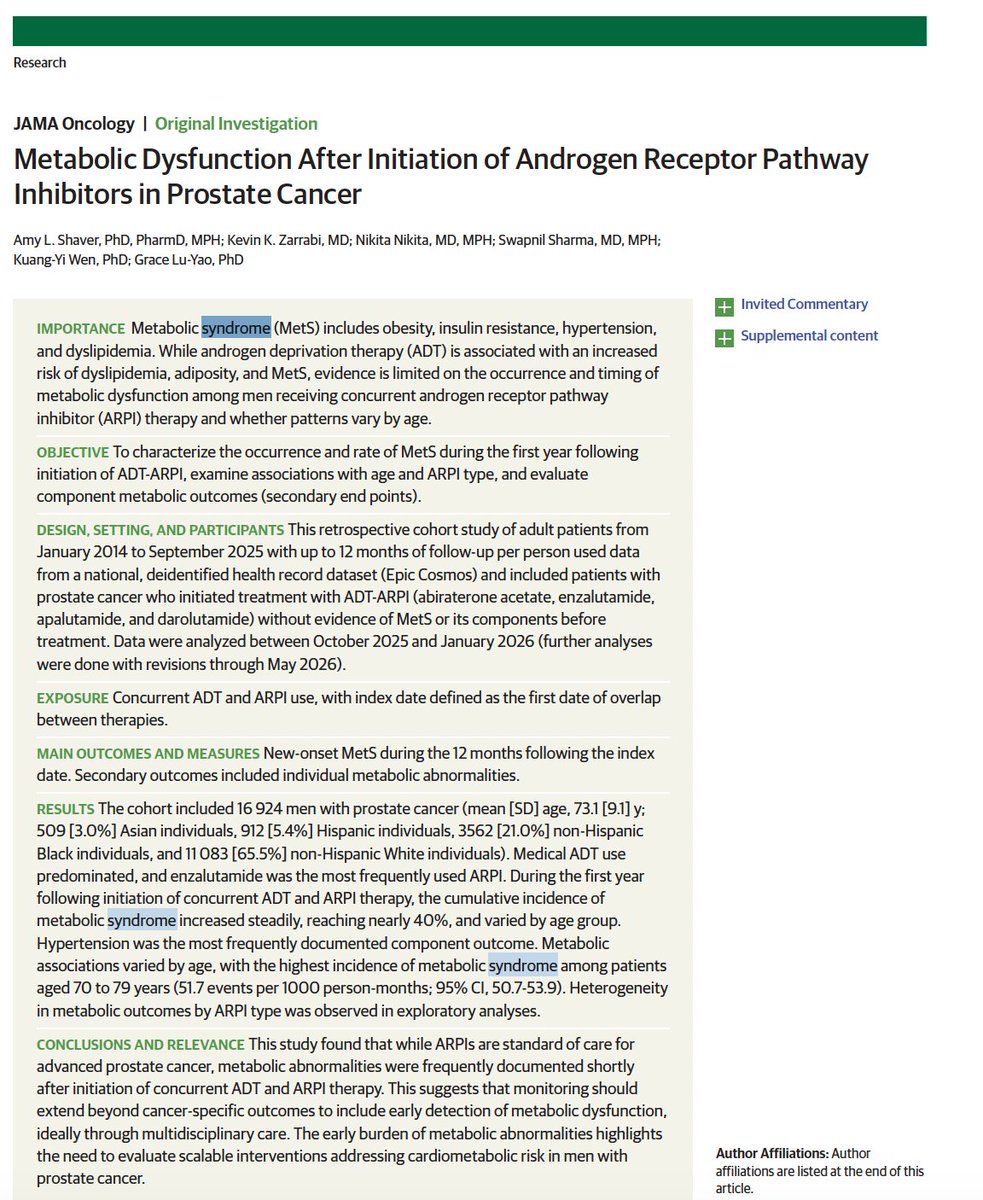
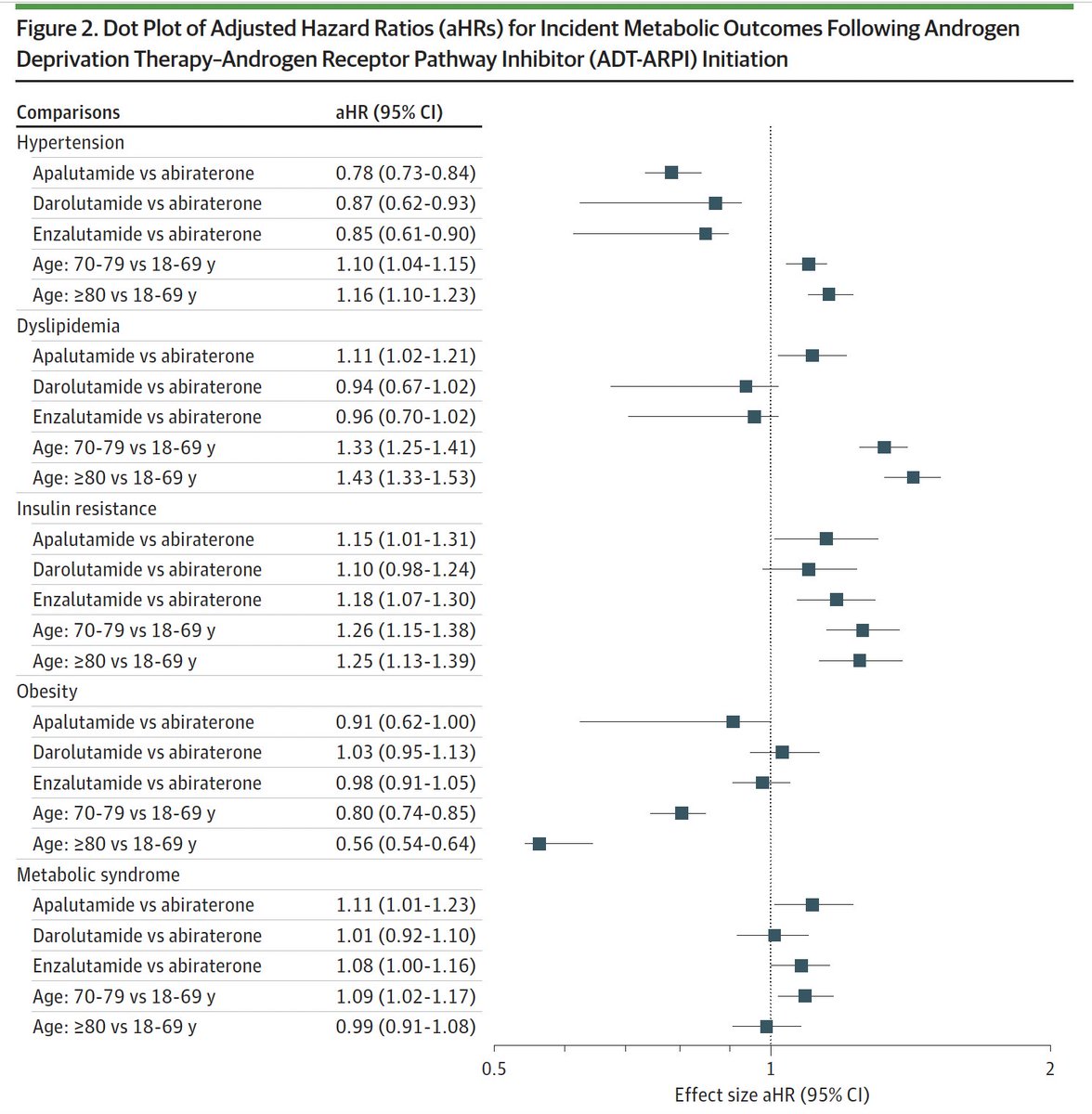
🚨 Start ADT + ARPI & metabolic dysfunction follows, often in just a few months🚨
@JAMAOnc
👥 16,924 men w/ #ProstateCancer starting ADT + ARPI, no prior metabolic dx
📊 12-mo cumulative incidence:
🔺 New HTN 83%
🔺 Dyslipidemia 52%
🔺 Metabolic syndrome 39%
⏱️ Median time to 1st abnormality: 1 mo. MetS: 2.6 mo
🔗 https://t.co/i5GLEJlUsP
@AmerUrological@PCFnews@PCF_Science@UroOnc@UrologyTimes@urotoday@renalandurology
JUST IN and via @Merck + @moderna_tx: A landmark moment for cancer immunotherapy. 🎯
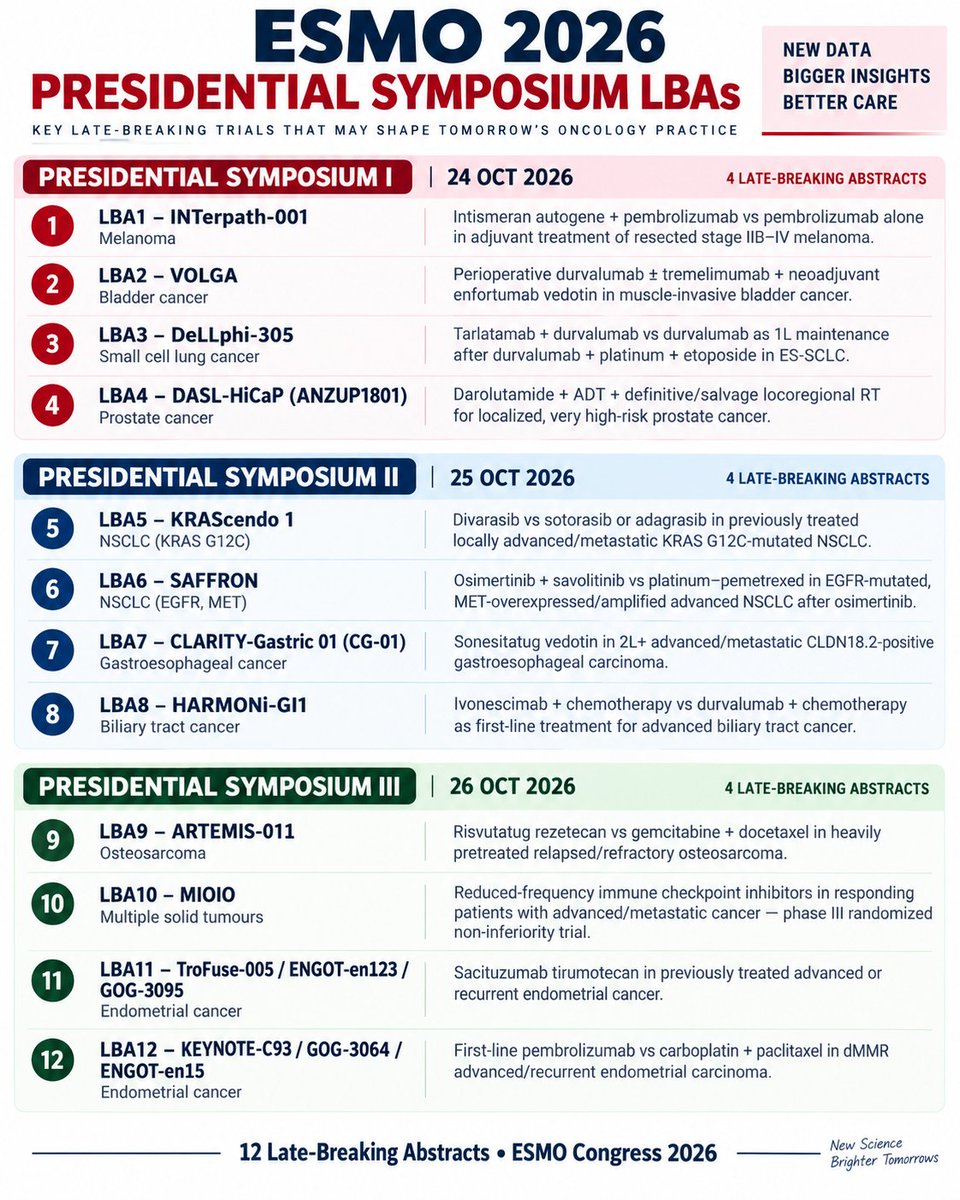
Phase 3 INTerpath-001 is positive: the individualized mRNA neoantigen therapy intismeran (V940/mRNA-4157) + pembrolizumab significantly improved both RFS/DMFS vs pembrolizumab alone after resection of high-risk melanoma.
For years, the idea of designing a treatment around the unique mutations of each patient’s tumor seemed aspirational. Now we have the first positive Phase 3 trial (N=1137) of an individualized neoantigen therapy—and of an mRNA-based cancer therapy.
Personalized cancer vaccines are moving from promise to reality.
Now we need to see the magnitude of benefit, durability, and ultimately OS. But today is an important day for the field—and hopefully for our patients. 👏
Congrats to #CathyWu @DanaFarber for her trailblazing research that is materializing in tangible outcomes! At @DanaFarber_GU we are closely working with Cathy + @DFCI_NeoVax team on several GU protocols, after our @Nature work with @BraunMDPhD et al (https://t.co/BdbKJqMKOw)
https://t.co/Akd0XQt3ml
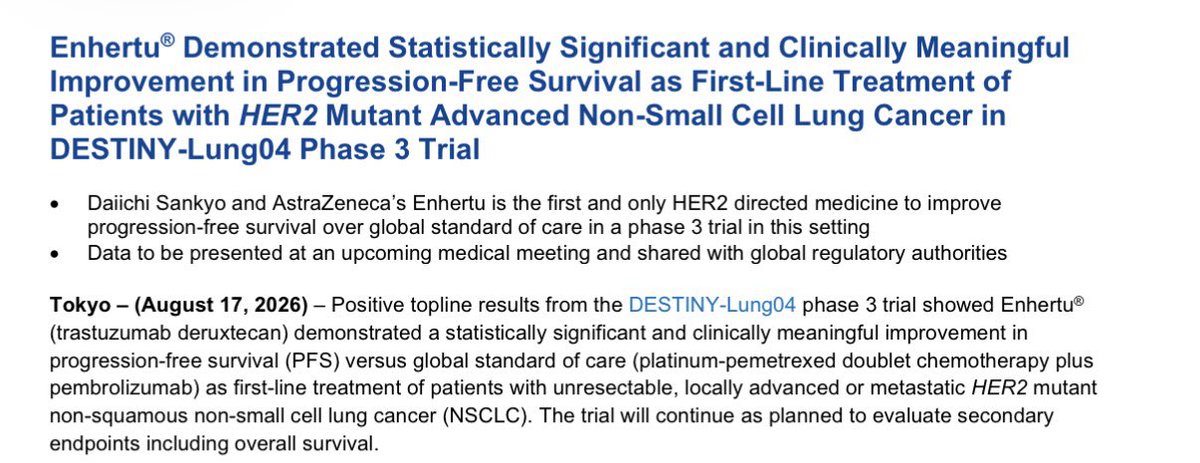
🚨 Phase 3 DESTINY-Lung04 met its primary endpoint
1L T-DXd significantly improved PFS versus pembro + chemo in advanced HER2m-NSCLC.
🔥 First P3 trial to show a HER2-directed therapy outperforming the global standard of care in this setting!
🔗 https://t.co/DDg8PHnaRJ
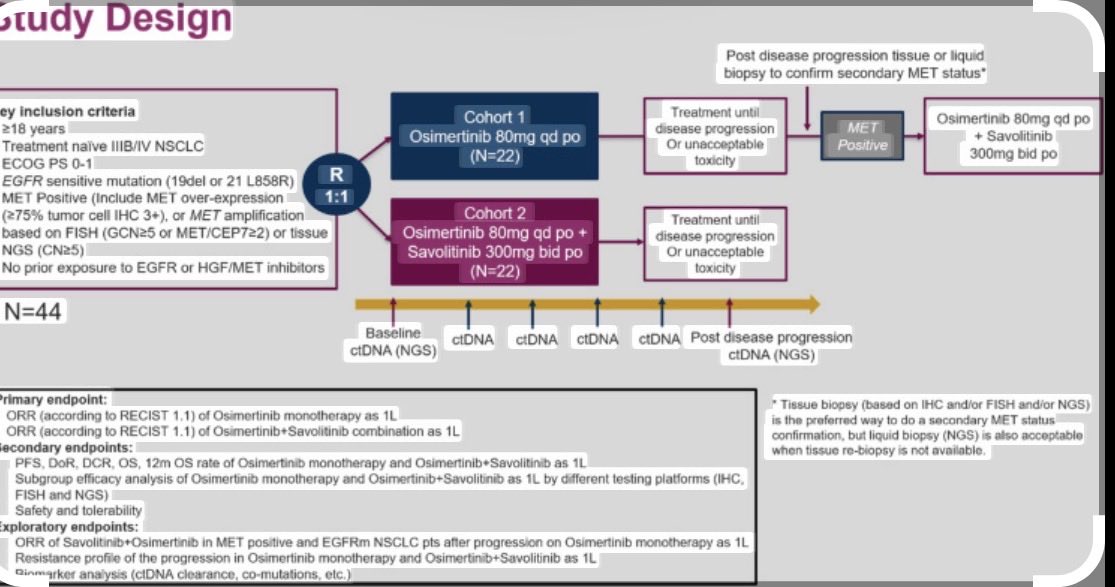
JUST IN: The SAFFRON trial is + for PFS and OS via @AstraZeneca —NSCLC, EGFR-mutated with MET over expression post EGFR-m progression
https://t.co/TbdmI9F7gn
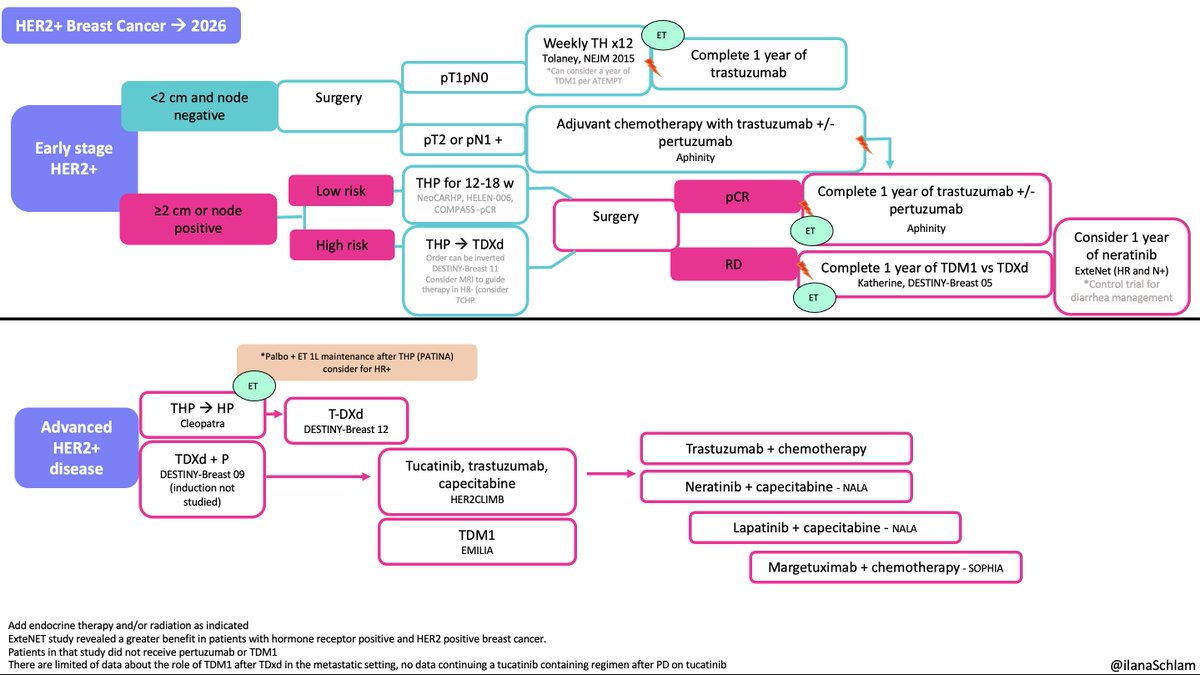
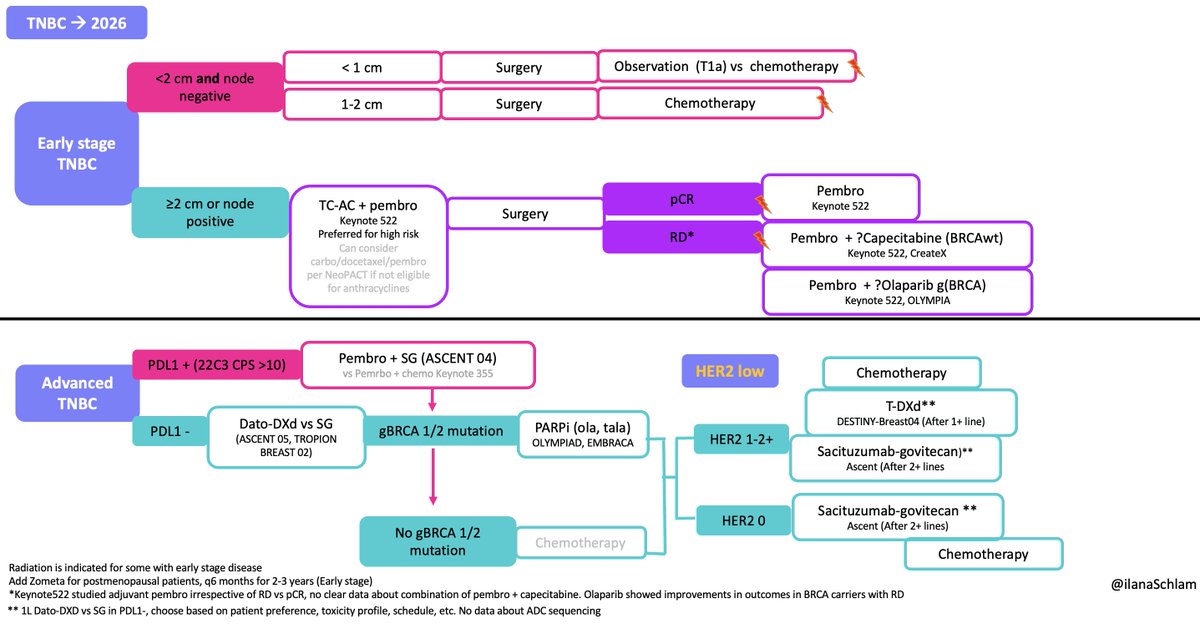
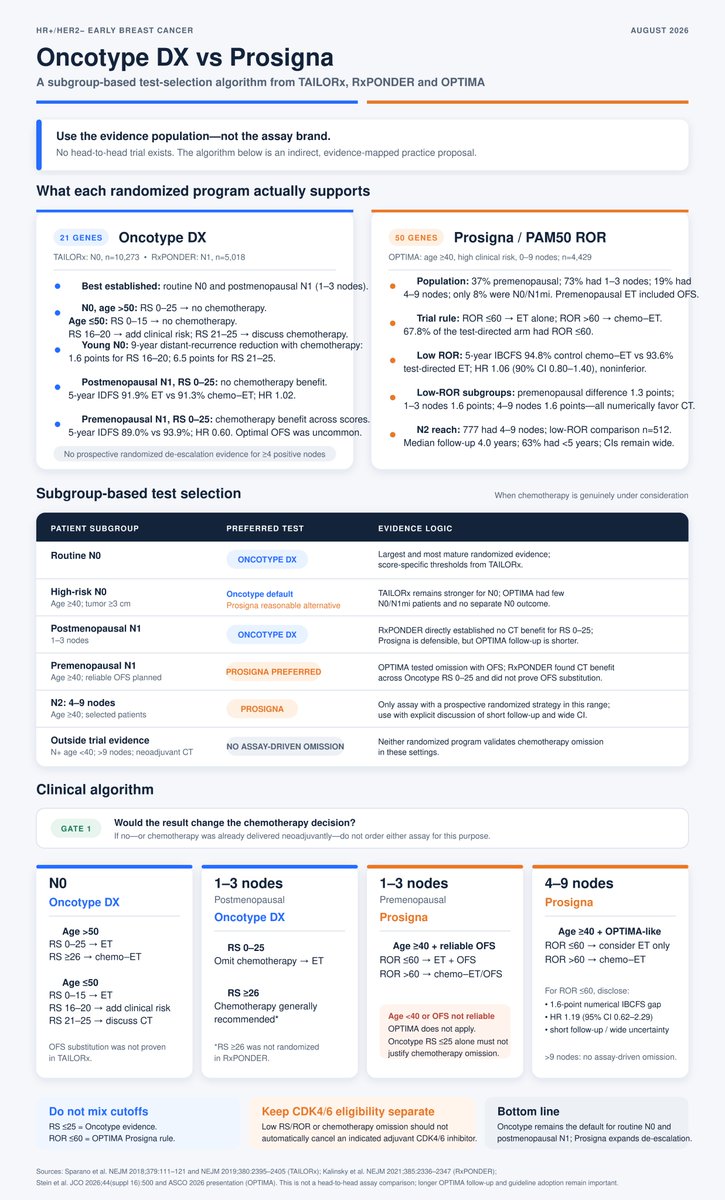
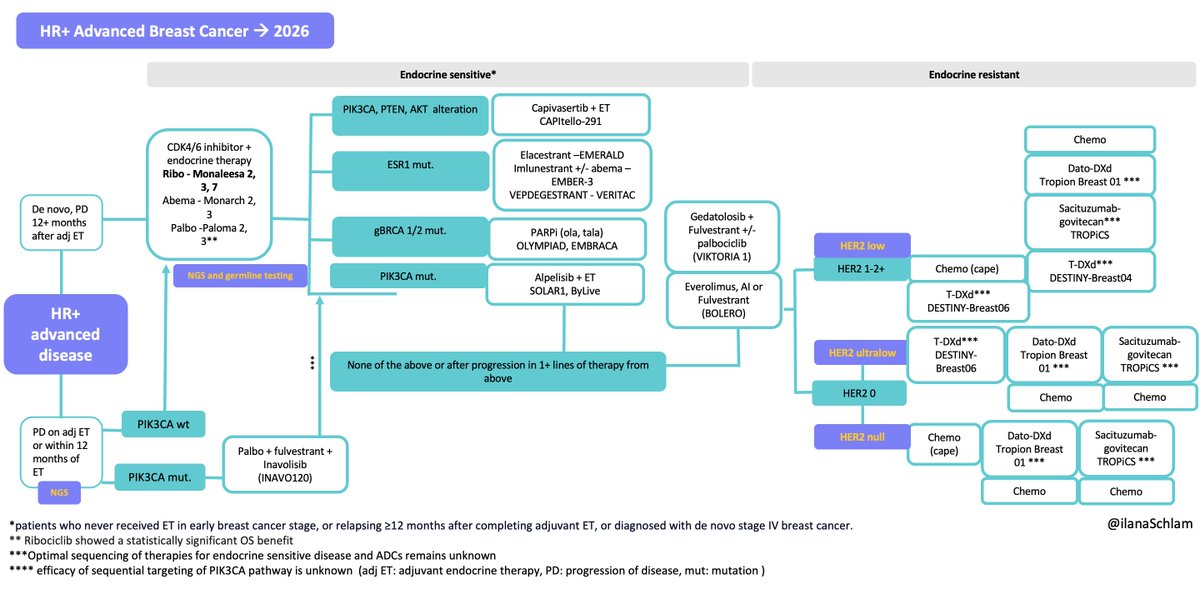
With 6 FDA approvals in breast cancer already in 2026, it was time to update the breast cancer treatment algorithms. It's a great problem to have when innovation is moving so fast that it's hard to keep up #bcsm@OncoAlert@DFCI_BreastOnc
As oncologists, we often think we know who needs an upfront dose reduction of chemo vs not.
This study shows that structured geriatric assessment could help us get better at IDing who would benefit (probably more people!) & keeping pts out of hospital.
https://t.co/tcAME2rInm
Ossoff: "Here's what's going to happen tonight: the world's most famous sore loser will deliver a prime-time presidential sour grapes address to pursue his 6-year-old grievances about the 2020 election, while his war in the Middle East spirals out of control and the cost of living continues to rise for Americans across the country. I expect the president to reheat debunked conspiracy theories about the repeatedly litigated and audited and confirmed 2020 presidential election in Georgia, an election that Donald Trump lost. And let me be very clear about this: if the President declares Georgia's election illegitimate, or if the President declares Georgia's sitting United States Senators illegitimate, he is declaring Georgia voters illegitimate. It's Donald Trump who tried to defraud Georgia voters in that election, Donald Trump who tried to commit election fraud when he called Georgia's Secretary of State Brad Raffensperger -- and it was caught on tape, and you should play the tape to your viewers today -- and badgered and bullied Georgia's top election official to 'find him' the votes that he needed to win in a state where he had lost."
Donald Trump’s spiral continues. The failed president, pocketing billions as he drives up prices, is afraid to lose the midterms. So he will reheat debunked election conspiracy theories and tell bizarre new lies to deny his 2020 defeat and attack voting rights. This is a disaster for Trump puppet Mike Collins. Already mired in scandal, Mike will now have to double down on conspiracy theories toxic in the General Election. From the start, Trump’s obsession with Georgia elections revealed his fury that Black voters were instrumental to his defeat. I'm asking concerned citizens nationwide to join me and support our voter protection efforts in Georgia.
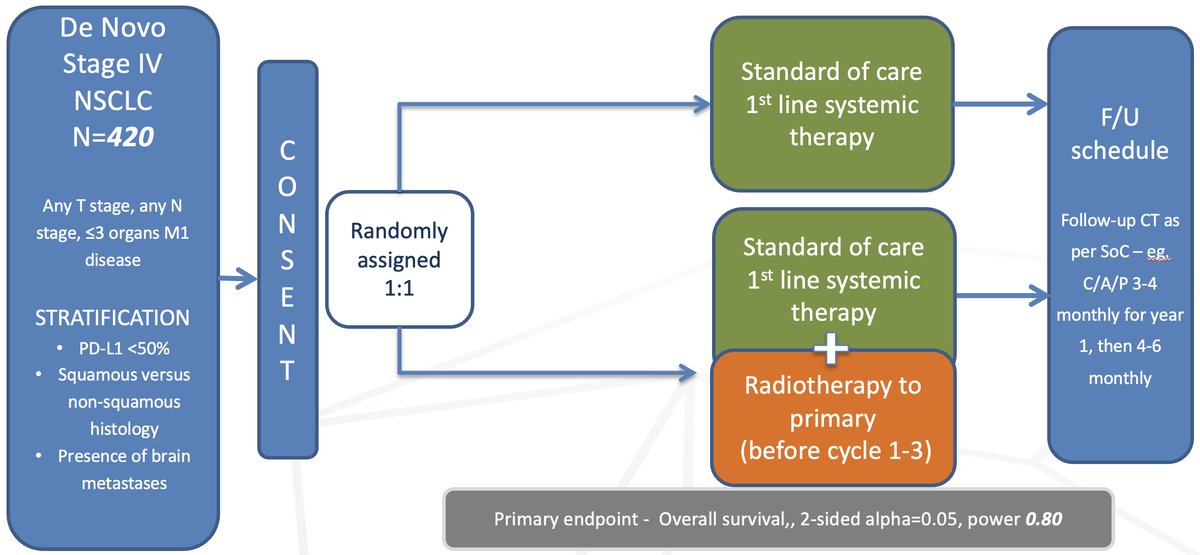
The primary is the source of first progression in >50% of cases of #lungcancer patients, and TRACERx showed us that in 32% of NSCLC the primary polyclonally seeds metastases. In our @IASLC consensus, now in JTO https://t.co/9LzfFi4ICc, makes the case for eradicating it with #radiotherapy. The EGFRm phase III data are the most compelling OS 34.4 vs 26.2 months with TKI+RT. There are still unresolved questions in the non-AGA population. We are opening the phase III PRIME-LUNG trial https://t.co/4J4JsgWu31 @TROGfightcancer@TOGAANZ to answer this question! #radonc
@Dr_RShatsky@Papa_Heme@Dr_R_Kurzrock Agreed and exponentially compounding. For our practice, I think a problem is we don’t limit our panel size and the APP structure enables that. It allows for on treatment patients to be seen by APPs by both the inbasket and tx decision burden is still on the physician