Read Tom Pickering, Gabrielle Rifkind, and Paul Ingram on how the United States and Iran can build a deal that provides “a ‘golden bridge’—or an arrangement that allows adversaries to retreat from maximalist positions while still claiming victory.”
https://t.co/9bW5vX77o1
@AntoineBondaz Sur les 16 cas énumérés dans Vers la Guerre, 14 sont résolus à l’issue des conflits ouverts toutefois les deux cas n’ont pas connu une analyse directe de leurs trajectoires singulières. Pourquoi le Royaumi uni et les US ont connu un transfert soft de la puissance au 20emesiècle?
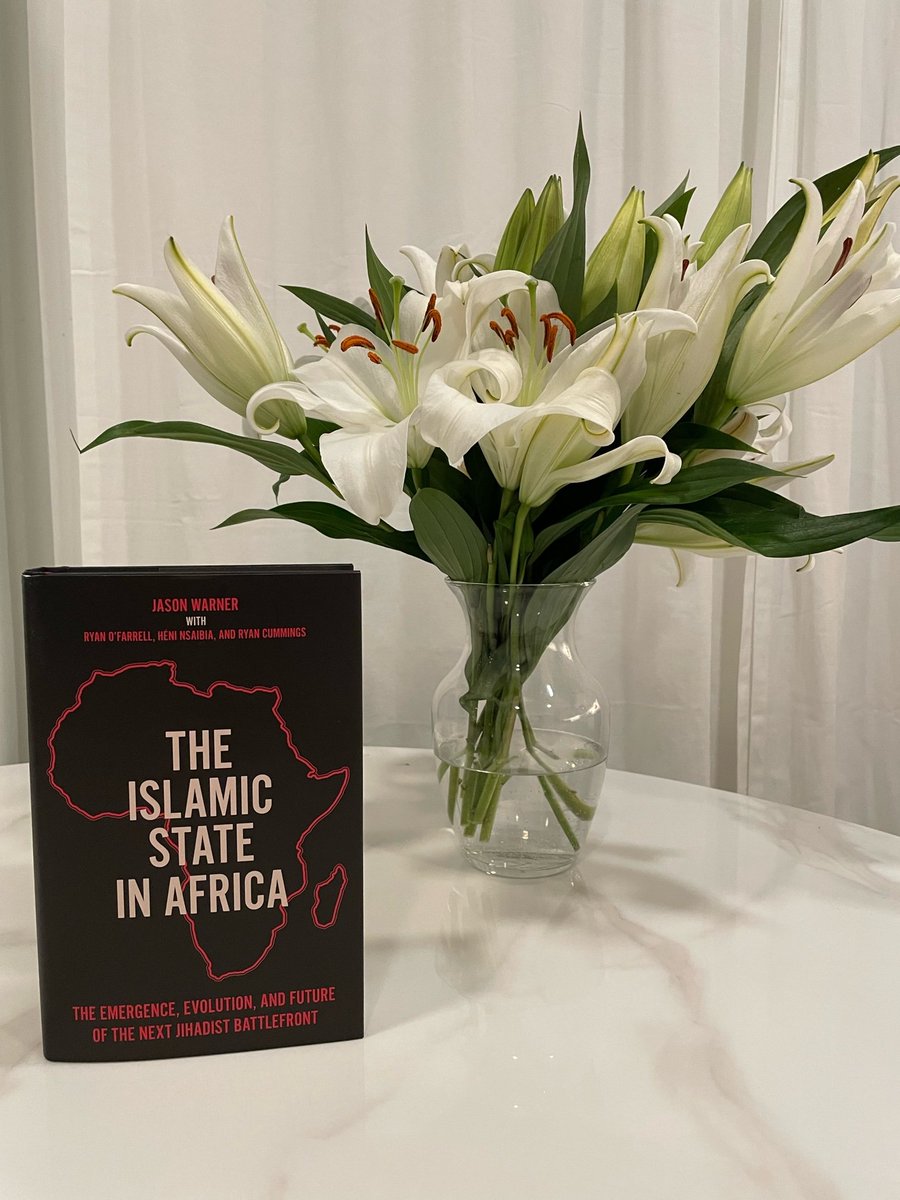
Perhaps appropriate that while on paternity leave, I can share news of a birth of a different type:
Thrilled that today is the official release of "The Islamic State in Africa," which I've authored w help from the brilliant team of @ryanmofarrell, @MENASTREAM, @Pol_Sec_Analyst.
🇺🇸🇮🇷🇵🇰Vice President Vance's Pakistan trip has been put on hold as Iran's leadership remained divided over whether to participate in a new round of peace talks. My story on @axios
https://t.co/w2w7TVS0bu
Why Trump’s Approach to Iran Was Always Doomed to Fall Short?
No matter how one looks at it, the writing was on the wall.
The Iran issue represents precisely the kind of challenge President Donald Trump has historically struggled with: it requires patience, offers no immediate visuals of victory, and involves an adversary that is both resilient and unwilling to bend under pressure.
This raises a fundamental question: why pursue confrontation in the first place using a strategy that doesn't suited to the nature of the problem?
From the outset, there has been a deep mismatch between the Trump administration’s negotiation style and Iran’s strategic culture. Trump’s approach, rooted in pressure, public signaling, and rapid deal-making, assumes that adversaries will respond predictably to escalating costs. Iran does not operate that way.
For Tehran, time is not a constraint but it is a tool. Strategic patience is built into its decision-making. Threats, far from compelling compromise, often reinforce resistance. The familiar “carrot and stick” framework has limited influence when it collides with rigid ideological red lines and a regime that views endurance as a form of victory.
Just as importantly, Iran does not measure success in the same way Washington often does. There is no need for a dramatic breakthrough or a symbolic signing ceremony. From Tehran’s perspective, simply holding firm in the face of American pressure can itself be framed domestically and regionally as a win.
As pressure fails to produce results, the instinct in Washington is often to escalate rhetoric and tighten demands. Yet in Tehran, such escalation is interpreted not as strength, but as evidence that its strategy is working l, meaning that the United States is growing impatient, even off balance.
If there is a viable path forward, it begins with a shift in assumptions. Iran is not a conventional negotiating partner, and it will not respond to unconventional pressure in conventional ways. Effective diplomacy in this context is less about public brinkmanship and more about quiet, sustained engagement.
It also requires an understanding that any durable agreement must allow Iran to perceive itself as having achieved something of value. Negotiations framed as “take it or leave it” are unlikely to succeed when the other side is prepared to leave it indefinitely.
There is, in fact, a shared interest in avoiding escalation and reaching some form of understanding. But as long as the process is driven by mismatched expectations, conflicting timelines, and fundamentally different definitions of success, that interest alone will not be enough.
Without a recalibration of approach, the gap between Washington and Tehran will remain not just wide, but structurally difficult to close
#IranWar
So far, President Trump has achieved few of his desired results in Iran, and the geopolitical costs are mounting.
Has any US military action ever racked up so many costs for so few gains?
My take:
MIKE JOHNSON: There have been tragedies in Minneapolis brought about in large measure by the governor and local officials in some cases inciting violence
WELKER: They're calling for peaceful protest
JOHNSON: They're also saying to resist
WELKER: But these state and local officials didn't pull the triggers that left these two Americans dead
@GerardAraud Je vous accorde le bénéfice du doute par rapport aux impressions de l’élite démocrate. Je pense qu’en pareilles circonstances les impressions de l’électeur démocrate est plus utile que la catégorie à laquelle vous faites allusion lors de ce rendez vous.
The international order, which has generally kept the peace for more than seven decades, is fast disintegrating. Who will reverse the almost irresistible momentum to global war?