New paper in Physiologia Plantarum
We addressed whether acidification of the leaf microenvironment can be considered a carbon concentrating mechanism in seagrass (Z. marina). We show relative adaxial surface acidification (or delayed basification) leading to enhanced CO2 formation, which enable enhanced photosynthetic performance in seagrass.
Link: https://t.co/DJ7Nnb9N8u
#seagrass #photosynthesis #carbon
@roskildeuni@MicroSensing
Great to see this nice collaborative piece come out with recommendations for standardizing studies of #deoxygenation effects and #hypoxia responses of #corals
and listing current knowledge gaps
Check out our new perspective on methodological standardization in coral deoxygenation experiments. We highlight the predominant gaps preventing cross study comparison and offer recommendations to move toward collective knowledge building.
https://t.co/AEOzx9f1i8
Our joint review with @MicroSensing Lab on #FLIM in @ACSPublications is now highlighted on a cover of the Volume 6, Issue 4 of ACS Measurement Science Au! #MyACSCover https://t.co/YSUN7pzZzL
Thank you @QuantaMagazine & Marlowe Starling for writing such an insightful story about our recent articles in @ScienceAdvances & @PRX_Life, which highlight the combined role of #cilia and O2 in corals' ability to withstand rising temperatures
@MooreFound
https://t.co/Z71lLMdELc
New paper in Marine Chemistry
"Multi-parameter imaging with planar optodes and 2D DET hydrogels: Application in the rhizosphere of seagrass (Z. marina)"
We show novel methodological development of combined planar optode and 2D DET hydrogel imaging, which enables simultaneous measurements of, for example, pH, dissolved Fe, O2, NO2−, NO3− , etc in marine sediments. Combinations were deployed in seagrass rhizospheres and enabled detailed investigations of biogeochemical processes and dynamics in the adjacent sediment.
Link: https://t.co/3uwqXBbba5
#seagrass
@roskildeuni
Corals may face more than bleaching during marine heatwaves.
New research shows that microscopic cilia that help corals transport oxygen can collapse under extreme heat, creating severe oxygen stress and accelerating mortality.
A new physiological tipping point for coral survival in a warming ocean.
🔗 https://t.co/fVKbQCoipJ
#CoralReefs #OceanScience #ClimateChange @pacherres_co@MicroSensing
Et internationalt forskerhold med danske forskere i spidsen har fundet en ny og ekstra forklaring på, hvorfor koraller lider i varmere havvand som følge af de menneskeskabte klimaforandringer https://t.co/Zr5LLsc5f7
Our findings reveal a hidden tipping point in coral survival: corals may begin to suffocate internally before or alongside bleaching
These process occur in a water layer <1mm tick, easy to miss in conventional measurements but potentially critical for understanding coral health
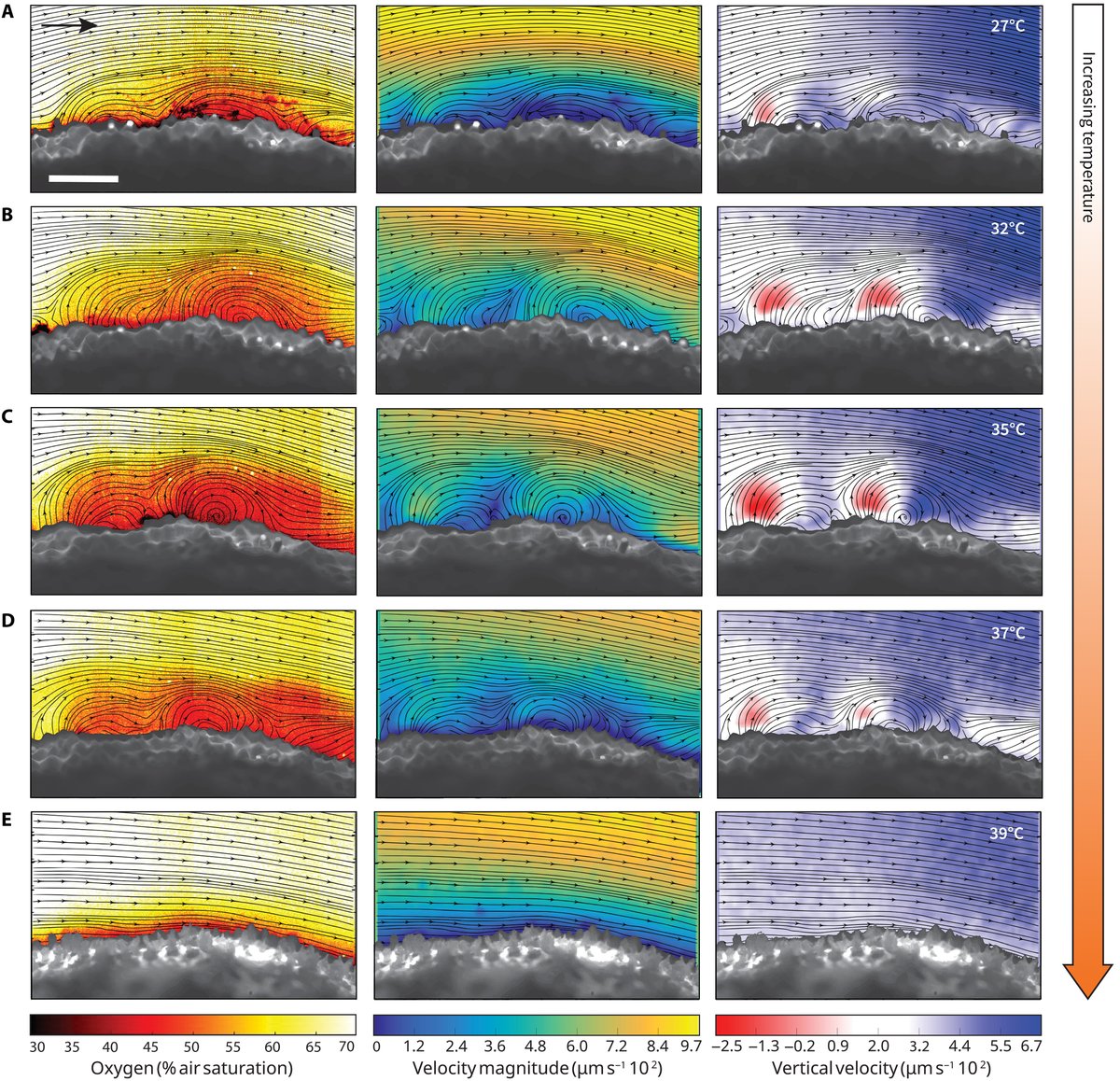
At higher temperatures, cilia coordination stops. Microscopic flows collapse, oxygen transport slows, and oxygen levels inside the coral drop to critical levels
Using high-speed microscopy, oxygen imaging and flow measurements we directly visualize flow and oxygen around corals
But the benefit doesn’t last. As temperatures rise further, these flows begin recirculating oxygen poor water near the coral surface, while coral oxygen demand keeps increasing.
Under moderate warming, corals initially cope as their cilia starts to beat faster, essentially creating stronger swirls and temporarily improving oxygen transport.
This mechanism is particularly important at night when both the coral and symbiotic algae consume oxygen.
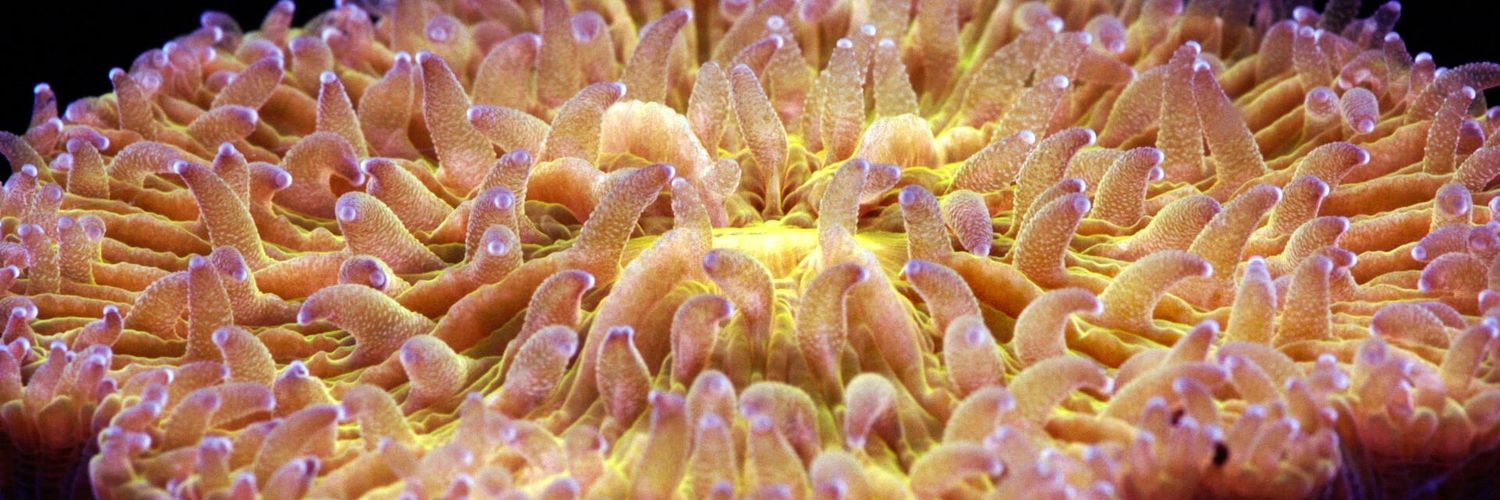
Corals 🪸 are covered with tiny hair-like structures called cilia. Their synchronized beating creates microscopic swirling flows that act like a natural ventilation system, helping transport oxygen around the coral tissue.
Coral reefs are increasingly threaten by marine heatwaves, but what pushes corals past their breaking point?
New in @ScienceAdvances: we found that corals can lose the microscopic system that helps move oxygen around their tissues during heat stress 🪸
https://t.co/3NUI9D3L8E