We use mathematics & microscopy to study dynamic processes in biology. Dr Douglas Brumley: Senior Lecturer @unimelb, Postdocs @MIT @ETH_en, PhD @Cambridge_Uni.
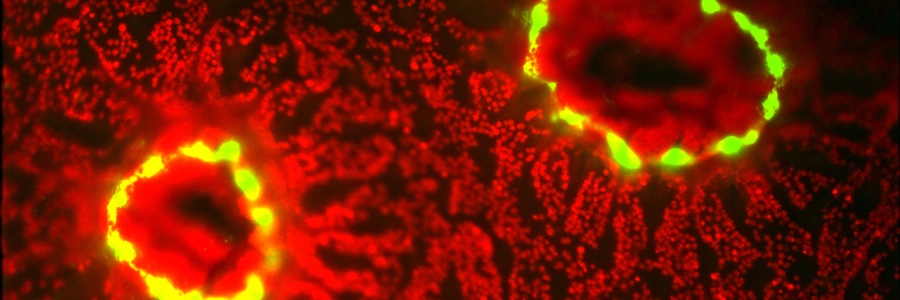
New research in @PRX_Life shows how corals use their beating cilia to create tiny 3D vortices that help move oxygen, nutrients, and waste across their surfaces. ��
Read the paper: https://t.co/7Um1vE8fK8
How do corals use microscopic beating cilia to generate complex 3D fluid flows?
Honored to write an @APSphysics@PhysicsMagazine Viewpoint on beautiful new @PRX_Life work by Selvan, Brumley, and colleagues 😀
Viewpoint: https://t.co/N8LffmSLiJ
Paper: https://t.co/lBkYNATjWX
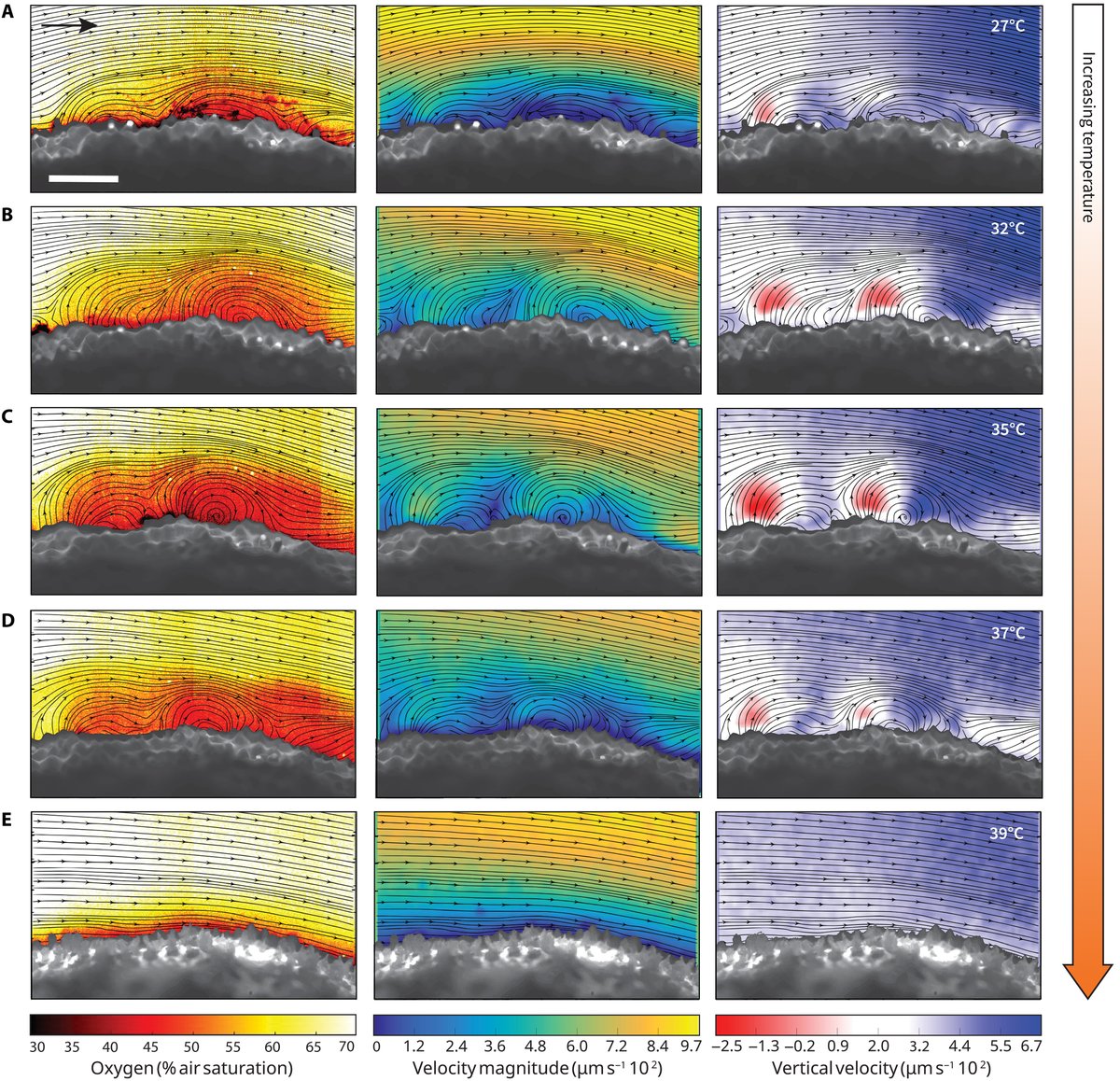
Coral reefs are increasingly threaten by marine heatwaves, but what pushes corals past their breaking point?
New in @ScienceAdvances: we found that corals can lose the microscopic system that helps move oxygen around their tissues during heat stress 🪸
https://t.co/3NUI9D3L8E
Congratulations to Vicky and Amelia for this review article, published in @TrendsPlantSci. This paper investigates dynamic interactions between microbes and root walls in plants.
https://t.co/eLYnBPfplV
Congratulations to PhD student Olle Pontén, whose talk on three-dimensional movement of dinoflagellates, won First Prize Student Talk at the 39th Annual Meeting of the Australasian Society for Phycology and Aquatic Botany. @SciMelb @UniMelb@ASPABites
Congratulations to Allison Mertin, who has successfully completed the PhD degree! Her thesis, co-supervised with Prof. Linda Blackall and Marlien Van Der Merwe, investigates the hidden world of microbes living in native Australian seeds. @SciMelb @UniMelb@BotanicSydney
The viscous fingers formed during injection of low-viscosity fluid tend to retrace their original paths during withdrawal, especially where low-viscosity concentration peaks. Simulations show that the initial fingering regime governs the reversal dynamics.
https://t.co/5LnUGm1mOC
Congratulations to Tristan, whose work is published in @PhysRevFluids today. This paper examines the dynamics of miscible viscous fingers under repeated injection and withdrawal cycles. @SciMelb @UniMelb
https://t.co/FgM51SR6fu
Congratulations to Antony Selvan for successfully completing all requirements of the PhD. His thesis, jointly awarded with @MCNDLab (co-supervised with Peter and Draga), developed new mathematical models for ciliary flows. @UniMelb @SciMelb @MelbMathBio
Congratulations to Nitay, whose work on viscoplastic flows has just been published in @JFluidMech. This paper, in collaboration with Ed Hinton, examines free-surface flows of viscoplastic material, both theoretically and experimentally @SciMelb @UniMelb
https://t.co/cPi405BtRH
Congratulations to Rania Ismail for successfully completing all requirements of the PhD. Rania’s thesis, co-supervised with Prof. Linda Blackall, studied cyanobacteria in Australian freshwater streams and reservoirs. @SciMelb @UniMelb
I am thrilled to receive a Future Fellowship from @arc_gov_au. The project, "Understanding the role of microscale fluid dynamics in biology", aims to develop novel mathematical models and experimental tools for investigating microscopic fluid flows in biology. @SciMelb @UniMelb
Congratulations to Allison for the first paper from her PhD, published in Seeds this week. This work aimed to optimise methodologies for investigating seed microbiomes across diverse plant species. @SciMelb
https://t.co/ZL75JBlbDx
Congratulations to Olle Pontén for winning first prize, and Xinyi Yang and Matthew Walker for honourable mentions in the VicANZIAM meeting. @ANZIAMnews @SciMelb
PhD position with scholarship available! If you’re interested to work on mathematical models of biological adaptation in fluctuating environments with Dr Alex Browning (@a13xbrowning) and myself, please apply below. @MelbMathBio@UniMelb
https://t.co/gvWzeEDBtZ