Out today in @CellCellPress! We introduce “mesoscale modules”—recurring multicellular functional units that provide a bridge between the behaviours of individual cells and the emergent properties of tissues.
https://t.co/ZxcP09M1ep
@ragoninstitute@MITBiology
אנחנו נמצאים בנקודת זמן קריטית לשיקום מכון ויצמן למדע, וזקוקים לתמיכה שלך.
בעזרתך נוכל לבנות מחדש מעבדות, לבסס מחדש מחקרים פורצי דרך ולהוביל את המדע לגבהים חדשים. התרומה שלך היום תניע את התגליות של מחר. עכשיו זה הזמן. לתמיכה >>אנחנו נמצאים בנקודת זמן קריטית לשיקום מכון ויצמן למדע, וזקוקים לתמיכה שלך.
בעזרתך נוכל לבנות מחדש מעבדות, לבסס מחדש מחקרים פורצי דרך ולהוביל את המדע לגבהים חדשים. התרומה שלך היום תניע את התגליות של מחר. עכשיו זה הזמן. לתמיכה >>אנחנו נמצאים בנקודת זמן קריטית לשיקום מכון ויצמן למדע, וזקוקים לתמיכה שלך.
בעזרתך נוכל לבנות מחדש מעבדות, לבסס מחדש מחקרים פורצי דרך ולהוביל את המדע לגבהים חדשים. התרומה שלך היום תניע את התגליות של מחר. עכשיו זה הזמן. לתמיכה >>אנחנו נמצאים בנקודת זמן קריטית לשיקום מכון ויצמן למדע, וזקוקים לתמיכה שלך.
בעזרתך נוכל לבנות מחדש מעבדות, לבסס מחדש מחקרים פורצי דרך ולהוביל את המדע לגבהים חדשים. התרומה שלך היום תניע את התגליות של מחר. עכשיו זה הזמן. לתמיכה >>
A prosperous future is intertwined with science and innovation. And right now, our science needs rebuilding. Help us restore the heart of discovery. Support the Weizmann Institute of Science. DONATE NOW >>
Congratulations to Tomer Milo, PhD, a postdoctoral fellow in the Wong Lab at the Ragon Institute, who was recently awarded a prestigious Jane Coffin Childs Fellowship!
https://t.co/Ch5PMNVwpO
#JCCFellow#RagonInstitute#Immunology#JaneCoffinChildsFellowship
Out today in @ScienceMagazine! We show that rising self-antigen levels during infection give self-reactive T cells an opportunity for enhanced TCR signalling. Regulatory T cells of matched specificity counteract this, thereby preventing autoimmunity. https://t.co/qtPMsBG4A1
It’s finally here! My PhD work, five years in the making, is now published in @CellSystems🚨
Cold and hot fibrosis define clinically distinct cardiac pathologies. 🧵
https://t.co/2jAfKNBbKg
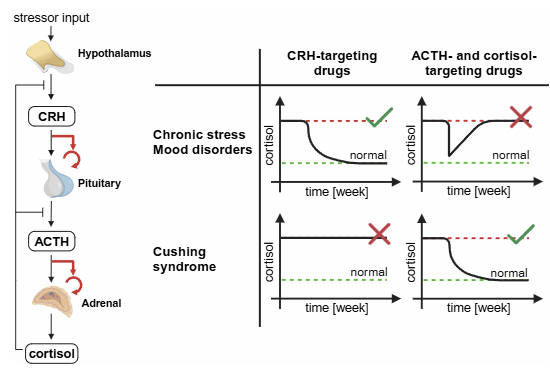
Happy to see this out! Hoping our predictions prove correct and help guide new treatment directions for mood disorders. Thanks @MolSystBiol for highlighting our study!
@UriAlonWeizmann lab reveals a hormone circuit that explains why most HPA drugs fail for mood disorders and predicts the few that work ➡️ https://t.co/Hl4PIDbNU6
We think the ability of endocrine glands to adjust their mass might explain why several promising drugs that target cortisol, the stress hormone, fail in clinical trials for mood disorders. We propose a new target - CRH. Hormonal feedback circuits can be tricky. @UriAlonWeizmann
Lightning-fast adaptive immune receptor similarity search by symmetric deletion lookup
https://t.co/3uqZF9AyMF
In work led by @heartnetkung we show how an algorithmic paradigm from spell checking can accelerate TCR clustering by orders of magnitude
Our theory paper on plasma cells is out. Protection following vaccination or infection depends to a large extent on the survival of plasma cells, but what determines their lifespan in the body?
https://t.co/Bej53SaDjA
Here we suggest that mood fluctuations in bipolar disorder is driven by cortisol slow (months-scale) dynamics.
It was a long journey of sharpening our premise and I am glad it is finally out :)
A new mechanism for bipolar disorder.
We measured hair cortisol over 12 months, and used large scale data on moods and our math model of the stress HPA axis, to propose how mood swings are generated.
#SystemsMedicine#ComputationalPsychiatry
https://t.co/P8dDJQ0nfU
E. coli engineered to become stem cells that differentiate! We prevent take-over by mutant stem cells that only self renew - by linking differentiation to an essential function. A new way to engineer stable microbial communities.
https://t.co/GW9XXWNYVg
Started my new position as a senior lecturer (Assistant Professor) at the Alexander Silberman Institute of Life Sciences and the Faculty of Medicine at @HebrewU.
We develop computational frameworks to study fundamental principles of tissues in both health and disease contexts.
Why do we get certain diseases whereas others do not exist?
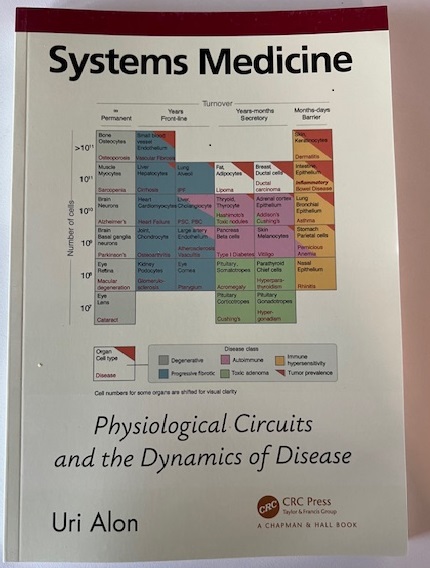
This new book builds a foundation for systems medicine. Starting from basic laws, it derives why hormone, immune and aging circuits are built the way the are, culminating in a periodic table of diseases.