AEPAC Statement on Reported Killings of Civilians and Attacks on Christian Communities in Ethiopia
Philadelphia, PA — The American Ethiopian Public Affairs Committee (AEPAC) is deeply alarmed by reports of renewed killings of civilians and attacks on Christian communities in Wollega, western Ethiopia , including particularly grave allegations emerging from East Wollega.
For more than 120 years, the United States and Ethiopia have maintained an important bilateral relationship . AEPAC has consistently advocated for strengthening and expanding that partnership. Its long-term durability, however, depends not only on shared strategic interests, but also on stability, accountable governance, respect for human rights and religious freedom, and the protection of civilian life.
Recent reports describe serious violence in East Wollega , including in and around Gida Ayana, Mender 3, Mender 22, Andode Dicho, Shashober, Fendika, Anger Gutin, and Limu-Gelila . Civilians, including members of the Ethiopian Orthodox Tewahedo Church, are reported to have been killed, while churches, homes, and other civilian property have reportedly been attacked or destroyed.
Among the gravest allegations are reports concerning the Gind Ansa St. Michael Monastery in Mender 3, Gida Ayana Woreda , where sources on the ground report that more than 250 ethnic Amhara civilians were killed after seeking refuge at the monastery. The precise number of victims has not yet been independently established. Given the scale and seriousness of these allegations, an immediate, credible, transparent, and independent investigation is essential to establish the facts, identify the victims, determine responsibility, and preserve evidence.
Equally disturbing are reports concerning the killing of Qomos Aba Tadesse , an Ethiopian Orthodox church administrator and member of the clergy in the Gida Ayana area. According to available reports, he and other clergy members were detained at Andode Selassie Church before he was killed. Allegations involving the detention and killing of religious leaders require urgent investigation and accountability.
The violence has also reportedly extended to places of worship. Preliminary human-rights reporting has identified the burning of Kidist Selassie, Lemi-Teklehaimanot, Kidus Giyorgis, and Abuhe Churches in East Wollega. Churches, monasteries, clergy, and worshippers must never become targets of ethnic, religious, or political violence. Freedom of religion and the protection of places of worship are fundamental rights that must be defended.
Reports have further identified Geda/Gadaa Commando forces and other armed groups as allegedly involved in attacks against civilians. These allegations must be independently investigated and responsibility determined on the basis of credible evidence. No government authority, regional security force, militia, or armed organization should be above the law. No Ethiopian should be targeted because of ethnicity, religion, political identity, or place of residence.
Civilian Protection Is a Fundamental Responsibility of Government
The repeated killing, displacement, and terrorization of civilians cannot be accepted as an inevitable consequence of Ethiopia's political conflicts.
The protection of civilians is among the most fundamental responsibilities of government. Ethiopian federal and regional authorities have an obligation to prevent foreseeable attacks, protect vulnerable communities, provide humanitarian access, and ensure that allegations of serious abuses are investigated impartially. Where security institutions fail to protect civilians—or where members of those institutions are credibly accused of participating in abuses—there must be investigation, transparency, and accountability.
Those responsible for atrocities must be held accountable through lawful and credible processes, *regardless of their political affiliation, ethnicity, government position, or organizational allegiance* .
The United States Should Make Civilian Protection and Accountability a Priority
The United States has a significant strategic interest in a peaceful, stable, democratic, and accountable Ethiopia . Lasting stability cannot be achieved while civilians remain vulnerable to recurring ethnic and religious violence.
The U.S. Administration and Congress should use appropriate diplomatic and policy tools to press for civilian protection, independent investigation of reported atrocities, accountability for serious human-rights abuses, protection of religious freedom, humanitarian access, and a credible political process capable of addressing the underlying causes of Ethiopia's continuing conflicts.
This is also why AEPAC has supported H.Res. 937 and broader congressional efforts intended to strengthen the tools available to the United States to advance peace, accountability, civilian protection, and long-term stability in Ethiopia.
A Stronger U.S.–Ethiopia Partnership Must Be Built on a Stronger Foundation
The future of U.S.–Ethiopia relations should not be measured solely by cooperation between governments or short-term geopolitical interests. The strongest and most sustainable relationship will be one built between the American and Ethiopian peoples , supported by institutions that respect human dignity and protect the rights of every citizen.
A strengthened partnership must therefore rest on a durable foundation of democracy, accountable governance, human rights, religious freedom, equality before the law, civilian protection, and respect for human dignity.
The people of Ethiopia deserve peace. They deserve security. They deserve the freedom to worship without fear. And they deserve institutions capable of protecting them and delivering justice when serious crimes are committed.
The violence must end. Civilians and religious communities must be protected. The facts must be independently established, and those responsible for atrocities must be held accountable.
👇🏻🖇️
https://t.co/ABG1epsY5V
@WhiteHouse@StateDept@USEmbassyAddis@UAEthio@UNOSAPG@VP@realDonaldTrump@TheIRD, @StateDRL, @AsstSecStateAF, @richghazal,
@markdtooley, @OrthodoxyNews,
@USEmbassyAddis@indefchristians,
@RepJohnJames,
@housegop, @Repsarajacobs,
@YoungKimCA, @RepJimBaird, @CongressmanKean,
@RepMillsPress, @RepGaramendi,
@jakejsullivan, @IMFNews, @StateDept, @JusticeOfficeUS,
@WorldBank, @WorldBankAfrica,
@StateIRF, @USCIRF, @IrfSecretariat, @Sean_ADFIntl,
@michaelgwaltz,@RepMarkWalker,@RepRileyMoore,@TomColeOk04,@HouseAppropsGOP,@LaurenBinDC,@SecRubio
🚨 Over 250 Amhara civilians massacred at Gind Ansa St. Michael Monastery as ENDF, Oromia Region Gada Commando, Jaal Mose-led OLA and Qeerroo forces carry out killings across Gida Ayana
More than 250 Amhara civilians who had sought refuge at Gind Ansa St. Michael Monastery in Mender 3, Gida Ayana Woreda, East Wollega Zone, Oromia Region, were massacred amid an ongoing wave of attacks against Amhara communities in the area. Priests, monks, elderly people, mothers, pregnant women and children were among those killed.
The monastery massacre forms part of a wider wave of violence affecting Andode Dicho Kebele, Shashober, Fendika, Anger Gutin, Mender 3, Mender 4 and Mender 22 since August 18, 2026. Sources on the ground and survivor accounts identify Ethiopian National Defense Force (ENDF) soldiers, Oromia Region Gada Commando forces, the Abiy regime-backed Oromo Liberation Army (OLA) led by Jaal Mose, and armed Qeerroo (Oromo youth) groups among the forces involved in the violence.
Videos emerging from the affected area reportedly show Jaal Mose-led OLA fighters operating alongside Gada Commando forces during a raid on an Ethiopian Orthodox church.
Some of the most severe violence occurred at Debre Anbessa Gind Ansa St. Michael, where large numbers of civilians had taken refuge after fleeing attacks on surrounding communities. ENDF soldiers and Gada Commando forces surrounded the monastery compound and opened fire on civilians attempting to escape, using Bren machine guns, sniper rifles and Kalashnikov rifles.
Armed Qeerroo (Oromo youth) members operating under the cover of the security forces entered the monastery compound and attacked civilians with bladed weapons. Among those killed were pregnant women and infants as young as two months old.
Additional killings occurred throughout Mender 3, where more than 52 civilians were reported killed in areas affected by the violence.
A separate massacre occurred in Mender 22, several kilometers from Mender 3, where more than 44 Amhara civilians were killed. Among the victims were 85-year-old Aba Ayele Arega, a respected community elder known for mediating disputes and consoling grieving families, and his wife, Emahoy Eskedar Gelaw. New mothers and infants were also among those killed.
Some victims in Mender 22 were killed with sickles and machetes. In particularly disturbing cases, the weapons used in the killings were found still lodged in victims’ bodies when their remains were recovered for burial.
The continuing presence of ENDF soldiers and other armed forces has prevented residents from safely recovering and burying many of those killed. Bodies remain scattered throughout affected areas, with some reportedly being consumed by vultures and wild animals and others swept away by floodwaters.
The final death toll could rise further. Several civilians attempting to flee Mender 3 and Mender 22 were shot by ENDF soldiers and escaped while bleeding, leaving their whereabouts and condition unknown.
Across Andode Dicho, Shashober, Fendika, Anger Gutin, Mender 3, Mender 4 and Mender 22, the attacks have caused extensive civilian casualties, mass displacement and widespread destruction. Entire communities have been devastated, while homes and civilian property have been destroyed and livestock looted and taken away.
Thousands of residents have fled their communities amid continuing insecurity and fear of further attacks, leaving surviving residents unable to safely retrieve victims, bury the dead or return to their homes.
🚨 جريمة ضد الإنسانية تُرتكب في إثيوبيا بتحريض من آبي أحمد 🚨
💥 أكثر من 400 قتيل من مدنيي الأمهرا، و300 منزل محترق، و15,000 نازح خلال أيام معدودة في منطقة (وليغا) بإقليم أوروميا، في سلسلة مجازر استهداف عرقية وممنهجة تتواصل منذ عقود.
🎯 الانتهاكات لم تتوقف عند تهجير العائلات الأبرياء، بل طالت المقدسات ورموز الدين، حيث تم تدمير وإحراق عشرات كنائس التوحيد الأرثوذكسية الإثيوبية ومقتل العديد من قساوستها.
🎯 تصفية القمص أبا تاديسي، داخل دير إندودي سيلاسي، عقب اقتحامه أثناء الصلاة، وتجريده من ردائه الديني وإهانته علنا قبل إعدامه.
🎯 مشاهد تفجع القلوب لطفلة جريحة ملقاة على جانب الطريق بجوار جثمان والدتها المقتولة.
🎯 المؤسف والمخزي أن هذه الاعتداءات تتم بمشاركة وإشراف مباشر من أجهزة الأمن الحكومية في إقليم أوروميا، وعلى رأسها قوات كوماندوز غيدا، حيث تحولت مؤسسات الدولة من حامٍ للمواطنين إلى أداة بطش وتصفية.
#إثيوبيا #Ethiopia
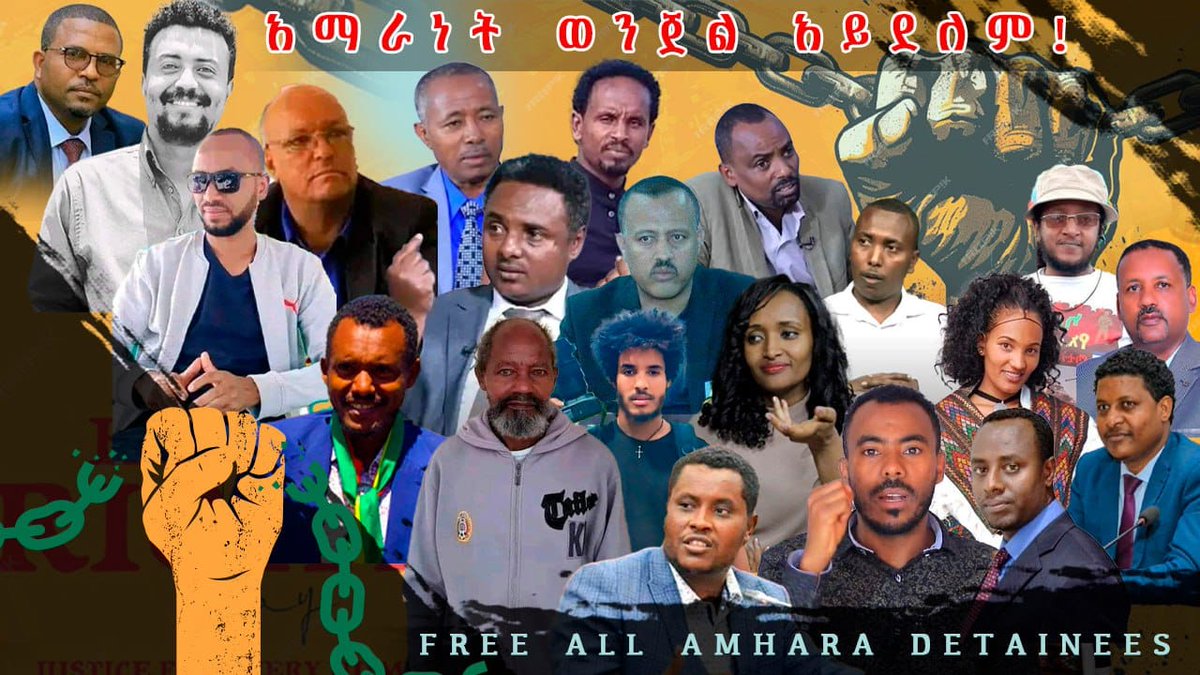
#Ethiopia 🇪🇹 CPJ calls on Ethiopian authorities to release five journalists who have spent three years in jail awaiting trial for reporting on unrest in Amhara region. Gobeze Sisay, Meskerem Abera, Genet Asmamaw, and Dawit Begashaw were detained in April 2023 and face terrorism charges, for which they could face the death penalty, if found guilty.
In February 2026, a federal court ruled that the prosecution had presented sufficient evidence for their joint case to proceed. But repeated adjournments have pushed the hearing to November 19, following the court’s August-to-October recess, their lawyers told CPJ.
Separately, Abay Zewdu was detained on August 10, 2023, a week after authorities declared a state of emergency in response to the Amhara insurgency. The court has yet to decide whether the prosecution has sufficient evidence for his case to proceed. Hearings are due to resume on October 16.
Prolonged pretrial detention and repeated judicial delays effectively amount to punishment without conviction, damaging both bodies and minds. Ethiopian authorities must not treat journalists as terrorists and must ensure prompt, fair, and transparent proceedings that respect their rights to due legal process.
Read more: https://t.co/ywWPHH4VAe
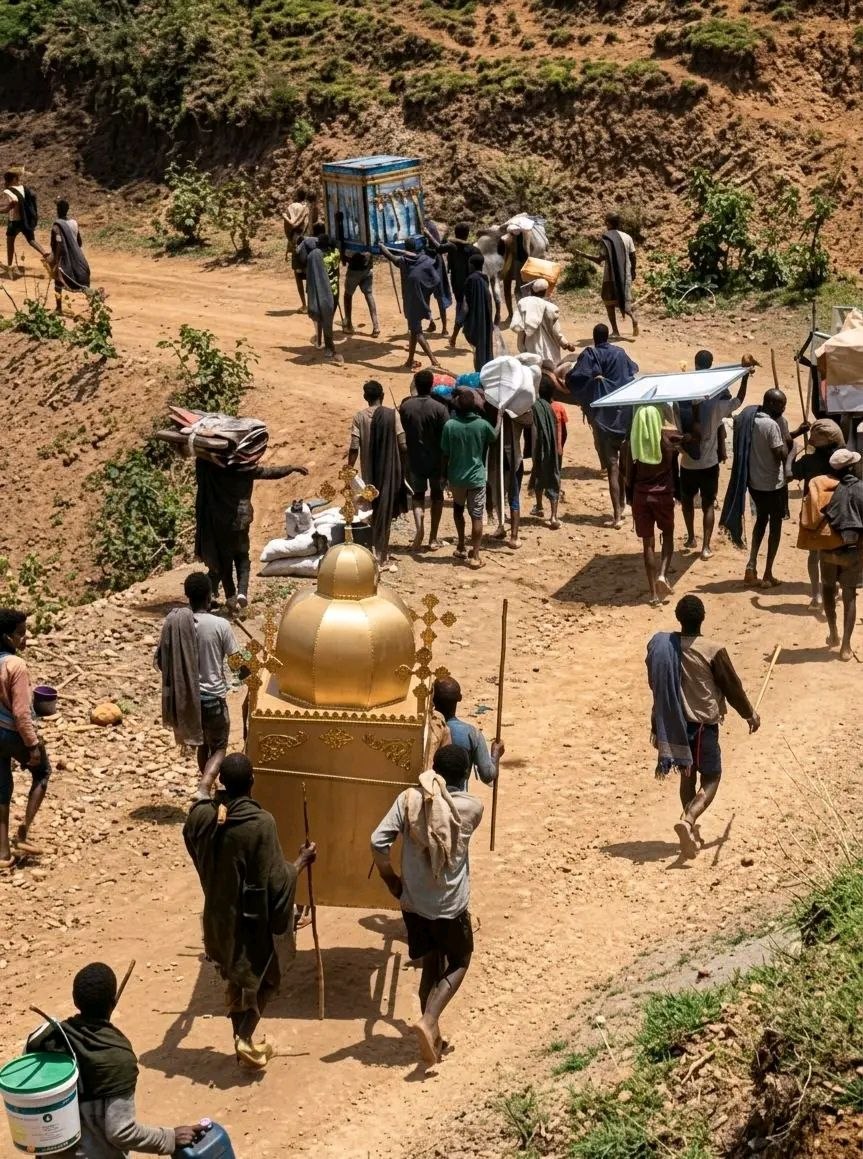
Chilling images from Arsi show Orthodox Christian Ethiopians fleeing with sacred church artifacts following the killing of more than 40 Christians and the destruction of a 101 year old St.Gabriel Church. Families devadtated, history canged to ruins.@UNHumanRights@_AfricanUnion
#Ethiopia: More than 40 Orthodox Christians have reportedly been massacred, and centuries-old churches have been burned by Oromo Islamist militants, who are alleged to be supported by the Abiy Ahmed regime, in the East Arsi Zone of Ethiopia’s Oromia Region since May 31, 2026.
120 innocent civilians were killed in a drone strike in Enarj Enawuga, Amhara region. Entire families, mothers, children wiped out. How many more must die before the world listens? This is not a conflict. This is genocide against #Amharas. Speak up.@hrw@StateDept@amnesty@ICRC
Abiy Ahmed's genocidal massacre against the Amhara people has reached a whole new level. In a horrifying drone strike on a health center in Zibist, Achefere, Gojjam, over 50 innocent Amharas were brutally massacred, including five mothers in labor, along with their family members, companions, and the nurse who was assisting them.
The genocidal massacre extended its cruelty to more than thirteen children playing near a school within a 300-meter radius, fathers gathered for social activities, laborers, people around a church, and individuals working in nearby farmlands.
Where is the journalism from major networks like @CNN, @AJEnglish, @ABC, @guardian, and others? Do the lives of innocent Amharas not matter? Are their stories not worthy of the world’s attention?
https://t.co/4wTkJXj8S0
Eighty-six-year-old Tadios Tantu, the oldest political prisoner held by the regime of dictator @AbiyAhmedAli, has been sentenced to six years and three months in prison. @amnesty@ECLJ_Official@UNHumanRights
Just in: The Ethiopian government continues its use of airstrikes in the Amhara region, targeting civilians with drones and helicopters. Recent attacks in Bahir Dar have resulted in casualties and damage to critical infrastructure.
https://t.co/cnexPy1T0M