🚨 I'm hiring PhD students to work @ EPFL to work on two distinct topics:
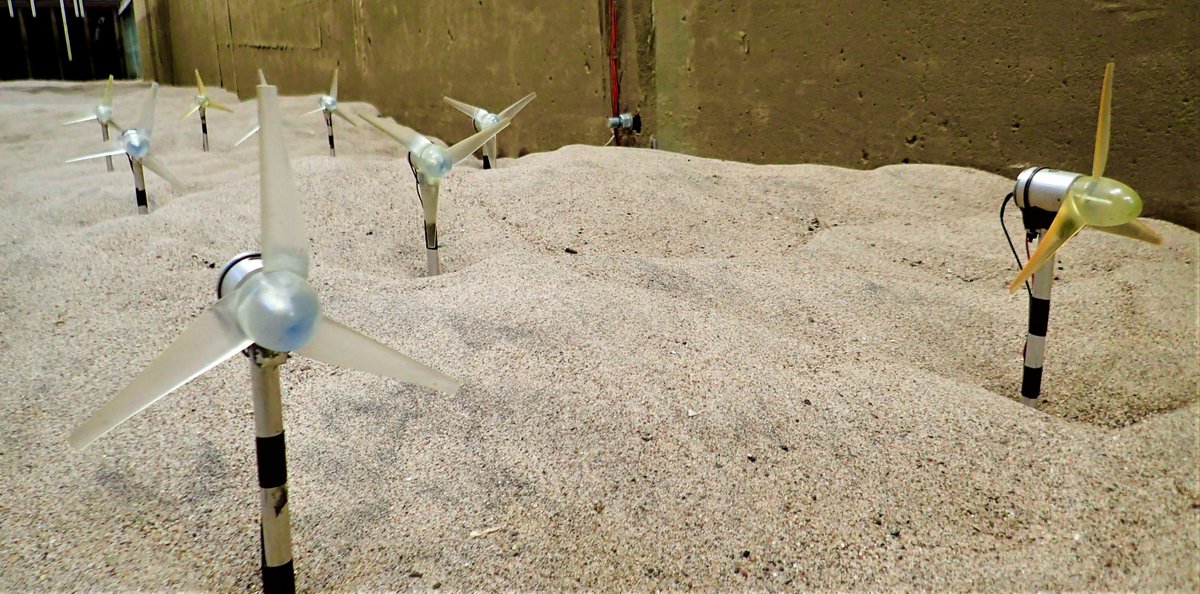
1️⃣ Hydrokinetic energy in rivers 🌊
2️⃣ Bedforms & sediment training solutions 🏞️
Learn more & applications: 🔗 https://t.co/SnDxmh0nvZ
🔄 Please share! #PhD#WaterResources#Geomorphology
Exciting news! I’ve started as a Tenure-Track Assistant Professor in Hydraulic Engineering at @epflENAC! Thrilled to return to academic research and take on the exciting challenge of teaching—at one of the best institutions, especially for hydraulic engineering!
Even more exciting: I’m launching STREEM – the Laboratory for Sustainable River Engineering, Energy, and Morphodynamics! 🌊⚡ Stay tuned—we’ll soon be hiring students & postdocs!
🔗 https://t.co/P4qjEmSt30
#Hydropower#RiverEngineering#SustainableEnergy#Morphodynamics#EPFL
People are rightly ridiculing OpenAI over its accusations of Deepseek using their output to train their model, but most people are missing the truly terrifying implications here.
The far more worrying aspect here is that OpenAI is suggesting that there are some cases in which they own the output of their model.
Now think for a minute what this means in the world of tomorrow where so much will be generated by AI (and already is): all the software code, the emails we send each others, the videos and images, etc.
Do you want to live in a future where, if for some reason the AI giants are dissatisfied with the way you use the output of their model, they can claim ownership of it? A future where every piece of content touched by AI - which might be virtually everything in the world of tomorrow - comes with invisible strings attached?
The implications for innovation and creativity are staggering. Small businesses and independent developers who rely on AI tools could find themselves trapped in a web of intellectual property claims. Worse, we're looking at a future where the very act of learning and building upon existing knowledge becomes gated by the interests of AI giants.
This would be techno-feudalism on steroids: if we don't challenge this now, we risk sleepwalking into a future where human creativity and innovation become the property of a bunch of AI overlords, and a world where they can dictate not only who gets to innovate, but what kind of progress is acceptable based on their own interests.
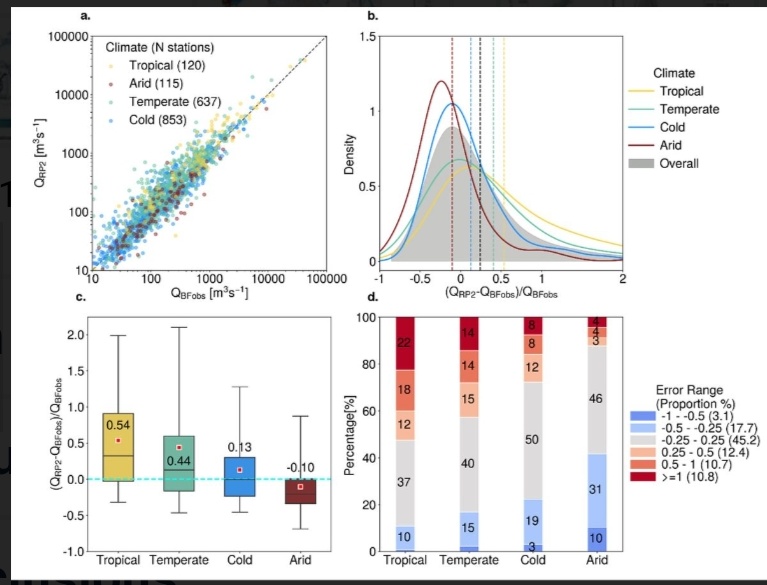
New @EvoFlood project paper preprinted @Nature "Global Estimation of River Bankfull Discharge Reveals Distinct Flood Recurrences Across Different Climate Zones" led by Yinxue Liu @lborouniversity@UniofOxford, based on observations & novel machine learning https://t.co/ZBM4gQvGmf
TENURE TRACK POSITION (W1)
in
FLUID-STRUCTURE INTERACTIONS
https://t.co/12aNz5EqHp
Integrated in the Institute for Water and Environment https://t.co/Dq1cZ7cr4R
@KITKarlsruhe#fluid#water#hydraulics
We captured some really neat footage of lynx this past year on our cameras but this is definitely the coolest. In fact, might be the best video of a lynx we have ever captured, not least because the lynx decided sit right in front of the camera...
Thanks to the Minnesota Environment and Natural Resources Trust Fund for their continued support of the project, which allows us to capture, document, and share neat footage of the wildlife in northern Minnesota!
📢New Paper out for #flumefriday: https://t.co/olryOvsKYV
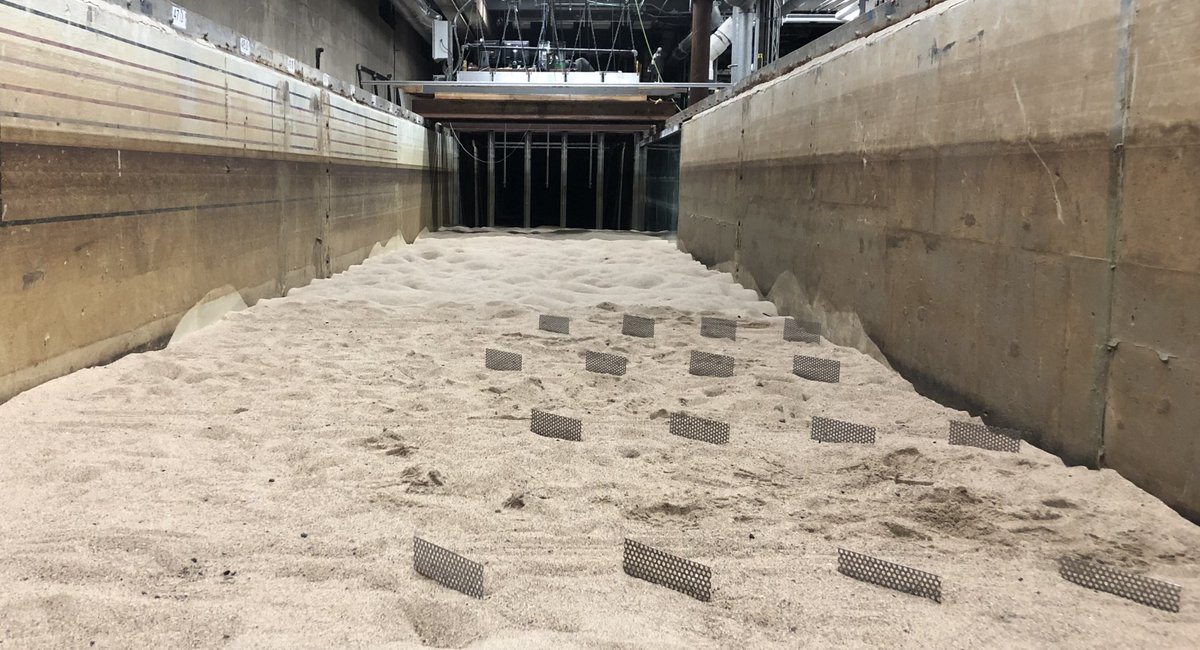
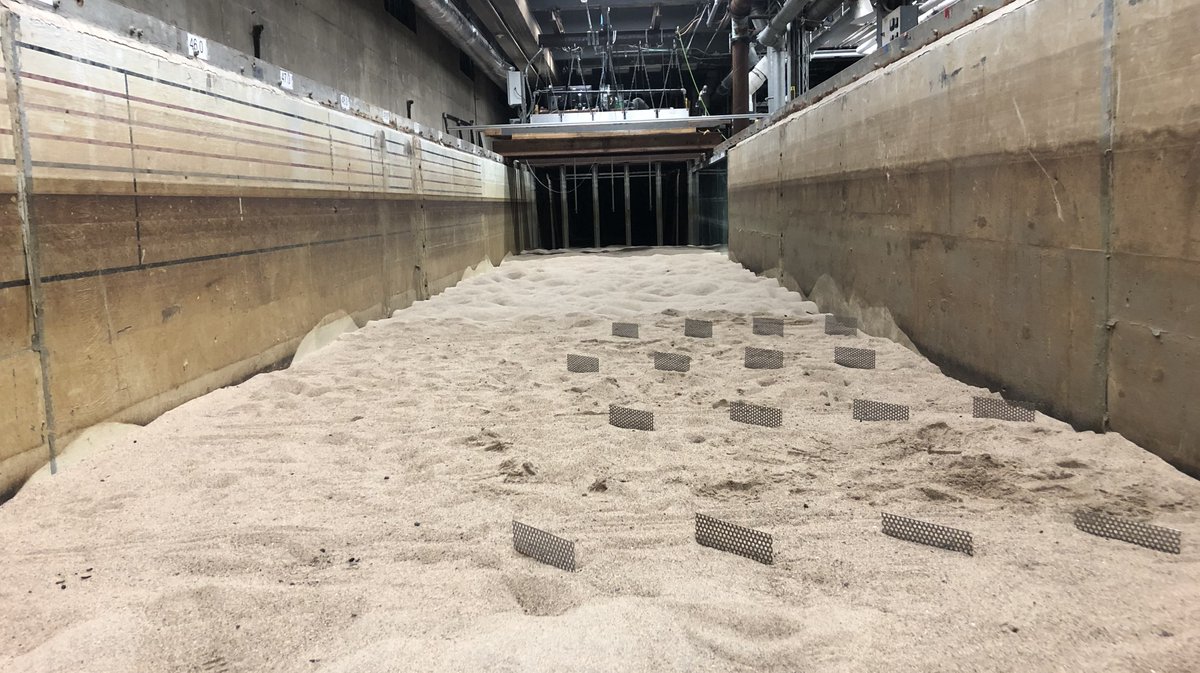
Together with @chienyung_tseng, @SciJiyong , @MicheleGuala, we experimentally tested an array of submerged porous vanes to control the lateral movement of sediments.
..and interesting questions came up! 👇🏽
1/3
How do we quantify the effectiveness of the vanes in controlling sediment direction? And so, how do you measure/estimate just the lateral sediment transport? The paper includes tentative answers and proposes a new methodology starting from laser bathymetric scans.
2/3
🚨 New Paper Alert! 🚨 We proposed a novel approach to quantify lateral bedload transport in a large-scale lab experiment. The result reveals how submerged vanes effectively steer bedform migration to optimize sediment capture!
#Sediment#Flumefriday
👉 https://t.co/IgAEjRKwEW
📢@AGUGlobalChange Session Alert!🚨
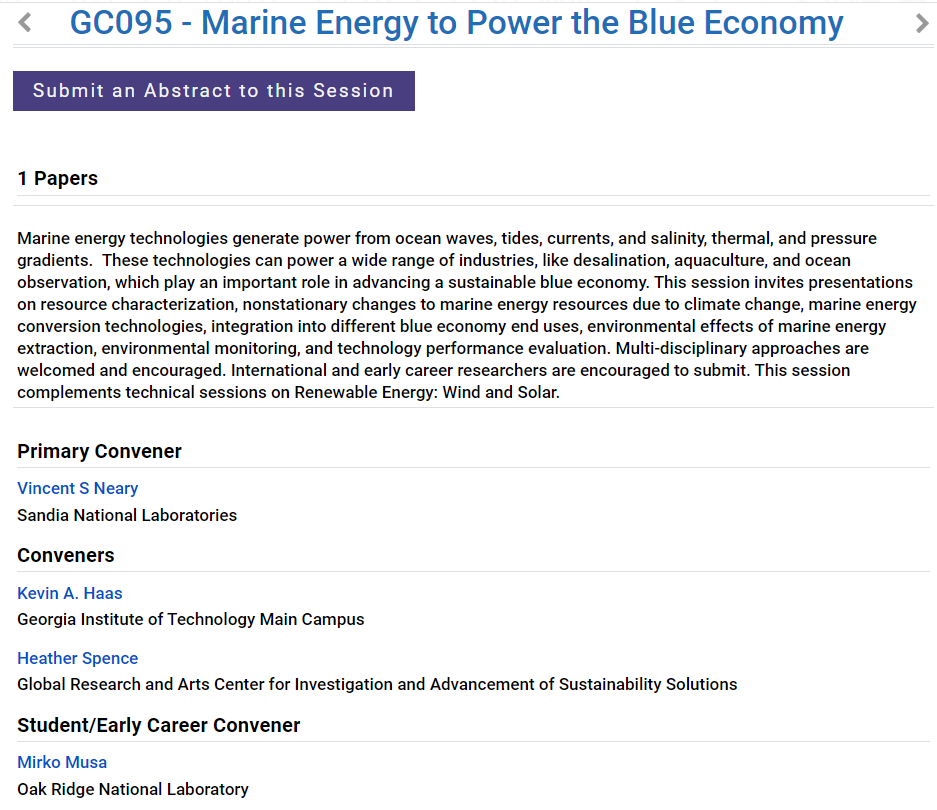
Do you work in #MarineEnergy research? 🌊Join our session, "GC095-Marine Energy to Power the Blue Economy," and share your innovative ideas!
Submit your abstract 👇: https://t.co/1mTCSbYOzU
Deadline: July 31st!
#BlueEconomy#Sustainability
I had the pleasure to participate in last year's edition and I had a blast. I learned so much about the world of policy making that, as an engineer, I knew very little about. This is an amazing opportunity for those interested in translating energy research into actions.
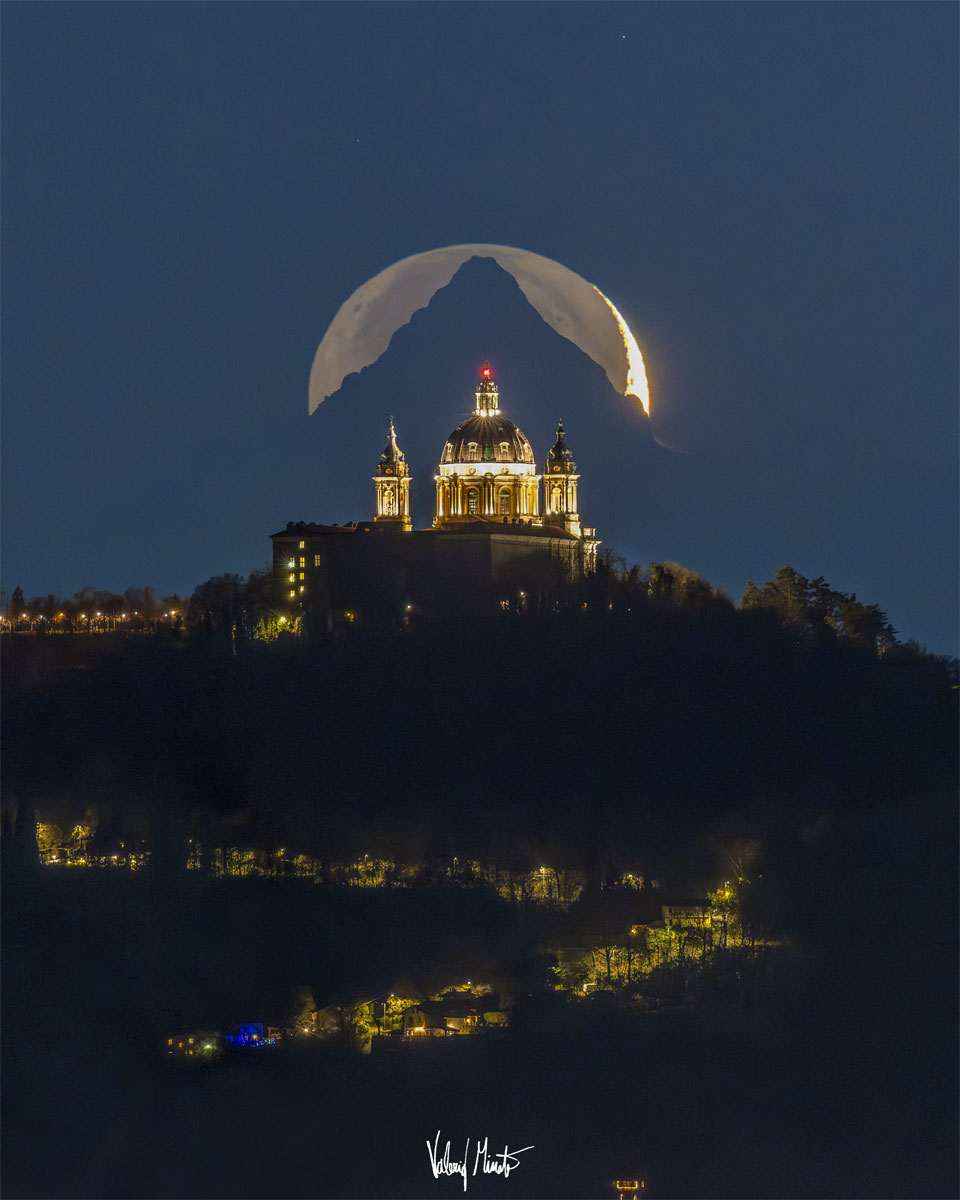
Cathedral, Mountain, Moon
Image Credit & Copyright: Valerio Minato
Explanation: Single shots like this require planning. The first step is to realize that such an amazing triple-alignment actually takes place. The second step is to find the best location to photograph it. But it was the third step: being there at exactly the right time -- and when the sky was clear -- that was the hardest. Five times over six years the photographer tried and found bad weather. Finally, just ten days ago, the weather was perfect, and a photographic dream was realized. Taken in Piemonte, Italy, the cathedral in the foreground is the Basilica of Superga, the mountain in the middle is Monviso, and, well, you know which moon is in the background. Here, even though the setting Moon was captured in a crescent phase, the exposure was long enough for doubly reflected Earthlight, called the da Vinci glow, to illuminate the entire top of the Moon.
Scientific institutions must create--and sustain--new kinds of roles so that researchers can provide the deep public engagement necessary to respond effectively to the escalating impacts of #climate change. The status quo isn't working. [Thread: 1/n] https://t.co/2J9897Dddv
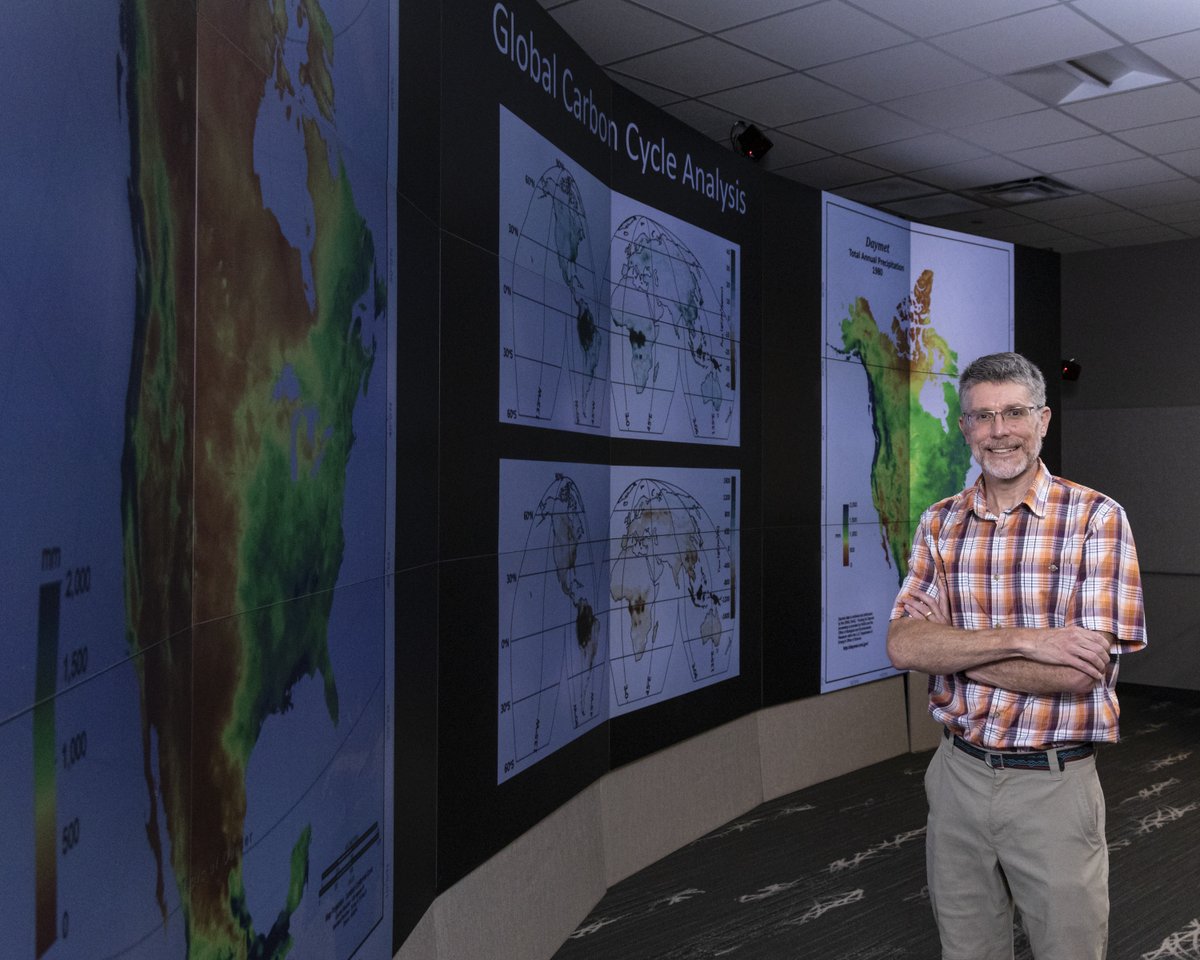
Congratulations to Peter Thornton – one of four scientists named as @ORNL Corporate Fellows this year. Throughout his career, Thornton has increased ORNL’s stature in both the national and international #climatechange science communities.
https://t.co/gtthOiQqzY