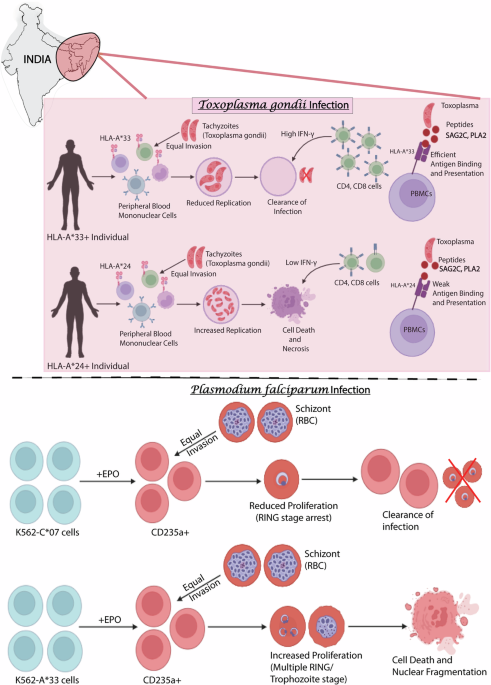
HLA polymorphisms shape divergent outcomes of Toxoplasma and Plasmodium infection in Eastern Indian HbE/β-thalassemia cohort: Communications Biology, Published online: 25 May 2026; doi:10.1038/s42003-026-10222-yHLA Polymorphisms shape the divergent… https://t.co/k9gcdWrIgp
For decades, the line between non-living chemistry and biological life has been one of the most defining boundaries in science. A groundbreaking achievement by researchers at the University of Minnesota has just blurred that line completely, marking a historic milestone in biological engineering.
Scientists have successfully engineered a minimal synthetic cell from the ground up, using entirely non-living components. Affectionately named SpudCell due to its unique shape under a microscope, this microscopic marvel is capable of feeding, growing, and replicating just like a natural organism.
Instead of utilizing the thousands of genes found in natural bacteria, SpudCell operates on a remarkably streamlined genome of just 36 essential genes. The truly ingenious part of the design lies in how it reproduces. Rather than relying on a complex internal skeleton to pull itself apart, the cell uses a clever mechanical trick where engineered proteins crowd the outer membrane until physical stress causes it to naturally split in two.
This milestone is far more than a laboratory curiosity; it represents a fundamental shift in how we interact with biology. By mastering the basic mechanics of cellular replication, scientists are paving the way for highly advanced, customizable molecular factories.
In the coming years, this technology could lead to the creation of ultra-precise therapeutics that target diseases with zero side effects, low-carbon industrial chemistry, and entirely new ways of manufacturing sustainable materials. While SpudCell is an engineered approximation of life rather than a fully independent organism, it proves that the core instructions of survival and growth can be successfully programmed from scratch.
Source: University of Minnesota (A Chemically Defined Synthetic Cell Capable of Growth and Replication, Department of Genetics, Cell Biology and Development, University of Minnesota, Minneapolis, MN, US)
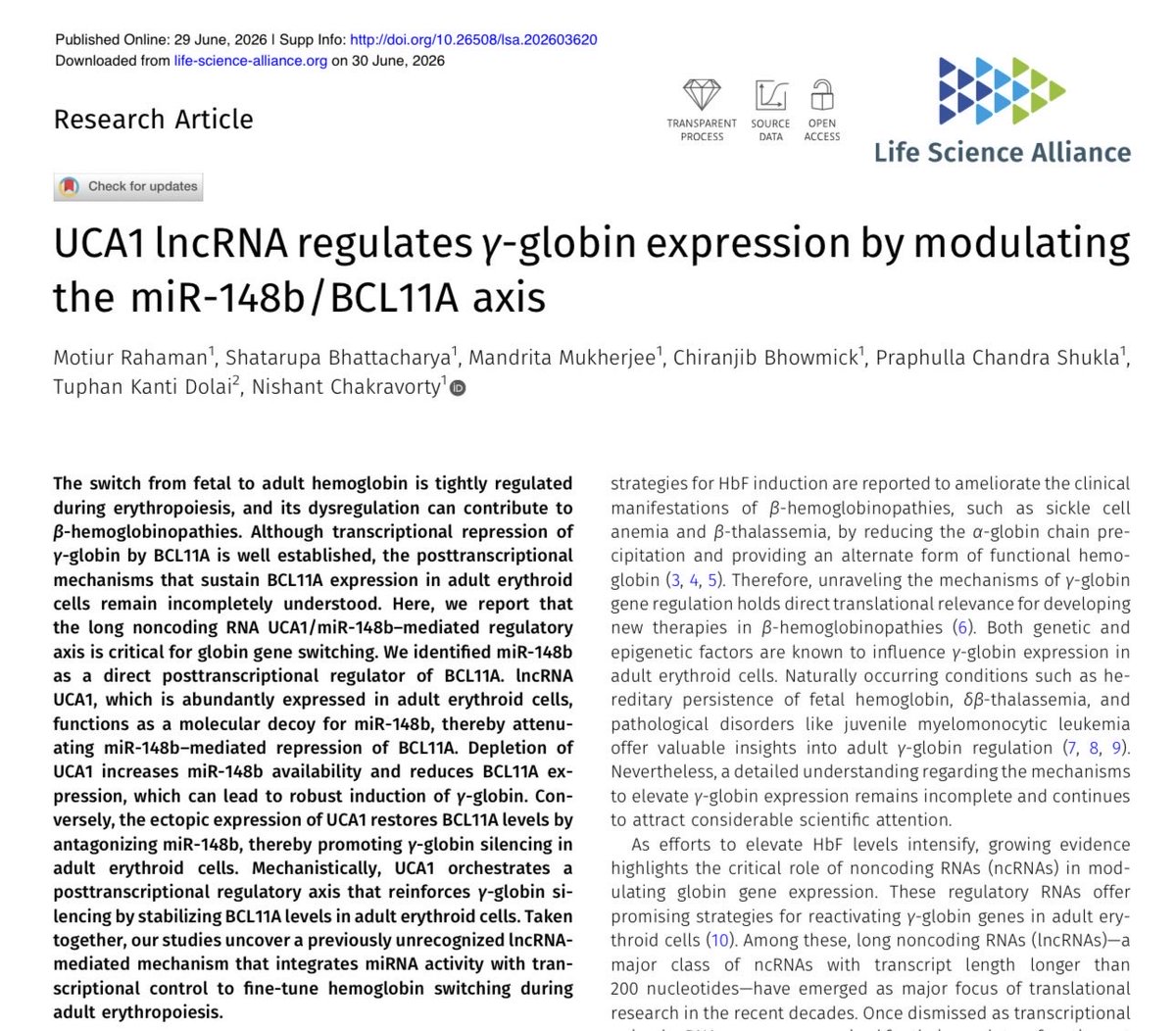
It’s raining papers in 2026! Our 2nd paper of the year is out in Life Science Alliance journal, spearheaded by my colleague @Motiur_Rhmn, this study was my first venture into the RNA biology world!
Happy Reading!
https://t.co/Yh2YlB1O54
@IITKgp
Congratulations to all authors!
The authors identify a UCA1/miR-148b/BCL11A regulatory network that modulates γ-globin in erythroid cells, revealing new therapeutic opportunities for β-hemoglobinopathies. @Motiur_Rhmn@nishichakra@SMSTIITKGP
https://t.co/47dcoj0TEs
Published in Nature this morning: the first paper showing efficient human embryo gene editing without the unintended effects seen with prior methods. A promising step, but rigorous safety work remains.
Excited that lead author Oliver has joined Preventive to continue this work!
Since the 1960s, the genetic code has been used to predict protein sequences from DNA and mRNA sequences. Our @Nature article demonstrates that these predictions miss thousands of protein sequences present in human tissues.
Across >1,000 human samples, we identified numerous abundant proteins whose amino acid sequences differ from those predicted by the genetic code.
These proteins are not rare translation byproducts. They accumulate to thousands of copies per cell. Some are more abundant than the proteins predicted by the genetic code from the same transcripts.
Their abundance reflects a combination of alternate RNA decoding mechanisms — including codon-anticodon mismatches, tRNA abundance, and RNA modifications — and selective stabilization of the resulting proteins. The last factor – protein stability – emerges as a major determinant of protein abundance across proteins, proteoforms and cell types: https://t.co/IzOfAZKnxT
Alternate RNA decoding is pervasive across functional groups of proteins, healthy and diseased tissues. It affects proteins playing key roles in neurodegeneration, and some alternately decoded proteins show strong enrichment in tumors compared to their surrounding tissues.
This discovery has been a long and exhilarating journey with Shira Tsour and the @slavovLab team. It started in 2019 and proceeded through many challenges and thrilling highs. A journey that has opened new perspectives that we long to explore!
1/
Pakistan Genomic Resource (PGR), founded by Danish Saleheen, is the world's largest genetic database of human knockouts. It has been quietly building since 2017, from 10,000 individuals (Saleheen et al. Nature 2017) to nearly 200,000 today.
A new paper in Nature by Koch et al. reports a new analysis of 173,303 Pakistanis from PGR, offering genetic insights from natural inbreeding experiments in humans.
Koch et al. Nature 2026
https://t.co/Uk9YaeN1Ev
In biology, to understand what a gene does, you delete it, a standard experiment. Knock out the gene in a mouse and see what breaks: organ fails, behaviour changes, animal dies. Thirty years of biology built this way. It works, until it doesn't. Because, you know, mice are not humans.
To know the function of a gene in humans, you need a similar experiment. But that's unethical, you cannot deliberately delete a gene in a human. Except you don't have to, because nature has already been doing that experiment.
Occasionally, a person inherits a broken copy of a gene from both parents and is born with no working version at all--a human knockout. The problem is finding them. In most of the world's populations, where mating is largely random, these events are nearly invisible. For a gene-inactivating variant at 0.1% frequency, you'd expect one homozygous individual in every million people.
That math collapses in populations like Pakistan, where consanguineous marriage has been practised for centuries. In first-cousin marriages, the odds of observing a human knockout for the same 0.1% variant rise to roughly 1 in 16,000, a 63-fold enrichment. And the rarer the variant, the larger the advantage: ~630-fold for a 0.01% variant, ~6,300-fold for a 0.001% variant. The variants too rare to ever be seen in European biobanks become findable here.
Sequencing more than 170,000 individuals from highly consanguineous communities, the authors report a mind blowing statistic: at least one living human knockout was observed for 6,476 genes, which is nearly 1/3rd of the entire protein-coding genome!
What do we find when we finally have the human knockouts?
Studying the phenotypes in the human knockouts helps us confirm or refute our understanding of the gene's function based on animal studies. A few examples I highlight below.
PRDM9
PRDM9 might be one of the most popular genes among animal biologists. It encodes a protein that controls where chromosomes break and recombine during sperm and egg formation. Deleting the gene has caused infertility in every animal. PRDM9 was classified as the first hybrid sterility gene in vertebrates, so fundamental that crosses between mouse species with different PRDM9 alleles can't produce a fertile offspring. PGR now has 4 human PRDM9 knockouts : three women, one man. All fertile, with 2 to 7 children each. A 14-year biological fact, overturned by four families in Pakistan.
LRRK2
LRRK2 is a well-established Parkinson's disease risk gene. Activating mutations in LRRK2 are among the most common risk factors for Parkinson's. LRRK2 is a therapeutic target with many companies exploring ways to switch off this gene in the brain to treat Parkinson's. Large-scale sequencing studies have found individuals with partial loss of LRRK2, who did not show any concerning health issues, predicting adverse effects of LRRK2 inhibition in humans. Animal knockouts though warned of kidney damage. Now PGR has two LRRK2 knockouts, both with kidney disease, confirming animal studies.
RXFP1
RXFP1 encodes the receptor for a pregnancy hormone called relaxin, which has long been studied in rodents. Animal studies suggested it played a critical role in cardiovascular adaptation and connective tissue remodelling, fuelling relaxin-targeted drug development, which failed in late-stage trials. PGR found 16 RXFP1 knockouts, expanded to 26 via recall-by-genotype, all tested with cardiac imaging. None had consistent cardiovascular or reproductive deficits, retrospectively explaining the failure of relaxin-targeted drug programmes that might have spent millions of dollars. Mouse physiology failed to inform humans in the case of relaxin.
Gene constraint insights
Existing large-scale biobanks are predominantly European-based outbred populations, which shaped our understanding of gene constraints largely based on intolerance to partial loss of function. Now PGR, a South Asian-based cohort enriched for consanguineous communities, is beginning to offer insights into gene constraints based on intolerance to complete loss of function.
PGR showed that nearly 1/3rd of human genes tolerate complete loss of function. As much as the genes for which knockouts were found, the genes for which knockouts weren't found can offer biological insights.
The authors find genes depleted for knockouts in PGR are enriched for genes essential for cell survival, known Mendelian disease genes (both dominant and recessive) and genes broadly expressed across human tissues.
A fascinating insight is significant enrichment for knockouts in tissue-specific genes (OR=2.39). Human knockouts confirm what drug developers have always thought: tissue-specific genes are much safer therapeutic targets than broadly expressed genes.
The above insight should be read with caveats. The sample size of PGR is small, hence not saturated for human knockouts. It's likely the number of genes will increase as the sample size grows. There is a survivorship bias, like any other volunteer-based cohort. Absence of a gene knockout here doesn't mean biological impossibility. It means incompatibility with being a 'healthy' adult volunteer. If you build a cohort based on a hospital-based pediatric rare disease South Asian cohort, you'd expect to see knockouts that never appeared in PGR.
South Asian populations represent nearly a quarter of humanity, yet they have been largely absent from the genomic revolution. PGR shows what absence has been costing the field: overturned biological assumptions, failed trials, missed targets. The biology was always there. We just weren't looking in the right place.
To solve aging, we first need to measure it. Excited to share our study in @NatureMedicine! Different cell types age at different rates within our body. From a tube of blood, we track aging across 40+ cell types, from immune cells to neurons, revealing signatures that forecast disease risk and resilience. @wysscoray 🧵1/9
Finally out in @Cellcellpress!
Proteins with long intrinsically disordered regions (IDRs) are prone to misfolding during protein synthesis.
This is prevented by mRNA 3′UTRs that act as mRNA-based IDR chaperones.
https://t.co/Pa4bWYhOMe
Exciting breakthrough technology from the lab, now live in @CellCellPress ! Instead of cutting the genome where proteins bind (e.g., Cut&Tag), D&D-seq scars the DNA with a deaminase, allowing single cell genome mapping of TFs and chromatin remodellers!
✨ Thrilled to share our new publication in Nature.
We define an “inflammatory memory” HSC state (HSC‑iM), linking lifelong inflammatory exposure to aging and disease.
📄 Article: https://t.co/7OSZ7uNZHi
Grateful to an incredible team and global collaborators 💚💙
Expanding the CRISPR genome editing toolkit:
A flip from RNA-guided DNA targeting to DNA-guided RNA targeting @NatureBiotech
https://t.co/GxKVthgbxh
https://t.co/UIifna0nsF
https://t.co/2ZB1eJzpCe
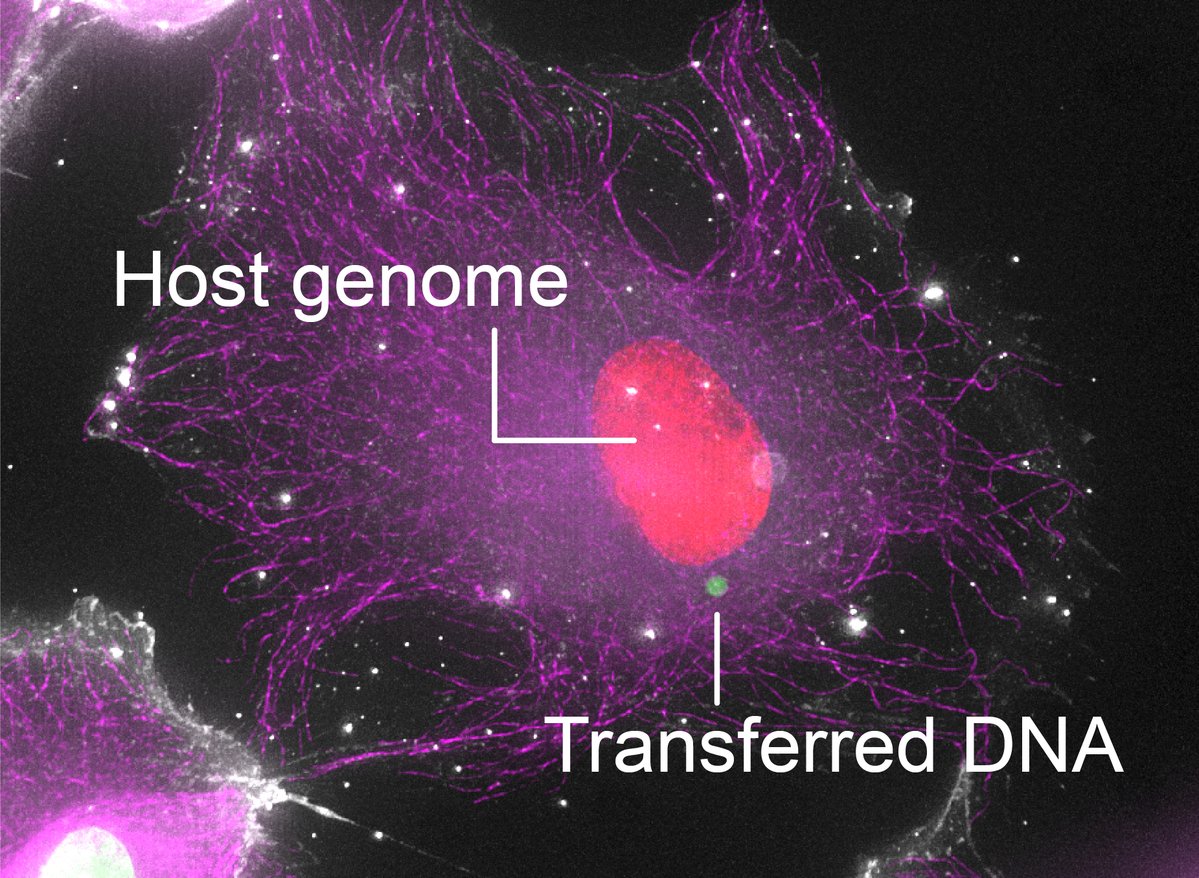
Excited to share our latest paper, out today @CellCellPress. We found that large pieces of the human genome can transfer between cells upon direct contact, endowing recipient cells with heritable phenotypic changes. (1/7)
https://t.co/SbshGhofN0
We have developed a cysteine-free, highly thermostable tagging system, UTag, that enables single-mRNA translation tracking in live cells. You may wonder how different tagging systems affect translation kinetics—we addressed this by performing a systematic comparison.
🚨 Excited to share a new paper in Cell! Human genetics led us to HOTSCRAMBL, a HOXA-locus lncRNA that regulates 🩸#stemcell self-renewal and HOXA9 splicing, with implications for AML.
Amazing work by @lvchosen1 with @silvirouskin, @Armstrong_dfci, and many more!
https://t.co/Kralk3tmzg