NASA's TESS telescope uncovers the puffiest planets ever found.
The Jupiter-sized worlds are as light as cotton candy. Further study can help us learn about planetary evolution. https://t.co/77y7BNNdfD
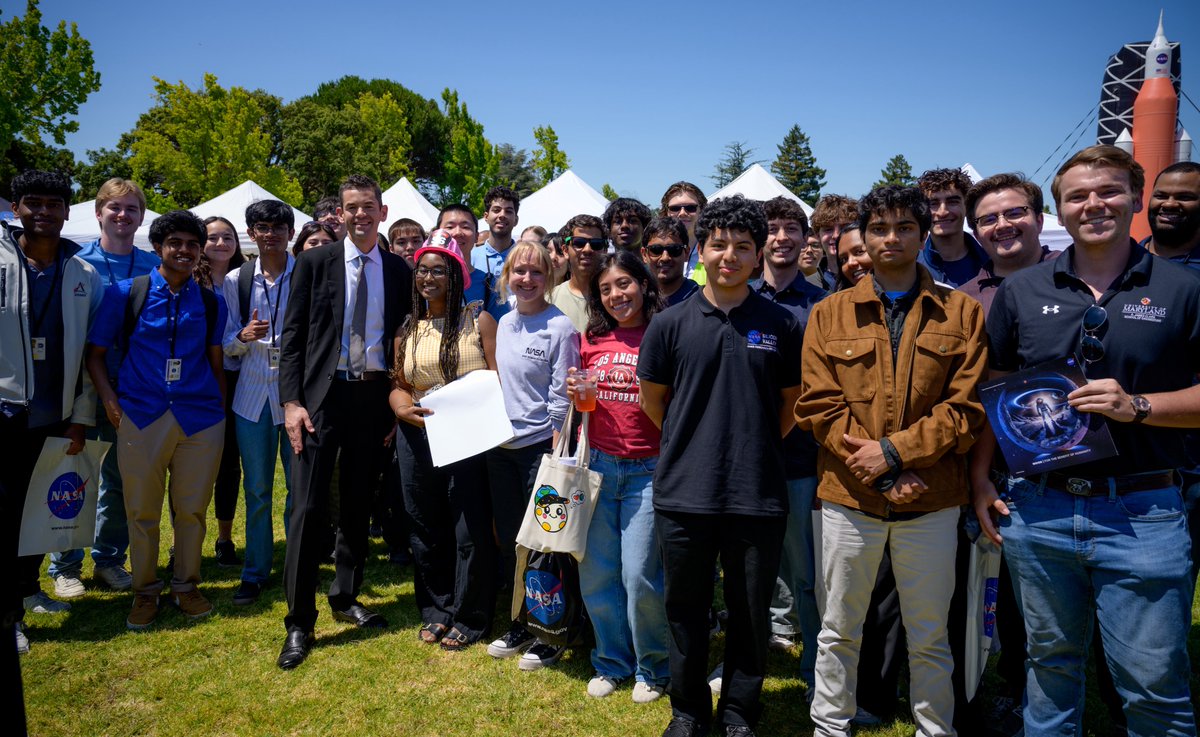
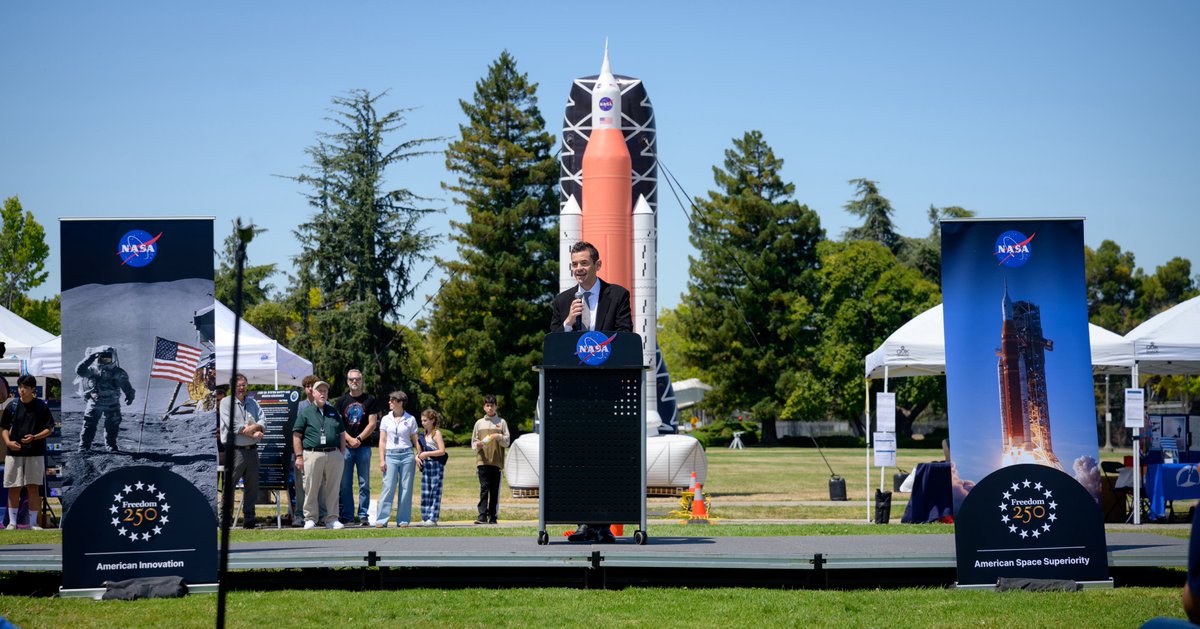
Last week, we welcomed NASA Administrator Jared Isaacman to our Silicon Valley center to explore the work powering NASA’s missions.
He also addressed the Ames workforce and met Lucas Ye, the creator of Rise.
Thanks for the visit, @NASAAdmin!
I love getting out of Washington and spending time with the people getting the job done!
It was great visiting @NASAAmes for the annual center picnic, meeting employees, interns, and students, and hearing firsthand about the work shaping the future of science & exploration.
I also had the chance to see some of the incredible capabilities that make Ames unique…from the world’s largest vertical motion flight simulator, where every Space Shuttle astronaut trained and no doubt those that will land on the moon will train, to the newly restored Hangar One, a landmark that represents both NASA’s history and its future.
Every visit reminds me that America’s leadership in space is powered by the people who show up every day to solve hard problems and push the boundaries of what’s possible.
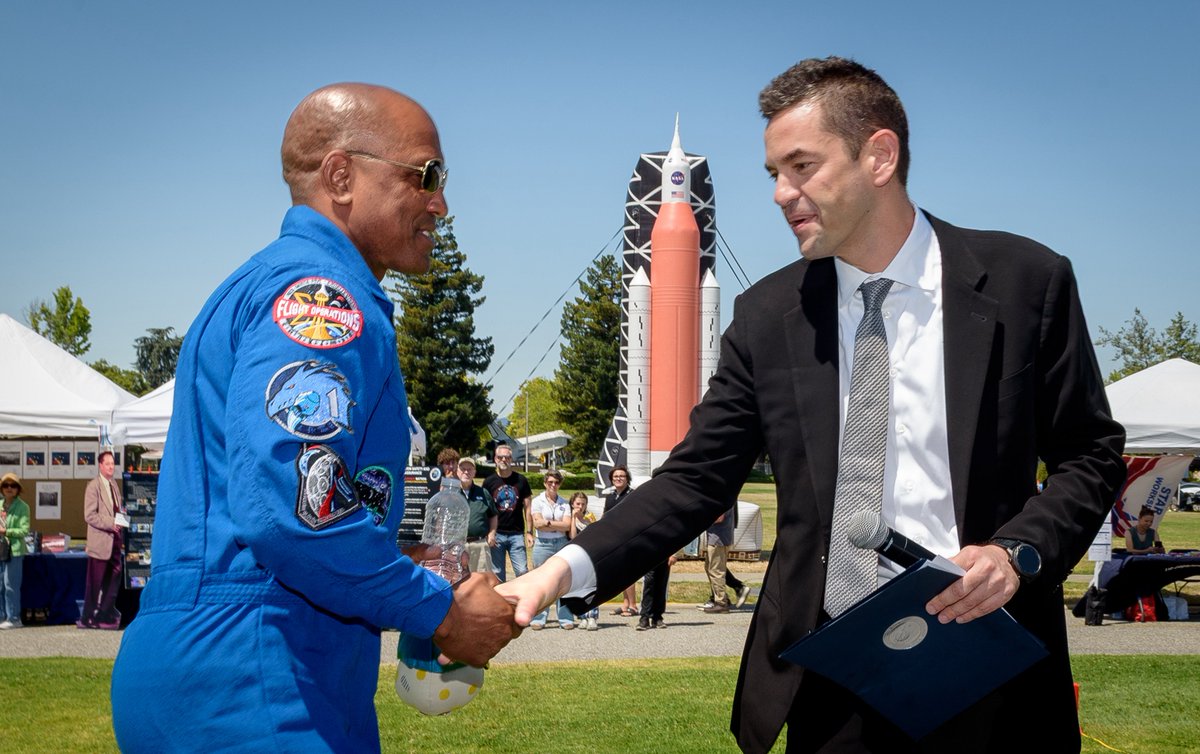
The young designer of Rise meets a @nasaartemis II astronaut!
Eight-year-old Lucas Ye had the brightest smile as Artemis II pilot @AstroVicGlover showed him Rise and congratulated him at the Ames summer picnic.
A true experience of Moon joy.
The quest to discover the secrets of the universe is a shared endeavor, and not exclusive to the world’s space agencies. At @NASA we are grateful to partner with and support @ericschmidt and the @relativityspace team, and hope this mission can be a model for future privately funded, philanthropic efforts in space.
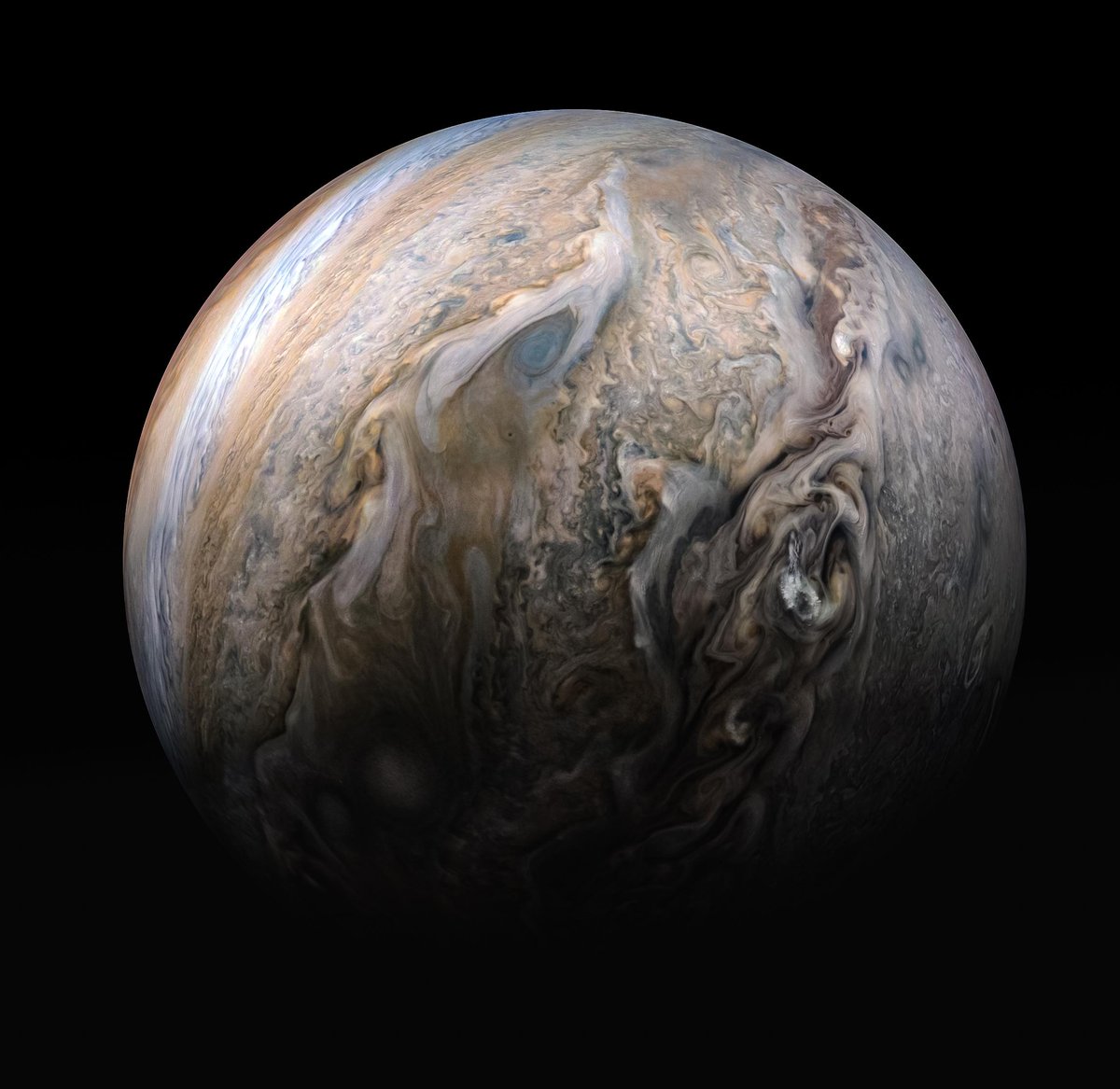
The artist of our solar system 🎨🖌️
Tumultuous storms and clouds in Jupiter’s northern hemisphere paint a mosaic across the gas giant. This image combines four views captured by NASA’s Juno spacecraft in 2019.
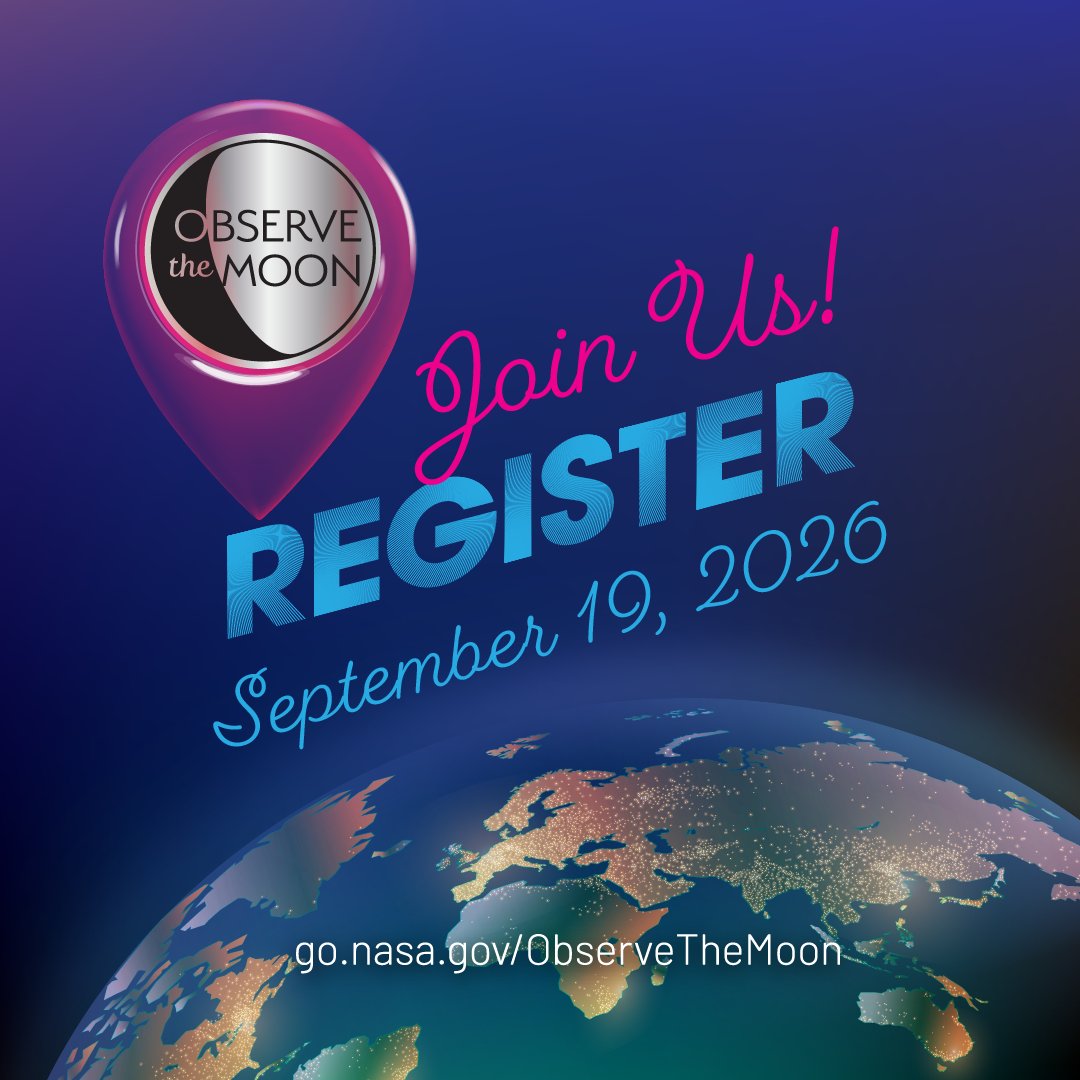
Get ready for a worldwide Moon appreciation moment 🌓
Last International Observe the Moon Night, an estimated 1 million people in 128 countries celebrated our nearest neighbor in space together. Who will you observe the Moon with this year?
Sign up: https://t.co/oidacfCUVY
✈️ ANOTHER MILESTONE UNLOCKED: NASA’s X-59 reaches speed, altitude for future quiet supersonic flight testing!
NASA's X-59 experimental aircraft achieved a major milestone June 12, reaching Mach 1.4 (about 924 mph) and an altitude of 55,000 feet – its fastest and highest flight so far, and the conditions required for future mission-critical tests.
These flights are focused on performance, the quiet flights are coming soon. After acoustic validation, NASA’s Quesst mission will fly the aircraft over several U.S. communities 🏘️ to collect data on public perception of the quieter sonic thump the aircraft will make at supersonic speeds. 🔊 ✈️
Learn more: https://t.co/5qhgOsSpBW
#NASA #X59 #Quesst
Nearing collision, the magnetic fields and plasma surrounding the stars become entangled, producing electromagnetic energy. Here, brighter colors indicate more energy.
Simulations like this provide scientists with a comprehensive look at the entanglement, exploring how light varies rapidly and how different magnetic field configurations impact the way light leaves the colliding system.
It takes two to tango ⭐
This simulation, performed on our now retired Pleiades supercomputer, shows two orbiting neutron stars in a delicate dance just moments before they collide.
Peek inside👀
The Electric Arc Shock Tube Facility at Ames is a one-of-a-kind facility that has two shock tubes that can generate some of the fastest shock waves in the world.
It simulates extremely hot, high-energy gas environments similar to what spacecraft experience during atmospheric re-entry on Earth and entry into other planetary atmospheres.
These tests give scientists insights into spacecraft heating data, helping advance thermal protection system designs for future deep space exploration.
Introducing Artemis III.
Four astronauts. Three launches. Two dockings. One splashdown.
In 2027, the Artemis III mission will practice docking the Orion spacecraft with two lunar landers in low Earth orbit — the capability we need to return humanity to the Moon’s surface.
Coming soon: one of history’s most complex missions
Tune in on Tuesday, June 9, at 11am ET, to meet the astronauts flying aboard Artemis III, the mission that will test docking capabilities with commercial landers in low Earth orbit — an important step to crewed lunar landings.
✈️ JUST IN: The X-59 has gone supersonic!
The X-59 achieved supersonic speeds for the first time ever today — a major milestone for NASA’s Quesst mission and an important step toward upcoming flights that will demonstrate its quiet supersonic technology ahead of future community overflights.
Fast now. Quiet soon. 🔊➡️🤫
Learn more: https://t.co/lpVA3qRxAj
#NASA #X59 #Quesst
Turning data into discovery faster.
Athena is NASA's most powerful and efficient supercomputer. It's designed to support a new generation of research—simulating rocket launches, modeling next-generation aircraft, and training large-scale AI foundation models to uncover new scientific insights.
Learn more about Athena: https://t.co/vufp43XQ74
Our @NASARoman space telescope is officially slated to launch on Aug. 30!
Get the details and follow Roman's journey on our new Roman Space Telescope blog: https://t.co/72iud38kMm
As gravity distorts our view…
This simulation shows how the extreme gravity of two orbiting black holes bends and redirects light emanating from the chaotic hot gas surrounding each one. As they pass in front of one another, light weaves through the fabric of space and time.