Rolling down the rails🚂
Eight booster motor segments for @NASAArtemis III are on their way from Utah to @NASAKennedy, hauled by Union Pacific’s new locomotive honoring America’s 250th anniversary.
The SLS boosters will provide 75% of the thrust at launch.
MORE: https://t.co/l0MiahpVHz
One week to go! 🚀
@NASA will announce the Artemis III crew on June 9 at 11am ET (1500 UTC). Get ready to meet the four astronauts who will help advance the technologies needed to return humans to the Moon.
More: https://t.co/AbNqKsLcvh
Future @NASAMoonBase engineers in action!
During NASA’s 2026 Lunabotics Challenge, college students from across the country engineered autonomous robots to excavate and move lunar soil simulant – and the results were incredible.
Meet this year’s winning teams: https://t.co/aNsgi5De2U
The near impossible is becoming possible.
We are building toward a sustained human presence at the lunar South Pole. It begins with Phase 1: CLPS landers and LTV rovers testing the “science of survival” on the lunar surface before heavy HLS cargo landers deliver the mass and infrastructure needed for an enduring presence.
We are building the Moon Base for all we will learn, the innovation that will improve life on Earth, the inspiration for the next generation of explorers, and to master the skills needed for where we will inevitably go next...Mars.
The Golden Age of lunar exploration has begun.
On Tuesday, June 9, we’ll announce the four astronauts who will orbit Earth aboard the @NASAArtemis III mission!
Watch our live event at 11 a.m. EDT (1500 UTC) to find out who will test the docking capabilities necessary for crewed Moon landings: https://t.co/TyU7StKGxH
@NASAMoonBase@blueorigin@NASAAdmin The second @NASAMoonBase mission will fly cargo to the lunar surface aboard the @Astrobotic Griffin lander and the third will deliver payloads chosen through open competition as well as international partners.
Both missions are targeted to launch before the end of 2026.
@NASAMoonBase The first of three @NASAMoonBase missions will be the @BlueOrigin Mark I Endurance lander, set to launch NET Fall 2026.
@NASAAdmin Isaacman describes how this mission will send scientific payloads to the lunar South Pole region and reduce risk for future astronaut explorers.
Join us today for a live event where we'll share our @NASAMoonBase plans! At 2pm ET (1800 UTC), we'll update you on our progress toward a long-term presence on the Moon. Watch right here on X.
"I believe that this nation should commit itself to achieving the goal, before this decade is out, of landing a man on the Moon and returning him safely to the Earth."
65 years ago today President John F. Kennedy addressed a joint session of Congress. Among his "Urgent National Needs"— achievement in space.
With the Space Race in full swing, he said, "while we cannot guarantee that we shall one day be first, we can guarantee that any failure to make this effort will make us last."
Memorial Day is a time to honor and remember the people that gave their lives for our country. To those who put our nation before themselves, and to their family and friends left behind, we honor your sacrifice.
So close
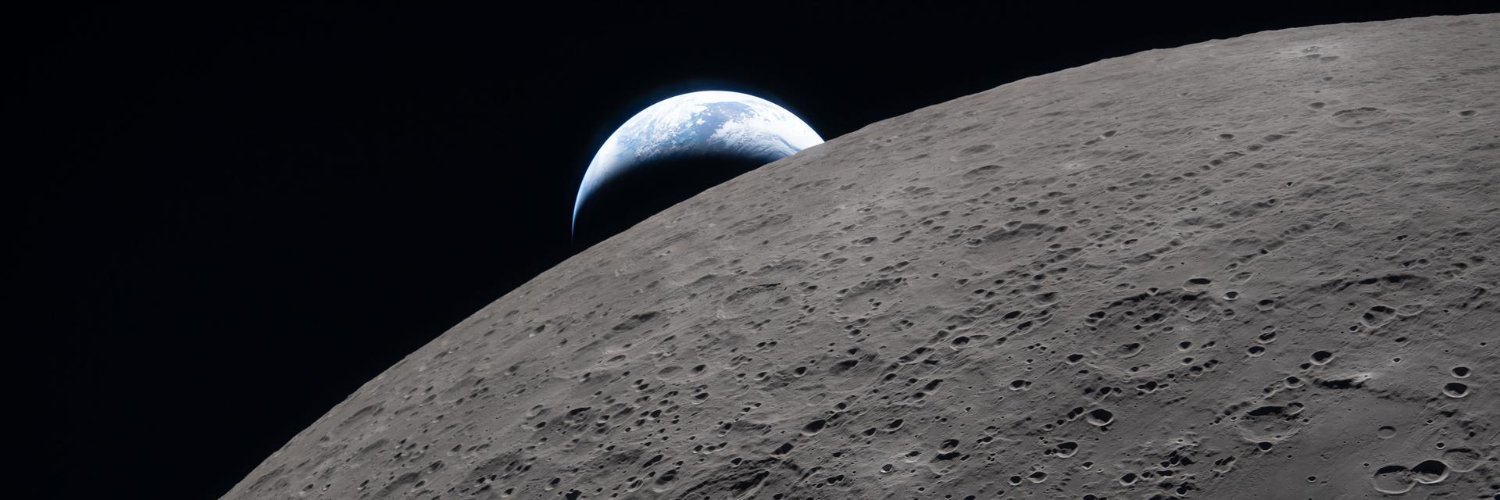
Astronauts Tom Stafford and Gene Cernan flew the Apollo 10 Lunar Module "Snoopy" to within 9 miles (14.4 km) of the lunar surface OTD in 1969, completing a critical test of all the systems and procedures needed for the Apollo 11 lunar landing. In this photo we see Maskelyne crater, located 250 km away from "Tranquility Base," the Apollo 11 landing site.
After maneuvering to the lower altitude and returning to dock with the "Charlie Brown" Command Module, Snoopy was jettisoned into an orbit around the Sun, unlike the other Apollo lunar module ascent stages. In 2019, a team of astronomers who analyzed terabytes of radar data reported they were 98% certain they found Snoopy.
What happens after four months in a simulated Mars mission?
On this week’s #HWHAP, the CHAPEA 2 crew checks in from inside their simulated Mars habitat with updates on mission life, holidays, downtime, and the latest band news. We also hear from NASA experts on how CHAPEA simulates Mars spacewalks on Earth. https://t.co/nHlLqpWb4H
Want to fly a CubeSat aboard a future Artemis mission?
The Space Launch System rocket provides an opportunity to deploy science and technology investigations into space.
Interested organizations should respond to NASA's request for information by June 1: https://t.co/7w4daZQbAC
If you’re seeing this… this is your sign.
Take the next giant leap in your future by applying for an internship, where students work on real NASA projects, build technical and professional skills, and learn directly from NASA mentors: https://t.co/QgrUmSyDSi
The final day of NASA’s Lunabotics competition is underway at the Kennedy Space Center Visitor Complex! 🚀
After the simulated lunar dust settles, judges will tally the scores to decide who takes home top honors in this year’s event.
Watch the action live: https://t.co/BCSB9U4SVM
Want to learn more about the lunar science of the @NASAArtemis II mission? Join @nightskynetwork for a free webinar featuring planetary scientist Dr. Ryan Watkins.🌕
Get details on this event & more for the STEM community in this week's @NASA EXPRESS!
https://t.co/GWf0pH6q7x
NASA’s Human Research Program is conducting studies of data collected during the @NASAArtemis II mission. And they want YOUR ideas for new ways to tackle data analysis.📊
The NASA Artemis II Human Research Data Methodology Challenge deadline is June 5.
https://t.co/nbCO6rnaQG