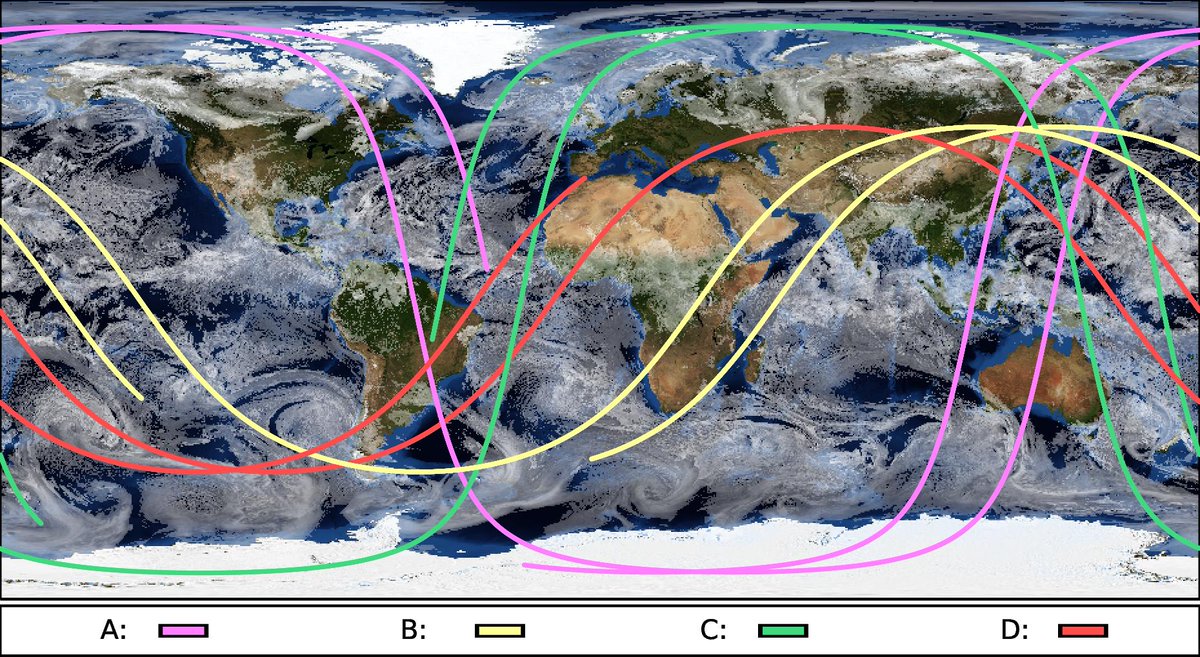
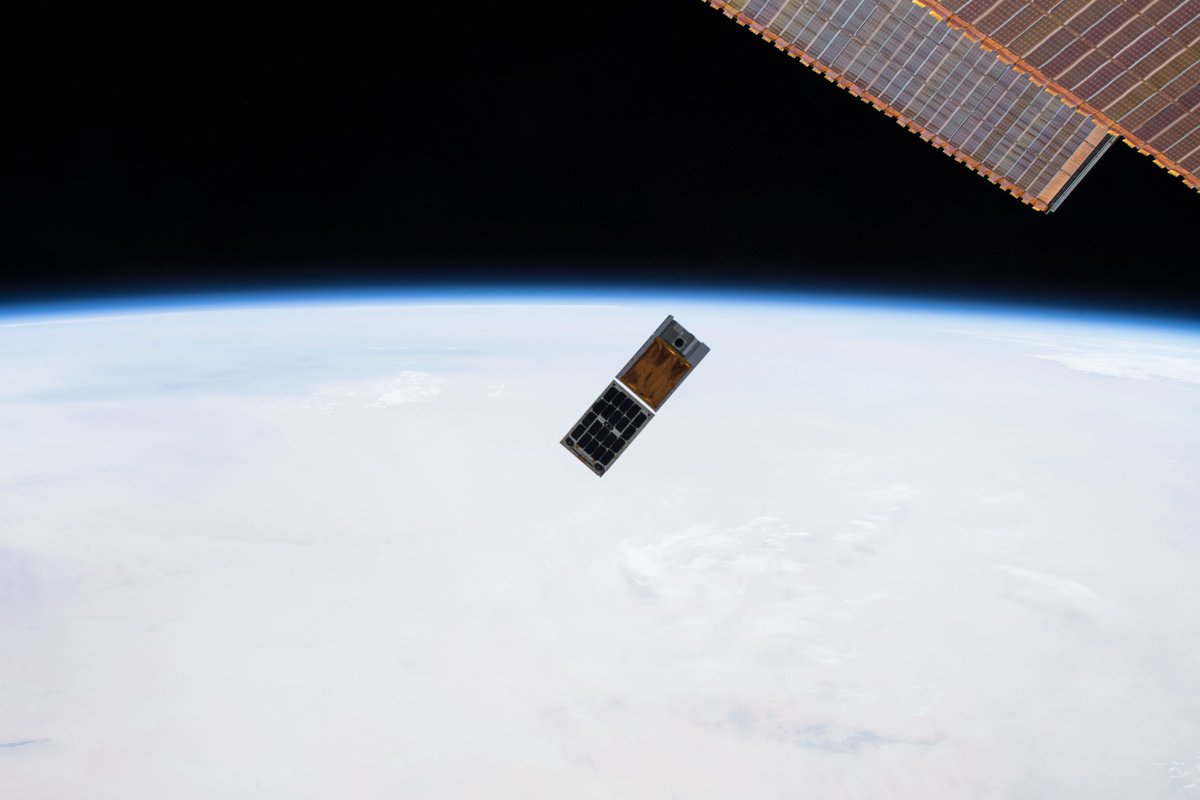
A tiny satellite seeking clouds ☁️ and aerosols is now on @ISS_Research after launching from @NASA_Wallops on Nov. 2! The HARP CubeSat plans to leave the space station and start its own orbit early in 2020. https://t.co/xluHQvlSKd
LIFTOFF! @northropgrumman’s #Antares rocket launched from @NASA_Wallops at 9:59am ET. Now heading to @Space_Station, the #Cygnus cargo vehicle will deliver about 8,200 pounds of @ISS_Research and cargo. Watch as it continues its journey into space: https://t.co/obe9nO4YkR
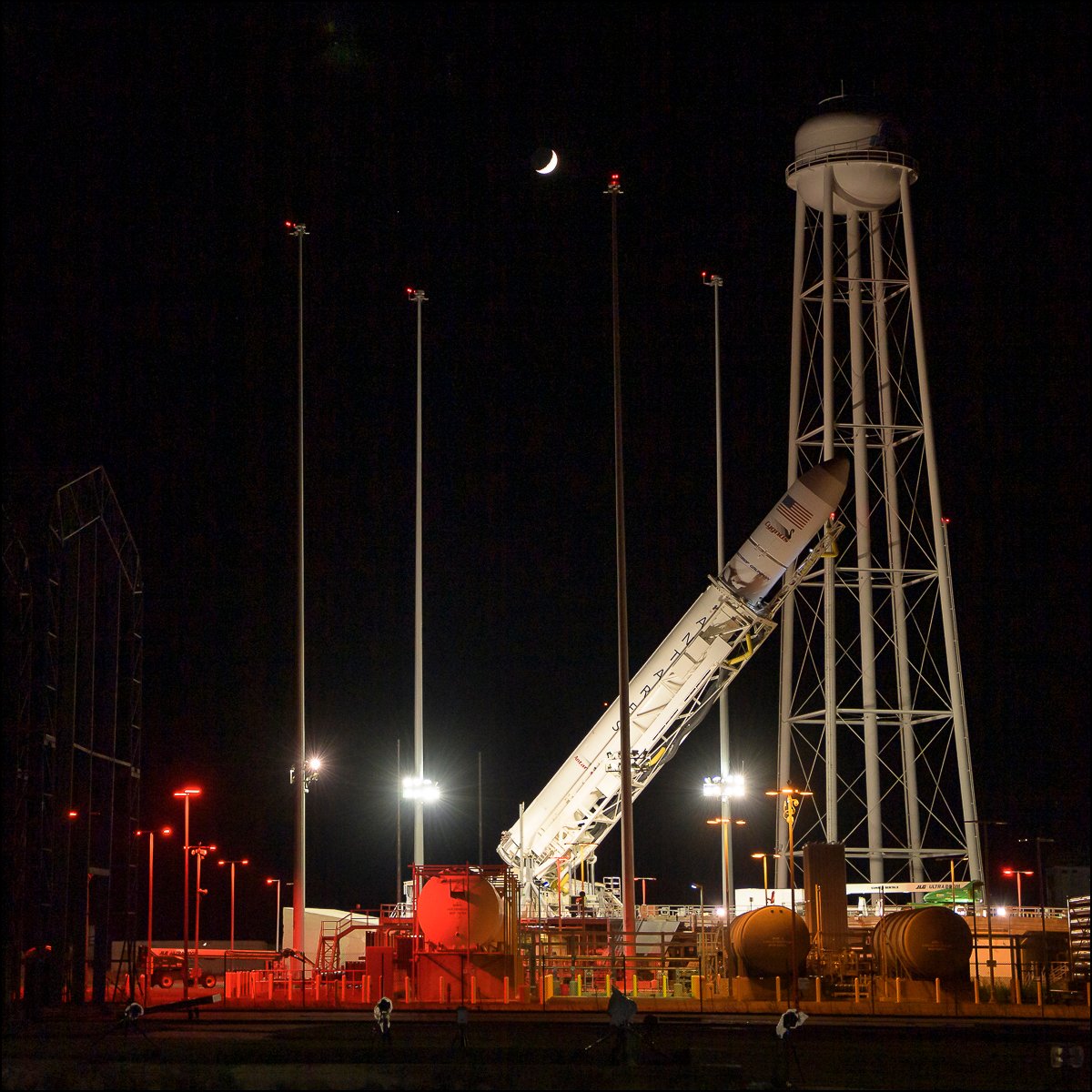
The @NorthropGrumman Antares rocket, with #Cygnus onboard, is raised vertical this evening at the @NASA_Wallops launch pad. Launch to the International Space Station is planned for 9:59 a.m. EDT Saturday, Nov. 2. More 📸 https://t.co/ca7yaqoLfY
A little CubeSat 🛰 seeking clouds ☁️ and aerosols is aboard and ready for launch! The Hyper-Angular Rainbow Polarimeter 🌈 (HARP) model is currently in the @NASA_Wallops visitor center 🌎 🚀 @NASASocial
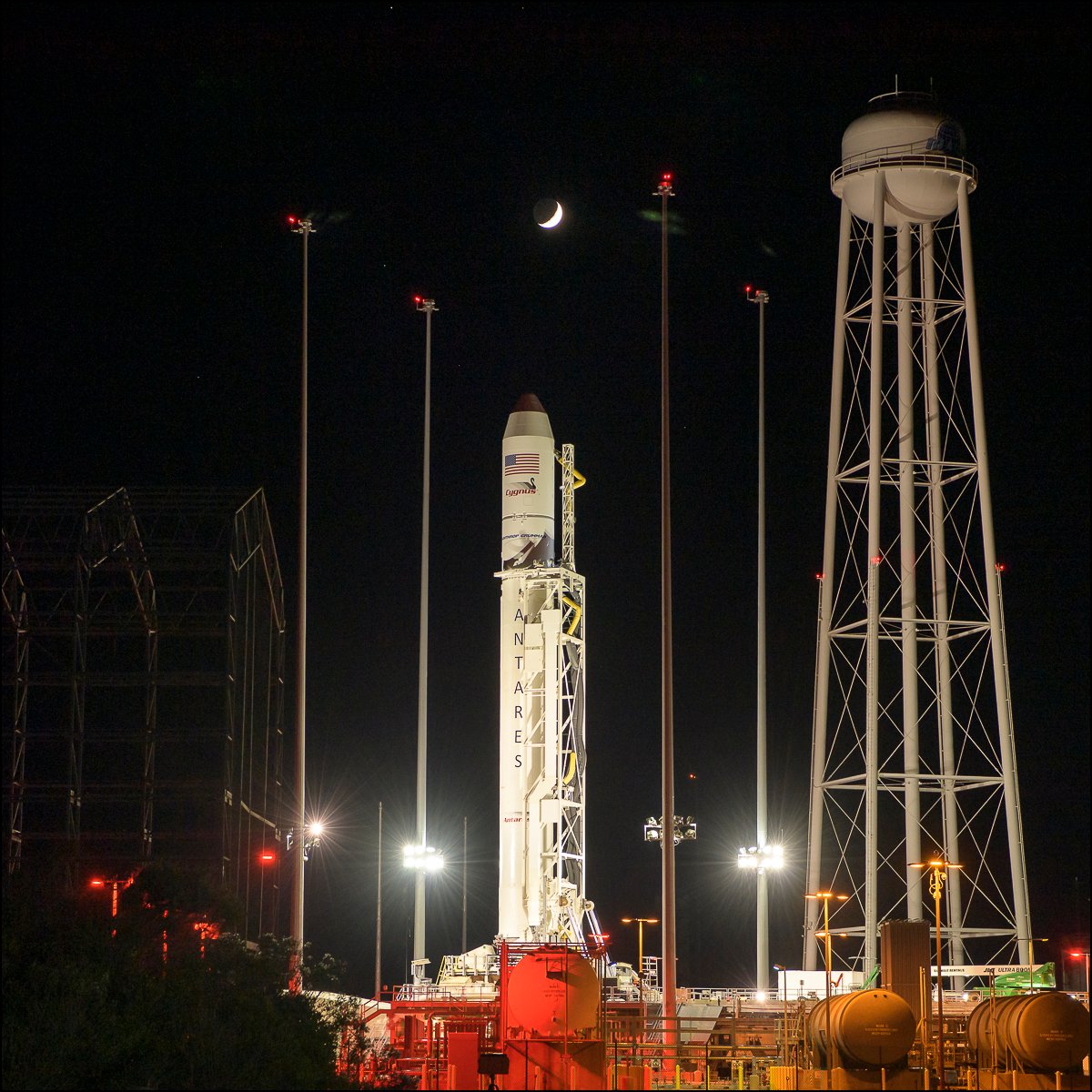
Antares and Cygnus spent several hours standing tall on the launch pad for a series of system checks. 🚀🛰️
They're now horizontal so late-load cargo can be packed into Cygnus just before liftoff of @NorthropGrumman's CRS-12 mission.
The @NorthropGrumman Antares rocket is vertical at @NASA_Wallops launch pad. Launch to the International Space Station is planned for 9:59 a.m. EDT Saturday, Nov. 2. More 📸 https://t.co/ca7yaqoLfY
A new CubeSat will soon launch from @NASA_Wallops to the @ISS_research! This tiny satellite will see rainbows 🌈, measuring clouds ☁️ and particles in the atmosphere to help us better understand air quality, weather and climate change.
https://t.co/FumYkNoUQI
Our portfolio keeps growing! 22 new technology development projects selected under the Advanced Information Systems Technology (AIST) program: https://t.co/9dn72z6Jop
New @NASA-funded tech will help small Earth 🌍satellites 🛰️ coordinate their movements while in orbit to create a more complete picture of storms and other phenomena.
Read more from the NASA Earth Science Technology Office: https://t.co/OjllQPlxN4
With new NASA-funded tech from @OhioState, satellites 🛰️ peering at #Earth 🌍🌎🌏will be able to coordinate their moves while in orbit. 📡https://t.co/4GbGzFzhT7
.@NASAESTO’s Jacqueline Le Moigne is now on stage at #PhiWeek talking about #NASA ESTO’s Advanced Information Systems Technology Program and the potential of New Observing Strategies applied to #EarthObservation satellite data.
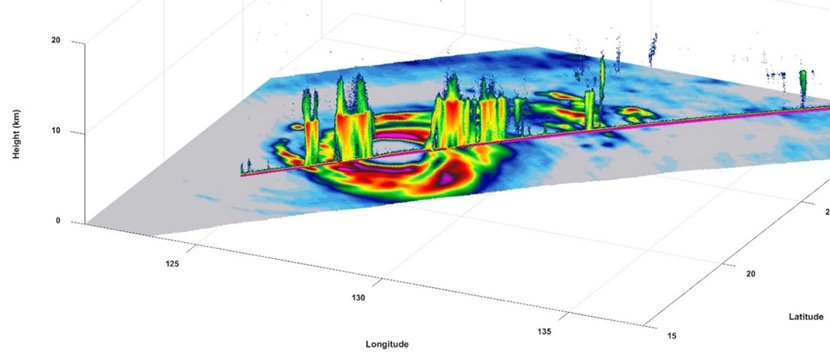
A shoebox-sized satellite got an inside look at #HurricaneDorian to reveal the storm's many layers. ESTO provided funding to @ColoradoStateU, @NASAJPL and @BlueCanyonTech to develop the CubeSat. https://t.co/1biuCuU51O
#TBT to @NASAJPL#CubeSat RainCube deploying from the @ISS_Research back in June 2018! RainCube is a tech demo that proved we can put a radar on a tiny toaster-sized satellite.
Check out the summer edition of the NASA Cutting Edge Magazine for stories about ESTO-funded tech to peer at ice clouds and understand aerosols! https://t.co/2eXXb0lzI8
A satellite 🛰️ so small you can hold it, TEMPEST-D is currently circling the globe, helping us better understand hurricanes, storms ⛈️ and other weather events. Read about this ESTO-funded project led by @ColoradoStateU researcher Steven Reising here. https://t.co/XWNXUvSN8X
Tech to better monitor #coralreef populations won the runner up spot for the 2019 NASA Government Invention of the Year Award! Congrats, #MIDAR! @NASAAmes's Ved Chirayath led the effort with funding from @NASAESTO. https://t.co/57z2NyqxZU
On a vinyl racecar track resembling the surface of the #moon, summer interns took turns racing a toaster-sized autonomous car. Their goal? To see whose algorithm could propel the car and stay on the track in the fastest time. https://t.co/Vi85qpZNMW