The safety and cleanliness issue of SF prevents people from wanting to start and raise families here. That creates a quiet, yet important simmering problem which is that the young people in SF are not physically, socially exposed to young families and parents, and thus not interacting with people who are raising the next generation of human beings.
Children remind you that your life is short, you will die, and then the next generation inherits the outcomes of your actions. This incentivizes more virtuous, excellent, long-term oriented efforts. @DanielLurie pls fix.
One huge benefit of being wasian is that there’s enormously less propaganda targeted at us than at the major ethnic groups.
In particular, it’s much harder to slot myself into the oppressed/oppressor dichotomy and thereby fuck up my psychology.
It feels worth really considering if the ai industry is tracking closer to being a modern defense apparatus (that is, an extension of sovereignty of the state) or if it's closer to something like journalism (which is a check on the power of the state, fourth estate)
Friends, a pet is not an adequate substitute for another person—and I say that as a dog lover!
We’re the animal that speaks, and that’s where human contact is made. “Cor ad cor loquitur,” says St. John Henry Newman’s famous motto. “Heart speaks to heart.”
You’re not going to find that with a dog or with your computer screen. You can only find it in conversation with another.
Media has insane control over what people worship. If you look at music, TV shows, modern “art”, and architecure, it’s clear that the substance of these have been on the decline. People should demand beauty, truth, and goodness, and not the horribly offensive slop that’s constantly fed to us. The things that we consume and surround ourselves with should invoke inspiration, and a desire for people to become more excellent and create more beauty in the world that outlasts ourselves.
First time reading CS Lewis, and wow!
This essay on inner circles, and the corrupting power of the desire to enter them.
If you make work your end, the most important (accidental) inner circle will open for you: craftsmanship.
https://t.co/XwoXKFpLIY
@RealCandaceO, it would be amazing if you and @TheoVon could interview Peter Thiel during his time in Nashville for his Antichrist lectures. Tech culture needs crossovers like these, especially now, as people in tech are increasingly searching for meaning. There’s a growing, bubbling interest in Christ here in SF, and a conversation between the three of you would help capture the moment to direct people towards truth and building meaningful things.
My mom is a non-native English speaker and sometimes mishears words. She’s been calling YC “YE” and in her head determined that it stood for “Youth and Engineering” which is not wrong.
Someone asked me recently why I’ve become interested in aesthetics after having spent most of my life more interested in STEM-adjacent topics. I hadn’t really considered the question consciously before, but I’m certainly thinking about aesthetics more than I used to. I think it’s a confluence of things:
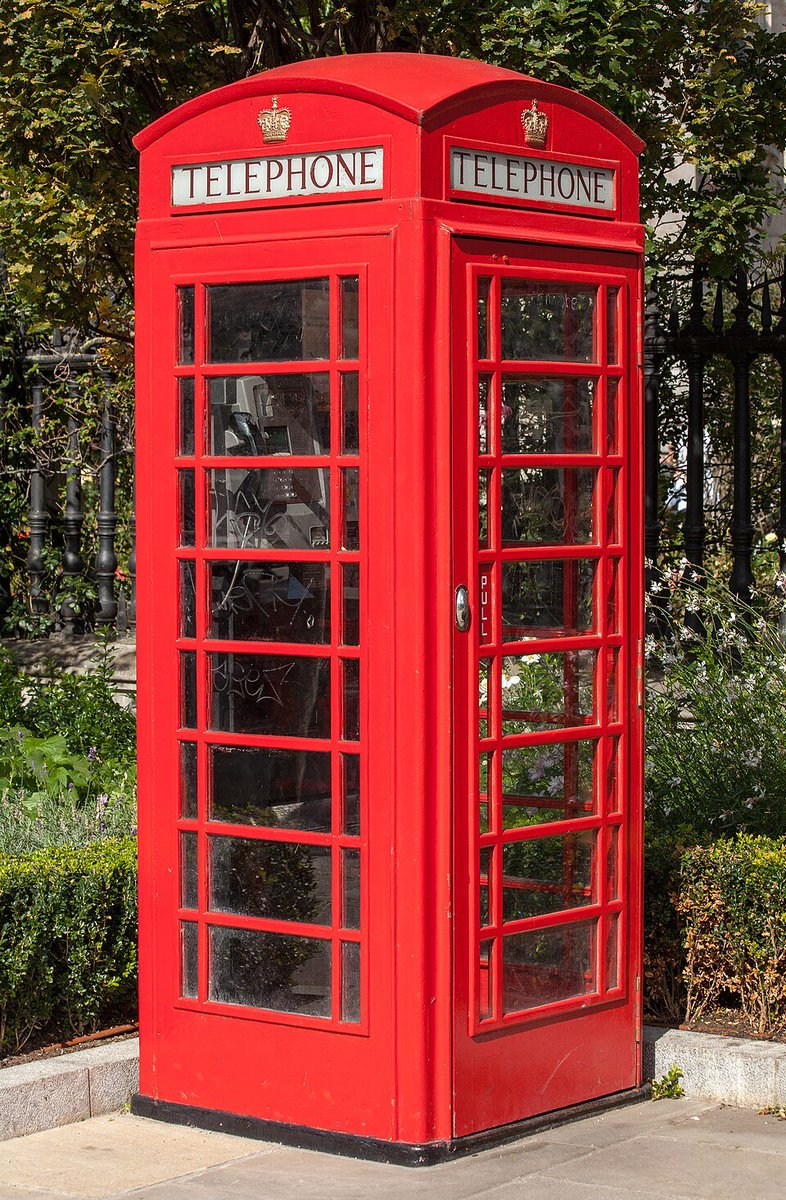
• Many things today are ugly and far uglier than they used to be or need to be. Once you see this, it’s kinda hard to stop perceiving it. (Early twentieth century phone boxes versus modern phone boxes; old water fountains versus new water fountains; etc.) As someone with a naively meliorist assumption that most things should be getting better rather than worse, it’s all a bit perplexing: why did we stop doing things nicely? Is it a choice? Was there a malevolent spell cast upon us? This vein led me to think more about modernism and why much of art became more intentionally "challenging", grotesque, opposed to prettiness, rebarbative, dissonant, etc. Can or should anything be done about this? Is this just how things ought to be?
• Relatedly, much of modernism involved a kind of explicit repudiation of cultural continuity and represented a schism with prior practices. This is maybe most evident in American architecture, where the International Style exhibition in 1932 initiated the displacement of a rich tapestry of prior styles. This cultural break seems important and interesting to me, and I suspect that the rejection had important consequences outside of the aesthetic domain. Samuel Hughes has been exploring this question in his recent writing at @WorksInProgMag; @RuxandraTeslo is also pulling on this thread. Elaine Scarry wrote about how beauty inspires creation. If so, the inverse may also be true: ugliness inhibits it.
• It’s clearly the case that changes in the aesthetic domain can at least inspire progress in other places. Petrarch helped set some of the preconditions for the Renaissance which in turn fostered the scientific revolution and Enlightenment. Things like World Fairs (the 1851 Fair at the Crystal Palace recorded 6 million admissions when the population was 21 million) reflect the popular interdependency that used to exist between aesthetics and material development.
• @tedgioia and others have written about stuck culture and how so many domains seem to have ceased to straightforwardly advance in the way that they did up until the nineties or thereabouts. This is obviously peculiar and interesting. What changed, and what does it mean? Is it about the internet and fragmentation? Is it about a loss of supply? Is it just about having reached the zenith of various mediums?
• I’m generally interested in markets and the dynamics of creation. In aesthetics broadly, I find the reflexivity between supply- and demand-side factors to be very thought-provoking. There’s a natural desire to view satisfaction of individual preferences as the yardstick to measure market success, but things get interesting and even a bit unsettling when we start to think about how the supply might start to shape the demand. I often think about this in the context of food. Why is food so much worse in Germany than many of its neighbors? Germany certainly doesn’t have less material ability to produce good food; indeed, Germany is richer than the countries around it. There’s probably something about German food supply chains that is impoverished relative to France and Italy, but the Germans themselves don’t seem too upset about it. It just seems that the Germans are stuck in an objectively worse market equilibrium than their neighbors: the food is bad and they’ve gotten used to it. The obvious question then is where else these kinds of reflexive patterns apply, and where else we’re stuck in some objectively inferior equilibrium, even if preferences are in some superficial sense being sated.
• While this is an extremely banal and obvious point, I hadn’t until recently thought much about or internalized how much one can study reasonably objective things ("the status of women in society", say) through artwork. (Thanks to @_alice_evans for opening my eyes here.) In this vein, I’m pretty excited about the possibilities over the coming years in computational art analysis. I want something that’s conceptually similar to Google Ngram timelines but for the visual arts.
• We've always tried to do things well at Stripe. I've come to see that attempting to do them beautifully is often a helpful way to break out of standard practices and to do something with greater novelty and in a way that might have other benefits besides. (Also, excellent people want to do great work because it is intrinsically satisfying. Explicitly allowing aesthetic considerations to carry weight avoids having to justify every assessment with some kind of torturous empiricism.)
• In his Nobel Lecture, Solzhenitsyn said that, among the Platonic virtues of goodness, truth, and beauty, that beauty is special, for it possesses a unique kind of irrefutability. He notes that arguments, writing, and philosophical systems can all be predicated on misapprehensions, but that “a true work of art carries its verification within itself.” He proceeds to observe that when goodness and truth are threatened, the “ever surprising shoots of beauty will still force their way through.” There is a lot of specious and motivated reasoning in the world today and plenty of questionable value systems. I don’t think that beauty directly reflects any definitive trait, but I’m intrigued by the idea that it can be a marker of deeper metaphysical coherence.