A good read:
•Show up. Keep showing up. Somebody successful said: 99% of success is just showing up
•If you are not falling down occasionally, you are just coasting
•You are what you do. Not what you say, not what you believe, not how you vote, but what you spend your time on
still don’t understand what’s so special about Elon Musk’s money that his $1 trillion dollars would solve every problem on earth, but the $7 trillion dollars the US government spends annually hardly solves the problems in America
Colonialism is bad, right?
Wrong.
The Aztec Empire ran sacrifice at industrial scale. Excavations of the Huey Tzompantli, the skull rack next to the Templo Mayor, have uncovered hundreds of skulls of men, women, and children. Spanish eyewitnesses described tens of thousands. The Aztecs fought "Flower Wars" whose purpose was capturing live victims for the altar. Hearts were cut out of living people. Subject peoples hated Aztec rule so much that Tlaxcalans made up most of Cortes's army. The conquest was largely an indigenous uprising against an indigenous empire. The sacrifices ended under Spanish rule.
India: burning a widow alive on her husband's funeral pyre. British records from Bengal alone documented thousands of cases between 1815 and 1828. The British, with Indian reformers like Raja Ram Mohan Roy, banned it in 1829. When priests told General Napier it was sacred custom, he answered: my nation also has a custom, we hang men who burn women alive. You follow yours, we will follow ours.
India: Thuggee cults murdered travelers by the tens of thousands over centuries as offerings to Kali. It was a hereditary profession. William Sleeman's campaign in the 1830s wiped it out.
Slavery was a universal indigenous institution. Dahomey and Ashanti were built on slave raiding and sold captives for a thousand years to Arab traders before any European ship arrived. Pacific Northwest tribes held up to a quarter of some village populations as slaves and killed them ceremonially at potlatches. The Comanche ran a captive-raiding economy across the Southwest. What colonizers introduced after 1807 was the first attempt in history to abolish slavery globally. The Royal Navy's West Africa Squadron spent fifty years hunting slave ships and freed about 150,000 Africans. African kings protested. The King of Bonny complained that abolition was destroying a trade ordained by his gods and priests.
The Dahomey kingdom's "Annual Customs" beheaded hundreds of captives and slaves every year to honor dead kings. Documented by European visitors for two centuries. It ended when France conquered Dahomey in 1894.
Sailors called Fiji the Cannibal Isles. Chief Ratu Udre Udre kept a stone for every victim he ate. His pile holds nearly 900. Shipwrecked sailors were killed and eaten. Within a generation of missionaries and British administration after 1874, the practice was gone.
Nigeria: In parts of Igboland, newborn twins were left in the bush to die and their mothers ostracized or killed. Missionary Mary Slessor spent decades in Calabar rescuing abandoned infants until the practice collapsed.
Indigenous genocide of indigenous people. In 1835, two Maori tribes invaded the Chatham Islands and slaughtered the Moriori, whose own law forbade them to fight back. They killed, enslaved, and ate them. The Moriori population fell from about 2,000 to barely 100. No European did this. British colonial law ended it.
Add headhunting in Borneo, the Philippines, and Nagaland. Female infanticide in India and Polynesia. Foot binding in China, dismantled partly by missionary campaigns. Every one of these ended under pressure from the colonial powers we are taught to treat as history's unique villains.
Colonialism was not charity. The Belgian Congo was a horror, conquest was for profit, and rule was without consent. But the ledger has two sides and one has been erased. Pre-colonial societies practiced slavery, human sacrifice, widow burning, infanticide, and genocide, because cruelty is not a European invention. The first civilization that tried to abolish these practices worldwide is the one you were taught to be ashamed of.
If "indigenous" means innocent and "colonizer" means guilty by definition, that is not history.
"You have to keep learning because the world keeps changing and competitors keep learning. You have to go to bed wiser than you got up. Very few have ever failed with that approach. You may rise slowly, but you are sure to rise."
— Charlie Munger
Elon Musk avait dit un truc qui m'avait marqué sur l'allocation de ressources. En substance : passé un certain niveau de richesse, l'argent n'est plus de la consommation, c'est de l'allocation de capital.
Cette phrase change tout.
L'économie, dans le fond, c'est juste un problème d'allocation. Tu as des ressources finies et des usages infinis. Qui décide où va quoi ?
Imagine une cour de récré. 100 enfants, des paquets de cartes Pokémon distribués au hasard. Tu laisses faire. Très vite, un ordre émerge. Les bons joueurs accumulent les cartes rares, les collectionneurs trient, les négociateurs trouvent des deals. Personne n'a planifié. Et pourtant chaque carte finit dans les mains de celui qui en tire le plus de valeur. Le système maximise le bonheur total de la cour. C'est ça, la main invisible.
Maintenant fais entrer la maîtresse. Elle trouve ça injuste. Léo a 50 cartes, Tom en a 3. Elle confisque, redistribue, impose l'égalité. Trois effets immédiats. Les bons joueurs arrêtent de jouer, à quoi bon. Les mauvais n'ont plus de raison de progresser, ils auront leur part. Les échanges s'effondrent. La cour est égale, et morte. Elle a maximisé l'égalité, elle a détruit le bonheur.
Le problème de la maîtresse, c'est qu'elle ne peut pas avoir l'information que la cour avait collectivement. C'est le problème du calcul économique de Mises, formulé en 1920. L'URSS a essayé de le résoudre pendant 70 ans avec le Gosplan. Résultat : pénuries, queues, effondrement. Pas parce que les Soviétiques étaient bêtes, parce que le problème est mathématiquement insoluble en mode centralisé.
Quand Musk a 200 milliards, il ne les consomme pas, il les alloue. SpaceX, Starlink, Neuralink, xAI. Chaque dollar est un pari sur le futur. Et lui a un track record. PayPal, Tesla, SpaceX. Il a démontré qu'il sait identifier des problèmes immenses et y allouer des ressources avec un rendement spectaculaire.
L'État aussi a un track record. Hôpitaux qui s'effondrent, éducation qui décline, dette qui explose, services publics qui se dégradent malgré des budgets en hausse constante. Le marché identifie les bons allocateurs, la politique identifie les bons communicants.
Le profit n'est pas une finalité, c'est un signal. Il dit : tu as alloué des ressources rares vers un usage que les gens valorisent suffisamment pour payer. Plus le profit est gros, plus la création de valeur est grande. Quand Starlink est rentable, ça veut dire que des millions de gens dans des zones rurales ont enfin internet. Quand un ministère est en déficit, ça veut dire qu'il consomme plus qu'il ne produit. L'un crée, l'autre détruit, et on appelle ça redistribution.
Dans nos sociétés il y a deux catégories d'acteurs. Les entrepreneurs et les bureaucrates. L'entrepreneur prend un risque personnel pour identifier un problème, mobiliser des ressources, créer une solution. S'il se trompe il perd. S'il a raison, ses clients gagnent, ses employés gagnent, ses fournisseurs gagnent, l'État collecte des impôts. Il est la cellule de base du progrès humain.
Le bureaucrate ne prend aucun risque personnel. Son salaire est garanti. Au mieux il maintient une rente existante. Au pire il la détruit par excès de réglementation, mauvaise allocation forcée, incitations perverses qui découragent ceux qui produisent. Mais dans aucun cas il ne crée.
Regarde les 50 dernières années. iPhone, internet civil, SpaceX, Tesla, Google, Amazon, Stripe, mRNA, ChatGPT. Toutes des inventions privées, portées par des entrepreneurs, financées par du capital risque. Pas un seul ministère n'a inventé quoi que ce soit qui ait changé ta vie au quotidien.
La France est devenue le laboratoire mondial de la dérive bureaucratique. 57% du PIB en dépenses publiques, record absolu. Une administration tentaculaire, une fiscalité qui pénalise la création de richesse. Résultat : décrochage face aux États-Unis, à l'Allemagne, à la Suisse. Fuite des cerveaux. Désindustrialisation. Dette qui explose.
Et le pire c'est que la mauvaise allocation s'auto-renforce. Plus l'État prélève, moins les entrepreneurs créent. Moins ils créent, moins il y a de base fiscale. Plus l'État s'endette et taxe. Boucle de rétroaction négative parfaite. La maîtresse pense qu'elle aide, et chaque année la cour produit moins.
Dans nos sociétés, ce sont les entrepreneurs, toujours, qui font avancer la civilisation. Les bureaucrates au mieux maintiennent une rente, au pire la détruisent. Aucune société n'a jamais progressé en taxant ses créateurs pour subventionner ses gestionnaires.
La question n'est jamais qui a combien. C'est qui alloue le mieux la prochaine unité de ressource pour maximiser le futur de l'humanité. La réponse depuis 200 ans n'a jamais changé. Ce ne sont pas les fonctionnaires.
Parents - put your phones out of sight when you’re with your kids. I really mean this. Especially at home. Treat it like a landline and “hang it up” in one place. (Wife and I have a little holder for them in the kitchen) When you need to check it, go over to where it’s placed and look at it, then walk away. Do not carry it around like a digital pacifier. Be present without it in sight. I guarantee this will make a huge impact on their childhood experience.
This narrative that export controls on AI chips only make sense if the U.S. hits AGI is just plain incorrect. The motivating logic was and still is: compute matters and will continue to matter (regardless of whether AI models reach AGI, ASI, or are just plain old really good), the U.S. has robust and enduring advantages in compute that are likely to last at least a decade and maybe more, AI will get much better over that decade, and we can maximize our advantages over China by maximizing our advantages in compute.
China is not going to catch up to the U.S. in compute in two years, but also isn’t going to slow down its efforts to catch up. And even if we don’t have AGI but AI is incredibly important economically and militarily (which it already is), we want to have as large of a lead over China as we can.
Plus, now that compute is in extremely short supply in the U.S., doesn’t that just make the entire export controls debate extraordinarily simple? At this point, you really have to galaxy brain your way into arguing that selling AI chips to China today, rather than U.S. companies that are desperate for them, is a good idea for the United States.
🚨PROFESSOR JIANG: "I've been to a lot of countries in the world and I'd say that America is the least racist country in the world because regardless of America's racist past Americans have a deep respect for hard work and talent.
America is the only country in the world where you can come as a nobody and open a restaurant and become a millionaire. I know because I have relatives who have done that. You couldn't do that in China. You couldn't do that in Europe. You couldn't do that anywhere else.
I understand that there's a racist past in America, that of slavery, that of the indigenous people, but you can't forget that America is still probably the most open and generous society in the world."
The average American today lives better than John D. Rockefeller did in 1926. That is not an exaggeration. It is a fact.
Rockefeller could not fly across the country in five hours. You can for $200. He could not video call his family from another continent. You do it for free. He had no antibiotics, no MRI, no air conditioning in July. He could not carry every book ever written in his pocket. You are reading this on a device that does all of that and more.
Americans throw away 30-40% of their food. Not because they are wasteful, but because food is so abundant that waste is affordable. Your car has climate control, navigation, and safety systems that did not exist at any price a century ago. Your home has heating, cooling, refrigeration, and entertainment that emperors could not have imagined.
None of this was voted into existence. None of it was redistributed from the rich. It was created by free minds operating in what remains of a free market. Every comfort you enjoy today is the product of a man who thought, invented, produced, and traded voluntarily.
This is what the remnants of capitalism still deliver, even while it is being dismantled. Imagine what a fully free society could build.
You start to make quantum leaps when you repeatedly ask yourself “what is the top constraint in my life?” and then relentlessly attack the it until it’s no longer the constraint.
I just saw a quote that said, “You worry too much for someone who figures it out every time” and I feel like I’m not the only one who needs to hear that.
Sure I killed my dreams and wasted my precious time on earth by organizing my life around the hallucinated opinions of people who never even thought about me at all, but at least I never felt embarrassed
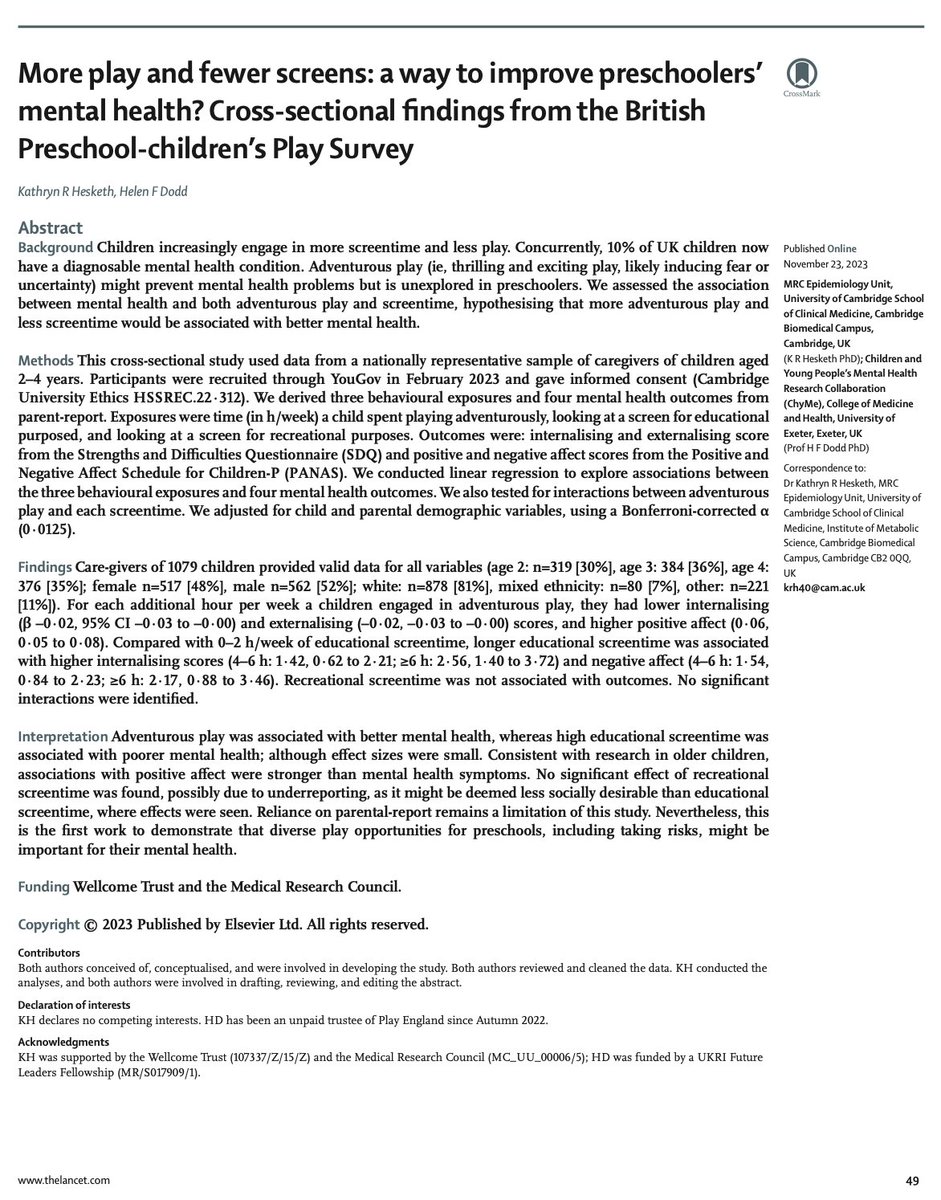
Every additional hour a child spends in adventurous play is associated with lower anxiety and a better mood.
More screen time does the opposite.
Why? Adventurous play is free exposure therapy. Kids feel scared, then survive it. Over and over, they learn fear is manageable.
Wayne Gretzky shares the advice he gives to every young athlete.
"The commitment and the work ethic is worth it."
"My dad was a big believer that the harder you work as a kid, the more fun you're going to have as an adult. And the more fun you have as a kid, the harder you're going to work as an adult."
Read that again.
It's one of the truest things ever said about success.
Work now, play later. Or play now and work forever.
"The commitment and the passion for what you're doing is so worth it at the end of the day. Just believe each and every day - it's really, really worth it."
Commitment is a choice. It's choosing long-term growth over short-term comfort.
"I wouldn't trade my life in for anything in the world."
Outcomes and rewards require sacrifice.
The key question is: what price am I willing to pay?
(🎥 Be Better Off Show)
Palantir CTO @ssankar in 2024:
“For $10 billion, @elonmusk put 300 rockets in orbit.”
“For $11 billion the state of California has built 1600ft of elevated rail, with no rail.”





![SteveStuWill's tweet photo. Sex differences that suggest that human males are adapted for combat.
[Link below.] https://t.co/KxKAvZYY3m](https://pbs.twimg.com/media/HAQ4X-lbMAAQpp1.jpg)


