Meet Reena Thomas, a neuro-oncologist at Stanford Medicine harnessing the immune system to fight brain and nervous system tumors. Find out what drew her to this field — and how she takes her coffee.
@stanfordcancer
Meet Steven Artandi, a physician-scientist who studies cancer biology. His work helps uncover the mechanisms that enable cancer to grow and persist. Learn what he wanted to be when he was a kid — and the quote he lives by. @StanfordCancer@SCIDirector
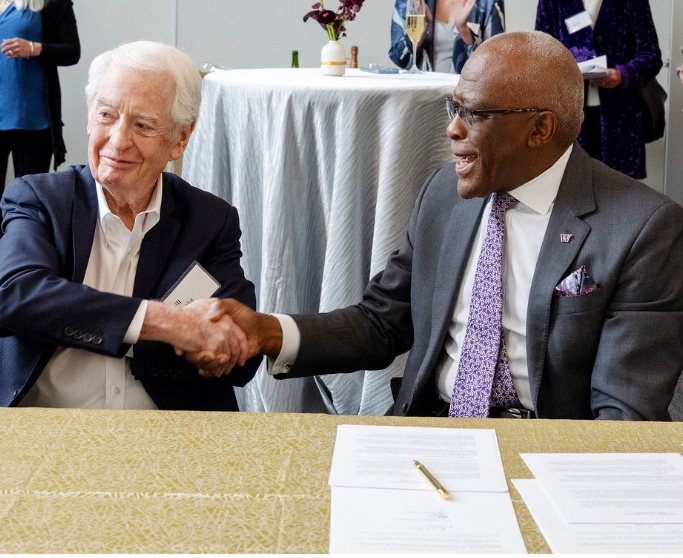
The largest-ever scholarship gift to @uwsomwwami's MD program — $25M from philanthropists Bill & Carolyn Franke — will train more primary care doctors for rural & Native communities across the region.
https://t.co/0JamLHuGs6
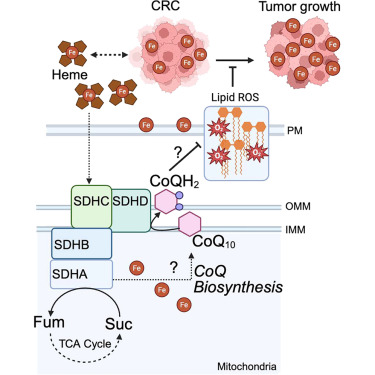
Scientists discovered that developing red blood cells can import heme from surrounding cells through the HRG1 transporter, a finding that could lead to new treatments for anemia and genetic blood disorders such as β-thalassemia.
https://t.co/x9pDvSycAL
📣The NIH Office of Nutrition Research has launched the “Integration of Nutrition Training into Health Care Education” Challenge!
This Challenge will recognize exemplary curricula for integrating nutrition training into healthcare education for physicians and nurses across the nation.
Learn more about this project and its potential for a $2M Phase 1 prize purse ➡️ https://t.co/8sTAd5d3kr
The person you will be in 5 years depends largely on:
1. The books you read
2. The food you eat
3. The habits you cultivate
4. The people you surround yourself with
5. The conversations you engage in
6. The mindset you adopt
7. The risks you take and lessons you learn
@mcuban is that the number for all med schools, or are you thinking just public (eg free in-state public vs tuition fee for out of state matriculants), while maintaining private med school option
Iron reduction via phlebotomy led to a 66% decreased risk of combined death, non-fatal heart attack, and stroke, in men with peripheral arterial disease.
PMID: 22093213
The colour of urine is, biochemically, the visible end of haemoglobin turnover.
Every day, red blood cells age and are dismantled mainly by macrophages in the spleen, liver and bone marrow.
Their haemoglobin is split into globin and haem. Globin is recycled as amino acids.
Haem, however, is chemically dangerous because its iron-containing porphyrin ring can promote oxidative reactions, so the body rapidly converts it into safer products.
The pathway begins with haem oxygenase, which opens the porphyrin ring and produces biliverdin, carbon monoxide and free iron. Biliverdin is green.
Then biliverdin reductase converts biliverdin into bilirubin, which is yellow-orange and hydrophobic.
At this stage, bilirubin cannot simply dissolve in plasma.
It travels bound to albumin towards the liver, where hepatocytes conjugate it with glucuronic acid via UDP-glucuronosyltransferase. This makes bilirubin water-soluble enough to be secreted into bile.
Most conjugated bilirubin enters the intestine.
There, bacterial enzymes convert it into urobilinogen. Part of this urobilinogen remains in the gut and is oxidised to stercobilin, which gives faeces their brown colour. But a fraction is reabsorbed into the portal circulation. Some returns to the liver; a small amount escapes into the systemic circulation and reaches the kidney.
In urine, urobilinogen is oxidised to urobilin, historically called urochrome. This yellow pigment is the main reason normal urine has its characteristic colour.
So the colour of urine is not simply “waste colour”.
It is the chemical signature of red blood cell renewal, hepatic processing, intestinal bacterial metabolism and renal excretion.
Hydration then modifies what we see.
When urine is diluted, the same pigments are dispersed in more water, so urine appears pale yellow.
When urine is concentrated, urobilin becomes more visually intense, giving amber or dark yellow urine.
Other colours add diagnostic clues.
Very dark brown urine may reflect bilirubin, haemoglobin, myoglobin or some drugs.
Red urine may come from blood, beetroot pigments or medications.
Orange urine may appear with dehydration, rifampicin or phenazopyridine.
Green or blue urine is rare but can occur with dyes, drugs or unusual infections.
Urine colour is haem biochemistry made visible: the body turning potentially toxic blood pigment into soluble molecular traces that the kidney can remove.
Hey foodies! On this new episode of the AVAHO Carecast dives into cancer patient food talk with AVAHO's favorite Registered Dietitian, Taylor Scialo! Listen and subscribe on your favorite podcast platforms!
🟣 Apple Podcasts - https://t.co/cau2EcFlYx
🟢 Spotify - https://t.co/rfgBi5tvyn
#MedicalPodcast #MedLife #DietitianApproved
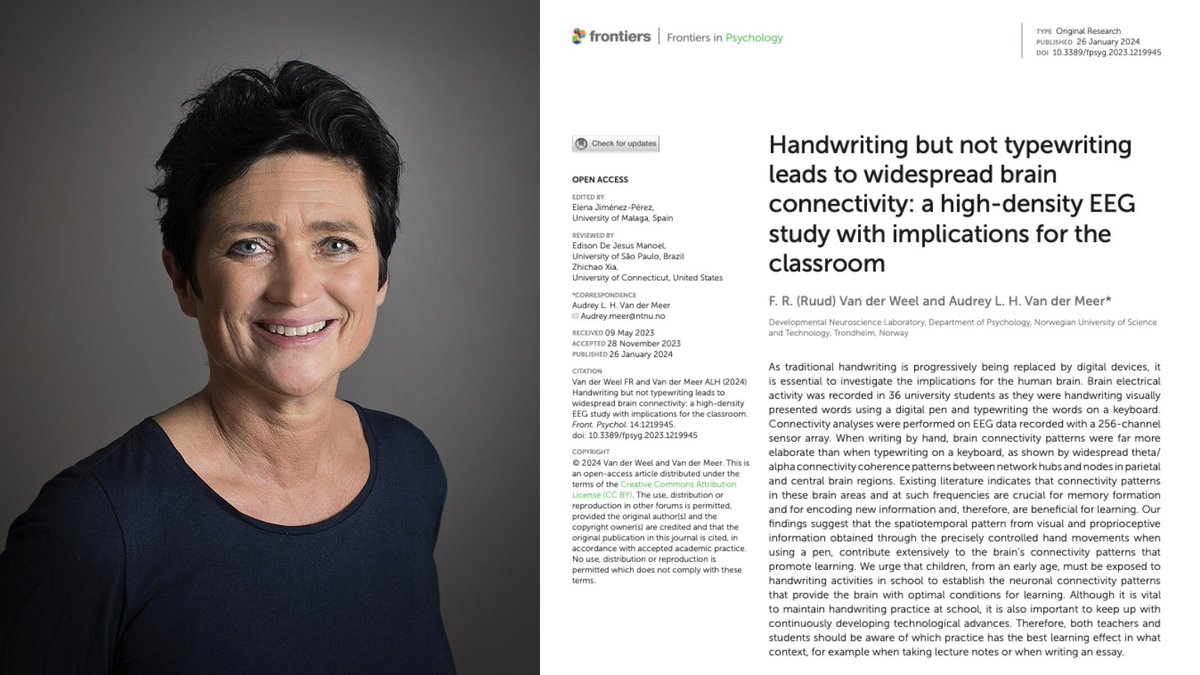
A Norwegian neuroscientist spent 20 years proving that the act of writing by hand changes the human brain in ways typing physically cannot, and almost nobody outside her field has read the paper.
Her name is Audrey van der Meer.
She runs a brain research lab in Trondheim, and the paper that closed the argument was published in 2024 in a journal called Frontiers in Psychology. The finding is brutal enough that it should have changed every classroom on Earth.
The experiment was simple. She recruited 36 university students and put each one in a cap with 256 sensors pressed against their scalp to record brain activity. Words flashed on a screen one at a time.
Sometimes the students wrote the word by hand on a touchscreen using a digital pen, and sometimes they typed the same word on a keyboard. Every neural response was recorded for the full five seconds the word stayed on screen.
Then her team looked at the part of the data most researchers had ignored for years, which is how different parts of the brain were communicating with each other during the task.
When the students wrote by hand, the brain lit up everywhere at once.
The regions responsible for memory, sensory integration, and the encoding of new information were all firing together in a coordinated pattern that spread across the entire cortex. The whole network was awake and connected.
When the same students typed the same word, that pattern collapsed almost completely.
Most of the brain went quiet, and the connections between regions that had been alive seconds earlier were nowhere to be found on the EEG.
Same word, same brain, same person, and two completely different neurological events.
The reason turned out to be something nobody had really paid attention to before her work. Writing by hand is not one motion but a sequence of thousands of tiny micro-movements coordinated with your eyes in real time, where each letter is a different shape that requires the brain to solve a slightly different spatial problem.
Your fingers, wrist, vision, and the parts of your brain that track position in space are all working together to produce one letter, then the next, then the next.
Typing throws all of that away. Every key on a keyboard requires the exact same finger motion regardless of which letter you are pressing, which means the brain has almost nothing to integrate and almost no problem to solve.
Van der Meer said it plainly in her interviews.
Pressing the same key with the same finger over and over does not stimulate the brain in any meaningful way, and she pointed out something that should scare every parent who handed their kid an iPad.
Children who learn to read and write on tablets often cannot tell letters like b and d apart, because they have never physically felt with their bodies what it takes to actually produce those letters on a page.
A decade before her, two researchers at Princeton ran the same fight using a completely different method and ended up at the same answer. Pam Mueller and Daniel Oppenheimer tested 327 students across three experiments, where half took notes on laptops with the internet disabled and half took notes by hand, before testing everyone on what they actually understood from the lectures they had watched.
The handwriting group won by a wide margin on every question that required real understanding rather than surface recall.
The reason was hiding in the transcripts of what the two groups had actually written down.
The laptop students typed almost word for word, capturing more total content but processing almost none of it as they went, while the handwriting students physically could not write fast enough to transcribe a lecture in real time, which forced them to listen carefully, decide what actually mattered, and put it in their own words on the page.
That single act of choosing what to keep was the learning itself, and the keyboard had quietly skipped the choosing and skipped the learning along with it.
Two studies. Two countries. Same answer.
Handwriting makes the brain work. Typing lets it coast.
Every note you have ever typed instead of written went into your brain through a thinner pipe. Every meeting, every book highlight, every idea you captured on your phone instead of on paper was processed at half depth.
You did not forget those things because your memory is bad. You forgot them because typing never woke the part of the brain that would have made them stick.
The fix is the thing your grandmother already knew.
Pick up a pen. Write the thing down. The slower road is the faster one.
On our new episode of AVAHO Carecast we're joined by special guests Evan Chenault, Hannah Zortman, and Palak Dutta to discuss their 2025 AVAHO Annual Meeting award winning abstracts, the next steps in their careers, and how it feels to be the new generation in healthcare.
✨Listen & Subscribe today!✨
⚪️ Apple - https://t.co/cau2EcEO8Z
🟢 Spotify - https://t.co/rfgBi5sXIP
#MedicalPodcast #Carecast #MedLife
Duncan Robinson’s love of basketball started with his big brother, Eli. But when Eli got older, he began to struggle.
It takes incredible strength to share a story like this. Thank you, Duncan, for your vulnerability. Well done @mcten. I know this hit close to home.
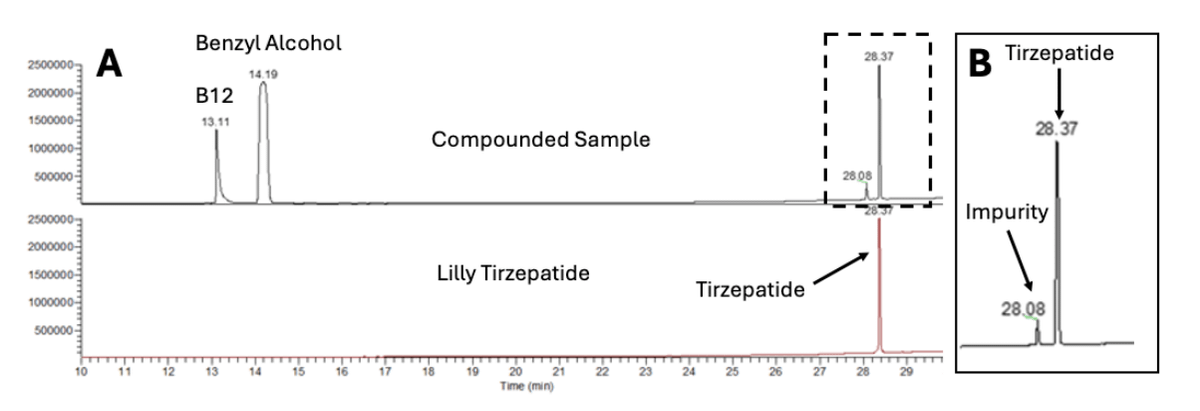
Compounders mix tirzepatide with vitamin B12 to evade FDA regulations. The two molecules react. Up to 10% of every dose is a chemical no one has ever tested. In March, Eli Lilly tested 10 samples of compounded tirzepatide pulled from pharmacies, medspas, and telehealth networks. Every sample contained the same novel impurity. The FDA qualification threshold for impurities in approved drugs is 0.15%. Lilly found the B12 adduct at 67x that threshold. Some samples came in at 43% of labeled potency. Tirzepatide took Eli Lilly 7,023 iterations to get it right. They threw away 7,022 of them. Each variant changed an amino acid sequence, a linker, or a half-life. Compound 7,023 was the only one that survived. A single amino acid substitution changes how this molecule binds, clears, and tolerates. Compounders cannot match Lilly's precision. Add B12, and the reaction creates an adduct that has never been near a trial. Except for the people who are now injecting it.
Excited to announce a new paper out now in @CD_AACR on a unique CAR T cell platform that eliminates AML and B-ALL without harming vital endogenous immune cells or other normal human tissues:
https://t.co/IVb5KIYqMs
AVAHO President, @NickBurwick was featured earlier this year on Medscape's ReCap segment! Learn more about New Insights on Treatment of Veterans With CLL From ASH 2025!
https://t.co/yrGaGXJVvn
#VeteranCare#ASH2025