📊 Research Summary: For adults with acute #ischemicstroke presenting 4.5 to 24 hours after symptom onset, the addition of intravenous #tenecteplase before EVT did not improve 90-day clinical outcomes and showed no significant difference in safety compared with EVT alone.
#ESOC2026 @ESOstroke
https://t.co/5LWORGabT7
Key 2026 updates in @pupillometry via an @Intermountain journal club today led by the OG @DaiwaiO84145 . Such a solid talk. Pros and cons of NPI in light of other metrics. Change > 0.7 or drop < 3.0 indicates possible neuro change. Discussion too of thoughtful post by @PulmCrit recently on the topic. #neurocritcal #CriticalCare @NeurOpticsInc@solvemed
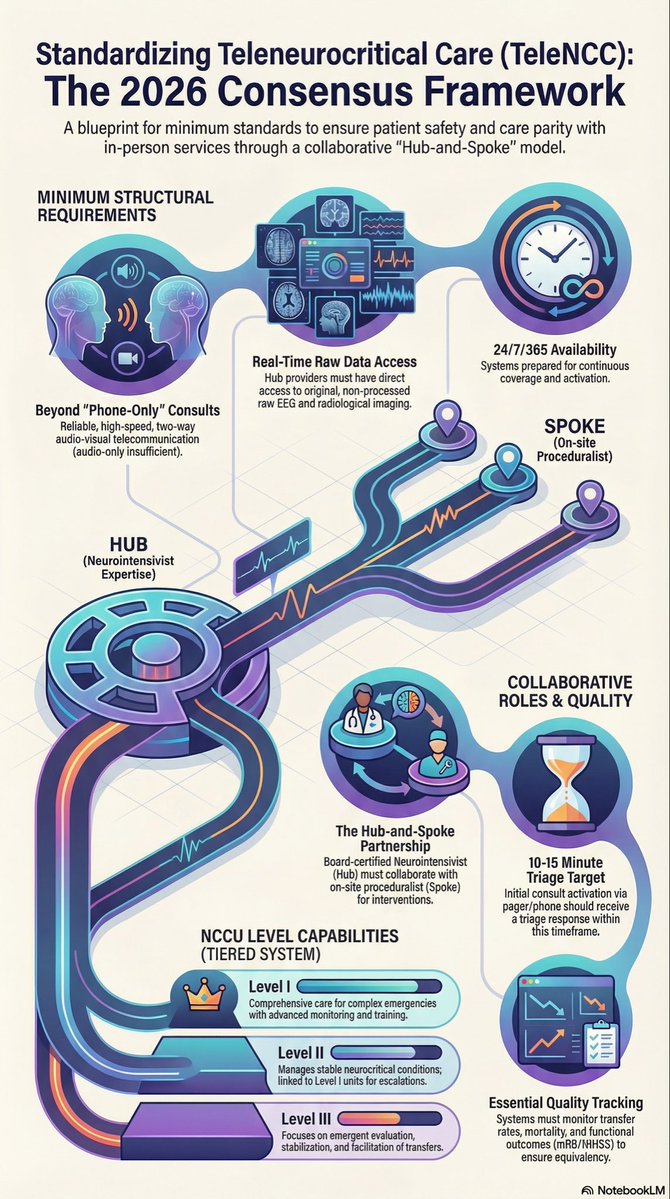
Our new paper in Neurocritical Care presents the first TeleNCC Consensus Statement—defining best practice, minimum standards, and benchmarks for teleneurocritical care.
Here are the key takeaways 👇
#TeleNCC#NeurocriticalCare#Stroke@Intermountain https://t.co/bbYGPYB9Ki
Bottom line:
TeleNCC can safely and effectively extend NeuroICU expertise—but only when delivered with the same rigor, structure, and accountability as in‑person care.
👋DM for implementation checklist / benchmarking starter set
🧠📡 Proud to share the first-ever Teleneurocritical Care (TeleNCC) Consensus Statement — an NCS Guidelines paper I co-authored with 21 multidisciplinary experts!
Endorsed by AAN, AANS, CNS & ATA, this 33-page document covers 13 sections on standards for virtual neurocritical care in EDs and ICUs without 24/7 in-person coverage.
Key takeaways: models, organization, structural requirements, quality metrics, and the first pediatric TeleNCC recommendations.
#NeuroCritCare #Telemedicine #TeleNCC #Neurology #Neurosurgery #CriticalCare #MayoClinic @NeurocritCareJ@neurocritical@mayoclinicnccfl
Mark your calendar and register for free for World Coma Day! This all-day, global online event will feature stories of remarkable recovery, science talks by medical experts, educational sessions & more. https://t.co/s3mWgkMJQj
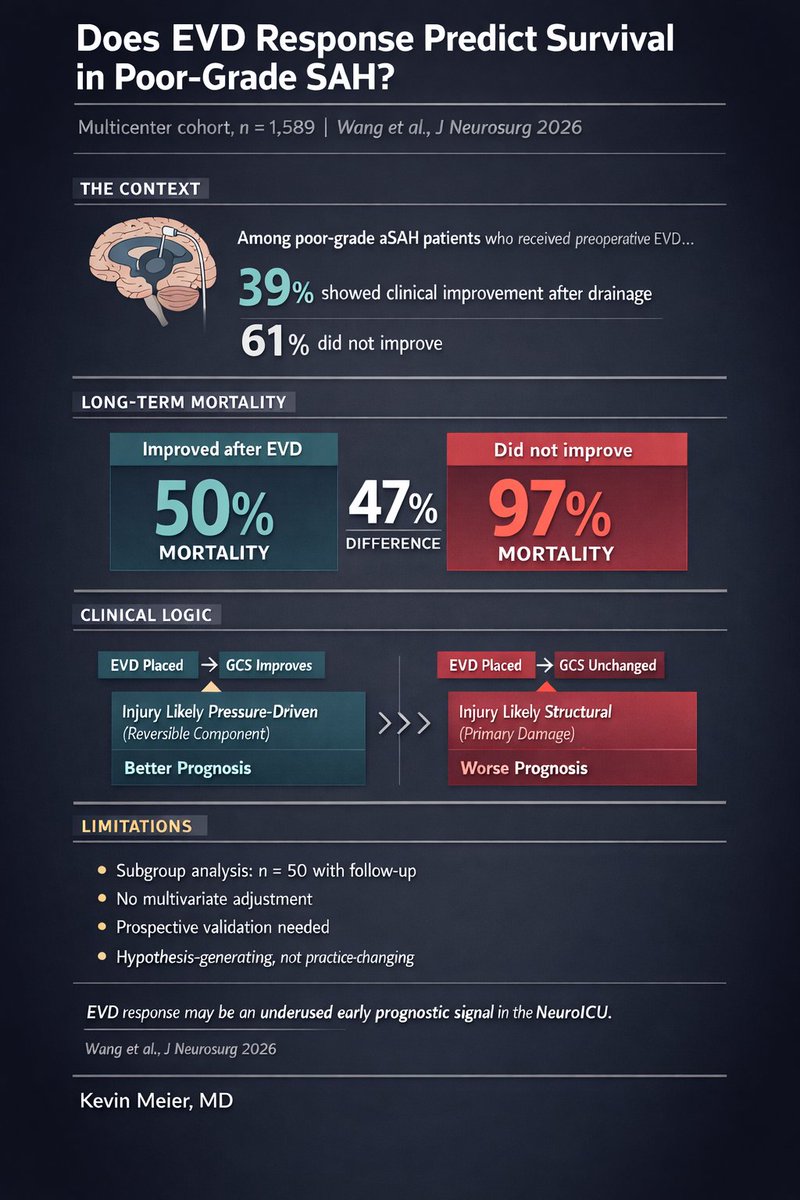
Just read an interesting paper, "Long-term outcomes of poor-grade aneurysmal subarachnoid hemorrhage"
New multicenter data (n=1,589) just published in the Journal of Neurosurgery looked at long-term outcomes in poor-grade aSAH. The headline finding was 51% long-term mortality.
What I found more interesting, among patients who received EVD before aneurysm treatment, 39% showed clinical improvement (GCS increase) after drainage.
At #ISC2026#ISC26 Abstract A104: Implementing and Improving #CodeICH -- Timely Door-To-Reversal in Anticoagulation-Associated ICH: Rate limiting steps and predictors in a Multicenter Observational Study. | Stroke https://t.co/0I4Qni2soh #Stroke@Intermountain@gabe_fontaine