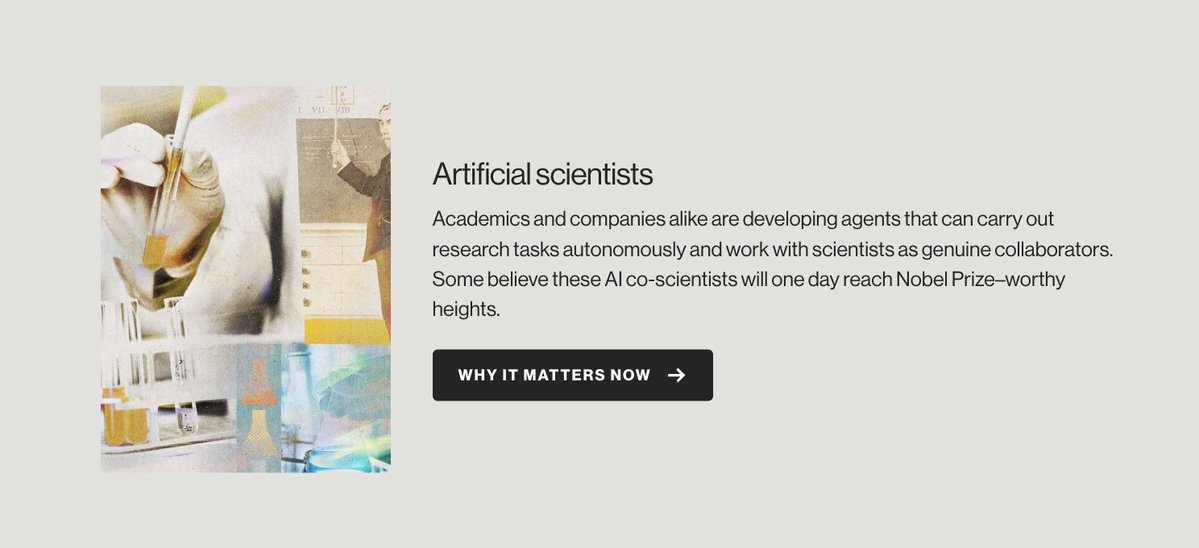
We're building agents for autonomous science. Closed-loop, faster iterations, more discovery, less time. Massive human scientist + AI scientist collaboration.
We believe AI can be a dedicated research partner to help discover the next breakthrough.
Enter Co-Scientist: our latest Gemini-based multi-agent system that can generate, debate and evolve novel hypotheses for complex scientific problems 🧵
How do the frontier models compare on biosecurity?
We’re releasing RefusalBench, an open benchmark by @AppliedSciAI for auditing frontier model refusal accuracy across biological risk tiers.
Our goal was to test which frontier models block legitimate research prompts the most often and pinpoint the patterns most likely to trigger a false refusal.
We used RefusalBench to test 19 models on the same biological prompts and found a wide gap (94.5 pp) between the least and most restrictive models.
• Anthropic models are ~21X more likely to refuse than the non-Anthropic baseline
• Grok 4.20 is the best-calibrated model - catching 81.7% of dangerous prompts while refusing 3.0% of benign ones
• High refusal rate ≠ high safety - the highest-refusing models aren't the best at catching genuinely dangerous requests - they're just refusing more of everything.
You can now test your own orchestrator model with RefusalBench and find which subdomain-tier intersections will silently kill your pipeline before it happens in production. 🧵
@NikoMcCarty@mkoeris I briefly tried to develop magnetogenetics as a PhD student using ferritin. Obviously didn’t work. I imagine that Meister 2016 paper explained quite a few negative experiments and failed projects
At @Biohub, our goal is to build models that accelerate scientific discovery and progress toward the cure to disease. We’re releasing all of this under MIT license allowing commercial and non-commercial use.
Read more here: https://t.co/Rt0Vo4QnSA
AI slop is not just LinkedIn posts anymore. It is scientific papers. It is technology releases of startups. Substance is becoming slop, wrapped in comms, and distributed to the world.
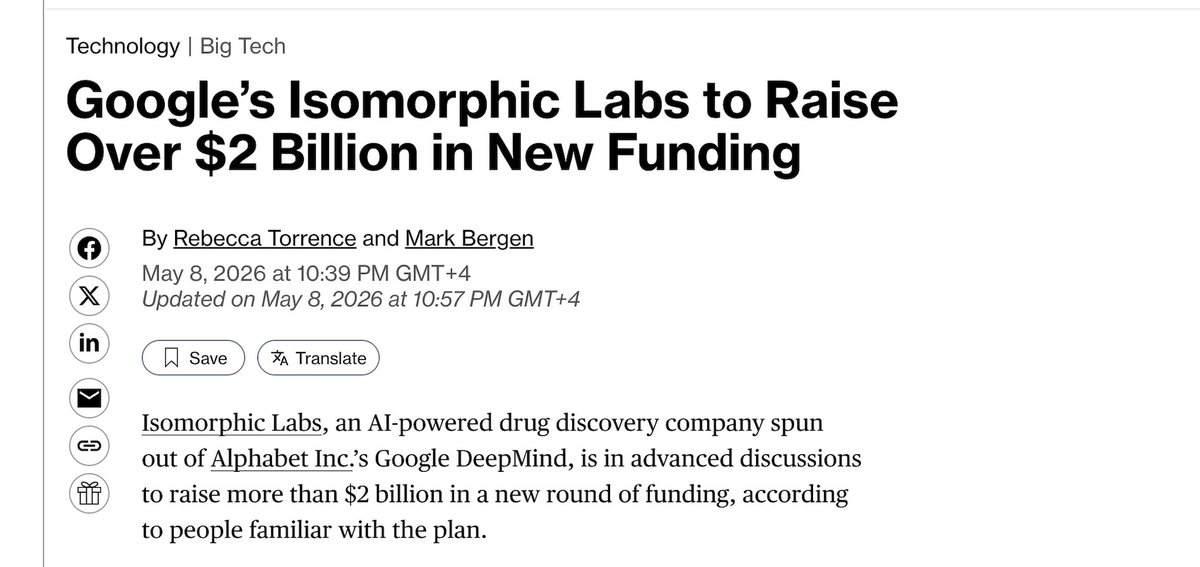
in the next 3 years, every major AI lab will spin up its own bio arm and in-house wet labs.
biology is the next big bet in AI after code
pay attention.
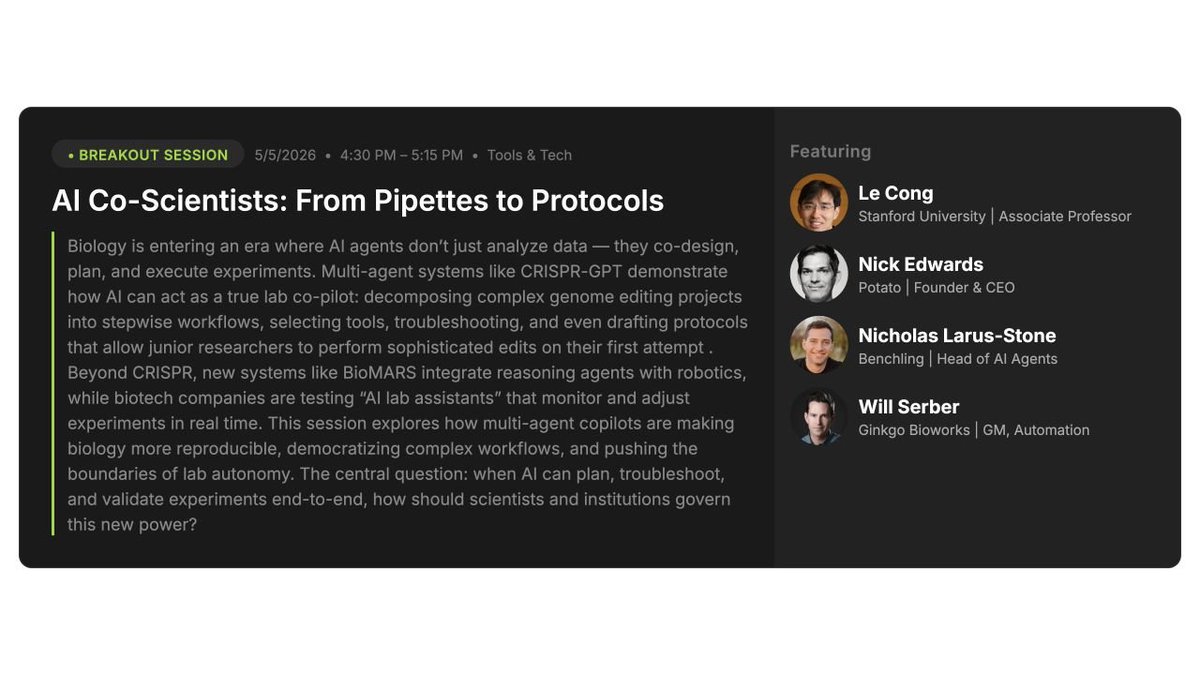
Looking forward to discussing AI co-scientist and lab of the future with @Nick___Edwards Nicholas Larus-Stone, George Peabody and a great panel moderated by @AnnaMarieWagner at SynBioBeta, and thanks @johncumbers and @ivanJaubert for organizing and highlighting this session!
Hope to see many old and new friends next week in San Jose. @SynBioBeta
#ai4science #synbiobeta #sanjose
Scaling laws are powering AI. It’s time to scale biology.
Today we’re launching the Virtual Biology Initiative to generate the data to unlock scaling laws in biology and build accurate predictive models of the cell.
Digital representations of proteins are already expanding our understanding of life at the molecular level, and accelerating the design of molecules and medicines. Accurate digital representations of the cell could reveal the mechanisms that are responsible for disease, and show how to reverse them.
The protein data bank, and worldwide repositories of protein sequence biodiversity were created through decades of work by the scientific community. The advances in artificial intelligence for proteins would not have been possible without them.
The cell is orders of magnitude more complex, and we will need to create the data in just a few years rather than decades.
This will require a coordinated global effort. We're partnering with Broad, Wellcome Sanger, Arc, Allen, Human Cell Atlas, Human Protein Atlas, NVIDIA, and Renaissance Philanthropy.
Biohub is contributing to this effort as both a funder and a builder. We are developing microscopy to observe millions of cells in living organisms, and cryo-ET to resolve the cell in atomic detail. We're building instruments that expand the range of modalities and parameters that can be simultaneously measured. We’re developing molecular, cellular, and tissue engineering to create models of disease and design interventions.
The data we generate will be available to the worldwide scientific community.
We’re also committing $100M over the next five years to support work beyond Biohub.
We invite other scientific teams and funders to join.
Link: https://t.co/93Nw1QT5iZ
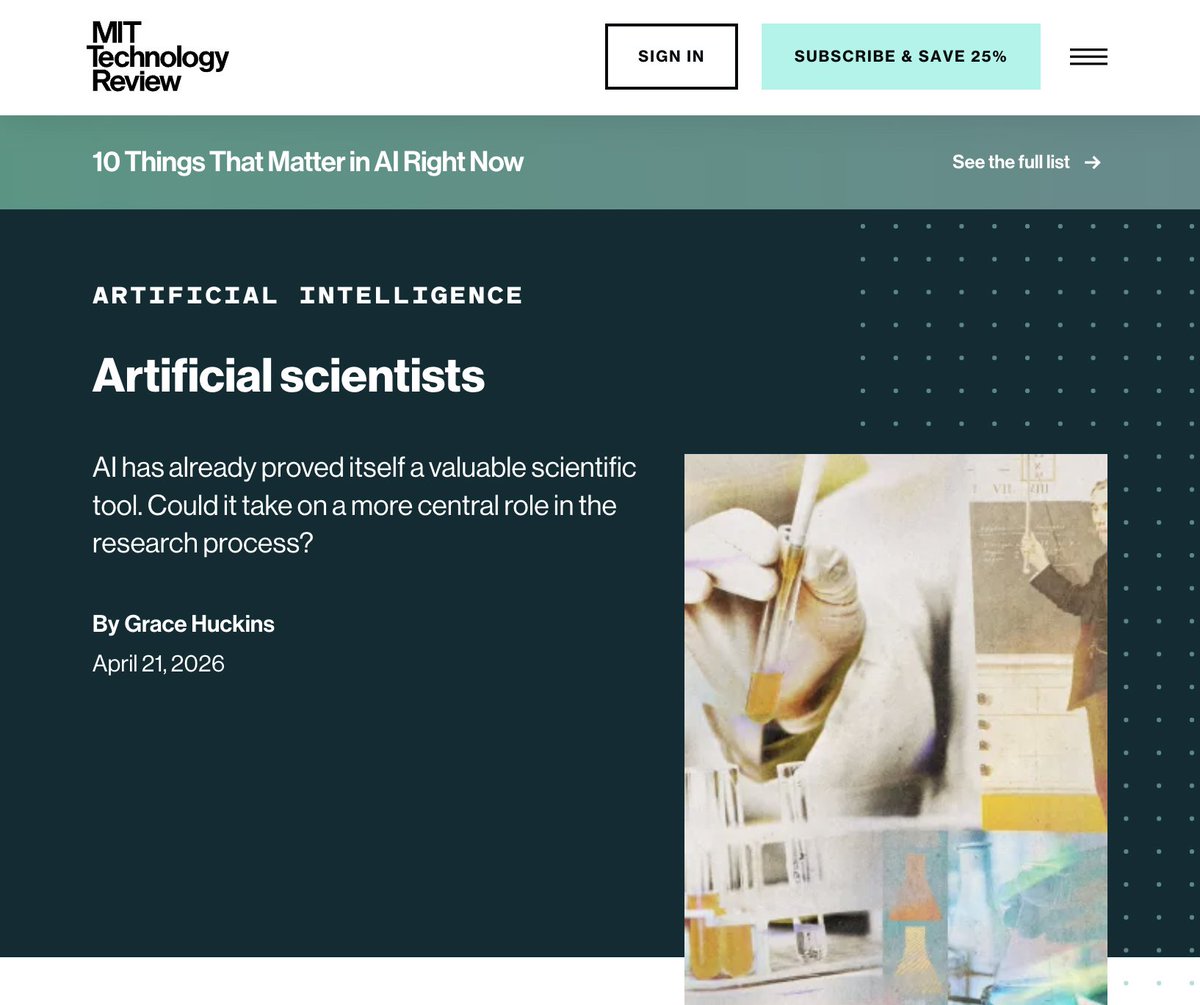
AI scientists are one of @techreview’s top 10 things that matter in AI right now. Read about how the autonomous lab plugs into AI-powered science today, including our work that reduced the cost of cell-free protein synthesis by 40%.
Story by @grace_huckins: https://t.co/znA4APgxsZ
I want to see 1000 application this month to @BoostVC that are completely focused on Bio-Security. We have yet to find an investment here, and I think its a monster category.
We will invest $500k.
Bio-Security will get preferential treatment this month: https://t.co/HXqPcU8oQ0
Alex on why AI drug discovery companies need to generate novel data to succeed:
"AI models based on the research that's available is a lot of garbage in and garbage out."
"A lot of the recorded literature is actually incorrect. There's been tons of studies that show if you go try to replicate the experiments that are in the literature, you don't even get the same results."
"The AI companies that I believe are gonna be most set up for success are the companies with a novel way to generate science tokens that don't exist in the public domain."